Proposal for Services Template

Free Word download β€’ Edit online β€’ Save & share with Drive β€’ Export to PDF

21 pagesβ€’40–55 min to fillβ€’Difficulty: Expert
Learn more ↓
FreeProposal for Services Template

At a glance

What it is
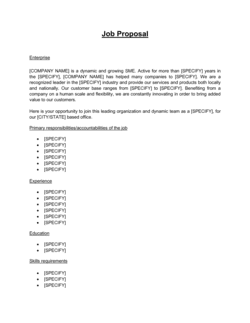
A Proposal For Services is a formal document a service provider sends to a prospective client to outline the scope of work, deliverables, timeline, pricing, and terms for a proposed engagement. This free Word download gives you a structured, professional starting point you can edit online and export as PDF to send to prospects within minutes of a discovery call.
When you need it
Use it whenever a prospect requests a formal proposal after an initial conversation, when you are responding to an RFP, or when you want to replace informal email quotes with a document that clearly defines what you will deliver, by when, and for how much.
What's inside
An executive summary, client problem statement, proposed solution, detailed scope of work, deliverables list, project timeline, pricing breakdown, team credentials, terms and conditions, and a call to action. Together these sections give the prospective client everything they need to approve the engagement without a follow-up meeting.

What is a Proposal For Services?

A Proposal For Services is a formal document a service provider submits to a prospective client to present a recommended solution to a defined problem, along with the scope of work, deliverables, timeline, pricing, and terms for the engagement. It moves the sales conversation from verbal agreement to a written offer both parties can evaluate, approve, and reference throughout the project. Unlike a quotation, which states a price with minimal context, a proposal demonstrates that the service provider understands the client's specific situation and has designed a solution around it β€” making it the standard document for complex, customized, or high-value service engagements.

Why You Need This Document

Without a written proposal, service engagements begin on mismatched assumptions. The client expects everything adjacent to the work you discussed; you priced only the core tasks. Scope disputes, revision arguments, and payment holdbacks follow. A well-structured proposal for services eliminates that ambiguity before work begins by documenting exactly what you will deliver, by when, for how much, and what falls outside the engagement. It also accelerates the sales cycle β€” clients who receive a clear, personalized proposal with a specific call to action and an expiry date decide faster than clients waiting on an informal email quote. This template gives you a complete, professional structure you can personalize in under an hour, so every proposal you send reflects the quality of the work you do.

Which variant fits your situation?

If your situation is…Use this template
Responding to a formal Request for Proposal (RFP)RFP Response Template
Proposing a one-time project with a fixed feeProject Proposal
Pitching an ongoing monthly retainer arrangementConsulting Proposal
Proposing technology or software implementation servicesIT Services Proposal
Submitting a bid for a construction or trade projectConstruction Proposal
Offering marketing or creative services to a new clientMarketing Proposal
Proposing a training program or workshop seriesTraining Proposal

Common mistakes to avoid

❌ Leading with your company history

Why it matters: Decision-makers scan proposals for evidence that you understand their problem. Opening with your founding story or award list makes them work to find the part that matters to them.

Fix: Open with the client's problem statement and proposed outcome. Move company background to the team section or an appendix.

❌ No out-of-scope list

Why it matters: Without an explicit exclusion list, any related task the client assumes is included becomes a dispute β€” and you have no written basis to issue a change order.

Fix: Add an 'Out of Scope' subsection immediately after the deliverables list, naming at least three adjacent services you are not providing.

❌ Single lump-sum pricing with no breakdown

Why it matters: Clients who cannot see what each cost covers negotiate the total number. A breakdown lets them evaluate value per component and gives you a defense for the overall price.

Fix: Break pricing into at least two line items β€” e.g., by phase or by deliverable β€” so the client can see where budget is allocated.

❌ Publishing a timeline without client dependencies

Why it matters: If the client's review delay pushes your delivery by two weeks, you have no written protection against a late-delivery complaint or withheld payment.

Fix: Annotate every timeline milestone that requires client action with a 'client response required by' date, and note that delays shift subsequent dates accordingly.

❌ Vague deliverables with no acceptance criteria

Why it matters: A deliverable described only as 'final report' leaves the client free to request unlimited revisions, and you with no basis to declare the work complete.

Fix: Define each deliverable with a name, format, and one-sentence acceptance criterion β€” e.g., 'Client has five business days to request one round of revisions after delivery.'

❌ Ending with 'let us know if you have questions'

Why it matters: This closing frames the next step as a conversation rather than a decision, stalling the sales cycle indefinitely.

Fix: Close with a specific call to action β€” sign and return by a date, click to book the kickoff call β€” and set a proposal expiry date to create urgency.

The 9 key sections, explained

Cover page and executive summary

Client needs and problem statement

Proposed solution

Scope of work and deliverables

Project timeline

Investment and pricing

Team and credentials

Terms, assumptions, and exclusions

Next steps and call to action

How to fill it out

  1. 1

    Complete the cover page with client and date details

    Enter your company name, the client's full legal or trading name, and the proposal date. Give the proposal a version number if you anticipate revisions.

    πŸ’‘ Address the proposal to the actual decision-maker by name β€” not 'To Whom It May Concern.' Personalization increases open and acceptance rates.

  2. 2

    Write the client problem statement from your discovery notes

    Summarize the client's specific situation, the pain point driving this engagement, and the cost of doing nothing. Use numbers wherever the client provided them in discovery.

    πŸ’‘ Read back your problem statement to the client before submitting β€” if they say 'yes, that's exactly it,' you have the right framing.

  3. 3

    Describe the proposed solution and methodology

    Explain your recommended approach in language the client's decision-maker can evaluate. Avoid technical jargon; focus on the outcome the method produces.

    πŸ’‘ Include one sentence on why you chose this approach over an alternative β€” it signals expertise and preempts competitor comparisons.

  4. 4

    Define scope, deliverables, and acceptance criteria

    List every task by phase and link each phase to a named, dated deliverable. Add one sentence of acceptance criteria per deliverable so both parties agree on what 'approved' means.

    πŸ’‘ Write the out-of-scope list immediately after the scope β€” anything adjacent to your work that you are not doing should be named explicitly.

  5. 5

    Build the timeline with client dependencies marked

    Map phases and milestones to calendar weeks. Annotate every point where you need client input β€” document review, stakeholder access, data delivery β€” with a 'client action required by' date.

    πŸ’‘ Add a one-sentence note that the timeline assumes client responses within [X] business days at each review gate.

  6. 6

    Set the investment and payment structure

    Break pricing into phases or deliverables rather than a single total. State the payment schedule β€” e.g., 50% at acceptance, 50% at delivery β€” and specify whether expenses are included or invoiced separately.

    πŸ’‘ Offer one optional add-on in the pricing section. It increases average deal size without forcing the client to negotiate against the core scope.

  7. 7

    Add team bios with one quantified achievement each

    Introduce the people who will actually do the work. Lead each bio with the single most relevant accomplishment for this engagement, expressed as a result rather than a responsibility.

    πŸ’‘ Include a photo if your brand supports it β€” named, recognizable people reduce perceived delivery risk.

  8. 8

    State validity period, assumptions, and next steps

    Set a proposal expiry date (30 days is standard), list every assumption baked into your pricing, and close with a single, specific call to action that tells the client exactly what to do to accept.

    πŸ’‘ A deadline on the proposal creates urgency without pressure β€” clients who intended to accept often do so faster when the price has an expiry.

Frequently asked questions

What is a proposal for services?

A proposal for services is a formal document a service provider submits to a prospective client outlining the scope of work, deliverables, timeline, pricing, and terms for a proposed engagement. It moves the conversation from an informal discussion to a documented offer the client can evaluate, approve, and act on. A well-written proposal reduces back-and-forth negotiation and protects both parties by establishing shared expectations before work begins.

What should a service proposal include?

A complete proposal for services covers a client problem statement, proposed solution, detailed scope of work with named deliverables, a project timeline with milestones, a pricing breakdown with payment terms, team credentials, and a terms section listing assumptions and exclusions. It closes with a specific call to action and an expiry date. Missing any of these sections creates ambiguity that clients interpret in their favor during disputes.

What is the difference between a proposal and a quote?

A quote states a price for a defined service with minimal context. A proposal explains the client's problem, the recommended solution, the scope and timeline, and only then presents the price β€” giving the client enough information to evaluate value rather than just comparing numbers. For simple, commodity services a quote is sufficient. For complex, customized, or high-value engagements a full proposal substantially increases win rates.

What is the difference between a proposal for services and a statement of work?

A proposal for services is a pre-sales document submitted to win the engagement β€” it is not yet a binding contract. A statement of work (SOW) is a contract-stage document that formally binds both parties to the agreed scope, schedule, and price. Once a client accepts a proposal, the SOW is typically drafted to replace it as the governing document. Some service providers combine both into a single sign-and-return proposal that functions as the SOW upon acceptance.

How long should a service proposal be?

For most professional services engagements, 4–8 pages is the right range. Long enough to demonstrate you understand the client's situation and have thought through the scope; short enough that the decision-maker reads it the same day it arrives. Complex multi-phase technology or consulting projects may run to 15–20 pages with appendices, but the core proposal body should still be scannable in under ten minutes.

How do I price a service proposal?

Break pricing into phases or deliverables rather than presenting a single lump sum. State the payment schedule β€” typically 50% at acceptance and 50% at delivery for projects under 90 days β€” and specify whether expenses are included or billed separately. Setting a proposal validity period of 30 days anchors the price and creates a natural deadline for the client to decide. Consider including one optional add-on to increase average deal size without forcing negotiation on the core scope.

Should a service proposal be signed by the client?

A signed proposal functions as a letter of intent and is often sufficient to begin work, particularly for straightforward engagements. For larger projects or new client relationships, follow the signed proposal with a formal statement of work or service agreement. At minimum, request written acceptance β€” an email confirmation or a signature block on the proposal β€” before starting any billable work.

How long does it take to write a service proposal?

A first proposal to a new client, built from scratch, typically takes 2–4 hours to write and review. A repeat proposal for a familiar service to a similar client, using a quality template, takes 30–60 minutes. The time investment is front-loaded: discovery notes and scope definition are the hard part. Once those exist, filling the template is fast. Firms that track proposal-to-close rates consistently find that more specific, personalized proposals close faster β€” making the extra hour worthwhile.

What is an RFP and when should I respond with a full proposal?

An RFP (Request for Proposal) is a formal document issued by a prospective client inviting vendors to submit competitive bids. Respond with a full proposal when the contract value justifies the effort, when you have a genuine competitive advantage for that specific engagement, and when the RFP requirements align with your core service offering. Declining RFPs that are a poor fit protects your team's time and maintains a higher win rate on the proposals you do submit.

How this compares to alternatives

vs Consulting Proposal

A consulting proposal is written for an advisory engagement where the deliverable is insight, strategy, or recommendations rather than a produced asset. A proposal for services covers a broader range of engagements β€” implementation, creative, technical, or trade work β€” where tangible deliverables and defined scope are central. Use the consulting variant when the engagement is primarily advice-driven with less predictable scope.

vs Project Proposal

A project proposal is an internal document used to gain organizational approval for a new initiative β€” it presents business case, budget, and resource requirements to a management team or board. A proposal for services is an external sales document sent to a prospective client to win a paid engagement. The audience and purpose are fundamentally different even though both documents describe planned work.

vs Service Agreement

A service agreement is a legally binding contract that governs the ongoing relationship between a service provider and a client β€” covering liability, IP ownership, confidentiality, and termination. A proposal for services is a pre-sales document submitted to secure the engagement; it becomes the basis for the service agreement once accepted. Use both: the proposal to win the work, the agreement to govern it.

vs Quotation

A quotation presents a price for a defined service with minimal supporting context β€” typically one to two pages. A proposal for services explains the client's problem, the recommended approach, the full scope, and only then presents pricing. For commodity or repeat services where the client already understands the scope, a quotation is faster. For complex, customized, or high-value engagements, the full proposal consistently produces higher win rates.

Industry-specific considerations

Marketing and creative agencies

Campaign deliverables, brand assets, and media spend are itemized separately from agency fees to give clients full budget visibility.

IT and managed services

Implementation phases, SLA commitments, and licensing costs are broken out, with a clear distinction between one-time project fees and recurring support retainers.

Professional services (accounting, legal, HR)

Hourly rates and estimated hours per task replace fixed-fee line items, with a maximum fee cap or contingency range to manage client budget expectations.

Construction and trades

Materials and labor are itemized separately, with a contingency line for unforeseen site conditions and a payment schedule tied to completion milestones.

Template vs pro β€” what fits your needs?

PathBest forCostTime
Use the templateFreelancers, small businesses, and agencies sending proposals for engagements under $50,000Free30–90 minutes per proposal
Template + professional reviewService firms responding to formal RFPs or proposing engagements over $50,000 with complex scope$200–$800 for a business advisor or proposal writer review1–2 days
Custom draftedLarge professional services firms, government contract bids, or multi-year managed service engagements$1,000–$5,000+ for a dedicated proposal writer or consulting firm1–3 weeks

Glossary

Scope of Work
A detailed description of the specific tasks, activities, and outputs the service provider agrees to deliver under the engagement.
Deliverable
A tangible output or result the service provider commits to producing by a defined date β€” such as a report, website, or trained team.
Statement of Work (SOW)
A formal document that binds both parties to the agreed scope, schedule, and pricing β€” the contract-stage successor to a proposal.
Request for Proposal (RFP)
A formal document issued by a prospective client inviting vendors to submit competitive proposals for a defined project or service.
Retainer
A recurring fee paid in advance to secure ongoing access to a service provider's time or expertise over a defined period.
Milestone
A defined checkpoint in a project timeline at which a specific deliverable is due and, in phased billing, payment is triggered.
Assumptions
Conditions the service provider states as true when calculating scope and price β€” if they prove false, scope or cost may change.
Out-of-Scope
Tasks or deliverables explicitly excluded from the proposal, providing a basis for a change order if the client later requests them.
Change Order
A written amendment to an approved proposal or contract that documents an agreed addition to scope, timeline, or budget.
Acceptance Criteria
The specific, measurable standards a deliverable must meet for the client to formally approve it as complete.

Part of your Business Operating System

This document is one of 3,000+ business & legal templates included in Business in a Box.

  • Fill-in-the-blanks β€” ready in minutes
  • 100% customizable Word document
  • Compatible with all office suites
  • Export to PDF and share electronically

Create your document in 3 simple steps.

From template to signed document β€” all inside one Business Operating System.
1
Download or open template

Access over 3,000+ business and legal templates for any business task, project or initiative.

2
Edit and fill in the blanks with AI

Customize your ready-made business document template and save it in the cloud.

3
Save, Share, Send, Sign

Share your files and folders with your team. Create a space of seamless collaboration.

Save time, save money, and create top-quality documents.

β˜…β˜…β˜…β˜…β˜…

"Fantastic value! I'm not sure how I'd do without it. It's worth its weight in gold and paid back for itself many times."

Managing Director Β· Mall Farm
Robert Whalley
Managing Director, Mall Farm Proprietary Limited
β˜…β˜…β˜…β˜…β˜…

"I have been using Business in a Box for years. It has been the most useful source of templates I have encountered. I recommend it to anyone."

Business Owner Β· 4+ years
Dr Michael John Freestone
Business Owner
β˜…β˜…β˜…β˜…β˜…

"It has been a life saver so many times I have lost count. Business in a Box has saved me so much time and as you know, time is money."

Owner Β· Upstate Web
David G. Moore Jr.
Owner, Upstate Web

Run your business with a system β€” not scattered tools

Stop downloading documents. Start operating with clarity. Business in a Box gives you the Business Operating System used by over 250,000 companies worldwide to structure, run, and grow their business.

Free Forever PlanΒ Β·Β No credit card required