Outside Employment Policy Template

Free Word download β€’ Edit online β€’ Save & share with Drive β€’ Export to PDF

4 pagesβ€’20–30 min to fillβ€’Difficulty: Standard
Learn more ↓
FreeOutside Employment Policy Template

At a glance

What it is
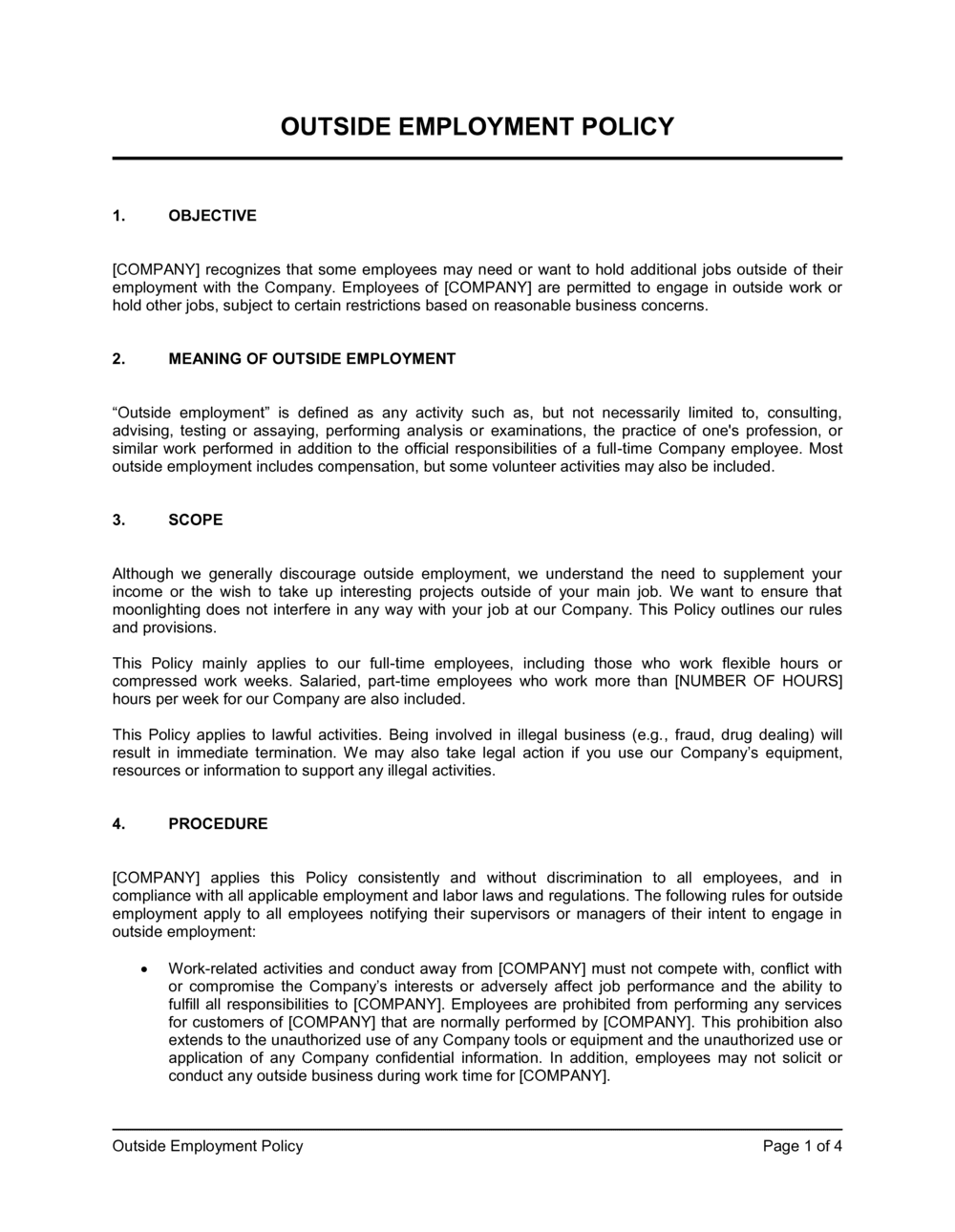
An Outside Employment Policy is a written workplace policy that defines the conditions under which employees may hold secondary jobs, freelance engagements, or self-employment activities while employed. This free Word download gives you a structured, editable template you can tailor to your organization's standards and publish in your employee handbook or intranet in under an hour.
When you need it
Use it when employees are asking to take on side work, when a conflict of interest has surfaced involving a secondary employer, or when you want to establish a clear disclosure and approval process before problems arise.
What's inside
A policy statement and scope clause, conflict-of-interest definitions, disclosure and approval requirements, prohibited activities, performance expectations, and consequences for non-compliance β€” giving managers and HR a consistent framework to apply across all employees.

What is an Outside Employment Policy?

An Outside Employment Policy is a written workplace policy that establishes the rules governing whether and how employees may hold secondary jobs, freelance engagements, board positions, or self-employment activities while employed by an organization. It defines what counts as outside employment, requires employees to disclose and seek approval before accepting secondary work, identifies categories of outside activity the organization will not permit β€” such as working for direct competitors or using company data for personal clients β€” and states the consequences for non-compliance. Unlike a contractual non-compete clause, this policy operates as an internal HR framework that sets process and expectations rather than creating a standalone legal obligation.

Why You Need This Document

Without a written outside employment policy, you have no consistent basis for evaluating or responding to employee moonlighting β€” and the gaps are costly. An employee who uses your proprietary data or client relationships while freelancing on the side can divert revenue and expose confidential information before you are even aware of the conflict. Performance problems tied to fatigue or divided attention become difficult to address when there is no documented expectation that outside work must not impair the primary role. In regulated industries such as financial services, the absence of a formal disclosure process can itself constitute a compliance failure. A clear, well-communicated policy closes these gaps by establishing a documented approval workflow, explicit prohibited activities, and a graduated disciplinary framework β€” giving HR and managers the tools to act consistently and defensibly when outside employment becomes a problem.

Which variant fits your situation?

If your situation is…Use this template
General workforce covering all employee levelsOutside Employment Policy
Executive and senior leadership roles with equity stakesExecutive Conflict of Interest Policy
Employees in regulated industries such as finance or healthcareConflict of Interest Policy
Remote and hybrid workforces with higher moonlighting frequencyRemote Work Policy
Independent contractors engaged alongside permanent staffIndependent Contractor Agreement
Organizations requiring a standalone disclosure form for approval requestsOutside Employment Disclosure Form
Companies addressing intellectual property created during outside workIntellectual Property Policy

Common mistakes to avoid

❌ Covering only paid secondary work

Why it matters: Unpaid advisory roles, board seats, and equity positions in competing startups carry the same conflict-of-interest risk as paid jobs. A policy that ignores them leaves a visible gap.

Fix: Expand the definition of outside employment to include unpaid roles, advisory positions, and any financial interest β€” such as equity or profit-sharing β€” in an outside entity.

❌ One-time disclosure at hire only

Why it matters: A side job that was harmless at hire can become a direct conflict after a market shift, a client relationship deepens, or a competitor is acquired. Static disclosure creates a false sense of security.

Fix: Require employees to re-disclose any material change to existing outside work and to disclose new engagements at any point during employment, not just at onboarding.

❌ Approvals with no documented rationale

Why it matters: If approvals are inconsistently granted β€” approved for one employee, denied for another in a similar role β€” the company is exposed to claims of discriminatory or arbitrary enforcement.

Fix: Require HR to document the specific factors considered for each approval or denial and retain that record for the duration of employment plus two years.

❌ No graduated disciplinary scale

Why it matters: Listing only termination as the consequence for non-compliance leaves managers with no proportionate response for minor or first-time violations, leading to either under-enforcement or disproportionate outcomes.

Fix: Include a three-step scale: written warning and mandatory disclosure for a first undisclosed engagement, revocation of any active approval for a second violation, and termination for repeated or egregious breaches.

❌ Failing to cross-reference IP and confidentiality obligations

Why it matters: Employees who receive approval for outside work may assume their IP and confidentiality obligations do not apply to work performed for a secondary employer β€” especially if those topics are only addressed in the employment contract.

Fix: Add an explicit clause stating that all existing confidentiality and IP obligations remain in full force during any approved outside employment, regardless of when or where the work is performed.

❌ Publishing the policy without a stated review date

Why it matters: An undated, unreviewed policy quickly falls out of step with changes in employment law, remote-work norms, and company structure β€” and signals to employees and auditors that it is not actively maintained.

Fix: Set an annual review date in the policy document itself, assign ownership to a named HR role, and calendar the review in your HR task management system at the time of publication.

The 9 key sections, explained

Policy purpose and scope

Definition of outside employment

Disclosure and approval requirements

Prohibited activities

Conditions for approval

Performance and availability expectations

Confidentiality and intellectual property

Consequences for non-compliance

Review and amendment

How to fill it out

  1. 1

    Insert your organization's legal name and effective date

    Replace all [COMPANY NAME] placeholders with your registered legal entity name and add the policy's effective date at the top of the document.

    πŸ’‘ Use the registered entity name, not a trade name, so the policy is consistent with employment contracts and your employee handbook.

  2. 2

    Define the scope of employees covered

    Confirm whether the policy applies to all employees, including part-time, fixed-term, and remote workers. Add any carve-outs β€” for example, board members governed by a separate conflict-of-interest policy.

    πŸ’‘ Broader scope reduces enforcement inconsistencies. If you carve out a group, document the reason to avoid discrimination claims.

  3. 3

    Customize the prohibited activities list

    Review the default list of prohibited activities and add or remove items specific to your industry β€” for example, patient solicitation bans in healthcare or client-poaching restrictions in professional services.

    πŸ’‘ Keep the list specific and exhaustive β€” courts give less deference to catch-all phrases like 'any conflicting activity.'

  4. 4

    Set disclosure timelines and the approval workflow

    Fill in the notice period employees must give before starting outside work (10 business days is standard) and identify who reviews requests β€” direct manager, HR, or a designated committee.

    πŸ’‘ A two-level review (manager plus HR) catches conflicts the direct manager may miss due to their own relationship with the employee.

  5. 5

    Define the performance expectations clause

    Specify the attendance and output standards that must be maintained regardless of outside commitments, and state that approval can be revoked if performance falls.

    πŸ’‘ Tie this clause directly to your existing performance management framework so the standard is already documented and familiar.

  6. 6

    Align the confidentiality and IP section with existing agreements

    Cross-reference your standard employment contract's confidentiality and IP assignment clauses so the policy reinforces rather than contradicts existing obligations.

    πŸ’‘ If your employment contracts vary by role, note the cross-reference generically β€” 'as set out in your employment agreement' β€” rather than quoting specific clause numbers.

  7. 7

    Set the review schedule and assign an owner

    Enter the annual review date, name the HR role responsible for updates, and specify how employees will be notified of changes.

    πŸ’‘ Calendar the review in your HR task management system immediately after publishing β€” policies without a scheduled review date are rarely updated.

  8. 8

    Add the policy to your employee handbook and collect acknowledgments

    Insert the finalized policy into your employee handbook, send it to all current employees for acknowledgment, and include it in onboarding materials for new hires.

    πŸ’‘ A digital acknowledgment with a timestamp is far easier to retrieve during a dispute than a paper signature file.

Frequently asked questions

What is an outside employment policy?

An outside employment policy is a written workplace rule that governs whether and how employees may hold secondary jobs, freelance engagements, or self-employment activities while employed. It typically defines what counts as outside employment, requires employees to disclose and seek approval before accepting outside work, lists prohibited activities such as working for competitors, and states the consequences for non-compliance. Organizations use it to protect confidential information, prevent conflicts of interest, and ensure employee performance is not compromised.

Do I legally have to have an outside employment policy?

In most jurisdictions, there is no legal requirement to maintain a written outside employment policy. However, several US states β€” including California and New York β€” have laws limiting an employer's ability to restrict lawful off-duty conduct, which makes a clearly scoped, written policy important for demonstrating that restrictions are business-justified rather than arbitrary. Regulated industries such as financial services may face secondary employment disclosure requirements from regulators like FINRA or the FCA. A written policy provides the documented framework to manage these obligations consistently.

Can employers prohibit employees from working a second job?

Employers can restrict outside employment that creates a conflict of interest, uses confidential information, or impairs job performance β€” but blanket prohibitions on all secondary work are difficult to enforce and, in some jurisdictions, unlawful. California's Labor Code, for example, limits employer control over lawful off-duty activities. The most defensible approach is a disclosure and approval model that permits outside work unless it meets specific defined criteria for denial, rather than a flat prohibition.

What is the difference between an outside employment policy and a conflict of interest policy?

An outside employment policy focuses specifically on secondary jobs and freelance work β€” setting disclosure requirements, approval criteria, and performance expectations around an employee's work for another employer. A conflict of interest policy is broader, covering any personal, financial, or relational interest β€” including investments, gifts, family relationships, and board memberships β€” that could improperly influence an employee's business decisions. Many organizations maintain both, with the outside employment policy cross-referencing the conflict of interest policy for the broader framework.

How should employees disclose outside employment?

Best practice is a written disclosure form submitted to the employee's direct manager and HR at least 10 business days before the outside work begins. The form should capture the name of the secondary employer, the nature of the work, estimated weekly hours, whether any company resources will be used, and whether any customers or colleagues of the primary employer are involved. Keeping the completed form on file creates a documented record that protects both the employee and the employer.

What happens if an employee fails to disclose outside employment?

Failure to disclose outside employment as required by the policy is a disciplinary matter. Depending on the severity β€” whether the undisclosed work involved a competitor, a company client, or the use of confidential information β€” consequences typically range from a written warning to termination. In cases where the outside work caused measurable harm, such as diverting a client or misappropriating trade secrets, the employer may also have grounds for civil claims beyond the disciplinary action.

Can an employee be fired for working a second job?

In at-will employment jurisdictions, an employer can generally terminate an employee for outside work that violates a clearly communicated policy, particularly if the work involves a competitor, uses confidential information, or demonstrably impairs performance. In jurisdictions with stronger employee protections β€” Canada, the UK, and most EU countries β€” termination for outside employment requires a documented connection to a legitimate business interest. A well-drafted, consistently enforced policy is the foundation for any defensible termination decision on these grounds.

Should the outside employment policy be in the employee handbook?

Yes. Including the policy in the employee handbook ensures that all employees receive it at onboarding, it is referenced consistently alongside other conduct policies, and the company can demonstrate that employees were on notice of the rules. Supplement handbook inclusion with a signed or digitally acknowledged receipt so there is a dated record that each employee reviewed the policy.

How often should an outside employment policy be reviewed?

An annual review aligned to your fiscal or calendar year is standard. Trigger an off-cycle review whenever the organization expands into new markets or industries, employment law changes in a jurisdiction where you operate, or a conflict-of-interest incident reveals a gap in the current policy. A policy that has not been reviewed in more than two years is unlikely to reflect current business operations or legal standards.

How this compares to alternatives

vs Conflict of Interest Policy

A conflict of interest policy covers a wider range of personal and financial interests β€” gifts, investments, family relationships, and board memberships β€” that could bias an employee's decisions. An outside employment policy focuses specifically on secondary jobs and freelance work. Most organizations need both, with the outside employment policy serving as a detailed subset of the broader conflict of interest framework.

vs Non-Compete Agreement

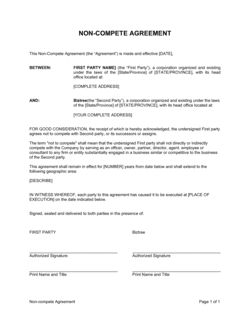
A non-compete agreement is a contractual restriction β€” typically in an employment contract β€” that prohibits an employee from working for competitors during or after employment. An outside employment policy is an internal HR policy that governs disclosure, approval, and performance conditions for any secondary work during employment. The policy manages the process; the non-compete creates the legal obligation.

vs Employee Code of Conduct

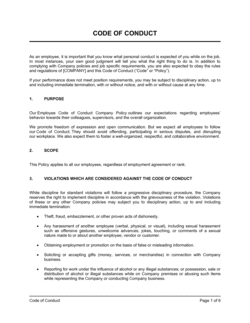
A code of conduct sets broad behavioral expectations β€” integrity, respect, and professional standards β€” across all aspects of employment. An outside employment policy provides the specific rules and procedures for one particular scenario: secondary work. The code of conduct typically references the outside employment policy rather than replacing it.

vs Remote Work Policy

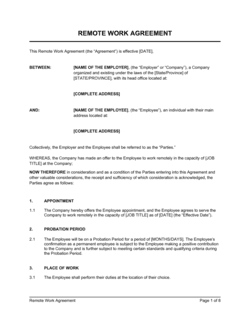
A remote work policy governs where and how employees perform their primary job duties β€” equipment, availability, security, and home-office expectations. An outside employment policy governs work an employee performs for a different employer or client. The two policies intersect for remote employees who are more likely to moonlight, and organizations with distributed teams should ensure both are current and cross-referenced.

Industry-specific considerations

Financial Services

FINRA Rule 3270 requires registered representatives to notify their firm before engaging in outside business activities β€” making a formal disclosure and approval workflow a regulatory compliance requirement, not just an HR best practice.

Technology / SaaS

Engineers and developers who freelance on the side risk inadvertently incorporating company code or proprietary algorithms into client work, making the IP cross-reference clause particularly critical.

Healthcare

Clinical staff working for multiple healthcare providers face patient confidentiality obligations under HIPAA at each employer, and secondary employment with a competing practice raises both conflict-of-interest and patient-solicitation concerns.

Professional Services

Consultants, accountants, and lawyers who moonlight for clients of their primary employer create direct fee diversion and confidentiality risks β€” the prohibited activities clause must explicitly cover work for any current or prospective client of the firm.

Template vs pro β€” what fits your needs?

PathBest forCostTime
Use the templateSMBs and startups building an HR policy framework for the first timeFree1–2 hours to customize and publish
Template + professional reviewCompanies in regulated industries or jurisdictions with strong off-duty conduct protections$300–$800 for an HR consultant or employment lawyer review2–5 business days
Custom draftedEnterprises operating across multiple jurisdictions or subject to sector-specific secondary employment regulations$1,500–$4,000 for a jurisdiction-by-jurisdiction employment law review2–4 weeks

Glossary

Outside Employment
Any paid or unpaid work performed for another employer, client, or self-owned business while the individual is employed by the organization.
Moonlighting
The informal term for holding a second job or freelance engagement alongside primary employment, typically performed outside regular working hours.
Conflict of Interest
A situation in which an employee's personal or financial interests β€” including those of a secondary employer β€” could improperly influence their judgment or actions in their primary role.
Disclosure Requirement
A formal obligation for an employee to inform their employer of any outside employment before accepting or continuing it.
Approval Process
A defined review by a manager, HR, or a designated committee that determines whether a disclosed outside engagement is permissible under the policy.
Competing Business
Any organization that sells products or services similar to those of the employer or targets the same customer base.
Material Interest
A financial stake β€” such as equity ownership, profit-sharing, or a commission arrangement β€” in an outside entity that could bias an employee's decisions.
Performance Standard
The minimum acceptable level of work quality, availability, and attendance required from an employee regardless of any outside commitments.
Non-Compete Clause
A contractual restriction, usually in an employment agreement, that limits an employee's ability to work for competitors during or after employment.
At-Will Employment
An employment relationship in which either party may end the arrangement at any time for any lawful reason β€” relevant because outside employment violations can constitute grounds for termination in at-will jurisdictions.

Part of your Business Operating System

This document is one of 3,000+ business & legal templates included in Business in a Box.

  • Fill-in-the-blanks β€” ready in minutes
  • 100% customizable Word document
  • Compatible with all office suites
  • Export to PDF and share electronically

Create your document in 3 simple steps.

From template to signed document β€” all inside one Business Operating System.
1
Download or open template

Access over 3,000+ business and legal templates for any business task, project or initiative.

2
Edit and fill in the blanks with AI

Customize your ready-made business document template and save it in the cloud.

3
Save, Share, Send, Sign

Share your files and folders with your team. Create a space of seamless collaboration.

Save time, save money, and create top-quality documents.

β˜…β˜…β˜…β˜…β˜…

"Fantastic value! I'm not sure how I'd do without it. It's worth its weight in gold and paid back for itself many times."

Managing Director Β· Mall Farm
Robert Whalley
Managing Director, Mall Farm Proprietary Limited
β˜…β˜…β˜…β˜…β˜…

"I have been using Business in a Box for years. It has been the most useful source of templates I have encountered. I recommend it to anyone."

Business Owner Β· 4+ years
Dr Michael John Freestone
Business Owner
β˜…β˜…β˜…β˜…β˜…

"It has been a life saver so many times I have lost count. Business in a Box has saved me so much time and as you know, time is money."

Owner Β· Upstate Web
David G. Moore Jr.
Owner, Upstate Web

Run your business with a system β€” not scattered tools

Stop downloading documents. Start operating with clarity. Business in a Box gives you the Business Operating System used by over 250,000 companies worldwide to structure, run, and grow their business.

Start freeΒ Β·Β No credit card required