1
Define the role type and reporting structure
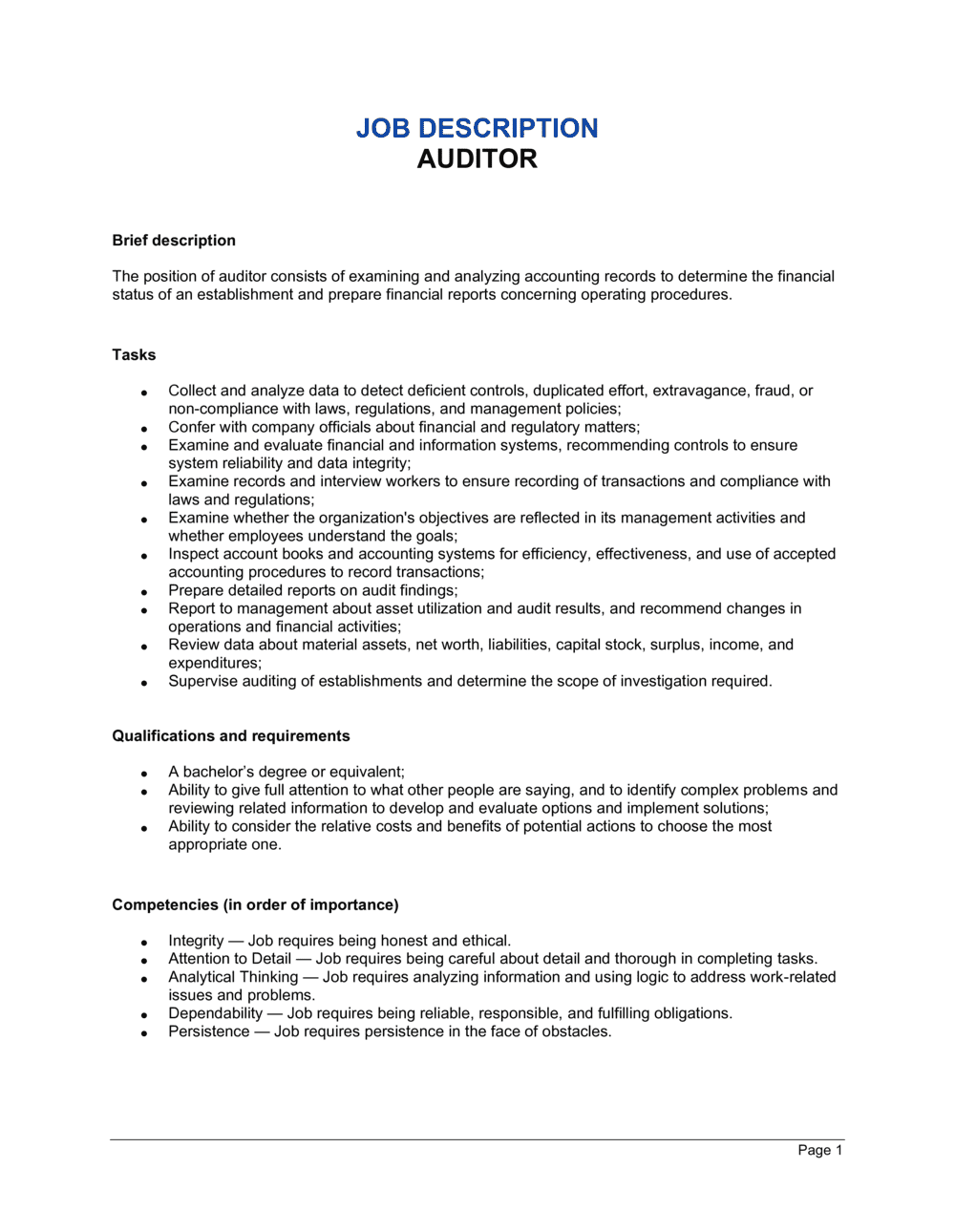
Decide whether the role is internal or external audit, the seniority level, and the dual reporting line — administrative (to CFO or VP Finance) and functional (to Audit Committee). Enter these clearly at the top of the template.
💡 The functional reporting line to the Audit Committee is non-negotiable for SOX-compliant internal audit roles — confirm this with your board before drafting.
2
Write the purpose and scope statement
Define the objective of the role in one to two sentences and specify which business units, processes, or geographies fall within the auditor's mandate. Use specific language rather than 'all company activities.'
💡 Scoping the role to specific risk areas (financial reporting, IT systems, operational compliance) attracts more qualified candidates than a catch-all description.
3
List duties with output-level specificity
For each duty, state the deliverable — not just the activity. 'Prepares audit reports with findings, root-cause analysis, and management recommendations' is more useful than 'conducts audits.'
💡 Limit the duties list to 8–12 items. More than 12 signals scope creep and will deter experienced auditors who recognize an overloaded role.
4
Set minimum and preferred qualifications separately
Separate hard requirements (e.g., bachelor's degree, 3 years of audit experience) from preferred qualifications (e.g., CIA certification, SAP proficiency). Conflating the two either over-filters or under-filters the applicant pool.
💡 Check current labor market data for your geography before setting certification requirements — demanding a CIA for a role paying below the median CIA salary will result in a long vacancy.
5
Include the independence and conflict of interest clause
State the independence standard explicitly and specify the disclosure obligation — what the auditor must report, to whom, and within what timeframe. Reference the organization's existing code of ethics or auditor independence policy.
💡 If your organization is publicly traded or preparing for a public offering, have legal counsel confirm this clause aligns with SEC and PCAOB independence requirements before posting.
6
Add measurable performance standards
Include three to five KPIs tied to audit plan completion rate, report turnaround time, and finding remediation rate. Reference the IIA International Standards as the professional benchmark.
💡 Make the KPIs achievable in Year 1 — setting a 95% audit plan completion target for a new hire building the function from scratch sets them up to fail in their first review cycle.
7
Review compensation band and FLSA classification
Confirm the salary band reflects current market rates for the role's seniority and geography. Verify FLSA exempt status applies — most professional auditors qualify, but hourly or junior roles may not.
💡 Pull compensation data from at least two sources (e.g., Robert Half Salary Guide and IIA salary survey) before finalizing the band to ensure it is competitive and defensible.
8
Obtain signatures before the role is posted or filled
Have HR, the hiring manager, and legal or compliance sign off on the final job description before it goes live or is attached to an offer letter. File the signed version in the employee's personnel record upon hire.
💡 A countersigned job description acknowledged by the employee at onboarding reduces duty-scope disputes and supports performance management documentation down the line.