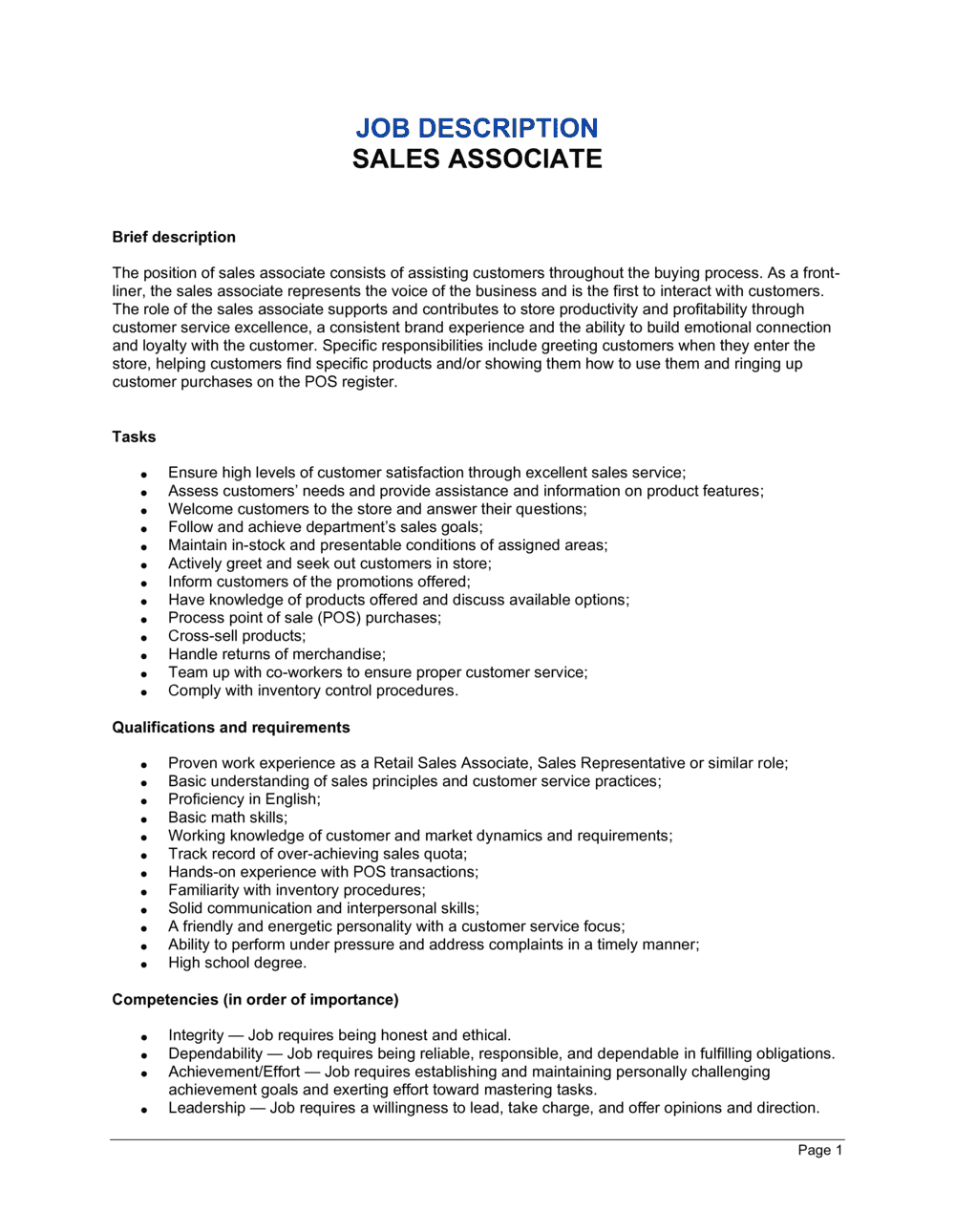
Sales Associate Job Description Template

Free Word download • Edit online • Save & share with Drive • Export to PDF

2 pages20–30 min to fillDifficulty: StandardSignature requiredLegal review recommended
Learn more ↓
FreeSales Associate Job Description Template

At a glance

What it is
A Sales Associate Job Description is a formal written document that defines the role, responsibilities, qualifications, compensation structure, and reporting relationships for a sales associate position. This free Word download gives you a structured, compliance-ready template you can edit online and export as PDF to post on job boards, attach to offer letters, or incorporate into employment contracts.
When you need it
Use it whenever you are hiring a new sales associate, backfilling a vacated role, or standardizing inconsistent job postings across departments or locations. It is also used when updating existing role definitions after a reorganization or compensation structure change.
What's inside
Job title and reporting structure, role summary, core duties and responsibilities, required and preferred qualifications, compensation range and commission structure, working hours and location, physical requirements, and equal opportunity and at-will employment statements.

What is a Sales Associate Job Description?

A Sales Associate Job Description is a formal written document that defines the scope, duties, qualifications, compensation structure, and working conditions of a sales associate position. It functions as the authoritative reference for recruiting, onboarding, performance management, and legal compliance throughout the employment lifecycle. Unlike a casual posting or informal role outline, a properly structured job description identifies essential functions under the ADA, documents FLSA classification, discloses compensation and commission terms, and includes the EEO and at-will statements required for compliant external postings. When signed by both the employee and the hiring manager before day one, it becomes a documented record of agreed expectations enforceable in performance and disciplinary proceedings.

Why You Need This Document

Operating without a documented sales associate job description creates risk on multiple fronts simultaneously. Without a formal duties list that identifies essential functions, defending an ADA accommodation denial or a performance-based termination becomes significantly harder — courts and the EEOC look first at what the job description says the role requires. Without a clear FLSA classification and compensation disclosure, overtime misclassification claims gain credibility and back-pay exposure grows. Without separate required and preferred qualification lists, every hiring decision becomes harder to justify if a rejected candidate files a discrimination complaint. And without a signed acknowledgment, an associate who misses quota can credibly claim they were never told what the target was. This template gives you a compliance-ready, recruiter-tested structure that closes all four gaps in under 30 minutes — and scales to every sales associate hire that follows.

Which variant fits your situation?

If your situation is…Use this template
Hiring an in-store retail sales associateRetail Sales Associate Job Description
Hiring a B2B inside sales representativeInside Sales Representative Job Description
Hiring a field or territory-based sales repOutside Sales Representative Job Description
Hiring a senior account executive or quota-carrying closerAccount Executive Job Description
Hiring an entry-level sales development representativeSales Development Representative Job Description
Defining a sales manager overseeing a team of associatesSales Manager Job Description
Formalizing terms after the role is filledEmployment Contract

Common mistakes to avoid

❌ Setting education requirements not justified by the role

Why it matters: Requiring a bachelor's degree for a role that does not genuinely need one can constitute disparate-impact discrimination under Title VII if the requirement disproportionately screens out protected groups without documented business necessity.

Fix: Replace degree requirements with skills- or experience-based criteria — e.g., '2 years of quota-carrying sales experience' — unless formal education is a verifiable job requirement.

❌ Omitting FLSA classification from the compensation section

Why it matters: When an employee later disputes overtime eligibility, the absence of a documented exempt or non-exempt classification on the job description strengthens their claim and increases back-pay exposure.

Fix: Always state 'Exempt' or 'Non-Exempt under the FLSA' in the compensation section and confirm the classification against the applicable salary threshold and duties test.

❌ Failing to separate essential from non-essential functions

Why it matters: Without an explicit essential-functions list, employers face greater difficulty defending termination or denial of accommodation requests when a disability prevents performance of specific duties.

Fix: Review the duties list with the hiring manager and label each function as 'essential' or 'marginal' based on time spent, frequency, and whether the function can be redistributed.

❌ Combining required and preferred qualifications into one list

Why it matters: When a rejected applicant challenges a hiring decision, a combined list makes it impossible to demonstrate that a specific qualification was a genuine knockout criterion rather than a post-hoc justification.

Fix: Use two distinct labeled sections — 'Required Qualifications' and 'Preferred Qualifications' — and apply the required list as a consistent knockout filter throughout the hiring process.

❌ Not obtaining a signed acknowledgment before day one

Why it matters: Without a signed record, an associate can credibly claim they were unaware of specific sales quotas, schedule requirements, or duties — complicating performance management, termination, and any resulting claims.

Fix: Build the job description acknowledgment into the onboarding paperwork packet and collect signatures alongside the offer letter and employment contract before the start date.

❌ Publishing the job description externally without an EEO statement

Why it matters: All US federal contractors are legally required to include an EEO statement in job postings. For non-contractors, its omission signals potential compliance gaps and invites EEOC scrutiny.

Fix: Add a standard EEO statement to every external-facing version of the job description and confirm it covers all federally protected characteristics plus any state-specific additions applicable to your locations.

The 10 key clauses, explained

Job title and reporting structure

In plain language: States the official position title, the department it belongs to, who the associate reports to, and whether any direct reports exist.

Sample language
Position: Sales Associate | Department: Sales / Retail Operations | Reports to: [STORE MANAGER / SALES MANAGER NAME OR TITLE] | Direct reports: None

Common mistake: Using an informal or inconsistent title that differs from the payroll system or offer letter — this creates discrepancies in HRIS records and can complicate unemployment or workers' compensation claims.

Role summary

In plain language: A 2–4 sentence overview of the position's purpose, the products or services sold, the customer base, and the primary performance metric.

Sample language
The Sales Associate is responsible for driving revenue by engaging [TARGET CUSTOMER TYPE] customers, demonstrating [PRODUCT / SERVICE], and closing sales in accordance with [COMPANY NAME]'s quality and compliance standards. The role is measured primarily on [MONTHLY QUOTA / REVENUE TARGET / CONVERSION RATE].

Common mistake: Writing a role summary so generic it could apply to any sales role in any industry — vague summaries attract unqualified applicants and weaken the document's utility as a performance management reference.

Duties and responsibilities

In plain language: An itemized list of the core tasks the associate performs day-to-day, written with enough specificity to support performance reviews and disciplinary actions.

Sample language
Essential functions include: (a) greeting and qualifying customers within [X] minutes of entry; (b) achieving or exceeding a monthly sales quota of $[AMOUNT]; (c) maintaining product knowledge for [PRODUCT LINE]; (d) completing [CRM NAME] entries within 24 hours of each customer interaction.

Common mistake: Listing duties without identifying which are 'essential functions' under ADA — omitting this distinction makes it harder to defend terminations or deny accommodation requests based on inability to perform the role.

Required qualifications

In plain language: The minimum education, experience, certifications, and skills a candidate must have to be considered for the role.

Sample language
Minimum qualifications: High school diploma or GED required; [X] year(s) of customer-facing sales or retail experience; demonstrated ability to meet sales targets; proficiency with [CRM / POS SYSTEM]; valid [STATE] driver's license if travel required.

Common mistake: Setting education requirements — such as a bachelor's degree — that are not genuinely necessary for the role. This can constitute disparate-impact discrimination under Title VII if the requirement disproportionately screens out protected groups without a documented business justification.

Preferred qualifications

In plain language: Additional skills or experience that would strengthen a candidate's application but are not disqualifying if absent.

Sample language
Preferred: [X]+ years of experience in [INDUSTRY / PRODUCT CATEGORY]; bilingual in [LANGUAGE]; prior experience with Salesforce or [CRM NAME]; demonstrated track record of exceeding quota by 15% or more.

Common mistake: Conflating required and preferred qualifications into a single list — this makes it harder to justify hiring decisions and exposes the employer to discrimination claims when a 'preferred' item was treated as a knockout factor.

Compensation and commission structure

In plain language: States base pay (hourly or salaried), the commission formula, OTE at full quota, pay frequency, and the FLSA classification.

Sample language
Base compensation: $[AMOUNT]/hour or $[AMOUNT]/year (Non-Exempt / Exempt under FLSA). Commission: [X]% of net sales, paid [monthly/bi-weekly]. OTE at 100% quota: $[AMOUNT]. Pay cycle: [bi-weekly / semi-monthly].

Common mistake: Omitting FLSA classification from the job description — when the classification is later disputed, the absence of a documented intent makes reclassification and back-pay exposure worse.

Working hours, location, and travel requirements

In plain language: Specifies whether the role is full-time or part-time, in-office or remote, the expected weekly schedule, and any travel percentage.

Sample language
This is a full-time, on-site position at [LOCATION ADDRESS]. Standard hours are [DAYS], [START TIME]–[END TIME], with flexibility required during peak seasons. Travel: up to [X]% within [TERRITORY / REGION].

Common mistake: Listing hours as 'flexible' with no further definition — this creates ambiguity about overtime eligibility for non-exempt roles and invites disputes over scheduling expectations.

Physical requirements

In plain language: Describes the physical demands of the role — standing, lifting, walking — as required by ADA for roles with genuine physical components.

Sample language
The Sales Associate must be able to stand and walk for up to [X] hours per shift, lift and carry items weighing up to [X] lbs, and operate a point-of-sale terminal for extended periods. Reasonable accommodations may be made for qualified individuals with disabilities.

Common mistake: Inflating physical requirements beyond what the role actually demands — this can be used to exclude candidates with disabilities in a manner that violates the ADA or equivalent statutes.

EEO and at-will statement

In plain language: Affirms the employer's non-discrimination policy and, where applicable, confirms the at-will nature of the employment relationship.

Sample language
[COMPANY NAME] is an equal opportunity employer. All qualified applicants will receive consideration for employment without regard to race, color, religion, sex, national origin, disability, age, or any other characteristic protected by applicable law. Employment is at-will unless otherwise stated in a separate written agreement.

Common mistake: Omitting the EEO statement entirely from the job description used in external postings — this is legally required for federal contractors and expected practice for all US employers under EEOC guidance.

Acknowledgment and signature block

In plain language: A section for the employee to sign confirming they have read, understood, and agree to perform the described duties — creating a documented record at the start of employment.

Sample language
I acknowledge that I have received and reviewed this job description and understand the duties and expectations of the Sales Associate role. Employee signature: ________________________ | Date: [DATE] | Manager signature: ________________________ | Date: [DATE]

Common mistake: Using the job description as a substitute for an employment contract without a formal acknowledgment signature — without a signed record, employees can claim they were unaware of specific duties or quotas, complicating performance management and termination.

How to fill it out

  1. 1

    Enter the job title and confirm the reporting structure

    Input the exact job title as it will appear in your payroll and HRIS system. Confirm who the associate reports to by name and title, and note the department or cost center.

    💡 Align the title precisely with your compensation band matrix — a title mismatch between the job description and the offer letter is one of the most common HR audit findings.

  2. 2

    Write a specific role summary tied to a measurable outcome

    Draft 2–4 sentences that identify the products or services sold, the customer type, and the primary metric by which the role is evaluated. Avoid generic language.

    💡 If you can swap the company name out and the summary still reads correctly for a competitor, it is too generic — add at least one specific product, market, or metric.

  3. 3

    List duties and label essential functions

    Write 6–10 specific daily or weekly duties. Mark any that are truly essential to the role — those that cannot be redistributed to others or eliminated — as 'essential functions' for ADA compliance purposes.

    💡 Essential functions should represent the majority of the associate's working time. If a duty takes fewer than 5% of a typical week, it is likely marginal, not essential.

  4. 4

    Set required versus preferred qualifications separately

    List minimum qualifications the hiring team will enforce as knockouts — years of experience, specific certifications, language requirements — separately from preferred qualifications that would strengthen but not disqualify an applicant.

    💡 Before listing a degree requirement, confirm it is genuinely necessary for job performance. For most sales associate roles, demonstrated sales results outweigh educational credentials.

  5. 5

    Define the compensation and commission structure in full

    Enter base pay, commission rate and formula, OTE at full quota, pay frequency, and FLSA classification. If the commission plan has tiers or accelerators, summarize them here and reference the full commission plan document.

    💡 State OTE as a range rather than a single number if your quota varies by territory or product line — this avoids creating an implied guarantee.

  6. 6

    Specify hours, location, and travel requirements

    State whether the role is full-time or part-time, in-office or remote, the expected weekly schedule, and an approximate travel percentage if the role requires it.

    💡 For non-exempt hourly roles, avoid language that implies fixed hours without acknowledging overtime eligibility — it can undermine later wage-and-hour compliance.

  7. 7

    Add physical requirements if applicable

    For retail, warehouse, or field sales roles, document the genuine physical demands — standing duration, lifting weight, driving requirements — using observable, objective language.

    💡 Review with your HR or legal team to confirm physical requirements reflect what the role actually demands, not aspirational fitness standards.

  8. 8

    Obtain signatures before the associate begins work

    Have both the associate and the hiring manager sign and date the acknowledgment block before day one. File the signed copy in the employee's HR record.

    💡 Collect the signed job description at the same time as the signed employment contract and offer letter — bundling them in one onboarding packet improves completion rates.

Frequently asked questions

What is a sales associate job description?

A sales associate job description is a formal document that defines the duties, required qualifications, compensation structure, working conditions, and reporting relationships for a sales associate role. It serves as the basis for recruiting, performance evaluation, and, when signed by the employee, a documented record of role expectations. A well-drafted description also supports legal compliance under the ADA, FLSA, and equal employment opportunity laws.

What should a sales associate job description include?

At minimum: job title and reporting structure, a specific role summary, an itemized list of duties with essential functions identified, separate required and preferred qualifications, full compensation details including FLSA classification and commission structure, working hours and location, physical requirements where applicable, an EEO statement, and a signed acknowledgment block. Missing any of these creates compliance gaps or weakens the document's utility in performance management.

Is a job description a legally binding document?

A job description is generally not a contract on its own, but it becomes legally significant in several contexts. When signed by the employee, it creates a documented record of agreed duties and expectations. Courts and administrative agencies reference job descriptions in ADA accommodation disputes, FLSA classification challenges, and wrongful termination claims. Including an at-will statement and ensuring it does not contradict the employment contract reduces the risk of implied contract arguments.

Does a sales associate job description need to include a salary range?

In a growing number of US states and cities — including California, New York, Colorado, and Washington — employers are legally required to include a salary or compensation range in job postings. Even where not mandated, disclosing an OTE range typically improves applicant quality and reduces time spent on compensation mismatches. Always confirm the pay transparency laws applicable to the states where you are posting.

What is the difference between a job description and an employment contract?

A job description defines what the role entails — duties, qualifications, and compensation structure. An employment contract is the binding legal agreement governing the employment relationship — confidentiality, IP assignment, non-compete, termination, and severance. The job description is typically attached to or incorporated into the employment contract as a schedule, but it does not replace the contract's legal protections.

How often should a sales associate job description be updated?

Review and update the job description any time the role materially changes — new product lines added, compensation structure revised, reporting relationship changed, or territory expanded. An annual review aligned to performance cycle planning is standard practice. Using an outdated description as the basis for performance reviews or termination decisions creates risk when the written duties no longer reflect what the employee was actually doing.

Can a job description be used as evidence in an employment dispute?

Yes. Job descriptions are regularly introduced as exhibits in EEOC complaints, ADA accommodation disputes, overtime misclassification claims, and wrongful termination lawsuits. A signed acknowledgment strengthens the employer's position. Inconsistencies between the job description and actual duties, compensation paid, or the classification on payroll records can be used by the employee's counsel to demonstrate pretextual grounds for termination or discriminatory application of standards.

Do I need a separate job description for each sales associate location?

If duties, compensation structures, physical requirements, or applicable state laws differ materially between locations, separate descriptions are advisable. For example, a California-based sales associate job description should reflect California's pay transparency requirements, meal and rest break rules, and restrictions on commission clawbacks — which differ significantly from a Texas-based version of the same role.

What FLSA classification applies to most sales associates?

Most hourly retail or inside sales associates are classified as non-exempt under the FLSA and are entitled to overtime pay at 1.5 times their regular rate for hours over 40 per week. Outside sales representatives who primarily work away from the employer's place of business and whose primary duty is making sales may qualify for the outside sales exemption and be classified as exempt. Misclassification is one of the most frequently litigated wage-and-hour issues — confirm classification with an employment attorney if the role is borderline.

How this compares to alternatives

vs Employment Contract

A job description defines what the role involves — duties, qualifications, and compensation structure. An employment contract is the binding legal instrument governing the entire employment relationship, including IP assignment, confidentiality, non-compete restrictions, and termination obligations. The job description is typically attached as a schedule to the employment contract, not used in its place. Both are needed for a complete new-hire package.

vs Offer Letter

An offer letter confirms a specific candidate's compensation, start date, and role to secure their acceptance. A job description defines the role generically for recruiting, compliance, and performance management purposes. The offer letter references the job description but does not duplicate it. Relying solely on an offer letter leaves the employer without documented essential functions, physical requirements, and EEO disclosures.

vs Sales Manager Job Description

A sales manager job description covers team leadership, forecasting, coaching, and quota-setting responsibilities in addition to individual selling duties. A sales associate job description focuses on individual contributor tasks — prospecting, demonstrating, and closing — with no team management scope. Using a manager template for an associate role creates misaligned expectations and potential FLSA classification issues if the associate is treated as exempt based on a supervisory title they do not hold.

vs Independent Contractor Agreement

An independent contractor agreement engages a self-employed sales professional for project- or commission-based work, with no employment entitlements — no benefits, no tax withholding, no overtime. A sales associate job description establishes an employee relationship with all associated statutory obligations. Misclassifying an employee as a contractor based on a job title alone, without an independent contractor agreement and proper economic-dependence analysis, triggers significant tax and labor law liability.

Industry-specific considerations

Retail

Floor coverage duties, POS system proficiency, loss-prevention awareness, and state-specific break and overtime requirements for hourly non-exempt associates.

Technology / SaaS

Product demo and discovery skills, CRM entry requirements, territory or named-account assignment, and quota structures tied to MRR or ARR metrics.

Financial Services

Licensing prerequisites (Series 6, Series 63, or state insurance licenses), suitability documentation obligations, and compensation disclosures required by FINRA and state regulators.

Manufacturing and Wholesale

Technical product knowledge requirements, distributor and channel partner management duties, and travel expectations tied to regional or national territory coverage.

Jurisdictional notes

United States

Pay transparency laws in California, Colorado, New York, and Washington require salary or OTE ranges in job postings — confirm requirements for every state where the role is posted. The FLSA governs exempt/non-exempt classification; most hourly sales associates are non-exempt and overtime-eligible. The ADA requires essential functions to be documented to support accommodation and termination decisions. Federal contractors must include an EEO statement in all job postings.

Canada

Job descriptions in Canada should reflect provincial employment standards minimums — hours of work, overtime thresholds, and vacation entitlements vary by province. Quebec requires that employment documents provided to provincially regulated workers be available in French. Commission clawback provisions must comply with provincial wage payment statutes, which in Ontario and BC restrict deductions from earned commissions. Human rights legislation in each province prohibits qualifications that create adverse-effect discrimination without a bona fide occupational requirement.

United Kingdom

UK employers must provide a written statement of employment particulars including job title and a brief description of duties on or before day one under the Employment Rights Act 1996. Job descriptions should avoid language that could constitute indirect discrimination under the Equality Act 2010 — including unjustified physical requirements or qualifications not genuinely necessary for the role. Commission terms must be clearly documented; uncapped commission schemes can create National Minimum Wage compliance issues if total pay falls below the NMW floor in a low-earnings period.

European Union

The EU Pay Transparency Directive (effective 2026 implementation in member states) requires employers to provide salary information before or during the interview stage and prohibits asking candidates about prior pay history. Job descriptions must not contain criteria that create indirect discrimination under the Equal Treatment Directives. GDPR applies to personal data collected during the recruitment process — job application data must be handled with a documented legal basis and retention limitation. Fixed commission structures must comply with member-state wage payment laws, several of which restrict or prohibit clawbacks of earned commission.

Template vs lawyer — what fits your deal?

PathBest forCostTime
Use the templateStandard sales associate hires at a single domestic location with straightforward compensationFree20–30 minutes
Template + legal reviewMulti-state postings, commission structures with clawback provisions, or roles requiring professional licensing$200–$500 for an employment attorney review1–3 days
Custom draftedExecutive-level sales roles with equity, heavily regulated industries (financial services, healthcare), or cross-border hiring$800–$2,500+1–2 weeks

Glossary

Job Description
A formal written document that outlines the duties, qualifications, compensation, and reporting structure of a specific position within an organization.
At-Will Employment
An employment arrangement in which either the employer or the employee may end the relationship at any time for any lawful reason, without advance notice — standard in most US states.
FLSA Classification
A designation under the US Fair Labor Standards Act indicating whether a role is exempt (salaried, no overtime) or non-exempt (hourly, overtime-eligible).
OTE (On-Target Earnings)
The total compensation a sales associate is expected to earn when hitting 100% of their quota — base salary plus full commission.
Commission Structure
The formula that determines variable pay for a sales role, such as a flat percentage of revenue, a tiered rate based on quota attainment, or a per-unit bonus.
Quota
A defined revenue, unit, or activity target assigned to a sales associate for a given period, typically monthly, quarterly, or annually.
Reporting Structure
The management hierarchy specifying who the sales associate reports to and, where applicable, who reports to them.
Essential Functions
The core duties of a role that a qualified employee must be able to perform, with or without reasonable accommodation — a legally significant designation under the ADA and equivalent statutes.
Equal Employment Opportunity (EEO) Statement
A required disclosure affirming that the employer does not discriminate on the basis of race, sex, religion, national origin, disability, age, or other protected characteristics.
Reasonable Accommodation
A modification to the work environment or job requirements that enables a qualified individual with a disability to perform essential functions, required under the ADA and equivalent laws.
Non-Exempt Employee
An employee entitled to overtime pay at 1.5 times their regular hourly rate for hours worked beyond 40 per week under the FLSA, typically applicable to hourly sales associates.

Part of your Business Operating System

This document is one of 3,000+ business & legal templates included in Business in a Box.

  • Fill-in-the-blanks — ready in minutes
  • 100% customizable Word document
  • Compatible with all office suites
  • Export to PDF and share electronically

Create your document in 3 simple steps.

From template to signed document — all inside one Business Operating System.
1
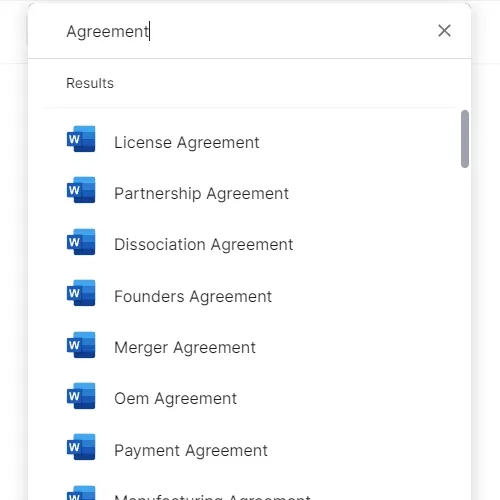
Download or open template

Access over 3,000+ business and legal templates for any business task, project or initiative.

2
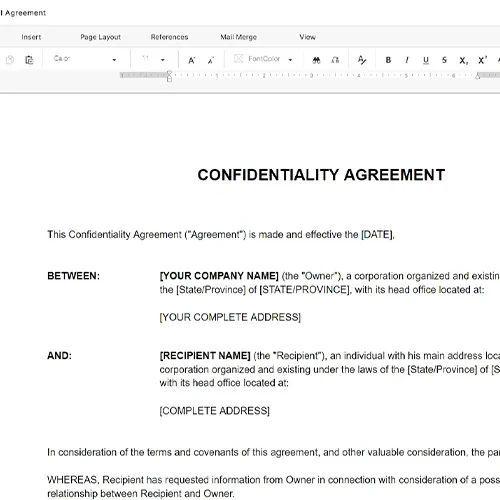
Edit and fill in the blanks with AI

Customize your ready-made business document template and save it in the cloud.

3
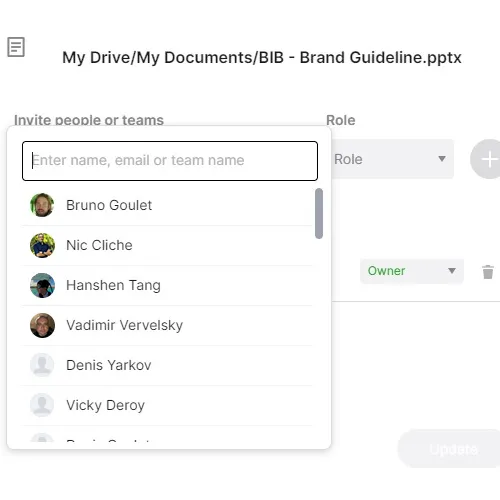
Save, Share, Send, Sign

Share your files and folders with your team. Create a space of seamless collaboration.

Save time, save money, and create top-quality documents.

★★★★★

"Fantastic value! I'm not sure how I'd do without it. It's worth its weight in gold and paid back for itself many times."

Managing Director · Mall Farm
Robert Whalley
Managing Director, Mall Farm Proprietary Limited
★★★★★

"I have been using Business in a Box for years. It has been the most useful source of templates I have encountered. I recommend it to anyone."

Business Owner · 4+ years
Dr Michael John Freestone
Business Owner
★★★★★

"It has been a life saver so many times I have lost count. Business in a Box has saved me so much time and as you know, time is money."

Owner · Upstate Web
David G. Moore Jr.
Owner, Upstate Web

Run your business with a system — not scattered tools

Stop downloading documents. Start operating with clarity. Business in a Box gives you the Business Operating System used by over 250,000 companies worldwide to structure, run, and grow their business.

Free Forever Plan · No credit card required