Amending Agreement Template

Free Word download β€’ Edit online β€’ Save & share with Drive β€’ Export to PDF

2 pagesβ€’25–30 min to fillβ€’Difficulty: Standardβ€’Signature requiredβ€’Legal review recommended
Learn more ↓
FreeAmending Agreement Template

At a glance

What it is
An Amending Agreement is a legally binding document that modifies one or more specific terms of an existing contract without replacing the entire original agreement. This free Word download lets you identify the original contract, describe exactly what is being changed, preserve all unaltered terms, and obtain signatures from all original parties β€” typically in two to four pages.
When you need it
Use it whenever both parties agree to change contract terms β€” adjusting a price, extending a deadline, expanding scope, or correcting an error β€” after the original agreement has already been signed and is in effect.
What's inside
Recitals identifying the original contract and parties, a precise description of each amendment, a confirmation that all other terms remain unchanged, a conflict-resolution clause establishing amendment priority, and execution blocks for all required signatories.

What is an Amending Agreement?

An Amending Agreement is a legally binding document that modifies one or more specific provisions of an existing contract without replacing the entire original agreement. Rather than renegotiating from scratch, the parties identify each term being changed, state the precise replacement language, and confirm that everything else in the original contract remains operative. It is read alongside the original agreement as a single, unified instrument. Amending agreements are used across virtually every contract type β€” from service agreements and employment contracts to loan documents and licensing arrangements β€” whenever agreed circumstances require a formal, documented change.

Why You Need This Document

Relying on email exchanges, verbal understandings, or informal notes to record contract changes exposes both parties to serious risk. Most commercial contracts include a written-amendment clause that renders oral modifications unenforceable β€” meaning an undocumented change may have no legal effect at all, leaving the original terms in force even when neither party intends to be bound by them. Without a signed amending agreement, a pricing adjustment can be disputed months later, a deadline extension can be treated as a waiver rather than a modification, and a scope addition can go unpaid because it was never formally incorporated. A properly executed amending agreement gives both parties a clear, enforceable record of exactly what changed, when it changed, and what remains unchanged β€” eliminating ambiguity before it becomes a dispute. This template provides the complete framework to document any contract modification in 30 to 60 minutes, with the precision and legal structure that protects both sides.

Which variant fits your situation?

If your situation is…Use this template
Changing a single clause in a service agreementAmending Agreement (Single Clause)
Extending the term of an existing contractContract Extension Agreement
Cancelling an existing contract entirely by mutual consentMutual Termination Agreement
Replacing an entire contract with an updated versionRestated Agreement (Amended and Restated)
Adding a new party to an existing agreementDeed of Adherence / Joinder Agreement
Temporarily suspending obligations under an existing contractForbearance Agreement
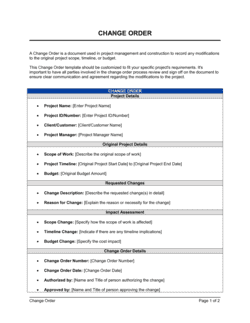
Documenting scope changes to a construction or project contractChange Order Agreement

Common mistakes to avoid

❌ Referencing the wrong agreement

Why it matters: If the recitals cite an incorrect date or title for the original contract, the amendment may be legally ineffective β€” it is modifying an agreement that does not match the one the parties actually intend to change.

Fix: Pull the original signed agreement before drafting and copy the exact title, parties, and execution date verbatim into the amendment's recitals.

❌ Changing terms without specifying the clause being replaced

Why it matters: Vague amendment language like 'the price is now $X' without referencing the specific clause creates a conflict between two enforceable provisions β€” courts may apply either, or find the amendment ineffective.

Fix: Always cite the exact section number and heading being modified and state the complete replacement text, so there is no question what the original said and what the new version says.

❌ Not obtaining signatures from all original parties

Why it matters: An amendment signed by only some of the original parties is generally not binding on the absent parties β€” their obligations remain governed by the unmodified original terms.

Fix: Identify every party on the original agreement's signature page and obtain an executed counterpart from each before treating the amendment as effective.

❌ Omitting the ratification clause

Why it matters: Without explicit confirmation that unamended terms remain in force, a party can argue β€” especially after a dispute arises β€” that the amendment implicitly replaced sections not specifically addressed.

Fix: Include a standard 'all other terms remain in full force and effect' clause in every amendment, regardless of how narrow the change appears.

❌ Backdating without documenting the retroactive intent

Why it matters: An amendment with a retroactive effective date that was not clearly agreed and documented can constitute fraudulent backdating in some jurisdictions, exposing both parties to legal and regulatory risk.

Fix: If a retroactive date is genuinely agreed, state it explicitly as the 'Amendment Effective Date,' record why it is retroactive in the recitals, and ensure both parties sign acknowledging the retroactive intent.

❌ Using an email exchange as the amendment instead of a signed document

Why it matters: Email exchanges may not satisfy the written-amendment requirement in many contracts and can fail to bind corporate entities when the emailer lacks formal signing authority.

Fix: Convert any agreed email changes into a formal amending agreement and obtain proper signatures β€” keep the email as supporting evidence of the negotiation history.

The 10 key clauses, explained

Preamble and recitals

In plain language: Identifies the full legal names of all parties, references the original agreement by its exact title and execution date, and states the background reason for the amendment.

Sample language
This Amending Agreement (this 'Amendment') is entered into as of [EFFECTIVE DATE] by and between [PARTY A LEGAL NAME] ('Company') and [PARTY B LEGAL NAME] ('Counterparty'). WHEREAS, the parties entered into that certain [ORIGINAL AGREEMENT TITLE] dated [ORIGINAL DATE] (the 'Original Agreement'); and WHEREAS, the parties wish to amend the Original Agreement on the terms set out herein.

Common mistake: Describing the original agreement by its common name rather than its exact registered title and date β€” creating ambiguity about which contract is being amended when multiple agreements exist between the same parties.

Defined terms and incorporation

In plain language: States that capitalized terms not defined in the amendment carry the meanings given in the original agreement, so the amendment doesn't need to redefine every concept.

Sample language
Capitalized terms used but not defined in this Amendment have the meanings given to them in the Original Agreement. The Original Agreement and this Amendment shall be read and construed as a single instrument.

Common mistake: Introducing new defined terms in the amendment without checking whether the same term is already defined differently in the original agreement, creating two conflicting definitions.

Amendment of specific provisions

In plain language: States precisely which section, clause, or definition is being changed, sets out the deleted text and the replacement text in unambiguous terms.

Sample language
Section [X.X] of the Original Agreement is hereby deleted in its entirety and replaced with the following: '[NEW TEXT WITH [PLACEHOLDERS] IN CAPS].'

Common mistake: Using language like 'the payment terms are now Net 45' without referencing the specific clause being replaced β€” leaving the original clause intact and creating a direct conflict between two enforceable provisions.

Consideration

In plain language: Records the mutual exchange of value that makes the amendment legally binding β€” typically the parties' mutual agreement to the revised terms, or a specific payment or concession.

Sample language
In consideration of the mutual covenants set out in this Amendment and for other good and valuable consideration, the receipt and sufficiency of which are hereby acknowledged, the parties agree as follows.

Common mistake: Omitting any consideration language on an amendment that only benefits one party β€” in some jurisdictions a one-sided amendment without fresh consideration may be unenforceable.

Effective date

In plain language: States the date on which the amendment comes into legal effect, which can be the signing date, a future date, or β€” where the parties agree β€” a retroactive date.

Sample language
This Amendment shall be effective as of [EFFECTIVE DATE] (the 'Amendment Effective Date'), regardless of the dates of signature below.

Common mistake: Leaving the effective date blank or writing 'as of the date last signed' without tracking which party signs last β€” creating uncertainty about when obligations under the new terms actually begin.

Ratification of original agreement

In plain language: Confirms that every term and condition of the original agreement not expressly changed by the amendment remains in full force and effect.

Sample language
Except as expressly amended hereby, all terms and conditions of the Original Agreement shall remain unchanged and in full force and effect and are hereby ratified and confirmed in their entirety.

Common mistake: Failing to include this clause entirely β€” creating ambiguity about whether the amendment implicitly supersedes provisions not mentioned, which can be argued in a dispute.

Priority and conflict resolution

In plain language: Provides that if any term of the amendment conflicts with a term in the original agreement, the amendment controls β€” preventing courts from applying the earlier language by default.

Sample language
In the event of any conflict or inconsistency between this Amendment and the Original Agreement, the terms of this Amendment shall prevail to the extent of such conflict.

Common mistake: Assuming priority without stating it. Courts in several jurisdictions apply the principle that the later-executed document controls, but express language eliminates any argument about which document governs.

Governing law

In plain language: Confirms that the same governing law as the original agreement applies to the amendment, ensuring a single legal framework governs the entire contract as amended.

Sample language
This Amendment shall be governed by and construed in accordance with the laws of [STATE / PROVINCE / COUNTRY], consistent with the governing law provision of the Original Agreement.

Common mistake: Omitting governing law from the amendment when the original agreement contained it β€” technically, the original clause should extend, but express confirmation eliminates any argument.

Counterparts and electronic signatures

In plain language: Permits each party to sign a separate copy of the amendment β€” by ink, scanned PDF, or e-signature platform β€” with each copy treated as an original and all copies together forming one agreement.

Sample language
This Amendment may be executed in counterparts, each of which shall be deemed an original and all of which together shall constitute one and the same instrument. Electronic signatures shall be deemed valid and binding to the same extent as original ink signatures.

Common mistake: Not including an electronic signature clause when parties are signing remotely β€” without it, a party could later challenge the validity of a DocuSign or similar execution.

Entire agreement

In plain language: States that the original agreement together with this amendment (and any prior amendments) represents the complete and final agreement between the parties on the subject matter.

Sample language
The Original Agreement, as amended by this Amendment, constitutes the entire agreement between the parties with respect to the subject matter hereof and supersedes all prior negotiations, representations, and understandings relating thereto.

Common mistake: Not updating the entire-agreement clause to reference all executed amendments by date β€” leaving open the argument that an earlier amendment superseded by this one is somehow still operative.

How to fill it out

  1. 1

    Identify the original agreement precisely

    Enter the exact title, parties' full legal names, and execution date of the contract you are amending. Pull the original document and confirm the title matches what is recorded on the signature page.

    πŸ’‘ If the original agreement has already been amended once, reference both the original and the prior amendment in the recitals to establish the full amendment chain.

  2. 2

    State the effective date explicitly

    Decide whether the amendment takes effect on the signing date, a future date, or retroactively. Enter that date in the effective date clause and confirm it is operationally feasible β€” retroactive amendments can affect invoicing, tax periods, and accrued obligations.

    πŸ’‘ For retroactive amendments, add a sentence confirming that any actions taken under the original terms between the retroactive date and today are deemed consistent with the amended terms.

  3. 3

    Pinpoint every clause being changed

    Open the original agreement and note the section number, heading, and exact text of every provision you are modifying. List each change as a separate numbered amendment item, quoting the deleted text and the replacement text.

    πŸ’‘ Use the format 'Section X.X is deleted and replaced with the following' rather than 'Section X.X is amended to read' β€” the former leaves no ambiguity about what the new text is.

  4. 4

    Confirm consideration is present

    Check whether the amendment benefits both parties mutually or only one. If only one party gains, document the specific consideration being provided β€” a payment, a concession, an extension of term β€” to support enforceability.

    πŸ’‘ Mutual amendments (both parties give up something) are inherently bilateral and typically satisfy consideration requirements. One-sided changes need explicit documentation of what the conceding party receives.

  5. 5

    Include the ratification and priority clauses

    Add the standard 'full force and effect' ratification language and the priority clause confirming this amendment controls over conflicting original terms. Both are one-sentence additions that close significant legal gaps.

    πŸ’‘ Do not assume these clauses will be implied. Courts in common-law jurisdictions have found ambiguity where they were absent and the original contract contained contrary terms.

  6. 6

    Verify signing authority for each party

    Confirm that each signatory has actual authority to bind their organization β€” check corporate resolutions, partnership agreements, or POA documents where the amendment involves a material financial commitment.

    πŸ’‘ For corporate signatories, the signature block should read 'Name, Title, on behalf of [ENTITY NAME]' β€” not just a personal signature β€” to make the organizational binding clear.

  7. 7

    Obtain signatures from all original parties

    Every party who signed the original agreement must sign the amendment for it to be effective. Missing a signatory leaves that party's obligations unchanged and may create an unenforceable partial amendment.

    πŸ’‘ Use Business in a Box eSign to timestamp execution and store the fully executed amendment alongside the original agreement in BIB Drive.

Frequently asked questions

What is an amending agreement?

An amending agreement is a signed legal document that modifies one or more specific terms of an existing contract while leaving the remainder of that contract intact and in force. It is used when parties want to change pricing, deadlines, scope, or other provisions without renegotiating or replacing the entire original agreement. A properly executed amending agreement becomes part of the original contract and is read alongside it as a single instrument.

When should I use an amending agreement instead of writing a new contract?

Use an amending agreement when the original contract is largely sound and only one or a few provisions need to change β€” for example, extending a deadline, adjusting a payment amount, or adding a new deliverable. Write a new contract (or an amended and restated agreement) when the changes are so extensive that the cumulative amendments would be longer or more complex than the original document, or when the parties want a clean single document to govern the relationship going forward.

Is an amending agreement legally binding?

Yes, an amending agreement is generally enforceable when it is signed by all original parties, supported by consideration (typically the mutual agreement to the new terms), and meets any formal requirements of the original contract β€” such as a written-amendment clause. Like any contract, enforceability also depends on jurisdiction-specific rules around capacity, consent, and legality of the subject matter.

Do all original parties need to sign the amendment?

Yes. An amendment is only binding on parties who have signed it. If one party to the original agreement does not sign, their obligations remain governed by the unmodified original terms. In multi-party agreements, all signatories from the original document must execute the amendment for it to take full effect across the entire agreement.

What is the difference between an amending agreement and a novation?

An amending agreement changes specific terms of an existing contract while keeping the original contract and all its parties in place. A novation substitutes a new party for an existing one β€” extinguishing the original party's obligations entirely β€” or replaces the original contract with a new one. Novation requires the consent of all parties, including the outgoing party, and creates a new legal relationship rather than modifying an existing one.

Does an amending agreement need to be notarized?

Notarization is not required for most commercial contract amendments in the US, Canada, the UK, or the EU. Exceptions include amendments to agreements that were originally notarized or registered β€” such as real estate contracts or certain secured financing documents. If the original agreement required notarization, the amendment typically should as well to maintain the same formal validity.

Can an amending agreement be retroactive?

Parties can agree to make an amendment retroactively effective, provided the retroactive date is clearly stated in the document, the retroactive intent is documented in the recitals, and all parties sign acknowledging the retroactive effective date. Retroactive amendments carry legal risk if they affect tax reporting periods, regulatory filings, or third-party rights β€” consult a lawyer before backdating any amendment with financial or regulatory consequences.

What happens if the amending agreement conflicts with the original contract?

A well-drafted amending agreement includes a priority clause stating that the amendment controls in the event of any conflict with the original agreement. Without this clause, courts in most common-law jurisdictions apply the principle that the more recent document prevails, but this is not universal. Including an express priority clause removes any ambiguity and protects against arguments that the original terms should apply.

How many times can a contract be amended?

There is no legal limit on the number of times a contract can be amended, provided each amendment is properly executed and supported by consideration. However, when a contract has been amended multiple times, it becomes difficult to read and administer. After three or four amendments, most practitioners recommend replacing all documents with a single amended and restated agreement that consolidates the original and all amendments into one clean, definitive version.

How this compares to alternatives

vs Amended and Restated Agreement

An amended and restated agreement replaces the original contract entirely with a single, consolidated document incorporating all prior changes. An amending agreement leaves the original intact and simply layers the new terms on top. When a contract has accumulated multiple amendments or the changes are extensive, an amended and restated version is cleaner and easier to administer.

vs Mutual Termination Agreement

A mutual termination agreement ends an existing contract by the consent of both parties, releasing each side from further obligations. An amending agreement keeps the contract alive and changes specific terms. Use a termination agreement when the parties want to exit the relationship entirely; use an amendment when they want to continue under revised terms.

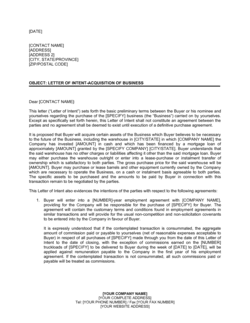
vs Letter of Intent

A letter of intent records the parties' intention to change or enter an arrangement but is generally non-binding on the substantive terms. An amending agreement is a fully executed, binding modification of an existing contract. An LOI may precede the drafting of an amendment but cannot substitute for it.

vs Change Order

A change order is a project-specific document used primarily in construction and professional services to authorize a discrete scope, price, or schedule change. An amending agreement is a broader legal instrument that formally modifies the underlying contract itself. For complex or recurring changes, an amending agreement provides stronger legal protection than a series of change orders.

Industry-specific considerations

Technology / SaaS

Amending subscription pricing, adding or removing licensed modules, adjusting SLA response-time commitments, or extending auto-renewal terms in software agreements.

Professional Services

Formalizing approved scope changes to consulting or agency retainer agreements, adjusting hourly rates at renewal, or extending project delivery deadlines.

Construction

Documenting owner-approved changes to project scope, price, or schedule under a general construction contract, often alongside a formal change order.

Financial Services

Modifying loan covenants, adjusting repayment schedules, or updating security provisions in credit agreements β€” typically requiring lender legal review and board approval.

Jurisdictional notes

United States

Most US commercial contracts contain a written-amendment clause requiring any modification to be in writing and signed by both parties β€” oral amendments are generally unenforceable where such a clause exists. Some states (including California and New York) recognize amendments by conduct in limited circumstances, but a signed document removes all doubt. Electronic signatures are broadly valid under ESIGN and UETA.

Canada

Amendment enforceability in Canada follows common-law consideration rules β€” a variation that benefits only one party requires fresh consideration to be binding. Courts in Ontario and British Columbia have voided one-sided amendments unsupported by consideration. Quebec's civil law framework (C.C.Q.) is more flexible on modification but still requires mutual consent. Electronic signatures are valid federally under PIPEDA and provincially under matching statutes.

United Kingdom

English contract law requires consideration for a simple contract amendment to be enforceable β€” a deed (executed as a deed with witness) can be used to avoid the consideration requirement for one-sided changes. No-oral-modification clauses ('NOM clauses') are enforceable in England and Wales following the MWB Business Exchange v. Rock Advertising Supreme Court decision (2018). The Electronic Communications Act 2000 and e-signature guidance from HM Land Registry govern electronic execution.

European Union

EU member states apply civil law rules to contract amendments β€” most require written form for commercially significant changes and do not impose the common-law consideration doctrine. The eIDAS Regulation provides a harmonized framework for electronic signatures across member states, with qualified electronic signatures carrying the highest legal weight. Amendments to consumer contracts may be subject to mandatory consumer protection rules requiring advance notice and a right to terminate.

Template vs lawyer β€” what fits your deal?

PathBest forCostTime
Use the templateStandard commercial amendments β€” price, deadline, or scope changes β€” in straightforward two-party agreementsFree30–60 minutes
Template + legal reviewAmendments to agreements with significant financial exposure, restrictive covenants, or multi-party structures$200–$6001–3 days
Custom draftedAmendments to complex financing documents, regulated industry contracts, or cross-border agreements with multiple jurisdictions$800–$3,000+1–2 weeks

Glossary

Amending Agreement
A signed document that changes one or more terms of an existing contract while leaving the rest of that contract intact and in force.
Original Agreement
The primary contract that the amending agreement modifies, identified by its title, parties, and execution date.
Recitals
Introductory background statements β€” often beginning with 'Whereas' β€” that identify the parties, the original contract, and the reason for the amendment.
Entire Agreement Clause
A provision stating that the written contract (including all amendments) represents the complete agreement between the parties, superseding prior oral and written understandings.
Consideration
Something of value exchanged by each party to make a contract legally binding β€” in an amendment, this is often the mutual agreement to the new terms or a specific payment.
In Full Force and Effect
Standard language confirming that all terms of the original contract not specifically amended remain operative and binding.
Priority Clause
A provision stating that, in the event of conflict between the amendment and the original agreement, the amendment controls.
Counterparts Clause
A provision allowing parties to sign separate physical or electronic copies of the same document, each of which is equally valid as an original.
Effective Date
The specific date on which the amendment takes legal effect, which may be the date of signing or a retroactive or future date agreed by the parties.
Novation
A separate legal mechanism that replaces an original contract entirely β€” or substitutes a new party for an existing one β€” rather than simply amending specific terms.
Material Amendment
A change significant enough to affect the fundamental obligations or economics of the contract, typically requiring fresh consideration to be enforceable.

Part of your Business Operating System

This document is one of 3,000+ business & legal templates included in Business in a Box.

  • Fill-in-the-blanks β€” ready in minutes
  • 100% customizable Word document
  • Compatible with all office suites
  • Export to PDF and share electronically

Create your document in 3 simple steps.

From template to signed document β€” all inside one Business Operating System.
1
Download or open template

Access over 3,000+ business and legal templates for any business task, project or initiative.

2
Edit and fill in the blanks with AI

Customize your ready-made business document template and save it in the cloud.

3
Save, Share, Send, Sign

Share your files and folders with your team. Create a space of seamless collaboration.

Save time, save money, and create top-quality documents.

β˜…β˜…β˜…β˜…β˜…

"Fantastic value! I'm not sure how I'd do without it. It's worth its weight in gold and paid back for itself many times."

Managing Director Β· Mall Farm
Robert Whalley
Managing Director, Mall Farm Proprietary Limited
β˜…β˜…β˜…β˜…β˜…

"I have been using Business in a Box for years. It has been the most useful source of templates I have encountered. I recommend it to anyone."

Business Owner Β· 4+ years
Dr Michael John Freestone
Business Owner
β˜…β˜…β˜…β˜…β˜…

"It has been a life saver so many times I have lost count. Business in a Box has saved me so much time and as you know, time is money."

Owner Β· Upstate Web
David G. Moore Jr.
Owner, Upstate Web

Run your business with a system β€” not scattered tools

Stop downloading documents. Start operating with clarity. Business in a Box gives you the Business Operating System used by over 250,000 companies worldwide to structure, run, and grow their business.

Start freeΒ Β·Β No credit card required