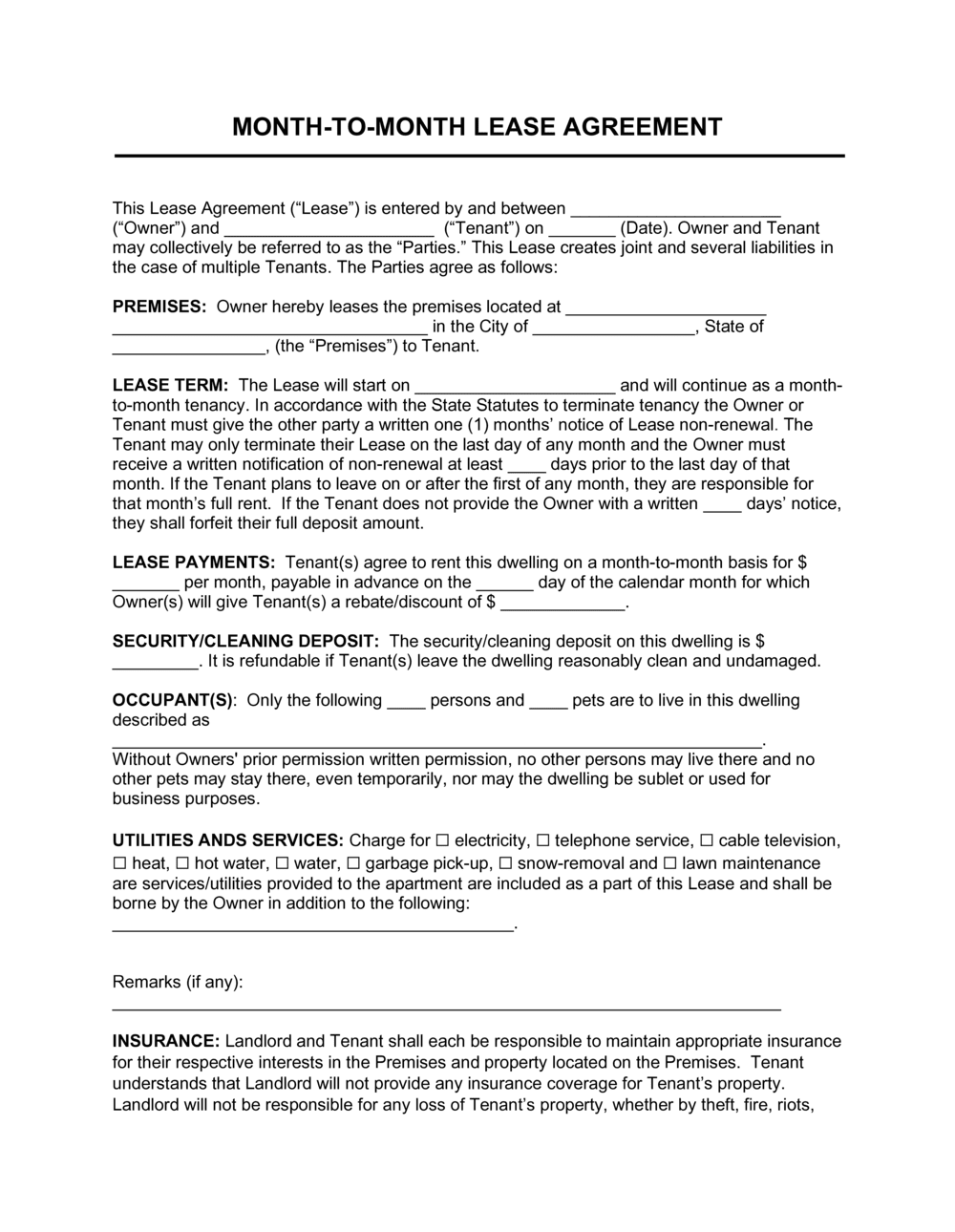
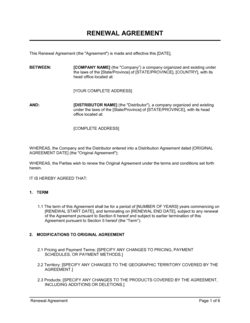
Month To Month Lease Agreement Template

Free Word download β€’ Edit online β€’ Save & share with Drive β€’ Export to PDF

3 pagesβ€’25–30 min to fillβ€’Difficulty: Complexβ€’Signature requiredβ€’Legal review recommended
Learn more ↓
FreeMonth To Month Lease Agreement Template

At a glance

What it is
A Month to Month Lease Agreement is a legally binding rental contract that renews automatically each calendar month until either party provides written notice to terminate. This free Word download covers rent amount, due date, security deposit, notice periods, maintenance responsibilities, and permitted use β€” giving landlords and tenants a flexible but enforceable framework without locking either party into a fixed multi-year term.
When you need it
Use it when a fixed-term lease has expired and you want to continue the tenancy on a rolling basis, when a tenant needs temporary housing before a permanent move, or when a landlord wants flexibility to reclaim the property with reasonable notice.
What's inside
Parties and property description, monthly rent and due date, security deposit terms, notice-to-terminate requirements, tenant and landlord obligations, permitted use and occupancy limits, pet and subletting policies, entry rights, and governing law.

What is a Month to Month Lease Agreement?

A Month to Month Lease Agreement is a legally binding rental contract between a landlord and a tenant that renews automatically at the end of each calendar month until either party provides written notice to terminate. Unlike a fixed-term lease, it carries no defined end date β€” the tenancy continues on a rolling basis, governed by the same enforceable terms covering rent, security deposit, maintenance obligations, permitted use, and landlord entry rights. The flexibility of the structure does not reduce the legal weight of the agreement: courts treat a properly executed month-to-month lease with the same authority as a 12-month contract for purposes of rent collection, eviction proceedings, and security deposit disputes.

Why You Need This Document

Operating a month-to-month tenancy without a written agreement is one of the most common and costly mistakes landlords make. Without a signed lease, the terms of the arrangement β€” rent amount, notice period, late fees, deposit conditions β€” default entirely to state or provincial statutory minimums, which are almost always less favorable to the landlord and frequently ambiguous. A missing notice-period clause can make it impossible to terminate a tenancy without litigation; an absent security deposit provision removes your ability to withhold funds for documented damage. For tenants, an undocumented tenancy leaves rent increases, entry rights, and maintenance obligations entirely at the landlord's discretion with no written record to contest. This template gives both parties a clear, jurisdiction-aware starting point β€” covering every material term from commencement through termination β€” so that the flexibility of a month-to-month arrangement is built on a legally solid foundation rather than a handshake.

Which variant fits your situation?

If your situation is…Use this template
Renting a residential unit for a fixed 12-month termStandard Residential Lease Agreement
Renting a commercial office, retail, or warehouse spaceCommercial Lease Agreement
Renting a furnished or unfurnished room within the landlord's primary residenceRoom Rental Agreement
Subleasing a unit from an existing tenantSublease Agreement
Leasing land without permanent structuresLand Lease Agreement
Extending a fixed-term lease without drafting a new full agreementLease Renewal Agreement
Documenting a short-term vacation or holiday rentalShort-Term Rental Agreement

Common mistakes to avoid

❌ Setting a notice period shorter than the statutory minimum

Why it matters: If the lease requires 20 days but state law requires 30, the statutory minimum automatically governs β€” a landlord who acts on the shorter period risks a wrongful eviction claim and potential damages.

Fix: Look up the notice-to-terminate requirement for the specific state or province before completing the template, then set the contractual period at or above that floor.

❌ Collecting a security deposit above the statutory cap

Why it matters: Most US states cap residential deposits at 1–2 months' rent; collecting more exposes the landlord to statutory penalties of two to three times the excess β€” plus attorney fees in some states.

Fix: Verify the maximum allowable deposit for the property's jurisdiction before move-in and document the amount collected and its deposit location in writing.

❌ Omitting a rent-increase notice clause

Why it matters: Without it, any rent increase is procedurally ambiguous β€” and in rent-controlled cities, an increase without proper advance notice is void and may trigger a regulatory complaint.

Fix: Include a clause requiring at least 30 days' written notice of any rent change, and confirm that the amount complies with any applicable rent control ordinance.

❌ Failing to name all adult occupants

Why it matters: An unnamed adult occupant may assert tenancy rights in some jurisdictions, making it significantly harder to regain possession of the property if the tenancy needs to be ended.

Fix: List every adult who will reside in the premises by full legal name, and include a clause requiring written landlord approval before any additional occupants move in.

❌ Using a landlord's trade name instead of the title-holding legal entity

Why it matters: If the property is held in an LLC and the lease names the individual owner personally, the liability protection of the LLC structure may be compromised in a dispute.

Fix: Confirm the entity that holds title on the property deed and use that exact legal name as the Landlord β€” including the full LLC or trust designation.

❌ Including an unrestricted landlord entry clause

Why it matters: Blanket entry rights violate a tenant's right to quiet enjoyment and are void in most jurisdictions; some states impose a civil penalty per unlawful entry regardless of what the lease states.

Fix: Specify a minimum advance notice period (24 hours at minimum, 48 recommended for showings) and limit entry to specific purposes β€” inspections, repairs, and showings β€” with a clear emergency exception.

The 10 key clauses, explained

Parties and property description

In plain language: Identifies the landlord and tenant as legal parties and precisely describes the rental property β€” address, unit number, and any included structures or parking.

Sample language
This Month to Month Lease Agreement is entered into on [DATE] between [LANDLORD FULL NAME / ENTITY] ('Landlord') and [TENANT FULL NAME(S)] ('Tenant'). The Landlord agrees to rent to the Tenant the property located at [FULL ADDRESS, UNIT NUMBER, CITY, STATE, ZIP] ('Premises').

Common mistake: Using a landlord's trade name or management company alias instead of the registered legal entity that holds title. If a dispute goes to court, the wrong named party can cause procedural dismissal.

Lease term and automatic renewal

In plain language: States that the tenancy begins on a specific date, runs month to month, and renews automatically each calendar month unless terminated by written notice.

Sample language
The tenancy shall commence on [START DATE] and shall continue on a month-to-month basis, renewing automatically on the first day of each calendar month unless either party provides written notice to terminate in accordance with Section [X].

Common mistake: Failing to specify the exact commencement date. Without it, the notice period is ambiguous β€” a 30-day notice served on the 15th of the month may or may not terminate on the last day of the following month, depending on the jurisdiction.

Rent amount and due date

In plain language: States the monthly rent, the date it is due, accepted payment methods, and the grace period and late fee if payment is not received on time.

Sample language
Tenant shall pay Landlord rent of $[AMOUNT] per month, due on the [1st / 15th] day of each calendar month. A grace period of [X] days applies. A late fee of $[AMOUNT] or [X]% of monthly rent shall be assessed on any payment received after the grace period.

Common mistake: Setting a late fee without checking the statutory cap in the applicable jurisdiction. Many states and provinces cap late fees at a specific dollar amount or percentage β€” exceeding the cap voids the clause.

Security deposit

In plain language: Specifies the deposit amount, the conditions under which it may be withheld, and the deadline and method for returning it after the tenancy ends.

Sample language
Tenant shall pay a security deposit of $[AMOUNT] upon execution of this Agreement. The deposit shall be held in a [segregated / interest-bearing] account. Landlord shall return the deposit within [X] days of Tenant vacating the Premises, less any deductions for unpaid rent or damage beyond normal wear and tear, accompanied by an itemized statement.

Common mistake: Collecting a deposit that exceeds the statutory maximum. Most US states cap residential security deposits at 1–2 months' rent; exceeding the cap exposes the landlord to statutory penalties of 2–3Γ— the excess amount.

Notice to terminate

In plain language: Sets the written notice period each party must provide to end the tenancy and specifies how and where notice must be delivered to be valid.

Sample language
Either party may terminate this Agreement by providing at least [30 / 60] days' written notice to the other party. Notice shall be delivered by [certified mail / email with read receipt / in-person delivery] to the address specified in Section [X].

Common mistake: Setting a notice period shorter than the statutory minimum. If the lease requires 20 days but state law requires 30, the statutory minimum governs β€” and a landlord who acts on the shorter period may be liable for wrongful eviction.

Rent increases

In plain language: Specifies the notice period required before the landlord may increase the rent and, where applicable, any statutory cap on the amount of increase.

Sample language
Landlord may increase the monthly rent by providing Tenant with at least [30 / 60] days' written notice prior to the effective date of the increase. In rent-controlled jurisdictions, any increase shall not exceed the allowable annual percentage established by [LOCAL AUTHORITY].

Common mistake: Omitting a rent-increase clause entirely and assuming notice can be given at any time. In rent-stabilized or rent-controlled cities, increases without proper notice and within permitted caps are void and can trigger regulatory complaints.

Tenant obligations and maintenance

In plain language: Lists the tenant's duties β€” keeping the premises clean, disposing of waste properly, reporting damage promptly, and not altering the property without consent.

Sample language
Tenant shall maintain the Premises in a clean and sanitary condition, promptly notify Landlord of any damage or required repairs, and shall not make alterations to the Premises without prior written consent. Tenant is responsible for [SPECIFIC UTILITIES / MINOR MAINTENANCE ITEMS].

Common mistake: Assigning all maintenance to the tenant, including structural repairs the landlord is legally obligated to perform. Clauses that purport to waive the landlord's implied warranty of habitability are unenforceable in most jurisdictions.

Permitted use and occupancy limits

In plain language: Restricts the premises to a specific use (typically residential), names the permitted occupants, and prohibits subletting without landlord consent.

Sample language
The Premises shall be used solely as a private residential dwelling. Permitted occupants are limited to [NAMES LISTED]. No subletting or assignment of this Agreement is permitted without prior written consent of the Landlord.

Common mistake: Failing to name all permitted occupants. An unnamed adult occupant can claim tenancy rights in some jurisdictions, complicating eviction proceedings if the tenancy later needs to be terminated.

Landlord entry rights

In plain language: States the conditions under which the landlord may enter the premises, the required notice period, and the exception for genuine emergencies.

Sample language
Landlord shall provide at least [24 / 48] hours' written notice prior to entering the Premises for inspections, repairs, or showings. In the event of an emergency threatening life or property, Landlord may enter without prior notice.

Common mistake: Using a blanket 'Landlord may enter at any time' clause. Courts consistently void unrestricted entry rights as a violation of the tenant's right to quiet enjoyment, and some states impose fines per unlawful entry.

Governing law and dispute resolution

In plain language: Specifies which jurisdiction's landlord-tenant law governs the agreement and sets out how disputes will be resolved β€” small claims court, mediation, or arbitration.

Sample language
This Agreement shall be governed by the laws of [STATE / PROVINCE / COUNTRY]. Any dispute arising under this Agreement shall first be submitted to non-binding mediation before either party initiates court proceedings, except for emergency injunctive relief.

Common mistake: Designating a governing law other than the state or province where the property is located. Courts routinely disregard such clauses in landlord-tenant matters β€” local mandatory law applies regardless of what the contract states.

How to fill it out

  1. 1

    Enter the legal names and property address

    Use the landlord's full registered legal name or entity name β€” whichever holds title to the property. Enter the tenant's name exactly as it appears on their government-issued ID. Include the full property address with unit number.

    πŸ’‘ If the property is held in an LLC or trust, use that entity's legal name as the Landlord β€” signing in your personal name when the LLC holds title can pierce the liability shield.

  2. 2

    Set the commencement date and confirm month-to-month structure

    Enter the exact date the tenancy begins. Confirm the agreement renews on the first of each month. If the tenant is moving in mid-month, specify a prorated rent amount for the partial first month.

    πŸ’‘ A mid-month start date simplifies the first payment but aligns all future due dates to the 1st β€” spell this out explicitly to avoid confusion at Month 2.

  3. 3

    Fill in the rent amount, due date, and late fee

    State the monthly rent in figures and words, the due date (typically the 1st), an acceptable grace period (3–5 days is standard), and the late fee. Check the statutory cap in the property's jurisdiction before entering the fee amount.

    πŸ’‘ Specifying both a dollar figure and a percentage for the late fee (whichever is less) keeps the clause enforceable even if one component is later challenged.

  4. 4

    Set the security deposit amount and return deadline

    Enter the deposit amount β€” confirm it does not exceed the statutory maximum for the state or province. Specify the return deadline (21 days in California, 14 days in Ontario, for example) and the account type where it will be held.

    πŸ’‘ Some jurisdictions require the security deposit to be held in a dedicated escrow account and the account details disclosed to the tenant in writing at move-in.

  5. 5

    Define the notice-to-terminate period

    Set the written notice period required by both parties. Check the statutory minimum for the property's location β€” 30 days is common in most US states, but some require 60 days after 12 months of tenancy. Specify the permitted delivery methods.

    πŸ’‘ Requiring certified mail or email with read receipt creates a timestamped record that removes all ambiguity about when notice was received.

  6. 6

    List permitted occupants and use restrictions

    Name every adult who will occupy the premises. State that the property is for residential use only. Include your subletting and pet policy β€” or reference a separate addendum for each.

    πŸ’‘ Use a separate Pet Addendum rather than trying to cover pet terms in the main lease body β€” it keeps the agreement cleaner and is easier to update independently.

  7. 7

    Confirm landlord entry rights and notice requirements

    Enter the required advance notice period for non-emergency entry β€” 24 hours is the statutory minimum in most US states; 24 hours is also standard in Canada and the UK. State the emergency exception clearly.

    πŸ’‘ In California and some other states, 24-hour notice is presumed reasonable but 48 hours is safer for showings β€” check local statutes before reducing below 24.

  8. 8

    Sign before the tenancy begins and retain executed copies

    Both the landlord (or authorized property manager) and all named tenants must sign and date the agreement before move-in. Provide a fully executed copy to every signatory.

    πŸ’‘ Use BIB eSign to capture timestamped electronic signatures and automatically store the executed agreement in BIB Drive β€” eliminates the risk of lost paper copies in a dispute.

Frequently asked questions

What is a month to month lease agreement?

A month to month lease agreement is a rental contract that renews automatically each calendar month until either the landlord or tenant provides written notice to end it. It gives both parties flexibility that a fixed-term lease does not β€” the landlord can reclaim the property with proper notice, and the tenant can leave without breaking a long-term commitment. The agreement still governs rent, security deposit, maintenance obligations, and all other terms as fully as a standard annual lease.

How much notice is required to end a month to month lease?

In most US states, 30 days' written notice from either party is the statutory minimum. Some states β€” including California, Oregon, and Washington β€” require 60 days' notice from landlords when the tenant has lived in the property for more than one year. In Canada, notice periods vary by province but typically run 60 days. In England and Wales, landlords must serve a Section 21 notice with at least two months' notice. Always check the specific requirement for the property's location, as the statutory minimum overrides any shorter period in the lease.

Is a month to month lease legally binding?

Yes. A month to month lease agreement is a legally binding contract in the same way as a fixed-term lease. It creates enforceable obligations on both the landlord and tenant regarding rent, security deposit, notice periods, and property use. The only substantive difference from an annual lease is the automatic month-to-month renewal and the right to terminate with proper written notice rather than waiting for a defined end date.

Can a landlord raise the rent on a month to month lease?

Generally yes, but only with proper written notice β€” typically 30 days in most US states, and 60 days in some. In rent-controlled or rent-stabilized cities (including New York City, San Francisco, Los Angeles, and Washington D.C.), increases are capped at a percentage set annually by the local housing authority regardless of what the lease says. Outside rent-controlled areas, landlords can raise rent to market rate with proper notice, making the month-to-month structure particularly flexible for landlords managing properties in rising rental markets.

What is the difference between a month to month lease and a fixed-term lease?

A fixed-term lease runs for a defined period β€” typically 12 months β€” and cannot be ended early by either party without penalty except for specific cause. A month to month lease renews each month and can be ended at any time with proper written notice. Fixed-term leases provide rent certainty and occupancy stability; month-to-month arrangements offer flexibility at the cost of predictability. Many tenancies start as fixed-term and convert to month-to-month automatically when the initial term expires.

Can a landlord evict a tenant on a month to month lease?

Yes, but proper procedure must be followed. In most jurisdictions, the landlord must first serve a valid notice to terminate with the required notice period. If the tenant does not vacate by the termination date, the landlord must file for eviction through the court β€” they cannot change locks or remove belongings without a court order. In cities with just-cause eviction ordinances (including Portland, Seattle, and most of California), landlords must also state a legally recognized reason for terminating the tenancy even on a month-to-month basis.

Do I need a separate lease agreement if a fixed-term lease has already expired?

Technically, in many jurisdictions the tenancy automatically converts to month-to-month on the same terms when a fixed-term lease expires and both parties continue without a new agreement. However, executing a written month-to-month lease is strongly recommended β€” it confirms the new rent amount, updates any terms that have changed, and documents that both parties understand the tenancy is now rolling. Relying solely on an implied conversion creates ambiguity about current terms and notice requirements.

What should a month to month lease agreement include?

At minimum: full legal names of all parties and the property address, commencement date and confirmation of month-to-month renewal, monthly rent amount and due date, grace period and late fee, security deposit amount and return deadline, written notice period required to terminate, permitted occupants and use restrictions, subletting and pet policy, landlord entry rights with required notice, maintenance responsibilities, and governing law. Missing notice-period or security-deposit terms are the gaps most likely to create disputes.

Is a month to month lease a good idea for landlords?

It depends on the landlord's priorities. Month-to-month arrangements allow a landlord to respond quickly to market conditions β€” raising rent, transitioning the property to a long-term lease, or reclaiming the unit for renovation or sale β€” with just 30–60 days' notice. The trade-off is reduced occupancy certainty; a tenant can also leave on short notice, creating vacancy risk. For properties in high-demand markets or those actively listed for sale, month-to-month is often the better structure. For landlords prioritizing stable long-term income, a fixed-term lease is usually preferable.

How this compares to alternatives

vs Standard Residential Lease Agreement

A standard residential lease runs for a fixed term β€” typically 12 months β€” and locks both parties into the agreement for that period. A month-to-month lease renews automatically and can be ended with written notice, offering flexibility at the cost of occupancy certainty. Use a fixed-term lease when you want stable, long-term rental income; use a month-to-month agreement when flexibility matters more than predictability.

vs Commercial Lease Agreement

A commercial lease governs office, retail, or industrial space and typically runs 3–10 years with complex provisions covering CAM charges, tenant improvements, exclusivity clauses, and permitted business use. A month-to-month lease is simpler and shorter, suited for transitional commercial occupancy or small operators testing a location. For any commercial tenancy exceeding 12 months, a full commercial lease with legal review is appropriate.

vs Room Rental Agreement

A room rental agreement covers a single room within a larger dwelling, often where the landlord also lives on the premises. A month-to-month lease covers an entire self-contained rental unit and typically involves a landlord who does not reside there. The legal protections, notice requirements, and eviction procedures differ significantly between the two structures.

vs Lease Renewal Agreement

A lease renewal agreement extends an existing fixed-term lease for another defined period β€” typically 12 months β€” on updated terms. A month-to-month lease converts the tenancy to a rolling basis with no fixed end date. Use a renewal agreement when both parties want continued certainty for another year; use a month-to-month agreement when flexibility is the priority going forward.

Industry-specific considerations

Residential Real Estate

Post-lease conversion, transitional housing for relocating tenants, and rental properties listed for sale where a long-term occupant would hinder showings.

Commercial Real Estate

Short-term office or retail occupancy for startups and pop-up businesses testing a location before committing to a multi-year commercial lease.

Property Management

Portfolio-wide standardization of rolling tenancy documentation, with addendum libraries covering pets, parking, and furnished units.

Corporate Housing and Relocation

Documenting temporary housing placements for transferred employees, with corporate entities named as the tenant and expense reimbursement clauses addressed separately.

Jurisdictional notes

United States

Notice-to-terminate requirements vary by state β€” 30 days is standard, but California, Oregon, and Washington require 60 days from landlords after 12 months of tenancy. Security deposit caps range from 1 month (Massachusetts) to 3 months (Connecticut) of rent. Cities including New York, San Francisco, Los Angeles, Seattle, and Portland impose just-cause eviction requirements and rent control rules that apply to month-to-month tenancies regardless of what the lease states.

Canada

Residential tenancies are governed by provincial legislation β€” the Residential Tenancies Act in Ontario, the Residential Tenancy Act in BC, and equivalent statutes in other provinces. Notice periods for landlord-initiated termination are typically 60 days in most provinces. Rent increase rules are strict in Ontario and BC, with annual caps tied to the consumer price index. Quebec leases must be in French for provincially regulated residential properties.

United Kingdom

In England and Wales, month-to-month residential tenancies typically operate as Assured Shorthold Tenancies under the Housing Act 1988. Landlords must use a Section 21 notice (no-fault) with at least two months' notice, or a Section 8 notice (with cause). The Renters (Reform) Bill proposed abolishing Section 21 β€” check current law before relying on no-fault termination. Scotland and Northern Ireland operate under separate legislation with different notice requirements.

European Union

Landlord-tenant law varies significantly by member state with no unified EU framework. Germany (Mietrecht) provides strong tenant protections including just-cause eviction requirements and caps on rent increases. France requires a minimum one-month notice period for furnished rentals and three months for unfurnished. Spain and the Netherlands impose minimum lease durations for residential property that may effectively limit true month-to-month arrangements. GDPR applies to any personal data collected from tenants during the tenancy.

Template vs lawyer β€” what fits your deal?

PathBest forCostTime
Use the templateLandlords renting residential units in straightforward single-state markets without rent controlFree15–30 minutes
Template + legal reviewLandlords in rent-controlled cities, multi-unit portfolios, or jurisdictions with complex local ordinances$200–$500 for a local real estate attorney review2–5 business days
Custom draftedCommercial month-to-month arrangements, corporate housing programs, or properties subject to complex local housing regulations$800–$2,500+1–2 weeks

Glossary

Month to Month Tenancy
A rental arrangement that renews automatically each calendar month and can be ended by either party with proper written notice β€” typically 30 days.
Notice to Terminate
A written declaration by either the landlord or tenant stating their intent to end the tenancy, delivered the required number of days before the termination date.
Security Deposit
A sum collected by the landlord before move-in, held against damage beyond normal wear and tear, unpaid rent, or lease violations.
Holdover Tenancy
The situation that arises when a tenant remains in the property after a fixed-term lease expires without a new agreement β€” often automatically converting to a month-to-month tenancy under state or provincial law.
Rent Escalation Clause
A provision allowing the landlord to increase rent with proper notice β€” typically 30 days for month-to-month agreements β€” rather than waiting for a new lease term.
Permitted Use
Language restricting how the tenant may occupy the premises β€” residential use only, specific commercial activity, or prohibition on certain businesses or activities.
Landlord Entry Rights
The conditions under which a landlord may enter the leased premises, typically requiring 24–48 hours written notice except in genuine emergencies.
Normal Wear and Tear
Minor deterioration from ordinary daily use β€” scuffed paint, small nail holes, carpet pile compression β€” for which a landlord generally cannot charge the tenant or deduct from the security deposit.
Subletting
When an existing tenant leases some or all of the rental unit to a third party, usually requiring explicit landlord consent under the lease terms.
Joint and Several Liability
A clause making each co-tenant individually responsible for the full rent obligation β€” so a landlord can pursue any one tenant for the entire amount owed.
Lease Addendum
A separate document attached to the main lease that modifies or supplements specific terms β€” such as a pet addendum, parking addendum, or COVID-19 disclosure.

Part of your Business Operating System

This document is one of 3,000+ business & legal templates included in Business in a Box.

  • Fill-in-the-blanks β€” ready in minutes
  • 100% customizable Word document
  • Compatible with all office suites
  • Export to PDF and share electronically

Create your document in 3 simple steps.

From template to signed document β€” all inside one Business Operating System.
1
Download or open template

Access over 3,000+ business and legal templates for any business task, project or initiative.

2
Edit and fill in the blanks with AI

Customize your ready-made business document template and save it in the cloud.

3
Save, Share, Send, Sign

Share your files and folders with your team. Create a space of seamless collaboration.

Save time, save money, and create top-quality documents.

β˜…β˜…β˜…β˜…β˜…

"Fantastic value! I'm not sure how I'd do without it. It's worth its weight in gold and paid back for itself many times."

Managing Director Β· Mall Farm
Robert Whalley
Managing Director, Mall Farm Proprietary Limited
β˜…β˜…β˜…β˜…β˜…

"I have been using Business in a Box for years. It has been the most useful source of templates I have encountered. I recommend it to anyone."

Business Owner Β· 4+ years
Dr Michael John Freestone
Business Owner
β˜…β˜…β˜…β˜…β˜…

"It has been a life saver so many times I have lost count. Business in a Box has saved me so much time and as you know, time is money."

Owner Β· Upstate Web
David G. Moore Jr.
Owner, Upstate Web

Run your business with a system β€” not scattered tools

Stop downloading documents. Start operating with clarity. Business in a Box gives you the Business Operating System used by over 250,000 companies worldwide to structure, run, and grow their business.

Free Forever PlanΒ Β·Β No credit card required