1
Identify the parties using full registered legal names
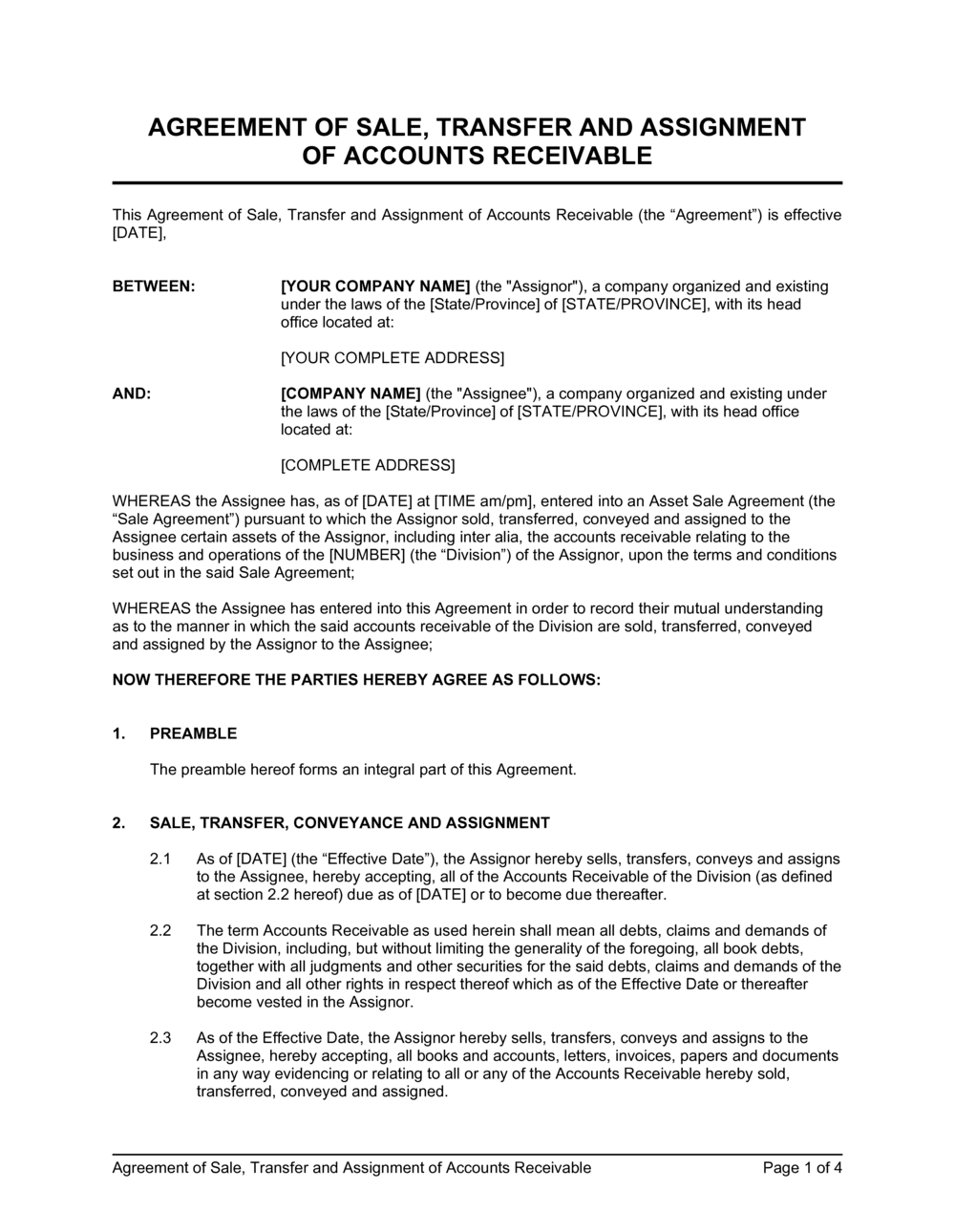
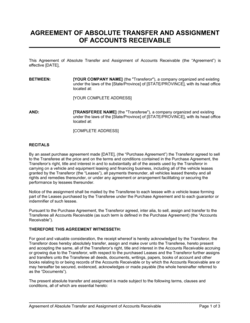
Enter the Assignor's and Assignee's complete registered legal entity names, states of incorporation, and principal business addresses. Confirm the Assignor is the entity that legally owns the receivables — not a subsidiary, affiliate, or trade name.
💡 Cross-reference your corporate registry filing and the invoice headers to confirm the Assignor name matches exactly.
2
Build the Schedule A receivables list
List every invoice being assigned: account debtor name, invoice number, issue date, original due date, and face amount. Include a column for any amounts already partially paid so the net outstanding is clear.
💡 Sort receivables by aging bucket (0–30, 31–60, 61–90 days) — Assignees price older receivables at steeper discounts, and a clear aging schedule prevents price disputes after execution.
3
Set the purchase price and discount rate
Agree on the discount applied to face value and calculate the total purchase price. State the payment method (wire transfer is standard), account details, and the number of business days after execution in which payment must be made.
💡 Specify the exact wire transfer details in the body of the agreement or in an attached schedule — not just in a side email — so the payment instruction is part of the binding document.
4
Complete the representations and warranties section
Review each warranty carefully against your actual receivables. If any invoice is already subject to a bank lien, UCC filing, or known dispute, disclose it in a schedule of exceptions rather than making an unqualified warranty.
💡 A single undisclosed prior lien can void the entire assignment in a UCC priority dispute — disclose proactively and negotiate around exceptions rather than hoping they go unnoticed.
5
Elect recourse or non-recourse treatment
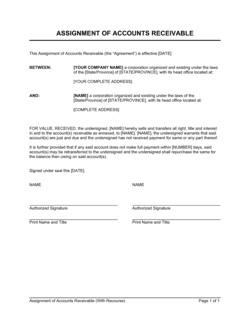
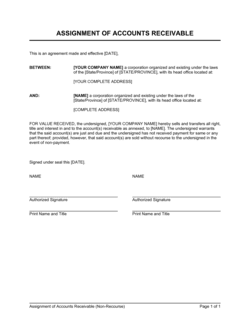
Decide whether the Assignor will buy back uncollected receivables after a defined number of days past due. Non-recourse deals carry higher discount rates; recourse deals are cheaper but leave the Assignor with contingent liability.
💡 If electing recourse, cap the repurchase window at 90 days past the original invoice due date — open-ended recourse obligations can survive for years if account debtors dispute invoices.
6
Prepare and send notice of assignment to account debtors
Draft the notice letter using the Exhibit B template, identify each account debtor, and send via a method that creates a delivery record — certified mail, courier with signature, or email with read receipt.
💡 Send the notice to the accounts-payable contact at the debtor, not just the project manager — AP departments route payments and are the ones who need to update their records.
7
File a UCC-1 financing statement (US transactions)
In the United States, the Assignee should file a UCC-1 financing statement in the Assignor's state of organization to perfect their interest in the assigned receivables against third-party creditors and a potential bankruptcy trustee.
💡 File the UCC-1 before or on the same day as execution — perfection priority is determined by filing date, not contract date.
8
Execute and retain copies
Both parties must sign — and in jurisdictions requiring witnesses or notarization, arrange that at signing. Store fully executed copies in a secure document system accessible to both parties' finance and legal teams.
💡 Use a timestamped e-signature platform so the execution date and sequence are unambiguous — critical if a bankruptcy trustee later challenges the transaction as a preference.