1
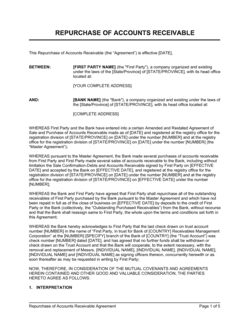
Identify and verify the legal entities
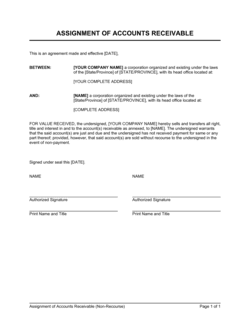
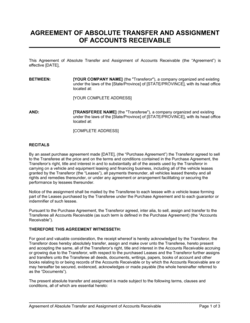
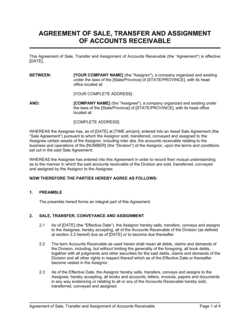
Enter the full registered legal names of the assignor and assignee — not trade names or abbreviations. Confirm entity type (LLC, corporation, partnership) and state or province of formation for each party.
💡 Run a business registry search before executing. If the assignor is a subsidiary, confirm the parent has not pledged the same receivables under a group-wide credit facility.
2
Compile the schedule of assigned receivables
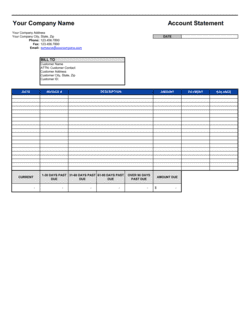
Prepare Schedule A listing every invoice being assigned with the debtor's full legal name, invoice number, invoice date, original due date, and face amount. Confirm the invoices are for goods delivered or services already rendered.
💡 Do not include invoices that are already past due beyond your lender's eligibility threshold — assigning ineligible receivables breaches the warranty clause and triggers immediate recourse.
3
Set the advance rate, reserve, and fees
Negotiate and enter the advance rate percentage, reserve percentage, discount fee rate and period, administration fee per invoice, and the interest rate on unpaid recourse obligations. State all amounts and rates in the body of the agreement.
💡 Model the effective annual cost of the facility before signing — a 3% fee per 30 days equates to a 36% annual rate. Compare to alternative financing sources before committing.
4
Define the recourse trigger and repurchase mechanics
Set the number of days after the original invoice due date at which an unpaid receivable triggers the repurchase obligation. Confirm the repurchase price formula — advance amount plus fees and accrued interest — is stated precisely.
💡 Set the recourse trigger at least 30 days beyond your longest standard payment term to avoid being called on receivables that are simply slow-paying rather than defaulted.
5
Conduct lien and security interest searches
Before executing, search UCC filings (US), PPSA registrations (Canada), or Companies House charges (UK) against the assignor to confirm no prior lender holds a blanket lien over receivables. File or register the new assignment promptly after execution.
💡 File a UCC-1 financing statement within one business day of execution to perfect the assignee's security interest before any competing creditor can file.
6
Prepare and send debtor notification letters
Draft notification letters to each debtor directing future payments to the assignee's account. Include the assignee's bank details, the invoice reference numbers, and the effective date of the assignment.
💡 Send notifications by certified mail or a method that generates a delivery record — in a dispute or insolvency, proof of notification determines priority of payment.
7
Execute the agreement before funding
Both parties must sign the agreement before any advance is disbursed. Confirm that the signatory for each party has authority to bind the entity — require a corporate resolution or authorization letter for any signing officer not named in organizational documents.
💡 Use a timestamped eSign platform to create an auditable execution record. A signed, dated agreement establishes the perfection date for the security interest in several jurisdictions.
8
Register the security interest and file required notices
File the appropriate financing statement in the correct jurisdiction immediately after execution. In the US, file a UCC-1 with the assignor's state of formation. In Canada, register under the applicable provincial PPSA. In the UK, register a charge at Companies House within 21 days.
💡 Failure to perfect the security interest by timely filing means the assignee may lose priority to a subsequent creditor or a bankruptcy trustee — perfection is not optional.