- Bill of Lading (BOL)
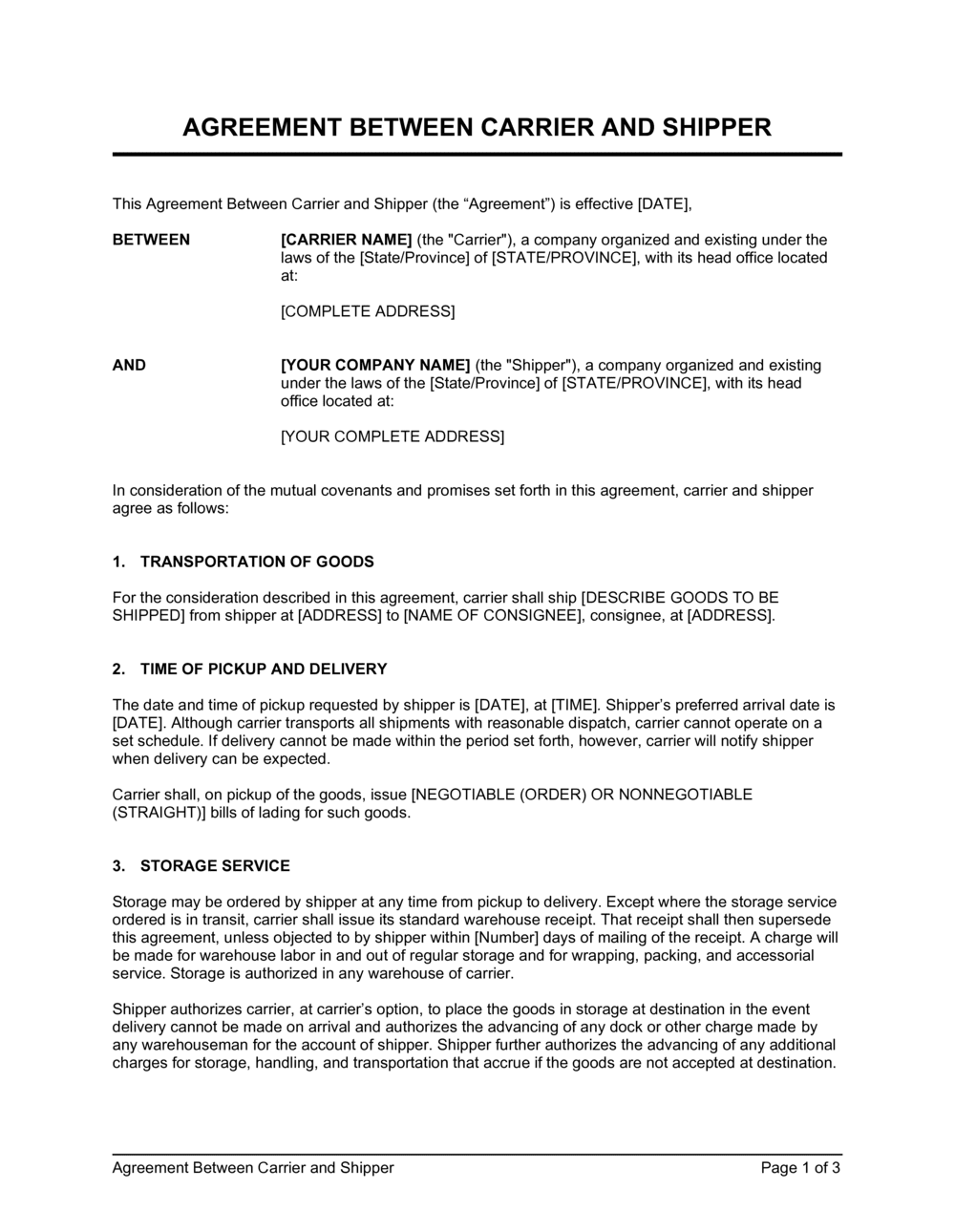
- A document issued by a carrier acknowledging receipt of cargo, specifying the terms of transport, and serving as a contract of carriage for a single shipment.
- Freight Rate
- The price charged by a carrier to transport a specified quantity of goods between two points, typically expressed per hundredweight, per pallet, or per container.
- Liability Limit
- The maximum monetary amount a carrier is obligated to pay for loss, damage, or delay to cargo, as set by contract or applicable law.
- CMR Convention
- The Convention on the Contract for the International Carriage of Goods by Road, which governs road freight across most of Europe and sets default carrier liability at 8.33 SDR per kilogram of gross weight.
- COGSA
- The Carriage of Goods by Sea Act, a US statute (and basis of the Hague-Visby Rules internationally) that limits ocean carrier liability to $500 per package unless a higher value is declared.
- Montreal Convention
- The international treaty governing air cargo liability, setting carrier liability for loss or damage at 22 SDR per kilogram unless a higher declared value applies.
- Special Drawing Right (SDR)
- An international monetary unit defined by the IMF, used as the basis for liability limits in CMR, the Montreal Convention, and the Hague-Visby Rules.
- Force Majeure
- A clause excusing a party from performance obligations caused by events outside their reasonable control, such as natural disasters, strikes, or government action.
- Subrogation
- The right of an insurer who has paid a cargo claim to step into the shipper's shoes and pursue recovery against the carrier or another responsible party.
- Accessorial Charges
- Fees beyond the base freight rate for additional services such as liftgate delivery, inside pickup, detention, or fuel surcharges.
- LTL / FTL
- Less-than-Truckload (LTL) refers to shipments that do not fill an entire trailer and are co-mingled with other shippers' freight; Full Truckload (FTL) means the shipper's cargo occupies the entire vehicle.