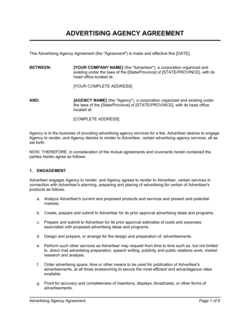
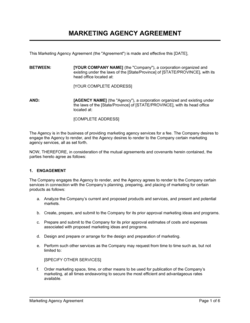
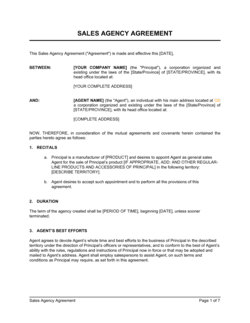
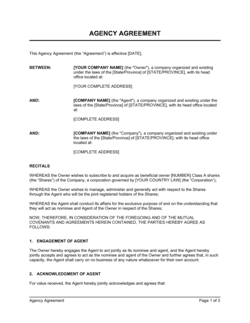
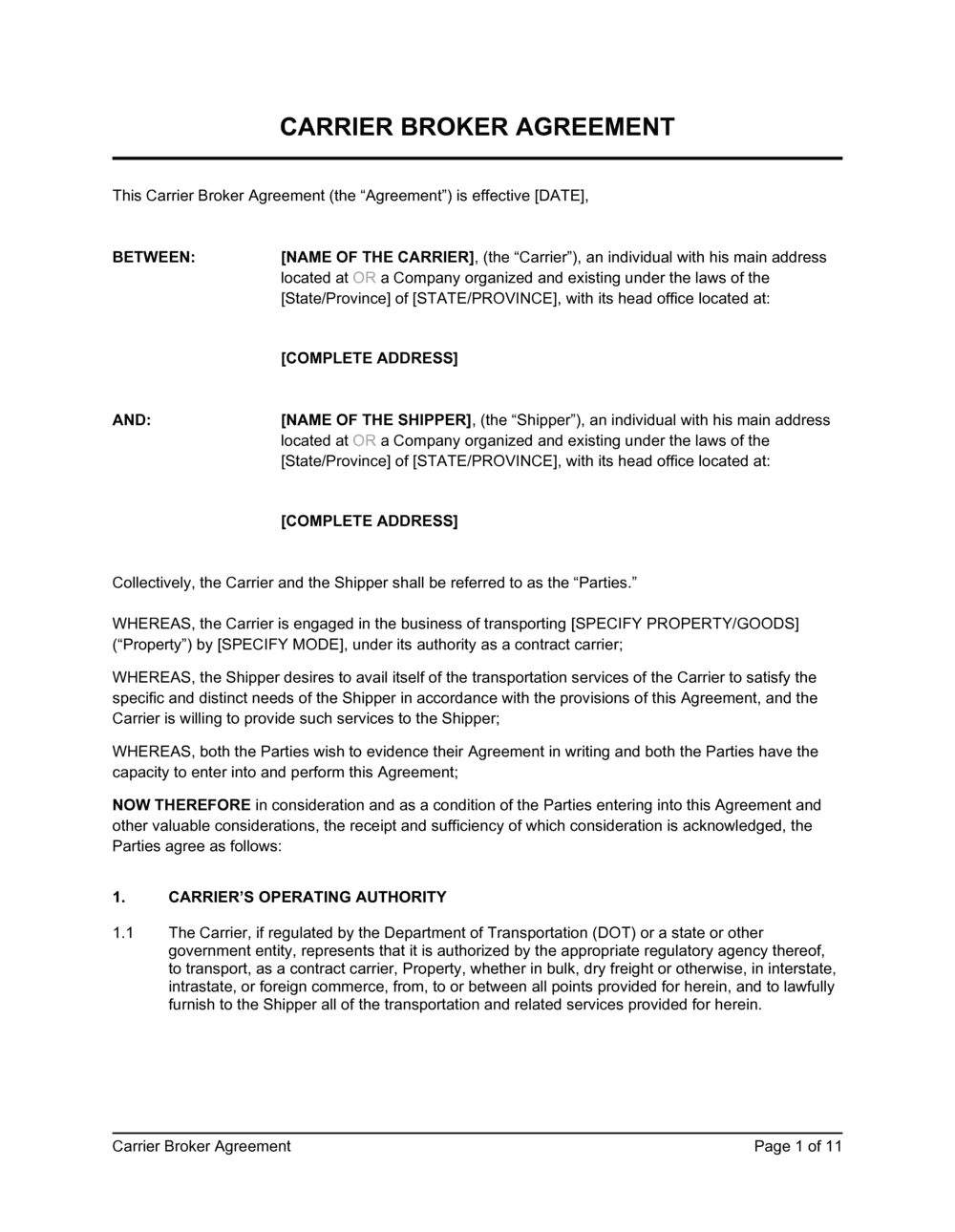
Broker Carrier Agreement Template

Free Word download • Edit online • Save & share with Drive • Export to PDF

11 pages30–45 min to fillDifficulty: ComplexSignature requiredLegal review recommended
Learn more ↓
FreeBroker Carrier Agreement Template

At a glance

What it is
A Broker Carrier Agreement is a legally binding contract between a licensed freight broker and a motor carrier that governs the terms under which the carrier will transport loads tendered by the broker on behalf of shippers. This free Word download covers rates, payment terms, cargo liability, insurance requirements, regulatory compliance, and dispute resolution in a single document you can edit online and export as PDF.
When you need it
Use it before a carrier hauls any load you have tendered as a broker — the agreement should be signed once and kept on file, covering all future loads between the two parties unless terms change. It is also required by many shippers as part of their carrier vetting process.
What's inside
Identification of broker and carrier with MC and DOT numbers, rate and payment terms, cargo insurance minimums, liability allocation, regulatory compliance obligations, prohibited practices, indemnification, and governing law with dispute resolution procedures.

What is a Broker Carrier Agreement?

A Broker Carrier Agreement is a legally binding master contract between a licensed freight broker and a motor carrier that establishes the terms and conditions under which the carrier will transport freight tendered by the broker on behalf of shippers. It identifies both parties by their FMCSA operating authority numbers, sets the rate confirmation process for individual loads, defines insurance minimums and cargo liability standards, imposes regulatory compliance obligations, and prohibits practices like double brokering that expose shippers and brokers to unvetted carriers. Unlike a rate confirmation — which governs a single shipment — a broker carrier agreement is signed once and governs the entire ongoing commercial relationship between the two parties.

Why You Need This Document

Operating without a signed broker carrier agreement leaves a freight broker exposed on every dimension that matters: a carrier can haul your shipper's freight with lapsed insurance and you have no contractual basis to hold them to your required minimums; a cargo claim turns into a credibility dispute rather than a contract enforcement exercise; a carrier can re-tender your load to an unknown third party with no consequence; and a carrier can approach your shipper directly the day after delivering their first load. Beyond protecting the broker, shippers increasingly require brokers to produce signed carrier agreements as part of their vendor compliance programs — without one on file, you can lose a shipper account regardless of your service record. This template gives freight brokers a professionally structured, FMCSA-aligned starting point that covers every material risk in the broker-carrier relationship, ready to customize and execute before the first load is dispatched.

Which variant fits your situation?

If your situation is…Use this template
One-time spot load with a carrier not previously contractedSpot Rate Confirmation
Long-term dedicated lane arrangement with a single carrierTransportation Services Agreement
Engaging an owner-operator as an independent contractorIndependent Contractor Agreement
Shipper contracting directly with a carrier without a brokerFreight Transportation Agreement
Brokering international cross-border shipments into Canada or MexicoInternational Freight Broker Agreement
Warehouse or intermodal freight requiring a multi-modal contractIntermodal Transportation Agreement
Documenting a single shipment rate and pick-up instructionsRate Confirmation Sheet

Common mistakes to avoid

❌ Failing to verify active FMCSA authority before signing

Why it matters: A carrier whose operating authority has been revoked cannot legally haul freight. Any loads they move expose the broker to shipper liability and potential FMCSA penalties for using an unauthorized carrier.

Fix: Run a SAFER database check on the carrier's MC number at the time of signing and again before each first load. Flag any 'Conditional' or 'Unsatisfactory' safety ratings for review before approval.

❌ Omitting the double brokering prohibition and its consequences

Why it matters: Without an explicit prohibition and stated consequence, carriers have no contractual deterrent from re-tendering loads to unvetted third parties — exposing shippers and the broker to cargo loss with no insurance coverage.

Fix: Include a clause expressly prohibiting re-brokering and stating that any unauthorized re-brokering voids the carrier's right to compensation and constitutes a material breach entitling the broker to damages.

❌ Accepting a stale certificate of insurance

Why it matters: A COI from the onboarding date may not reflect the carrier's current coverage. Policies lapse, limits change, and cargo coverage can be reduced between onboarding and any given load.

Fix: Require an updated COI before the carrier's first load and implement an annual COI renewal requirement. For high-value shippers, pull a fresh COI at the time of each tender.

❌ Using a one-sided indemnification clause

Why it matters: Carriers increasingly review broker agreements closely; a clause that indemnifies only the broker without reciprocity causes carriers to reject the agreement or demand costly revisions before signing.

Fix: Draft a mutual indemnification clause — each party indemnifies the other for losses arising from their own negligence or breach. This is both fairer and faster to execute.

❌ No specific payment trigger document list

Why it matters: Vague payment terms like 'upon completion of services' create disputes about when the clock starts — and carriers often submit invoices before delivering a signed POD, creating accounting friction.

Fix: List every document required to trigger payment — signed POD, carrier invoice referencing the load number, and any accessorial documentation — so the payment clock has an unambiguous start date.

❌ Short or missing non-circumvention period

Why it matters: A 6-month non-circumvention window is rarely long enough to protect broker-shipper relationships. Carriers can legitimately wait it out and then approach the shipper directly.

Fix: Set the non-circumvention period at 18 to 24 months post-termination and tie it specifically to shippers introduced through the brokerage relationship, not all shippers the carrier has ever served.

The 10 key clauses, explained

Parties, operating authority, and recitals

In plain language: Identifies the broker and carrier by legal name, state of formation, FMCSA MC number, and DOT number, and states that both parties hold the required operating authority.

Sample language
This Broker Carrier Agreement ('Agreement') is entered into as of [DATE] between [BROKER LEGAL NAME], MC# [XXXXXX] ('Broker'), and [CARRIER LEGAL NAME], MC# [XXXXXX] / DOT# [XXXXXXX] ('Carrier').

Common mistake: Using a trade name instead of the registered legal entity. If the carrier's name on the agreement doesn't match their FMCSA authority, the insurance certificate and claim paperwork won't align, complicating any cargo claim.

Rates, charges, and rate confirmation

In plain language: States that compensation for each load is set in a load-specific rate confirmation issued by the broker, and that the rate confirmation incorporates the terms of this master agreement.

Sample language
Carrier shall be compensated for each shipment at the rate set forth in the Rate Confirmation Sheet issued by Broker for that load. Each Rate Confirmation is incorporated herein by reference and subject to the terms of this Agreement.

Common mistake: Embedding a fixed rate schedule in the master agreement rather than a rate confirmation process. Static rates become outdated and require contract amendments; a rate confirmation process keeps the master agreement evergreen.

Payment terms and invoicing

In plain language: Sets the payment cycle — typically Net 15 to Net 30 from delivery and receipt of required documents — and lists the documents the carrier must submit to trigger payment.

Sample language
Broker shall pay Carrier within [30] days of receipt of a signed Proof of Delivery, carrier invoice, and any other required documentation. Payments shall be made by [ACH / check] to the account designated by Carrier.

Common mistake: Not specifying which documents trigger the payment clock. Carriers that submit an invoice without a signed POD get indefinite payment delays because the clock never starts.

Insurance requirements

In plain language: Sets the minimum insurance coverage the carrier must maintain — typically $1M auto liability, $100K cargo, and $1M general liability — and requires the broker to be named as an additional insured or certificate holder.

Sample language
Carrier shall maintain at its own expense: (a) Commercial Auto Liability of not less than $1,000,000 per occurrence; (b) Cargo Insurance of not less than $100,000 per occurrence; (c) General Liability of not less than $1,000,000. Broker shall be named as a Certificate Holder on all policies.

Common mistake: Accepting a certificate of insurance without confirming coverage is active at the time of each load. Carrier policies can lapse between the signing date and a specific haul — a COI pull at load time catches this.

Cargo liability and claims

In plain language: Allocates liability for cargo loss, damage, or delay between the broker and carrier, establishes the claim notice and filing timeline, and references the Carmack Amendment as the governing standard.

Sample language
Carrier assumes full liability for cargo loss or damage while freight is in Carrier's custody, subject to the Carmack Amendment. Carrier must be notified of a claim within [9] months of delivery. Claims must be filed within [2] years of denial.

Common mistake: Including a per-pound liability cap without also specifying a minimum floor. Some carriers insert sub-Carmack caps that dramatically limit recovery — and shippers expect the broker's contract to hold the carrier to full Carmack standards.

Regulatory compliance

In plain language: Requires the carrier to maintain all federal and applicable state operating authority, comply with FMCSA hours-of-service rules, drug and alcohol testing requirements, and applicable hazmat regulations.

Sample language
Carrier shall at all times maintain valid FMCSA operating authority and comply with all applicable federal, state, and local laws, including 49 C.F.R. Parts 382 (drug and alcohol), 390–399 (safety), and 171–180 (hazardous materials) as applicable.

Common mistake: Referencing compliance obligations generically without citing the specific CFR parts. A vague 'comply with all laws' clause is difficult to enforce — specific regulatory citations give both parties clear benchmarks.

Prohibited practices

In plain language: Expressly prohibits double brokering, re-brokering, or sub-contracting the load to another carrier without the broker's prior written consent.

Sample language
Carrier shall not re-broker, subcontract, or assign any shipment tendered under this Agreement to any other carrier or party without prior written consent of Broker. Any unauthorized re-brokering constitutes a material breach and voids Carrier's right to compensation for that load.

Common mistake: Omitting the consequence of double brokering in the clause. Without a stated consequence — forfeiture of compensation and potential damages — carriers have little contractual deterrent against the practice.

Indemnification and hold harmless

In plain language: Each party agrees to indemnify and hold the other harmless from claims, damages, and liabilities arising from their own negligence, regulatory violations, or breach of this agreement.

Sample language
Carrier shall indemnify, defend, and hold harmless Broker and its principals from any claims, damages, losses, or expenses — including reasonable attorney's fees — arising out of Carrier's performance of services hereunder, to the extent caused by Carrier's negligence or breach. Broker's indemnification obligations are reciprocal.

Common mistake: Using a one-sided indemnification clause that only protects the broker. Carriers increasingly refuse to sign unilateral indemnification agreements — a mutual clause closes deals faster and is more defensible in litigation.

Confidentiality and non-circumvention

In plain language: Prohibits the carrier from using the broker's shipper identity to solicit freight directly and restricts both parties from disclosing the other's confidential business information.

Sample language
For a period of [18] months following the termination of this Agreement, Carrier shall not solicit or accept freight directly from any Shipper whose identity Carrier learned through Broker's tendered loads. Each party shall treat the other's business information as confidential.

Common mistake: Setting a non-circumvention period shorter than 12 months or omitting it entirely. A 6-month window is rarely long enough to protect the broker's shipper relationships — 18 to 24 months is the enforceable standard in most jurisdictions.

Term, termination, and governing law

In plain language: States the agreement's initial term, the notice required to terminate, survival of key obligations after termination, and the governing state law and dispute resolution mechanism.

Sample language
This Agreement shall remain in effect for one (1) year from the Effective Date and renew automatically unless terminated by either party with [30] days' written notice. Disputes shall be resolved by binding arbitration in [CITY, STATE]. This Agreement is governed by the laws of [STATE].

Common mistake: Choosing a governing law state with no connection to either party's operations. Some jurisdictions have carrier-friendly Carmack preemption interpretations that affect claim outcomes — choose the governing state deliberately.

How to fill it out

  1. 1

    Enter both parties' legal names and authority numbers

    Insert the broker's and carrier's full registered legal names, MC numbers, and DOT numbers. Verify both MC numbers are active in the FMCSA SAFER database before execution.

    💡 A carrier whose operating authority has been revoked or whose safety rating is 'Conditional' or 'Unsatisfactory' should not be approved — check SAFER at the time of signing, not just onboarding.

  2. 2

    Set up the rate confirmation process

    Reference a load-specific Rate Confirmation Sheet for all per-load pricing rather than embedding a rate schedule. Confirm the Rate Confirmation is incorporated by reference into the master agreement.

    💡 Include a clause stating that the carrier's acceptance of a load — by picking it up — constitutes acceptance of the Rate Confirmation, even without a separate signature.

  3. 3

    Define payment terms and required documents

    State the payment window in calendar days (Net 15 to Net 30 is typical), identify the specific documents that start the payment clock — signed POD, carrier invoice, and any accessorial backup — and specify the payment method.

    💡 Net 30 from receipt of a clean POD is the industry standard; carriers negotiating Net 7 or Quick Pay at a discount should have that mechanism spelled out here or in the rate confirmation.

  4. 4

    Specify insurance minimums and certificate requirements

    Enter the minimum auto liability, cargo, and general liability coverage amounts. Add any shipper-specific minimums you are contractually obligated to pass through. Require an updated COI before the carrier's first load.

    💡 For hazmat loads, auto liability minimums jump to $5M under federal regulations — add a conditional clause triggering higher minimums for hazmat tenders.

  5. 5

    Complete the cargo liability and claims section

    Confirm the Carmack Amendment applies as the liability standard. Set the claim notice period (9 months from delivery) and filing deadline (2 years from denial) consistent with federal Carmack timelines.

    💡 If your shippers carry their own shipper's interest cargo insurance, note that here — it simplifies claim handling and may reduce the carrier's exposure on high-value loads.

  6. 6

    Tailor the non-circumvention period and confidentiality scope

    Set the non-circumvention period at 18 to 24 months post-termination and define 'Confidential Information' to include shipper identities, rate schedules, and lane data learned through the brokerage relationship.

    💡 Courts are more likely to enforce a narrowly defined non-circumvention clause than a broad 'never contact any shipper we mentioned' restriction — limit it to shippers whose identity the carrier learned exclusively through your loads.

  7. 7

    Choose governing law and dispute resolution

    Select a governing state with a meaningful connection to your operations. Choose binding arbitration (AAA or JAMS) for faster resolution of freight disputes, or specify federal court for cargo claims governed by the Carmack Amendment.

    💡 Carmack Amendment claims are federal in nature — designate federal court jurisdiction for cargo claims specifically, while routing other contract disputes to arbitration.

  8. 8

    Obtain signatures before the first load is tendered

    Both parties must sign before the carrier hauls any load under this agreement. Collect and file the signed agreement alongside a current COI, W-9, and FMCSA authority printout in the carrier's onboarding file.

    💡 Use Business in a Box eSign to timestamp execution and store the executed agreement with the carrier's onboarding documents in BIB Drive.

Frequently asked questions

What is a broker carrier agreement?

A broker carrier agreement is a master contract between a licensed freight broker and a motor carrier establishing the terms under which the carrier will transport loads tendered by the broker. It covers compensation, insurance requirements, cargo liability, regulatory compliance, payment terms, and prohibited practices like double brokering. It is signed once and governs all future loads between the two parties unless the terms are amended.

Is a broker carrier agreement required by law?

Federal law does not explicitly mandate a written broker carrier agreement, but FMCSA regulations require freight brokers to maintain records of each transaction including carrier agreements. Many shippers contractually require their brokers to have signed agreements with every carrier in their network. As a practical matter, any broker operating without one exposes themselves to unenforceable insurance, payment, and liability terms.

What insurance minimums should a broker carrier agreement require?

At minimum, require $1,000,000 in commercial auto liability, $100,000 in cargo insurance, and $1,000,000 in general liability. For hazmat loads, federal regulations require auto liability of $1,000,000 to $5,000,000 depending on the material class. Some shippers — particularly large retailers — impose higher cargo minimums of $250,000 or more as a condition of their shipper agreements, which the broker should pass through to the carrier contract.

What is double brokering and why is it prohibited?

Double brokering occurs when a carrier accepts a load from a broker and then secretly re-tenders it to a different carrier without the originating broker's knowledge or consent. The shipper ends up with an unvetted carrier they never approved, cargo claims become nearly impossible to resolve because neither carrier's insurance acknowledges the load, and the broker faces shipper liability for a carrier they never actually dispatched. A well-drafted broker carrier agreement expressly prohibits the practice and voids the carrier's right to payment if they do it.

What is the Carmack Amendment and how does it affect cargo liability?

The Carmack Amendment is a federal law codified at 49 U.S.C. §14706 that governs carrier liability for loss or damage to freight moving in interstate commerce. Under Carmack, a carrier is liable for the actual loss or damage to the shipment unless it can prove one of five recognized defenses — act of God, act of public enemy, act of shipper, inherent vice of goods, or act of public authority. Broker carrier agreements typically reference Carmack as the liability standard and set claim notice and filing deadlines consistent with its requirements.

How long should a broker carrier agreement remain in effect?

Most broker carrier agreements are evergreen — they renew automatically on a one-year term unless either party provides written notice of termination, typically 30 days in advance. This structure avoids the administrative burden of annual re-signing while giving both parties an exit if the relationship sours. Key obligations — indemnification, confidentiality, non-circumvention, and pending cargo claims — should survive termination explicitly in the agreement.

What is the difference between a broker carrier agreement and a rate confirmation?

A broker carrier agreement is the master contract governing the overall relationship — insurance, liability, compliance, payment terms, and prohibited practices. A rate confirmation is a load-specific document issued for each individual shipment confirming the agreed rate, origin, destination, pick-up window, delivery deadline, and special handling instructions. The rate confirmation incorporates the master agreement by reference, so both documents together govern each haul.

Can a broker carrier agreement be used for international shipments?

A standard domestic broker carrier agreement is designed for US interstate commerce under FMCSA jurisdiction. Cross-border shipments into Canada or Mexico involve different regulatory frameworks — Transport Canada and the SCT respectively — and may require additional insurance endorsements, customs broker references, and jurisdiction-specific liability clauses. Consider a separate international freight agreement or addendum for cross-border lanes.

Do I need a lawyer to draft a broker carrier agreement?

For standard domestic broker-carrier relationships, a high-quality template reviewed against your specific insurance requirements and shipper pass-through obligations is typically sufficient. Engage a transportation attorney when your shipper agreements impose non-standard carrier obligations you need to pass through, when you are operating cross-border, when a cargo claim dispute is likely, or when a carrier pushes back materially on your standard terms and proposes their own contract instead.

How this compares to alternatives

vs Rate Confirmation Sheet

A rate confirmation is a load-specific document confirming the price, origin, destination, and instructions for a single shipment. A broker carrier agreement is the master contract that governs the entire relationship across all loads. The rate confirmation incorporates the master agreement by reference — you need both, not one or the other.

vs Transportation Services Agreement

A transportation services agreement is typically a shipper-to-carrier direct contract for a dedicated lane or long-term volume commitment, without a broker intermediary. A broker carrier agreement governs the three-party relationship where a broker is tendering loads on behalf of multiple shippers. Use a transportation services agreement when a shipper contracts directly with a carrier and no broker is involved.

vs Independent Contractor Agreement

An independent contractor agreement engages an owner-operator or driver as a contractor for a carrier's own operations — covering equipment use, compensation, and FMCSA lease requirements under 49 C.F.R. Part 376. A broker carrier agreement governs the broker-carrier commercial relationship and does not address the carrier's internal driver or operator arrangements. Misusing an independent contractor agreement in place of a broker carrier agreement leaves the broker with no cargo liability, insurance, or compliance protections.

vs Non-Disclosure Agreement

A standalone NDA covers confidentiality of business information shared between two parties but includes no rate, liability, insurance, or compliance terms. A broker carrier agreement contains its own confidentiality and non-circumvention provisions tailored to the freight context — shipper identity protection, lane data, and rate schedules. A general NDA is not a substitute for the non-circumvention clause in a broker carrier agreement.

Industry-specific considerations

Trucking and freight brokerage

Core use case — governs every carrier relationship in a broker's network, from owner-operators to large fleets, across dry van, reefer, flatbed, and specialized equipment types.

Third-party logistics (3PL)

3PLs use broker carrier agreements as part of a broader carrier onboarding packet alongside COI requirements, W-9s, and EDI setup — standardizing a high-volume carrier approval process.

Retail and e-commerce

Retailers with brokered freight programs require carriers to carry higher cargo minimums — often $250,000 to $500,000 — and mandate specific tracking and communication standards embedded in the agreement.

Food and beverage

Temperature-controlled and food-grade shipments require additional compliance clauses covering FSMA, reefer pre-cool documentation, and sanitation certification that standard broker carrier agreements must be amended to address.

Jurisdictional notes

United States

Freight brokers must hold a valid FMCSA Property Broker License (MC number) and maintain a $75,000 surety bond or trust fund under 49 C.F.R. Part 387. Carrier liability for cargo loss is governed federally by the Carmack Amendment (49 U.S.C. §14706), which preempts most state law claims. Non-circumvention clause enforceability varies by state — California courts apply heightened scrutiny to post-termination business restrictions.

Canada

Freight brokerage in Canada is not federally licensed the same way as in the US — there is no direct Canadian equivalent of the FMCSA broker authority. Carriers operating in interprovincial commerce must hold a National Safety Code certificate. Cargo liability is governed by provincial statutes and common law rather than a Carmack equivalent, so loss and damage claim frameworks vary by province. Quebec-based carriers or brokers may require French-language contract versions for provincially regulated entities.

United Kingdom

UK freight brokers operating as haulage intermediaries are not subject to a licensing regime equivalent to FMCSA broker authority, but must comply with the Road Haulage Association standard trading conditions and the Road Traffic Act 1988 for carrier insurance requirements. CMR Convention rules apply to international road freight within Europe, governing carrier liability with a per-kilogram cap. Post-Brexit, UK-EU cross-border haulage requires separate ECMT permits or bilateral arrangements.

European Union

Freight forwarding and brokerage within the EU is governed by national licensing requirements — France, Germany, and the Netherlands each have their own transport intermediary regulations. The CMR Convention (Convention on the Contract for the International Carriage of Goods by Road) governs liability for international road shipments across most EU member states, limiting carrier liability to approximately 8.33 SDR per kilogram of gross weight lost or damaged. GDPR applies to personal data exchanged in the carrier onboarding process, requiring appropriate data processing clauses.

Template vs lawyer — what fits your deal?

PathBest forCostTime
Use the templateLicensed freight brokers onboarding standard domestic carriers for dry van, reefer, or flatbed loads in US interstate commerceFree30 minutes
Template + legal reviewBrokers with large shipper accounts that impose specific carrier pass-through obligations, or cross-border Canada/Mexico lanes$400–$900 for a transportation attorney review2–5 days
Custom drafted3PLs managing hundreds of carriers, brokers handling hazmat or high-value commodities, or operations with material shipper indemnification exposure$1,500–$5,000+1–3 weeks

Glossary

Freight Broker
A federally licensed intermediary who arranges transportation of freight between shippers and carriers for compensation, without taking physical possession of the cargo.
Motor Carrier
A company or individual licensed by the FMCSA to transport freight by road, identified by a unique MC number and DOT number.
MC Number
The Motor Carrier operating authority number issued by the FMCSA, required for brokers and for-hire carriers operating in interstate commerce.
DOT Number
A unique identifier assigned by the US Department of Transportation to commercial vehicles operating in interstate commerce, used for safety monitoring.
Cargo Liability
Legal responsibility for loss, damage, or delay to freight while in the carrier's custody, typically governed by the Carmack Amendment in the US.
Carmack Amendment
A federal law governing carrier liability for loss or damage to interstate shipments, establishing a uniform standard that typically limits carrier liability to actual loss.
Contingent Cargo Insurance
Secondary insurance coverage carried by a freight broker that pays claims when a carrier's primary cargo insurance fails to respond or is insufficient.
Rate Confirmation
A load-specific document issued by the broker confirming the agreed rate, pick-up and delivery details, and special instructions for a single shipment.
FMCSA
Federal Motor Carrier Safety Administration — the US agency that regulates commercial motor vehicle operators and freight brokers, issuing operating authority and setting safety standards.
Double Brokering
The prohibited practice in which a carrier re-tenders a load to another carrier without the originating broker's knowledge or consent, exposing the shipper to unvetted carriers.
Indemnification
A contractual obligation by one party to compensate the other for specified losses, claims, or damages — commonly used to allocate risk between broker and carrier.

Part of your Business Operating System

This document is one of 3,000+ business & legal templates included in Business in a Box.

  • Fill-in-the-blanks — ready in minutes
  • 100% customizable Word document
  • Compatible with all office suites
  • Export to PDF and share electronically

Create your document in 3 simple steps.

From template to signed document — all inside one Business Operating System.
1
Download or open template

Access over 3,000+ business and legal templates for any business task, project or initiative.

2
Edit and fill in the blanks with AI

Customize your ready-made business document template and save it in the cloud.

3
Save, Share, Send, Sign

Share your files and folders with your team. Create a space of seamless collaboration.

Save time, save money, and create top-quality documents.

★★★★★

"Fantastic value! I'm not sure how I'd do without it. It's worth its weight in gold and paid back for itself many times."

Managing Director · Mall Farm
Robert Whalley
Managing Director, Mall Farm Proprietary Limited
★★★★★

"I have been using Business in a Box for years. It has been the most useful source of templates I have encountered. I recommend it to anyone."

Business Owner · 4+ years
Dr Michael John Freestone
Business Owner
★★★★★

"It has been a life saver so many times I have lost count. Business in a Box has saved me so much time and as you know, time is money."

Owner · Upstate Web
David G. Moore Jr.
Owner, Upstate Web

Run your business with a system — not scattered tools

Stop downloading documents. Start operating with clarity. Business in a Box gives you the Business Operating System used by over 250,000 companies worldwide to structure, run, and grow their business.

Start free · No credit card required