Acknowledgment of Independent Contractor Template

Free Word download • Edit online • Save & share with Drive • Export to PDF

1 page15–20 min to fillDifficulty: Standard
Learn more ↓
FreeAcknowledgment of Independent Contractor Template

At a glance

What it is
An Acknowledgment of Independent Contractor is a formal letter a business issues to confirm that a worker engaged for services is operating as an independent contractor — not an employee. This free Word download lets you edit the document online in minutes and export it as PDF to share with the contractor as part of your onboarding or compliance documentation.
When you need it
Use it when onboarding a new contractor, responding to a worker's request for written confirmation of their status, or reinforcing the classification already established in an independent contractor agreement.
What's inside
A clear statement of contractor status, a description of the services engaged, confirmation that no employment relationship exists, a summary of the contractor's tax and benefit responsibilities, and a closing acknowledgment that both parties understand the terms.

What is an Acknowledgment of Independent Contractor?

An Acknowledgment of Independent Contractor is a formal letter a business issues to confirm that a worker engaged for services is operating as an independent contractor — not an employee. It documents the mutual understanding that no employment relationship exists, that the contractor controls the method and means of their work, and that they are solely responsible for their own taxes and benefits. Unlike a full contractor agreement, this letter is focused narrowly on classification: its purpose is to create a clear, contemporaneous written record that both parties recognized the non-employment nature of the engagement from the outset.

Why You Need This Document

Worker misclassification is one of the most scrutinized issues in small business compliance — the IRS, state labor agencies, and the Department of Labor all run programs specifically targeting businesses that pay contractors who function as employees. Without a written acknowledgment in place, a single audit or disputed claim can result in back payroll taxes, penalties, and liability for unpaid benefits covering every year the worker was engaged. This letter, issued at the start of each contractor relationship and countersigned by the contractor, creates contemporaneous documentation that supports your classification decision and may qualify your business for safe harbor protection. Combined with a properly drafted contractor agreement, it closes the paper-trail gap that most misclassification disputes exploit.

Which variant fits your situation?

If your situation is…Use this template
Engaging a contractor for a defined project with deliverables and deadlinesIndependent Contractor Agreement
Onboarding a contractor who will handle confidential business informationNon-Disclosure Agreement
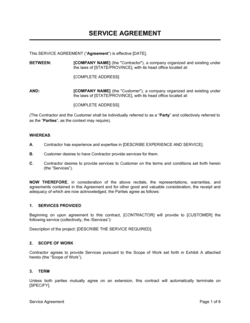
Engaging a contractor for ongoing or recurring servicesService Agreement
Confirming classification in a jurisdiction with strict worker testsIndependent Contractor Agreement (detailed)
Hiring a consultant for a specific advisory roleConsulting Agreement
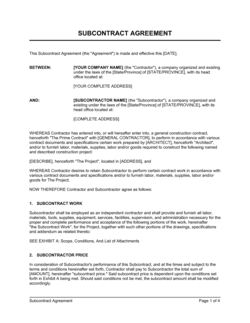
Formalizing a subcontractor relationship in a construction or trade contextSubcontractor Agreement

Common mistakes to avoid

❌ Implying employment through careless word choice

Why it matters: Phrases like 'welcome to the team,' 'your manager,' or 'reporting to' in the acknowledgment letter can be used as evidence of an employment relationship in an audit or misclassification dispute.

Fix: Review the letter for any language that describes supervision, hierarchy, or belonging to the organization and replace it with outcome-focused, arms-length language.

❌ Failing to obtain a signed acknowledgment from the contractor

Why it matters: An unsigned letter shows you issued a notice but cannot prove the contractor received or agreed with it, weakening your position in any classification dispute or tax audit.

Fix: Always request a countersignature or a dated reply email confirming receipt, and store the confirmation alongside your other contractor documentation.

❌ Omitting the tax responsibility clause

Why it matters: Without written confirmation that the contractor acknowledges their self-employment tax obligations, you have no documentation to counter a worker's later claim that they believed taxes were being withheld.

Fix: Include a specific paragraph naming the taxes the contractor is responsible for and explicitly stating that Company will not withhold on their behalf.

❌ Issuing the acknowledgment after work has already started

Why it matters: Documentation created after the fact carries less evidentiary weight and can appear to be a retroactive attempt to reclassify an employee, which regulators view skeptically.

Fix: Issue the acknowledgment as part of the contractor onboarding process, on or before the first day of work, so the record precedes any engagement activity.

The 8 key clauses, explained

Date, Parties, and Reference Line

In plain language: Establishes the date the letter is issued, identifies the business sending it, and names the contractor receiving it — along with a subject line or reference to any underlying agreement.

Sample language
[DATE] | To: [CONTRACTOR FULL NAME / BUSINESS NAME] | Re: Acknowledgment of Independent Contractor Status — [PROJECT / ENGAGEMENT NAME]

Common mistake: Addressing the letter to an individual's personal name when the contractor operates under a registered business name. The entity receiving payment should match the entity named in the letter.

Opening Statement of Purpose

In plain language: One or two sentences explaining why the letter is being issued and confirming the nature of the relationship being acknowledged.

Sample language
This letter confirms that [COMPANY NAME] ('Company') has engaged [CONTRACTOR NAME] ('Contractor') to provide [DESCRIPTION OF SERVICES], effective [START DATE]. This letter is intended to acknowledge and document the independent contractor nature of this engagement.

Common mistake: Using language like 'we are pleased to welcome you' or 'as a member of our team' — phrases that imply employment and undermine the contractor classification.

Description of Services

In plain language: A concise statement of the specific services the contractor is engaged to provide, without dictating the method or schedule of how they are to be performed.

Sample language
Contractor has been engaged to provide [SPECIFIC SERVICES — e.g., software development, graphic design, bookkeeping] as further described in the agreement dated [DATE] or the attached scope of work.

Common mistake: Describing services in terms of role and schedule rather than deliverable or output — for example, 'working Monday–Friday, 9am–5pm in our office' signals employment, not contracting.

No Employment Relationship

In plain language: Explicitly states that the engagement does not create an employer–employee relationship and that the contractor is not entitled to employment benefits.

Sample language
Nothing in this engagement, or in any agreement between the parties, shall be construed to create an employment relationship. Contractor is not an employee of Company and is not entitled to any employee benefits, including health insurance, retirement contributions, vacation pay, or workers' compensation.

Common mistake: Omitting this clause entirely or writing it vaguely. A clear, explicit disavowal of employment status is the single most important protective element of this letter.

Control and Independence

In plain language: Confirms that the contractor retains control over how, when, and where the work is performed, and that the company's interest is in the result — not the method.

Sample language
Contractor shall determine the method, details, and means of performing the services described herein. Company's interest is solely in the results achieved and the timely completion of agreed deliverables.

Common mistake: Including language about required working hours, mandatory check-ins, or exclusive availability — all of which indicate the behavioral control characteristic of employment.

Tax and Withholding Responsibilities

In plain language: States clearly that the contractor is responsible for their own tax obligations and that the company will not withhold income tax, Social Security, Medicare, or other payroll taxes.

Sample language
Contractor acknowledges that Company will not withhold income taxes, Social Security, Medicare, or any other payroll taxes from compensation paid. Contractor is solely responsible for reporting and remitting all applicable federal, state, and local taxes on income received.

Common mistake: Using general language like 'taxes are the contractor's problem' rather than naming the specific obligations. Named specifics are harder to dispute in an audit.

Right to Engage Other Clients

In plain language: Confirms that the contractor is free to provide services to other clients during the engagement and is not exclusively tied to the hiring business.

Sample language
Contractor retains the right to perform services for other clients during the term of this engagement, provided such work does not create a conflict of interest with the services provided to Company.

Common mistake: Including a de facto exclusivity requirement while simultaneously calling the worker a contractor. Exclusivity is a strong indicator of employment under most worker classification tests.

Acknowledgment and Receipt

In plain language: Closes the letter by inviting the contractor to confirm receipt and understanding of the terms, typically by countersigning or returning a copy.

Sample language
Please confirm your receipt and understanding of this acknowledgment by signing and returning a copy to [CONTACT NAME] at [EMAIL / ADDRESS] at your earliest convenience.

Common mistake: Sending the letter without any mechanism for the contractor to confirm receipt. An unacknowledged letter provides far weaker documentation than one the contractor has signed and returned.

How to fill it out

  1. 1

    Enter the date and identify both parties

    Add today's date at the top of the letter and fill in the company's full legal name and the contractor's full legal name or registered business name. Cross-check the contractor's name against their W-9 or equivalent tax form.

    💡 If the contractor operates through an LLC or corporation, use the entity name — not the individual's personal name — to align with how you will issue their 1099 or T4A.

  2. 2

    Add the engagement reference and start date

    Insert the name or reference number of the underlying agreement or project, and the date the engagement commenced or is commencing. This ties the acknowledgment to a specific engagement rather than leaving it open-ended.

    💡 If you already have a signed independent contractor agreement in place, reference its date and title here so the two documents are clearly linked.

  3. 3

    Describe the services by output, not by schedule

    Write a concise description of what the contractor is delivering — outputs, deliverables, or project scope. Avoid specifying hours, location, or supervision structure.

    💡 Use the scope-of-work language from your contractor agreement verbatim if possible — consistency between documents strengthens your classification position.

  4. 4

    Confirm the no-employment and no-benefits clause

    Review the no-employment-relationship clause and ensure it explicitly lists the benefits the contractor is not entitled to. Generic language is less effective than a specific enumeration.

    💡 Add any benefits specific to your company — profit sharing, stock options, tuition reimbursement — that a regular employee would receive but this contractor will not.

  5. 5

    Review the tax and withholding language

    Confirm the specific taxes listed match the jurisdiction where the contractor performs the work. US-based engagements should reference federal income tax, Social Security, and Medicare at minimum.

    💡 For contractors in states with additional obligations (e.g., California SDI), add the relevant state-level taxes to the enumeration.

  6. 6

    Send for acknowledgment and file the signed copy

    Email the letter to the contractor and request a countersigned copy by a stated date. File the executed copy alongside the contractor agreement and W-9 or equivalent in your contractor compliance records.

    💡 Use a dated delivery method — email with read receipt, or a PDF with an eSign timestamp — so you have proof of when the contractor received and reviewed the letter.

Frequently asked questions

What is an acknowledgment of independent contractor?

An acknowledgment of independent contractor is a formal letter a business issues to a worker confirming that the engagement is structured as an independent contractor relationship — not employment. It documents that both parties understand the worker is self-employed, responsible for their own taxes, not entitled to employee benefits, and in control of how their work is performed. It is typically issued alongside or shortly after a contractor agreement.

Is this letter legally required?

No federal law in the US mandates a standalone acknowledgment letter — a signed independent contractor agreement typically suffices. However, issuing this letter adds a layer of contemporaneous documentation that strengthens your classification position during an IRS audit, a state labor agency inquiry, or a worker misclassification claim. In jurisdictions with strict worker classification tests (California, for example), detailed written documentation of contractor status is strongly advisable.

What is the difference between this letter and an independent contractor agreement?

An independent contractor agreement is a binding contract that governs the full scope of the engagement — deliverables, payment terms, IP ownership, confidentiality, and termination. This acknowledgment letter is a shorter confirmatory document focused specifically on classifying the worker's status and documenting that both parties understand the non-employment nature of the relationship. The two documents work together and should be consistent with each other.

Should the contractor sign this letter?

Yes, requesting a countersignature or written confirmation of receipt significantly strengthens the document's value as evidence. A contractor who has signed acknowledging their independent status is in a much weaker position to later claim they believed they were an employee. Store the signed copy with your contractor agreement and tax forms.

Can I use this letter instead of an independent contractor agreement?

This letter is not a substitute for a full contractor agreement. It does not establish payment terms, deliverables, IP ownership, or confidentiality obligations. For any engagement of meaningful scope or duration, both documents are needed — the agreement governs the commercial relationship, and the acknowledgment letter reinforces the classification.

What happens if a contractor is later reclassified as an employee?

Reclassification typically triggers liability for back payroll taxes (both employer and employee portions), interest and penalties, and potentially unpaid minimum wage, overtime, and benefits. This letter, combined with a properly drafted contractor agreement and consistent treatment of the worker, helps demonstrate reasonable basis for the original classification — which may reduce or eliminate penalties under safe harbor provisions such as IRS Section 530.

Does this acknowledgment need to be notarized?

Notarization is not required or standard for this type of document. A simple countersignature from the contractor, with a date, is sufficient to document receipt and acknowledgment. For high-stakes engagements where classification is genuinely at risk, consult an employment attorney about whether additional documentation is warranted.

How often should I issue this acknowledgment?

Issue one acknowledgment per contractor at the start of each distinct engagement or when the nature of the engagement changes materially. You do not need to reissue it for every project under a continuing master contractor agreement — once per relationship, refreshed when the underlying agreement is renewed or substantially amended, is generally sufficient.

How this compares to alternatives

vs Independent Contractor Agreement

An independent contractor agreement is a binding contract covering deliverables, payment, IP, confidentiality, and termination. This acknowledgment letter is a shorter confirmatory document focused solely on worker classification. Both documents serve different functions and should be used together — the agreement governs the engagement; the acknowledgment reinforces the classification.

vs Employment Contract

An employment contract formalizes an employer–employee relationship with salary, benefits, IP assignment, and termination terms. This acknowledgment letter exists specifically to document that no such relationship exists. The two documents are mutually exclusive — use one or the other depending on how the worker is correctly classified.

vs Service Agreement

A service agreement governs an ongoing or recurring service relationship between two businesses or a business and a contractor, covering scope, fees, and terms of service. This acknowledgment letter is narrower — it confirms classification status rather than establishing commercial terms. For engagements that blur the line between contractor and employee, both documents together provide the most complete protection.

vs Consulting Agreement

A consulting agreement is tailored to advisory or specialized professional engagements and typically includes provisions for deliverables, fees, expenses, and confidentiality. This acknowledgment letter can accompany any contractor engagement — including consulting — but does not replace the agreement's commercial terms. Use the acknowledgment letter as a classification supplement, not a commercial substitute.

Industry-specific considerations

Technology / SaaS

Software developers and UX designers engaged on a project basis require clear IP and classification documentation; acknowledgment letters complement IP assignment clauses in contractor agreements.

Creative and Marketing Agencies

Copywriters, designers, and video producers working across multiple clients make contractor classification straightforward, but written acknowledgment protects agencies during client audits.

Construction and Trades

Subcontractors on job sites are routinely audited by state labor agencies; a signed acknowledgment paired with a subcontractor agreement is standard compliance practice.

Professional Services

Consulting firms and law firms engaging specialists or overflow support on a contractor basis use acknowledgment letters to maintain clean classification records for client billing and tax purposes.

Template vs pro — what fits your needs?

PathBest forCostTime
Use the templateSmall businesses and startups issuing standard contractor acknowledgments for typical freelance or project-based engagementsFree5–10 minutes per letter
Template + professional reviewBusinesses in high-audit-risk industries or jurisdictions with strict classification tests such as California's ABC Test$100–$300 (employment attorney quick review)1–2 days
Custom draftedOrganizations with large contractor workforces, regulated industries, or prior misclassification findings requiring remediation documentation$500–$1,500+3–7 days

Glossary

Independent Contractor
A self-employed worker who provides services to a business under a contract, controls how the work is performed, and is not subject to employer-level tax withholding or benefits.
Worker Misclassification
The improper designation of an employee as an independent contractor, which can trigger back taxes, penalties, and liability for unpaid benefits.
1099 / T4A
Tax forms used in the US and Canada respectively to report payments made to independent contractors for non-employment income.
IRS Common Law Test
A US federal framework that examines behavioral control, financial control, and the type of relationship to determine whether a worker is an employee or a contractor.
ABC Test
A worker classification standard used in several US states that presumes workers are employees unless the business can satisfy three specific conditions.
Right to Control
The central factor in most worker classification tests — an employer controls both what work is done and how it is done, while a contractor controls only the result.
No Withholding
The obligation of independent contractors to pay their own income tax, self-employment tax, and any applicable sales or VAT — the hiring business does not withhold on their behalf.
Engagement Letter
A letter confirming the scope, terms, and nature of a professional relationship — functionally similar to this acknowledgment but more commonly used in professional services contexts.
Sole Proprietor
The most common legal structure for an independent contractor — an unincorporated individual running a one-person business with personal liability for the business's obligations.
Safe Harbor
A legal provision — such as IRS Section 530 in the US — that protects businesses from worker misclassification liability if certain consistency and reasonable basis requirements are met.


Part of your Business Operating System

This document is one of 3,000+ business & legal templates included in Business in a Box.

  • Fill-in-the-blanks — ready in minutes
  • 100% customizable Word document
  • Compatible with all office suites
  • Export to PDF and share electronically

Create your document in 3 simple steps.

From template to signed document — all inside one Business Operating System.
1
Download or open template

Access over 3,000+ business and legal templates for any business task, project or initiative.

2
Edit and fill in the blanks with AI

Customize your ready-made business document template and save it in the cloud.

3
Save, Share, Send, Sign

Share your files and folders with your team. Create a space of seamless collaboration.

Save time, save money, and create top-quality documents.

★★★★★

"Fantastic value! I'm not sure how I'd do without it. It's worth its weight in gold and paid back for itself many times."

Managing Director · Mall Farm
Robert Whalley
Managing Director, Mall Farm Proprietary Limited
★★★★★

"I have been using Business in a Box for years. It has been the most useful source of templates I have encountered. I recommend it to anyone."

Business Owner · 4+ years
Dr Michael John Freestone
Business Owner
★★★★★

"It has been a life saver so many times I have lost count. Business in a Box has saved me so much time and as you know, time is money."

Owner · Upstate Web
David G. Moore Jr.
Owner, Upstate Web

Run your business with a system — not scattered tools

Stop downloading documents. Start operating with clarity. Business in a Box gives you the Business Operating System used by over 250,000 companies worldwide to structure, run, and grow their business.

Free Forever Plan · No credit card required