7 Tips To Keep Your Passion and Purpose Burning

Free to read β€’ Save or share with one click

Free7 Tips To Keep Your Passion and Purpose Burning Template

At a glance

What it is
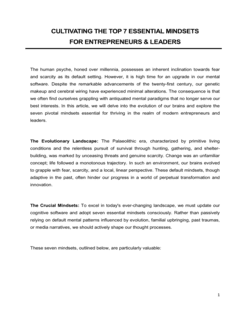
The 7 Tips To Keep Your Passion And Purpose Burning is a structured Word document that guides entrepreneurs, managers, and team leaders through seven evidence-based practices for sustaining motivation and aligning daily actions with a defined professional purpose. This free Word download gives you a ready-to-complete framework you can edit online and export as PDF to use in one-on-one coaching, team workshops, or personal development planning.
When you need it
Use it when you or your team are experiencing burnout, declining engagement, or a loss of direction β€” or proactively at the start of a new quarter, fiscal year, or business phase to anchor decisions in a clearly articulated purpose.
What's inside
A purpose statement worksheet, a values-alignment audit, a progress and milestone tracker, energy management prompts, accountability commitments, and reflection exercises tied to each of the seven tips.

What is 7 Tips To Keep Your Passion And Purpose Burning?

7 Tips To Keep Your Passion And Purpose Burning is a structured Word document that guides entrepreneurs, leaders, and professionals through seven evidence-based practices for sustaining personal motivation and maintaining alignment between daily work and a clearly defined purpose. It combines reflective exercises β€” a purpose statement worksheet, a values alignment audit, a passion inventory, and an energy management plan β€” with concrete action tools including a progress tracker, an accountability commitment section, and a 30-day reset plan. Unlike motivational reading material, this template produces tangible written outputs that anchor purpose to scheduled, trackable behavior.

Why You Need This Document

Motivation that isn't documented is motivation that disappears under pressure. When workloads spike, markets shift, or early momentum fades, founders and leaders who have never written down their purpose have nothing concrete to return to β€” and drift is the predictable result. Disengagement costs organizations an estimated $3,400 for every $10,000 in annual salary through reduced output, avoidable turnover, and declining decision quality. Beyond the financial impact, leaders who lose their sense of purpose make poorer strategic decisions, communicate less effectively, and model the disengagement they cannot afford to spread to their teams. Completing this template before motivation becomes a crisis β€” not after β€” gives you a written anchor, a named accountability partner, and a 30-day action plan that converts intention into habit. The Business in a Box Word template provides a ready-to-use structure so you spend your time on honest reflection rather than formatting.

Which variant fits your situation?

If your situation is…Use this template
Leading a one-on-one coaching session with a direct reportPerformance Improvement Plan
Facilitating a full team alignment or offsite workshopTeam Meeting Agenda
Setting personal and professional goals for the year aheadPersonal Development Plan
Tracking progress against mission-driven business objectivesStrategic Planning Template
Addressing team burnout or disengagement formallyEmployee Satisfaction Survey
Establishing a written personal vision and values statementPersonal Mission Statement
Building a company-wide culture and values frameworkCompany Values Statement

Common mistakes to avoid

❌ Completing the template in one sitting without reflection time

Why it matters: Rushed answers produce surface-level responses that don't reflect genuine values or real patterns β€” making the entire exercise decorative rather than diagnostic.

Fix: Spread completion across three sessions over three days: purpose and values on Day 1, energy and passion on Day 2, action plan on Day 3.

❌ Writing aspirational values instead of actual ones

Why it matters: If the values audit reflects who you wish you were rather than who you are today, the gap analysis will target phantom problems and miss real ones.

Fix: Use your last 30 days of calendar, spending, and decisions as the data source for your values β€” not an idealized self-image.

❌ Setting goals in the action plan with no connection to the purpose statement

Why it matters: Disconnected goals are indistinguishable from a generic to-do list and lose motivational power within days because they feel arbitrary.

Fix: For each action in the 30-day plan, write one sentence explaining how it advances the purpose statement you wrote in Section 1.

❌ Skipping the accountability partner section

Why it matters: Research consistently shows that written commitments shared with a specific person are completed at significantly higher rates than private intentions.

Fix: Name a real person and contact them before closing the document β€” even a brief message saying 'I'd like to check in with you weekly on a goal' is enough to activate the accountability effect.

The 9 key sections, explained

Purpose Clarity Worksheet

Values Alignment Audit

Passion Inventory

Progress and Milestone Tracker

Energy Management Plan

Accountability Commitment Section

Gratitude and Wins Log

Renewal and Recovery Rituals

30-Day Passion Reset Action Plan

How to fill it out

  1. 1

    Complete the purpose clarity worksheet first

    Before filling any other section, write your purpose statement using the provided sentence structure. Spend at least 20 minutes on this β€” it anchors everything that follows.

    πŸ’‘ Test your statement by asking: 'Would I still pursue this if no one paid me for it?' If the answer is no, revise the core action verb.

  2. 2

    Run the values alignment audit honestly

    List five values you currently live by β€” based on where you actually spend time and money, not aspirations. Then map each to your current weekly activities to identify where the gaps are largest.

    πŸ’‘ Use last week's calendar as your data source, not your self-perception. The calendar doesn't lie about priorities.

  3. 3

    Complete the passion inventory with time-tracking data

    Review the past two weeks of work and categorize each major task as energizing, neutral, or draining. Calculate the rough percentage of time in each category.

    πŸ’‘ If more than 50% of your current work falls in the 'draining' category, flag this for your manager or coach before completing the action plan β€” the fix may be structural, not attitudinal.

  4. 4

    Set micro-milestones in the progress tracker

    Break your primary goal into milestones no larger than one week's worth of effort. Enter the first four milestones now; add subsequent ones at each weekly review.

    πŸ’‘ A milestone should be specific enough to answer 'did I do this or not?' with a yes or no β€” no partial credit.

  5. 5

    Build your energy management plan around actual data

    Track your energy levels hourly for three consecutive workdays before completing this section. Note when you are sharpest, when focus dips, and when you feel most creative.

    πŸ’‘ Most people overestimate their afternoon focus. Three days of honest tracking usually reveals a 90-minute peak window in the morning that can be protected for deep work.

  6. 6

    Name and brief your accountability partner

    Write a specific person's name in the accountability section, then contact them before saving the document. Agree on the check-in format and cadence in the same conversation.

    πŸ’‘ A peer at a similar level of responsibility makes a more effective accountability partner than a manager β€” the power dynamic changes the conversation.

  7. 7

    Schedule renewal rituals as non-negotiable calendar blocks

    Transfer every renewal ritual from the template into your calendar immediately. Treat them as client appointments β€” not suggestions β€” for the first 30 days.

    πŸ’‘ If a renewal ritual gets cancelled twice in a row, replace it with a shorter or simpler version rather than removing it entirely.

  8. 8

    Activate the 30-day action plan with a start date

    Choose a specific start date β€” no more than 72 hours from now β€” and write it on the cover page. Review your progress against the weekly milestones every Sunday evening.

    πŸ’‘ Share the completed document with your accountability partner on Day 1. The act of sharing raises follow-through rates significantly compared to keeping it private.

Frequently asked questions

What is the 7 Tips To Keep Your Passion And Purpose Burning template?

It is a structured Word document that walks entrepreneurs, managers, and team leaders through seven evidence-based practices for sustaining motivation and aligning daily work with a clearly defined purpose. Each tip corresponds to a worksheet or exercise β€” including a purpose statement, values audit, passion inventory, energy management plan, and 30-day action plan β€” so the guidance translates directly into scheduled, trackable behavior.

Who should use this template?

Founders and small business owners experiencing motivational fatigue, managers running team engagement workshops, executive coaches working with individual clients, and HR professionals building leadership development programs all use this template. It is equally applicable for personal use during a career transition or business reset, and for facilitated group settings with up to 12 participants.

How long does it take to complete this template?

Completing the full template thoughtfully takes approximately three to five hours spread across multiple sessions. Rushing through it in one sitting typically produces surface-level answers that don't hold up as real motivational anchors. Spreading completion across three days β€” with reflection time between sessions β€” produces meaningfully better outputs and higher follow-through on the 30-day action plan.

What is the difference between passion and purpose in this context?

Passion refers to the specific activities, topics, and interactions that produce genuine engagement and energy for a particular individual. Purpose is the broader 'why' β€” the direction those passions point toward and the impact they are meant to create. This template treats passion as fuel and purpose as the destination; both are needed for sustained motivation.

Can this template be used in a team setting or workshop?

Yes. The template is designed for individual completion but works well in a facilitated group workshop where each participant completes their own copy and then shares selected sections with peers. A typical workshop format runs three hours: 90 minutes of individual completion followed by 90 minutes of paired or small-group discussion. The accountability partner section is particularly effective when completed in real time with a workshop partner.

How is this different from a personal development plan?

A personal development plan focuses on skill-building and career progression milestones β€” certifications, competencies, and role transitions. This template focuses specifically on motivational sustainability and purpose alignment. The two are complementary: a personal development plan maps what you are building toward, while this template addresses the psychological fuel required to pursue it consistently without burning out.

How often should I revisit this document?

A full review of the purpose statement and values audit is recommended quarterly or whenever a significant business change occurs β€” a new role, a pivot, a major loss, or a significant win. The progress tracker and wins log should be updated weekly. The 30-day action plan is designed to be completed and then rebuilt from scratch at the end of each 30-day cycle, incorporating what you learned from the previous round.

What if I complete the template but still feel unmotivated?

Persistent motivational deficit after completing the template often signals a structural problem β€” role misalignment, unsustainable workload, unresolved conflict, or a business model that no longer fits the founder's strengths β€” rather than a mindset problem. In those cases, consider pairing the template with a conversation with an executive coach, therapist, or trusted mentor who can help diagnose root causes that a self-guided framework cannot address.

Can I use this template for my employees?

Yes, with appropriate framing. Position it as a voluntary personal development tool rather than a performance management instrument. Employees who complete it as a genuine self-assessment and share results on their own terms benefit most. Requiring disclosure to managers removes the psychological safety needed for honest answers and undermines the document's effectiveness.

How this compares to alternatives

vs Personal Development Plan

A personal development plan maps skill-building goals, training milestones, and career progression over 6–12 months. This template focuses exclusively on motivational sustainability and purpose alignment. The two documents are complementary β€” use this one to ensure you have the psychological fuel to execute the development plan you have written.

vs Strategic Planning Template

A strategic plan is an organizational document covering market positioning, initiatives, KPIs, and resource allocation for a business unit or company. This template is an individual-level motivational and purpose-alignment tool. Founders often use both together: the strategic plan sets the direction for the business, while this template keeps the leader personally energized to execute it.

vs Performance Improvement Plan

A performance improvement plan is a formal HR document used to address specific documented performance deficiencies with measurable remediation targets and timelines. This template is a voluntary self-development tool with no disciplinary function. If disengagement has crossed into performance failure, a PIP is the appropriate instrument; if the issue is motivational and pre-disciplinary, this template is the better starting point.

vs Employee Engagement Survey

An employee engagement survey measures motivation and satisfaction levels across a team or organization at a point in time, generating aggregate data for management decisions. This template is an individual action-planning tool that guides a person through changing their own motivational state. Surveys diagnose the group problem; this template addresses it at the individual level.

Industry-specific considerations

Professional Services

Consultants and advisors use the energy management and passion inventory sections to identify which client engagements to prioritize or deprioritize when managing a full book of business.

Technology / SaaS

Startup founders and engineering leaders use the purpose clarity and 30-day action plan sections to reconnect with product vision after long sprints of technical debt and reactive work.

Healthcare

Clinical managers and healthcare administrators use the renewal rituals and burnout prevention sections to address the above-average rates of compassion fatigue and occupational burnout in care settings.

Nonprofit and Social Enterprise

Nonprofit leaders use the values alignment audit to identify when mission drift has occurred and to realign staff and volunteer energy with the organization's founding purpose.

Template vs pro β€” what fits your needs?

PathBest forCostTime
Use the templateIndividual contributors, founders, and managers working through a personal motivation reset without external facilitationFree3–5 hours over 3 days
Template + professional reviewLeaders who want a structured facilitated session with a coach or HR partner to work through the document together$200–$800 for a single coaching session or workshop facilitationHalf-day workshop or two 90-minute coaching sessions
Custom draftedOrganizations building a proprietary leadership development or onboarding program that embeds purpose-alignment practices at scale$2,000–$8,000 for a custom program design with a learning and development consultant4–8 weeks

Glossary

Purpose Statement
A written declaration of why an individual or organization exists and what they are ultimately trying to achieve beyond financial gain.
Intrinsic Motivation
Drive that comes from internal rewards β€” curiosity, meaning, mastery, and personal values β€” rather than external incentives like pay or recognition.
Values Alignment
The degree to which daily decisions and behaviors match the personal or organizational values a person has explicitly identified as important.
Burnout
Chronic occupational stress characterized by exhaustion, cynicism, and reduced professional efficacy β€” distinct from ordinary tiredness.
Accountability Partner
A trusted colleague, peer, or coach who checks in on commitments at a defined cadence to help maintain follow-through.
Energy Audit
A structured review of which tasks, relationships, and environments increase versus drain personal energy, used to make intentional changes to workload and habits.
Growth Mindset
The belief that abilities and intelligence can be developed through effort and learning, as opposed to being fixed traits.
Micro-milestone
A small, near-term progress marker β€” typically achievable within one to two weeks β€” that creates visible momentum toward a larger goal.
Vision Board
A visual collage of images, words, and symbols representing desired outcomes and aspirations, used as a daily reminder of long-term purpose.
Reflection Practice
A scheduled, deliberate habit of reviewing recent experiences to extract insights, identify patterns, and adjust behavior going forward.

Part of your Business Operating System

This document is one of 3,000+ business & legal templates included in Business in a Box.

  • Fill-in-the-blanks β€” ready in minutes
  • Compatible with all office suites
  • Export to PDF and share electronically

Create your document in 3 simple steps.

From template to signed document β€” all inside one Business Operating System.
1
Download or open template

Access over 3,000+ business and legal templates for any business task, project or initiative.

2
Edit and fill in the blanks with AI

Customize your ready-made business document template and save it in the cloud.

3
Save, Share, Send, Sign

Share your files and folders with your team. Create a space of seamless collaboration.

Save time, save money, and create top-quality documents.

β˜…β˜…β˜…β˜…β˜…

"Fantastic value! I'm not sure how I'd do without it. It's worth its weight in gold and paid back for itself many times."

Managing Director Β· Mall Farm
Robert Whalley
Managing Director, Mall Farm Proprietary Limited
β˜…β˜…β˜…β˜…β˜…

"I have been using Business in a Box for years. It has been the most useful source of templates I have encountered. I recommend it to anyone."

Business Owner Β· 4+ years
Dr Michael John Freestone
Business Owner
β˜…β˜…β˜…β˜…β˜…

"It has been a life saver so many times I have lost count. Business in a Box has saved me so much time and as you know, time is money."

Owner Β· Upstate Web
David G. Moore Jr.
Owner, Upstate Web

Run your business with a system β€” not scattered tools

Stop downloading documents. Start operating with clarity. Business in a Box gives you the Business Operating System used by over 250,000 companies worldwide to structure, run, and grow their business.

Free Forever PlanΒ Β·Β No credit card required