10 Important Qualities For Effective Leadership At Work Template

Free to read β€’ Save or share with one click

Free10 Important Qualities For Effective Leadership At Work Template

At a glance

What it is
The 10 Important Qualities For Effective Leadership At Work is a structured operational document that defines, explains, and applies the ten core leadership traits that distinguish high-performing managers and executives from average ones. This free Word download gives teams, HR professionals, and managers a ready-to-use framework they can edit online and export as PDF for training sessions, self-assessments, or leadership development programs.
When you need it
Use it when onboarding new managers, running a leadership development program, conducting 360-degree performance reviews, or establishing a shared leadership standard across a growing organization.
What's inside
Each of the ten leadership qualities is defined with a plain-English description, practical workplace application, and behavioral indicators that distinguish strong from weak performance. The document also includes guidance on self-assessment and development planning for each quality.

What is a Leadership Qualities Document?

A Leadership Qualities Document is a structured operational framework that defines, explains, and applies the essential traits that distinguish effective managers and leaders from average ones in a workplace setting. Each quality is presented with a plain-English definition, observable behavioral indicators, and practical examples that allow managers, HR teams, and individual contributors to assess current performance and identify development priorities. This free Word download gives organizations a ready-to-use starting point they can customize to their culture, management levels, and strategic context β€” then export as PDF for use in training, reviews, and onboarding.

Why You Need This Document

Without a shared, written definition of what good leadership looks like in your organization, every manager operates against a different internal standard β€” and performance conversations devolve into subjective disagreements rather than evidence-based development discussions. Inconsistent leadership expectations are a leading cause of first-time manager failure, which costs organizations an estimated six to nine months of the manager's salary in productivity loss and re-hiring. A clear leadership qualities framework gives HR teams an objective basis for promotion decisions, gives managers a concrete self-assessment tool, and gives executives a standard against which to hold all layers of management accountable. This template eliminates the blank-page problem and provides a battle-tested structure you can deploy in days rather than commissioning a months-long competency design project.

Which variant fits your situation?

If your situation is…Use this template
Evaluating an individual manager's current leadership effectivenessLeadership Self-Assessment
Running a structured 360-degree review process360-Degree Feedback Form
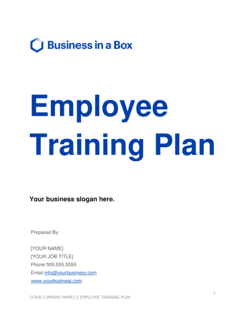
Planning a full leadership development programEmployee Training Plan
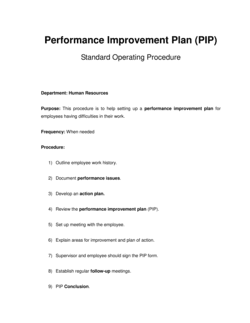
Setting performance goals tied to leadership competenciesPerformance Improvement Plan
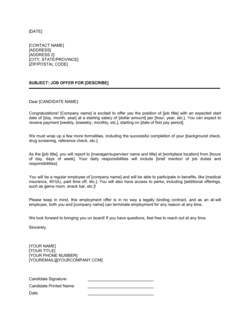
Communicating leadership expectations to a new hireJob Description Template
Documenting a company-wide leadership philosophyEmployee Handbook
Guiding succession planning for senior rolesSuccession Planning Template

Common mistakes to avoid

❌ Treating the document as a one-time training handout

Why it matters: A leadership qualities document used once in an onboarding session and never referenced again has no measurable impact on manager behavior or team performance.

Fix: Embed the document into recurring touchpoints β€” quarterly reviews, one-on-one agendas, and promotion criteria β€” so the qualities become a living operating standard rather than a PDF artifact.

❌ Listing qualities without behavioral definitions

Why it matters: Abstract labels like 'good communicator' or 'strategic thinker' mean different things to different managers, making fair and consistent evaluation impossible.

Fix: Define each quality with at least two observable, job-specific behaviors that a third party could confirm by watching the leader work for a week.

❌ Applying the same framework uniformly across all management levels

Why it matters: A front-line team lead and a VP of Operations require different weightings of the same qualities β€” decisiveness at the team-lead level looks very different from strategic decisiveness at the VP level.

Fix: Create level-specific notes for each quality, or produce separate versions of the document calibrated for team leads, mid-level managers, and senior leaders.

❌ Omitting a development action component

Why it matters: A document that identifies leadership gaps without a structured path to address them produces awareness without change β€” which can frustrate both the leader and their manager.

Fix: Add a dedicated action-planning section that names specific next steps, a timeline, and a check-in mechanism for each development priority identified.

❌ Building the framework without manager input

Why it matters: Leadership standards designed entirely by HR and handed to managers without consultation are routinely dismissed as disconnected from real operational demands.

Fix: Involve two or three high-performing managers in reviewing and editing the quality definitions before the document is finalized and distributed.

❌ Never updating the framework after major organizational changes

Why it matters: A leadership qualities document written for a 20-person startup becomes misaligned once the company grows to 200 people, shifts its business model, or restructures its management layers.

Fix: Schedule an annual review of the document β€” at minimum β€” timed to coincide with the performance review cycle so updates are incorporated before the next cohort of reviews.

The 10 key sections, explained

Effective communication

Accountability and ownership

Emotional intelligence

Vision and strategic thinking

Decisiveness

Delegation and trust

Integrity and consistency

Adaptability and resilience

Coaching and developing others

Building psychological safety

How to fill it out

  1. 1

    Identify the audience and purpose

    Decide whether this document will be used for self-assessment, team training, manager onboarding, or performance review. The audience determines which sections to weight and how to frame the language.

    πŸ’‘ For onboarding use, add a cover page naming the role and the manager receiving the document β€” this increases the perception of relevance and uptake.

  2. 2

    Customize quality definitions to your organizational context

    Edit each quality's plain-English definition to reflect the language and values already used in your company. Replace generic behavioral examples with scenarios specific to your industry or team.

    πŸ’‘ Anchor at least three of the ten qualities to specific events or challenges your organization has recently faced β€” concrete context accelerates adoption.

  3. 3

    Add behavioral indicators for each quality

    For each of the ten qualities, add two to three observable behaviors that signal strong performance and one that signals a gap. These become the basis for structured feedback conversations.

    πŸ’‘ Frame gap indicators as behaviors, not character traits β€” 'delays decisions past agreed deadlines' is more actionable than 'is indecisive.'

  4. 4

    Align qualities to existing performance frameworks

    Cross-reference your company's existing competency model or performance review rubric and note where the ten qualities map. Flag any competencies already covered so reviewers do not duplicate assessments.

    πŸ’‘ If your company uses a 1–5 rating scale, add a column to each quality section so this document can feed directly into the review process.

  5. 5

    Build a self-assessment section

    Add a brief self-rating prompt after each quality definition β€” for example, 'Rate your current performance on this quality: 1 (rarely) to 5 (consistently)' β€” with a space for one specific example.

    πŸ’‘ Self-assessments completed before a manager review meeting produce more honest and productive conversations than those filled out in the meeting itself.

  6. 6

    Create a development action plan page

    Add a final page where the reader identifies their top two development priorities from the ten qualities, lists one action per priority, names an accountability partner, and sets a 90-day checkpoint date.

    πŸ’‘ Limit development priorities to two. Leaders who attempt to improve all ten simultaneously improve none measurably within a quarter.

  7. 7

    Export as PDF and distribute

    Save the completed document as PDF for distribution in training sessions or one-on-one meetings. Keep the editable Word file for future updates as organizational needs evolve.

    πŸ’‘ Version-date the document in the footer (e.g., 'Leadership Standards v1.2 β€” Updated [MONTH YEAR]') so teams always know which version is current.

Frequently asked questions

What are the most important qualities of an effective leader at work?

The ten qualities most consistently associated with effective workplace leadership are: clear communication, accountability, emotional intelligence, visionary thinking, decisiveness, delegation, integrity, adaptability, coaching others, and building psychological safety. No single quality defines leadership effectiveness in isolation β€” the combination and situational application of all ten determines how well a leader performs across different team and organizational contexts.

How is a leadership qualities document used in a business setting?

Organizations use a leadership qualities document as a competency framework for hiring and promoting managers, a self-assessment tool in performance reviews, a curriculum anchor for leadership development programs, and a reference standard in 360-degree feedback processes. It creates a shared vocabulary around what good leadership looks like inside a specific organization, replacing vague expectations with observable behavioral standards.

Can a small business use this document, or is it only for large organizations?

Small businesses benefit from a leadership qualities document as much as large ones β€” often more so. When a founder promotes a high-performing individual contributor to a management role for the first time, a clear framework of leadership expectations prevents the most common failure mode: the new manager trying to do their old job and manage simultaneously. The template can be scaled down to the five or six qualities most relevant to a small team's immediate needs.

What is the difference between a leadership qualities document and a competency framework?

A competency framework is a broader HR tool that maps skills, knowledge, and behaviors across all roles and levels in an organization β€” typically covering technical, functional, and leadership competencies together. A leadership qualities document focuses specifically on the behavioral traits that distinguish effective leaders and is typically used in management development rather than organization-wide role design. The two documents complement each other and are often cross-referenced in performance reviews.

How many leadership qualities should a workplace framework include?

Ten is the upper practical limit for a framework managers will actually use and retain. Frameworks with fifteen or more qualities become unwieldy in review conversations and difficult to prioritize for development. If your organization has a shorter list, consolidating overlapping qualities β€” for example, combining integrity and accountability into a single ownership dimension β€” is preferable to padding the list with redundant entries.

How often should a leadership qualities document be updated?

Review it annually at minimum, timed to the performance review cycle. Trigger an off-cycle review when the organization restructures its management layers, shifts its strategy materially, or receives consistent feedback that a particular quality is missing or misweighted. Version-date each revision so managers know they are working from the current standard.

Should leadership qualities be weighted differently for different management levels?

Yes. Decisiveness at the team-lead level means making clear day-to-day task decisions; at the VP level it means committing to strategic bets with incomplete information. Delegation for a front-line manager means assigning tasks; for an executive it means designing systems that distribute decision-making authority across layers. Add level-specific notes to each quality, or create separate versions of the document for each management tier.

Can this document be used as a hiring tool?

Yes, with modification. Map the ten qualities to your interview question bank using behavioral prompts β€” for example, 'Tell me about a time you had to make a decision with incomplete information' tests decisiveness directly. Add a scoring rubric to each quality so interviewers evaluate candidates consistently rather than relying on subjective impressions. Using the same framework for hiring and performance review creates continuity from interview to onboarding to promotion.

What is the difference between leadership qualities and leadership styles?

Leadership qualities are stable traits and competencies a leader develops over time β€” integrity, accountability, emotional intelligence. Leadership styles are situational behavioral patterns β€” directive, coaching, delegating, or participative β€” that effective leaders shift between depending on the context and the team's readiness. Strong leadership qualities enable a leader to execute multiple styles credibly; a leader with poor emotional intelligence, for example, will struggle to shift styles appropriately even if they understand the theory.

How this compares to alternatives

vs Performance Improvement Plan

A performance improvement plan is a corrective document issued when a specific employee is failing to meet defined standards β€” it identifies gaps, sets targets, and establishes a review timeline. A leadership qualities document is a proactive development framework applied broadly to all managers, not triggered by underperformance. Use the qualities document to set standards and the PIP when those standards are not being met.

vs Employee Training Plan

An employee training plan maps learning activities, timelines, and resources for developing specific skills across a team or individual. A leadership qualities document defines what skills matter and how they are measured β€” it is the 'what' that the training plan operationalizes into the 'how.' Both documents are used together in a structured leadership development program.

vs Employee Handbook

An employee handbook covers company-wide policies, procedures, and conduct expectations for all staff. A leadership qualities document is a targeted competency tool for managers and leaders specifically. The handbook tells every employee how the company operates; the qualities document tells managers what kind of leaders the company expects them to be.

vs Job Description Template

A job description defines the responsibilities, qualifications, and reporting structure for a specific role. A leadership qualities document defines the behavioral competencies expected of anyone in a management role, regardless of specific function. Job descriptions reference these qualities as hiring criteria; the qualities document provides the detailed definition behind the reference.

Industry-specific considerations

Technology / SaaS

Fast-growth SaaS teams weight decisiveness and adaptability heavily given frequent pivots, and add a specific section on leading distributed or remote teams across time zones.

Healthcare

Healthcare organizations emphasize psychological safety and accountability as patient-safety imperatives, with behavioral indicators drawn from clinical incident review standards.

Professional Services

Consulting and advisory firms tie leadership qualities directly to client relationship management, with coaching and communication weighted most heavily in manager-level reviews.

Manufacturing

Shop-floor and operations leaders are assessed primarily on accountability, delegation, and decisiveness, with behavioral examples drawn from safety compliance and production-target contexts.

Template vs pro β€” what fits your needs?

PathBest forCostTime
Use the templateSmall businesses, growing teams, and HR managers building a first-time leadership framework without an L&D budgetFree2–4 hours to customize and distribute
Template + professional reviewMid-size organizations integrating the framework into formal performance review systems or manager onboarding programs$500–$2,000 for an HR consultant or organizational development specialist to review and align with existing competency models1–2 weeks
Custom draftedLarge enterprises building a multi-tier leadership competency architecture tied to succession planning and executive development$5,000–$25,000+ for a full organizational development engagement6–12 weeks

Glossary

Emotional Intelligence (EQ)
The ability to recognize, understand, and manage one's own emotions and respond constructively to the emotions of others in the workplace.
Active Listening
A communication practice in which the listener gives full attention, asks clarifying questions, and confirms understanding before responding.
Accountability
Taking ownership of outcomes β€” including failures β€” and holding team members to agreed standards without deflecting responsibility.
Psychological Safety
A team environment where members feel safe to speak up, ask questions, and admit mistakes without fear of punishment or ridicule.
Visionary Thinking
The capacity to define a clear, compelling future state for a team or organization and communicate it in a way that motivates action.
Delegation
Assigning tasks and decision-making authority to team members at the appropriate level, balancing trust with oversight.
Decisiveness
The ability to make timely, well-reasoned decisions under uncertainty β€” and to commit to a course of action without excessive second-guessing.
Coaching Mindset
An approach to leadership that prioritizes developing the capability of team members through questions, feedback, and growth opportunities rather than simply directing work.
Integrity
Consistent alignment between a leader's stated values and their actions, especially under pressure or when no one is watching.
Adaptability
The willingness and ability to adjust strategies, behaviors, and plans in response to changing circumstances or new information.

Part of your Business Operating System

This document is one of 3,000+ business & legal templates included in Business in a Box.

  • Fill-in-the-blanks β€” ready in minutes
  • Compatible with all office suites
  • Export to PDF and share electronically

Create your document in 3 simple steps.

From template to signed document β€” all inside one Business Operating System.
1
Download or open template

Access over 3,000+ business and legal templates for any business task, project or initiative.

2
Edit and fill in the blanks with AI

Customize your ready-made business document template and save it in the cloud.

3
Save, Share, Send, Sign

Share your files and folders with your team. Create a space of seamless collaboration.

Save time, save money, and create top-quality documents.

β˜…β˜…β˜…β˜…β˜…

"Fantastic value! I'm not sure how I'd do without it. It's worth its weight in gold and paid back for itself many times."

Managing Director Β· Mall Farm
Robert Whalley
Managing Director, Mall Farm Proprietary Limited
β˜…β˜…β˜…β˜…β˜…

"I have been using Business in a Box for years. It has been the most useful source of templates I have encountered. I recommend it to anyone."

Business Owner Β· 4+ years
Dr Michael John Freestone
Business Owner
β˜…β˜…β˜…β˜…β˜…

"It has been a life saver so many times I have lost count. Business in a Box has saved me so much time and as you know, time is money."

Owner Β· Upstate Web
David G. Moore Jr.
Owner, Upstate Web

Run your business with a system β€” not scattered tools

Stop downloading documents. Start operating with clarity. Business in a Box gives you the Business Operating System used by over 250,000 companies worldwide to structure, run, and grow their business.

Free Forever PlanΒ Β·Β No credit card required