- Operational Risk
- The risk of loss or disruption resulting from inadequate or failed internal processes, people, systems, or external events — distinct from financial or strategic risk.
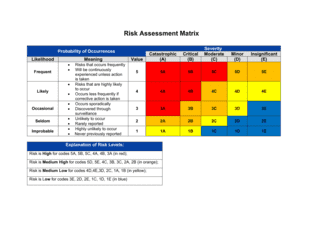
- Likelihood Score
- A numeric rating (typically 1–5) representing the probability that a specific risk event will occur within a defined time horizon.
- Impact Score
- A numeric rating (typically 1–5) representing the severity of consequences — financial, operational, legal, or reputational — if the risk event materializes.
- Risk Priority Number (RPN)
- The product of likelihood and impact scores, used to rank risks by urgency and determine which require immediate mitigation action.
- Inherent Risk
- The level of risk exposure before any controls or mitigation measures are applied.
- Residual Risk
- The level of risk that remains after existing controls and mitigation actions have been applied — the actual exposure the organization accepts.
- Control Measure
- A process, policy, procedure, or system put in place to reduce the likelihood or impact of a specific risk event.
- Risk Owner
- The named individual or role accountable for monitoring a specific risk, implementing controls, and escalating if the risk profile changes.
- Risk Appetite
- The level of risk an organization is willing to accept in pursuit of its objectives, typically defined by senior management or the board.
- ISO 31000
- The international standard providing principles and guidelines for risk management processes applicable to any organization regardless of industry or size.
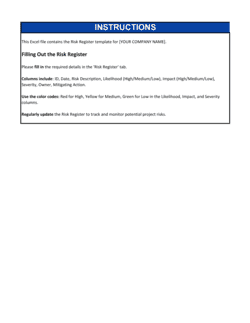
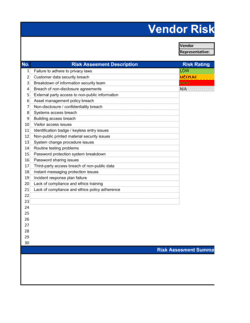
- Risk Register
- A master log of all identified risks, their scores, owners, controls, and review dates — the ongoing output of a completed risk assessment worksheet.