- Pre-emption Rights
- The right of existing shareholders to purchase newly issued shares before they are offered to outside parties, preserving their ownership percentage.
- Right of First Refusal (ROFR)
- A contractual right giving existing shareholders the opportunity to buy a departing shareholder's shares on the same terms offered by a third-party buyer.
- Drag-Along Rights
- A provision allowing majority shareholders to compel minority shareholders to sell their shares on the same terms in an approved acquisition.
- Tag-Along Rights
- A provision allowing minority shareholders to join a majority shareholder's sale and receive the same price and terms being offered to the majority.
- Reserved Matters
- A defined list of significant decisions — such as issuing new shares, taking on debt, or changing the business purpose — that require unanimous or supermajority shareholder approval.
- Deadlock
- A situation where shareholders are unable to reach agreement on a material matter, typically defined by a specific number of failed votes within a set period.
- Vesting Schedule
- A timeline over which a founder or employee earns irrevocable rights to their shares, typically with a one-year cliff and monthly vesting over four years.
- Anti-Dilution Protection
- A clause protecting an investor's ownership percentage from being reduced by subsequent share issuances at a lower valuation, through broad-based or weighted-average adjustments.
- Good Leaver / Bad Leaver
- Definitions that determine the price at which a departing shareholder must sell their shares — good leavers (e.g., illness, redundancy) typically receive market value; bad leavers (e.g., resignation, gross misconduct) receive a discounted or nominal price.
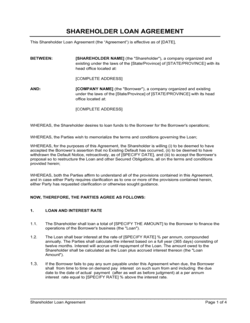
- Shareholder Loan
- A loan made by a shareholder to the company, typically documented separately but referenced in the shareholders agreement regarding repayment priority on a winding-up.
- Articles of Association
- The public constitutional document of a company filed with the corporate registry, which works alongside — but is subordinate to — the shareholders agreement in many jurisdictions.