Self Employment Success Strategies To Market Yourself

Free Word download β€’ Edit online β€’ Save & share with Drive β€’ Export to PDF

3 pagesβ€’20–25 min to fillβ€’Difficulty: Standard
Learn more ↓
FreeSelf Employment Success Strategies To Market Yourself Template

At a glance

What it is
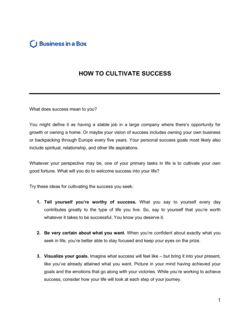
A Self Employment Success Strategies to Market Yourself document is a structured action plan that helps independent professionals define their personal brand, identify ideal clients, and build a repeatable system for winning new business. This free Word download gives you a ready-to-edit framework covering positioning, promotion, pricing, and client acquisition that you can export as PDF and put into practice immediately.
When you need it
Use it when transitioning from traditional employment to self-employment, when your client pipeline has stalled and you need a systematic approach to attracting new work, or when you want to move from reactive referral dependence to a proactive, documented marketing strategy.
What's inside
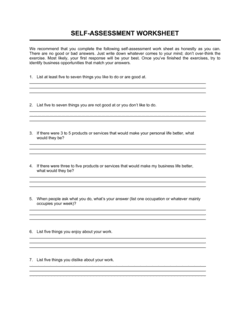
Personal brand statement, target client profile, competitive positioning, service packaging and pricing, promotion channels, networking and referral plan, digital presence audit, outreach cadence, and 90-day action milestones.

What is a Self Employment Success Strategies Document?

A Self Employment Success Strategies to Market Yourself document is a structured action plan that helps an independent professional build a consistent, repeatable system for attracting and winning clients. It covers the full arc of solo-business marketing: defining a personal brand, identifying the most valuable client type to pursue, packaging services into clear offers, selecting the right promotion channels, and scheduling the outreach activities that keep the pipeline full. Unlike a general business plan or a campaign-level marketing document, this guide is written for one person β€” the professional whose expertise, reputation, and time are the core assets of the business.

Why You Need This Document

Without a documented marketing strategy, self-employed professionals default to reactive behavior β€” taking whatever work arrives, underpricing to avoid losing it, and scrambling every time a project ends. The cost of that pattern is concrete: income volatility, clients who are a poor fit, and a business that never grows beyond the founder's immediate network. A written strategy forces the decisions that most solo practitioners avoid β€” who exactly to target, what to charge, and which two or three activities to do every week regardless of how busy the calendar looks. This template gives you the structure to make those decisions once, document them clearly, and execute against a 90-day milestone plan that turns marketing from an afterthought into a scheduled, measurable business function.

Which variant fits your situation?

If your situation is…Use this template
Launching a freelance practice for the first timeSelf Employment Success Strategies To Market Yourself
Creating a full go-to-market plan for a service businessMarketing Plan
Building a personal brand on LinkedIn or social platformsSocial Media Marketing Plan
Defining a pitch for a specific client or projectConsulting Proposal
Setting rates and billing structure for freelance servicesService Invoice
Formalizing a client engagement with a service agreementService Agreement
Planning a 12-month solo business growth roadmapBusiness Plan

Common mistakes to avoid

❌ Targeting everyone instead of a defined niche

Why it matters: Broad positioning produces generic messaging that resonates with no one specifically. Prospects self-select toward specialists who appear to understand their exact situation.

Fix: Pick one primary client type and one primary outcome for the first 90 days. Expand scope only after that niche is generating consistent inquiries.

❌ Relying exclusively on referrals with no active outreach

Why it matters: Referral-only pipelines create feast-or-famine revenue cycles because the inflow is entirely outside your control.

Fix: Run a parallel outreach cadence of 10–20 new prospects per week regardless of current workload, so the pipeline stays full through busy periods.

❌ Launching outreach before the digital presence is ready

Why it matters: A cold message from a professional with an incomplete LinkedIn profile or an outdated website is dismissed immediately β€” the outreach effort is wasted.

Fix: Audit and update website, LinkedIn, and portfolio before sending the first outreach message. Budget one full day for this before starting the cadence.

❌ Pricing by the hour instead of by the package or outcome

Why it matters: Hourly billing makes your income a direct function of time, invites clients to second-guess hours, and prevents you from being rewarded for working efficiently.

Fix: Create at least two fixed-price or retainer packages. Start by converting your most common project type into a scoped, named offer with a flat fee.

❌ Publishing on too many channels inconsistently

Why it matters: Sporadic activity across five channels produces less visibility and credibility than a consistent weekly presence on two, because algorithms and audiences both reward regularity.

Fix: Commit to two channels with a fixed publishing day and format. Measure follower growth and inbound messages at the 60-day mark before adding a third channel.

❌ Writing a strategy document without scheduling 90-day milestones

Why it matters: A marketing strategy without deadlines and checkpoints rarely survives the first week of client work β€” billable tasks crowd out business development indefinitely.

Fix: Block a recurring 2-hour business development slot in your calendar for the next 90 days before closing the template. Treat it as a client commitment.

The 9 key sections, explained

Personal brand statement

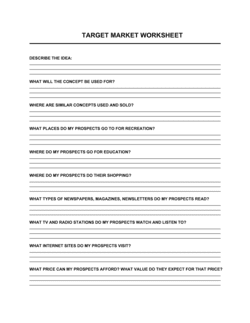
Target client profile

Competitive positioning

Service packages and pricing

Promotion channels and content plan

Networking and referral plan

Digital presence audit and improvement plan

Outreach and follow-up cadence

90-day action milestones

How to fill it out

  1. 1

    Write your personal brand statement

    Draft a two- to three-sentence statement identifying who you serve, what outcome you deliver, and what makes your approach distinctive. Test it by reading it aloud β€” it should sound like a person talking, not a brochure.

    πŸ’‘ Ask three past clients to describe what you do and why they hired you. Their language is almost always more persuasive than the language you would choose yourself.

  2. 2

    Define your ideal client profile in specific terms

    Name the industry, role, company size or revenue level, and the single biggest pain point your ideal client faces. Include the trigger event β€” the thing that makes them start looking for someone like you.

    πŸ’‘ If you can describe a specific past client who was an ideal engagement, model the ICP on them. One concrete example beats a generic description every time.

  3. 3

    Map your competitive landscape

    List three to five alternatives your target client might hire β€” including generalist platforms, agencies, and direct competitors. Identify the one dimension on which you consistently outperform them and write one specific sentence defending it.

    πŸ’‘ Your competitive advantage should be something you can prove, not just claim. A case study result or a methodology name is stronger than 'higher quality.'

  4. 4

    Package your services into named tiers

    Create two or three distinct service packages with names, clear deliverables, scopes, and fixed or range prices. Anchor the middle tier at your target price point.

    πŸ’‘ Name your packages after the client outcome, not the process β€” 'Launch-ready brand' sells better than 'Brand strategy package.'

  5. 5

    Select two primary promotion channels

    Choose the two channels where your ideal clients are most active and that you can sustain consistently. Assign a publishing frequency and content format to each and block the time in your weekly schedule.

    πŸ’‘ Pick channels you already use personally β€” you will produce better content and maintain higher consistency on platforms you understand intuitively.

  6. 6

    Build your referral partner list

    Write the names of five to ten people β€” past clients, complementary service providers, or well-connected peers β€” who could credibly refer you. Assign a monthly or quarterly outreach action to each.

    πŸ’‘ The most reliable referral partners are professionals who serve the same client at a different stage of the journey β€” a bookkeeper referring a CFO consultant, for example.

  7. 7

    Audit and update your digital presence

    Review your LinkedIn headline, website homepage, and top portfolio piece against your brand statement. Update each to reflect your current ICP and positioning before launching any outreach.

    πŸ’‘ Your LinkedIn headline is the highest-leverage edit you can make β€” it appears in search results, message previews, and connection requests simultaneously.

  8. 8

    Set your 90-day milestones and schedule weekly reviews

    Break the strategy into three 30-day blocks with specific, measurable outputs β€” number of prospects contacted, discovery calls booked, proposals sent. Set a 30-minute weekly review to track progress and adjust.

    πŸ’‘ Measure leading indicators (outreach sent, calls booked) weekly and lagging indicators (revenue closed) monthly β€” only lagging indicators tell you if the strategy is working.

Frequently asked questions

What is a self employment success strategies document?

A self employment success strategies document is a structured action plan that helps an independent professional define their personal brand, identify ideal clients, select promotion channels, and build a repeatable system for winning new business. It replaces ad-hoc marketing activity with a documented strategy that can be reviewed, refined, and consistently executed over time.

How is this different from a standard marketing plan?

A traditional marketing plan is designed for a business with a team, budget, and product line. A self employment marketing strategy is written for a single professional whose primary asset is their own expertise and reputation. It emphasizes personal brand positioning, one-to-one outreach, referral networks, and service packaging β€” tactics that do not require an advertising budget or a marketing department to execute.

How do I identify my niche as a self-employed professional?

Start by listing your last ten clients and identifying which engagements were most profitable, most enjoyable, and most likely to generate referrals. The intersection of those three filters is usually your best niche. Then confirm the niche is large enough to sustain your revenue target by estimating how many clients of that type exist in your reachable market.

How many promotion channels should I focus on?

Two channels, executed consistently, outperform five channels executed sporadically. Pick the two platforms where your ideal clients are already active and where you can realistically publish on a weekly basis. For most independent professionals, LinkedIn combined with direct email outreach is the highest-return combination in the early stages of building a pipeline.

What should my pricing structure look like as a self-employed professional?

Package your services into two or three named tiers with fixed or range pricing rather than quoting hourly rates. Price the middle tier at your target monthly revenue divided by the number of clients you want to serve. Offer an entry-level package to lower the barrier for new clients, and a premium package to capture clients who want more access, speed, or scope.

How long does it take to see results from a self-employment marketing strategy?

Most independent professionals see the first inbound inquiries from a consistent content and outreach strategy within 30 to 60 days. Converting those inquiries into paying clients typically takes 60 to 90 days, depending on the sales cycle in your industry. Revenue from referral partners activated at the same time often closes faster β€” within 30 days of the first conversation.

Do I need a website to market myself as self-employed?

A professional LinkedIn profile and a simple one-page website are the minimum digital presence needed to convert outreach into discovery calls. The website does not need to be elaborate β€” a clear headline stating who you help and how, one to three case studies, and a contact form are sufficient for most service categories. A strong LinkedIn profile alone can substitute in the early stages while the website is in development.

How do I generate referrals systematically rather than waiting for them?

A referral engine requires three things: a list of named referral partners (past clients, complementary providers, and well-connected peers), a scheduled outreach cadence to maintain those relationships, and a specific ask when the timing is right. Sending a past client a relevant article once a quarter and then asking for a specific introduction when they respond is more effective than a general 'keep me in mind' request.

How often should I update my self employment marketing strategy?

Review the strategy at 30, 60, and 90 days after launch to assess which channels and outreach tactics are producing discovery calls. Do a full annual revision to update your ICP, pricing, and competitive positioning as your experience and market evolve. A strategy that has not been updated in 18 months is usually out of sync with where your best current clients are actually coming from.

How this compares to alternatives

vs Marketing Plan

A marketing plan is designed for a business with a team, defined product lines, and a dedicated marketing budget. A self employment success strategies document is built for a single professional whose primary asset is personal expertise β€” it focuses on personal brand, outreach cadence, and service packaging rather than campaign management or channel attribution. Use the marketing plan once your solo practice grows into a structured business with employees.

vs Business Plan

A business plan covers market analysis, financial projections, funding requirements, and operational structure β€” it is primarily a document for external stakeholders like investors and lenders. A self employment marketing strategy is an internal action plan focused exclusively on client acquisition and personal brand development. Most self-employed professionals need the marketing strategy first and a formal business plan only if they seek external financing.

vs Consulting Proposal

A consulting proposal is a client-facing document that wins a specific engagement by scoping deliverables, timeline, and pricing for one prospective client. A self employment success strategy is an internal document that defines how you will generate the pipeline of opportunities that lead to sending proposals. The strategy comes first; the proposal closes the individual deals it produces.

vs Social Media Marketing Plan

A social media marketing plan covers platform-specific content calendars, audience growth tactics, and engagement metrics for one or more social channels. A self employment success strategy is broader β€” it encompasses personal brand, pricing, referral networks, direct outreach, and digital presence together. The social media plan is one component of the larger self-employment strategy, not a substitute for it.

Industry-specific considerations

Professional Services

Accountants, lawyers, and financial advisors use personal brand positioning and referral partner networks as primary acquisition channels, where trust and credentials drive client decisions.

Creative and Marketing

Designers, copywriters, and brand strategists rely heavily on portfolio visibility, LinkedIn content, and niche specialization to differentiate in a crowded freelance marketplace.

Technology and IT

Freelance developers, UX designers, and IT consultants benefit from platform presence (GitHub, Dribbble, Upwork) alongside direct outreach to product and engineering decision-makers.

Coaching and Training

Coaches and trainers depend on thought-leadership content, speaking engagements, and community involvement to build credibility before a prospect is ready to commit to a paid engagement.

Template vs pro β€” what fits your needs?

PathBest forCostTime
Use the templateFreelancers and independent professionals building or relaunching their client pipeline without a marketing budgetFree3–6 hours to complete; 30–60 days to see initial results
Template + professional reviewEstablished consultants who want a business coach or marketing advisor to pressure-test positioning and pricing before execution$300–$1,000 for a strategy session or advisor review1–2 weeks
Custom draftedHigh-earning independents or solo practitioners entering a new market who need a full personal brand and go-to-market strategy built from scratch$2,000–$6,000 for a marketing consultant or personal brand strategist3–6 weeks

Glossary

Personal Brand
The distinct combination of skills, values, and reputation that makes a self-employed professional recognizable and memorable to prospective clients.
Value Proposition
A clear statement of the specific outcome a client receives by hiring you, and why that outcome is better or different from what competitors offer.
Ideal Client Profile (ICP)
A detailed description of the type of client most likely to hire you, benefit from your work, pay your rates, and refer others.
Service Packaging
Bundling individual skills or deliverables into named, priced offers so clients can easily understand and purchase what you do.
Lead Generation
Any activity β€” outreach, content, networking, referrals, or advertising β€” that produces a steady stream of prospective clients interested in your services.
Positioning Statement
A one- to two-sentence internal declaration of who you serve, what you deliver, and what makes your approach distinctly valuable.
Outreach Cadence
A scheduled, repeatable sequence of touchpoints β€” messages, calls, follow-ups β€” used to move a prospective client from first contact to a discovery conversation.
Referral Engine
A system for consistently generating introductions from past clients, peers, and partners rather than relying on occasional organic word-of-mouth.
Digital Footprint
The sum of a professional's online presence β€” website, LinkedIn profile, portfolio, social accounts, and published content β€” that prospects find before making contact.
Niche
A narrowly defined target market or service specialization that allows a self-employed professional to stand out and command premium pricing.

Part of your Business Operating System

This document is one of 3,000+ business & legal templates included in Business in a Box.

  • Fill-in-the-blanks β€” ready in minutes
  • 100% customizable Word document
  • Compatible with all office suites
  • Export to PDF and share electronically

Create your document in 3 simple steps.

From template to signed document β€” all inside one Business Operating System.
1
Download or open template

Access over 3,000+ business and legal templates for any business task, project or initiative.

2
Edit and fill in the blanks with AI

Customize your ready-made business document template and save it in the cloud.

3
Save, Share, Send, Sign

Share your files and folders with your team. Create a space of seamless collaboration.

Save time, save money, and create top-quality documents.

β˜…β˜…β˜…β˜…β˜…

"Fantastic value! I'm not sure how I'd do without it. It's worth its weight in gold and paid back for itself many times."

Managing Director Β· Mall Farm
Robert Whalley
Managing Director, Mall Farm Proprietary Limited
β˜…β˜…β˜…β˜…β˜…

"I have been using Business in a Box for years. It has been the most useful source of templates I have encountered. I recommend it to anyone."

Business Owner Β· 4+ years
Dr Michael John Freestone
Business Owner
β˜…β˜…β˜…β˜…β˜…

"It has been a life saver so many times I have lost count. Business in a Box has saved me so much time and as you know, time is money."

Owner Β· Upstate Web
David G. Moore Jr.
Owner, Upstate Web

Run your business with a system β€” not scattered tools

Stop downloading documents. Start operating with clarity. Business in a Box gives you the Business Operating System used by over 250,000 companies worldwide to structure, run, and grow their business.

Free Forever PlanΒ Β·Β No credit card required