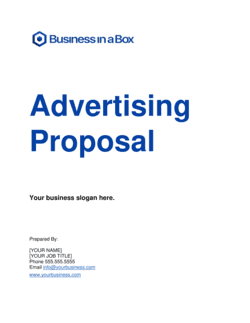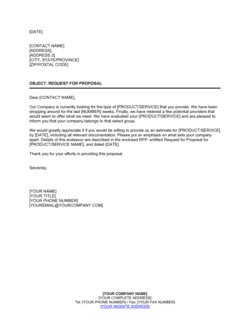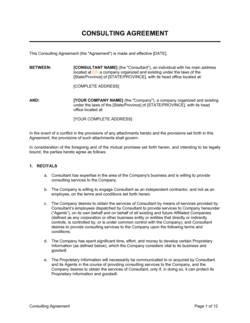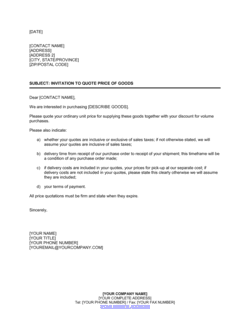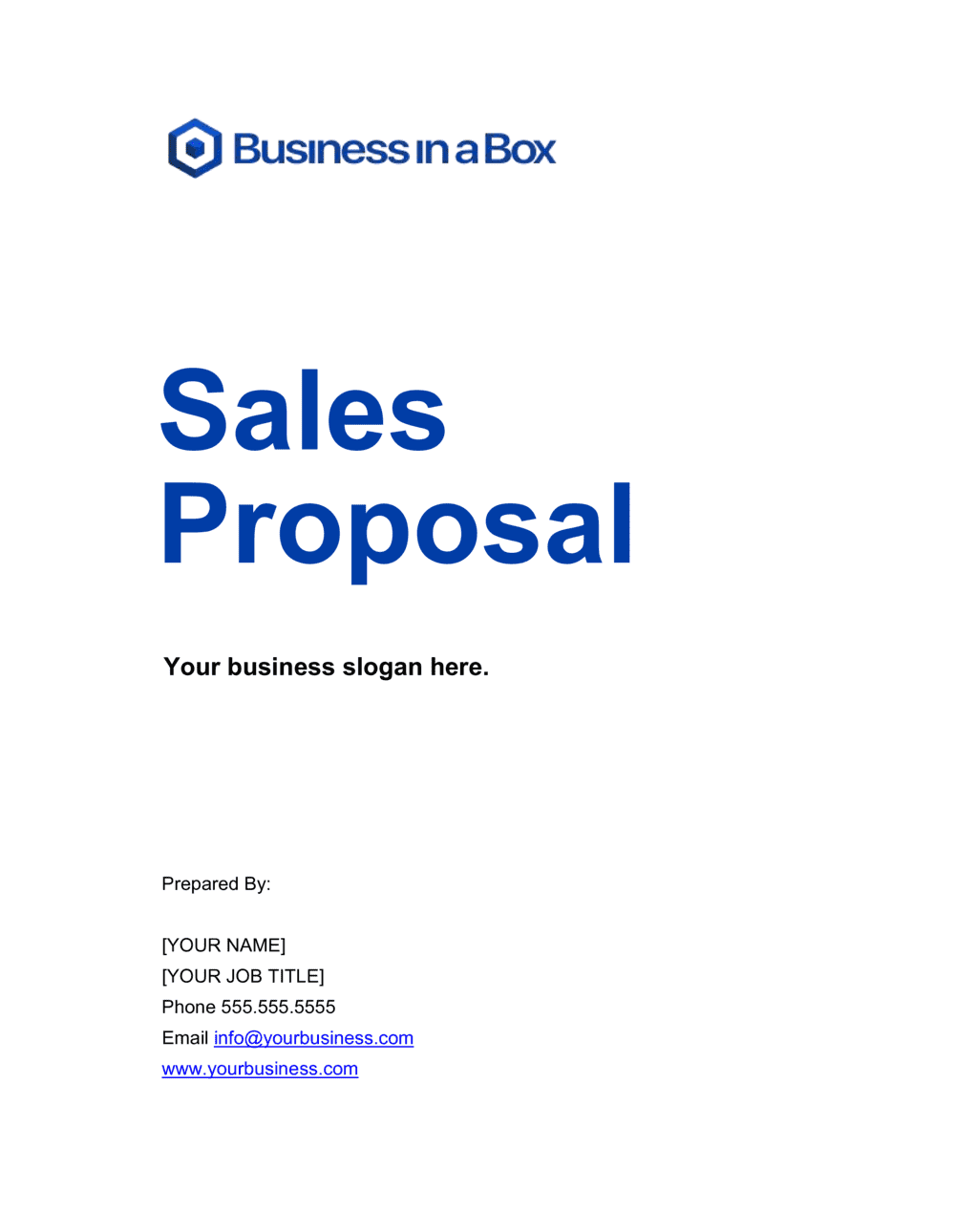
Sales Proposal Template

Free Word download β€’ Edit online β€’ Save & share with Drive β€’ Export to PDF

21 pagesβ€’40–50 min to fillβ€’Difficulty: Expert
Learn more ↓
FreeSales Proposal Template

At a glance

What it is
A Sales Proposal is a structured document a seller submits to a prospect to formally present a solution, outline deliverables, and request a purchasing decision. This free Word download gives you a professionally formatted starting point you can edit online and export as PDF β€” covering everything from the client's problem statement through pricing, timeline, and acceptance terms in a single coherent document.
When you need it
Use it when a prospect has expressed qualified interest and needs a formal written pitch before committing to a purchase. It is the document that moves a conversation from verbal to contractual.
What's inside
Executive summary, prospect situation and needs analysis, proposed solution and scope of work, deliverables and milestones, pricing and payment terms, implementation timeline, team and credentials, client references, and acceptance terms with a signature block.

What is a Sales Proposal?

A Sales Proposal is a structured document a seller submits to a qualified prospect to formally present a recommended solution, define the scope and deliverables, justify the investment, and request a purchasing decision. It translates the verbal understanding developed during discovery into a written record both parties can review, approve, and act on. A well-constructed proposal covers the prospect's situation, the proposed approach and its rationale, a specific scope with explicit exclusions, pricing and payment schedule, implementation timeline, and the acceptance terms that convert the document into a commitment.

Why You Need This Document

Without a written proposal, deals stall in the verbal stage β€” prospects cannot get internal approval for a purchase that exists only as a conversation. A formal proposal gives the buyer something concrete to present to their finance team, legal team, or board, and gives you a defined expiry date and acceptance mechanism that creates urgency. Proposals also protect you operationally: a clearly written scope of work with an exclusions list is your first line of defense against scope creep, which is the single most common reason service engagements erode margin. This template gives you a proven structure so you spend your time customizing for the prospect β€” not rebuilding the document from a blank page for every deal.

Which variant fits your situation?

If your situation is…Use this template
Responding to a formal RFP with mandatory response formatRFP Response Template
Pitching a recurring monthly retainer engagementBusiness Proposal Template
Proposing a one-time consulting engagement with defined deliverablesConsulting Proposal
Quoting price only, without a full solution narrativePrice Quote Template
Pitching a grant or non-commercial funding opportunityGrant Proposal
Proposing a marketing or advertising campaignMarketing Proposal
Pitching a software development or IT projectProject Proposal

Common mistakes to avoid

❌ Opening with a company history instead of the prospect's problem

Why it matters: Decision makers skip to the pricing page when the document opens by talking about the seller. The proposal loses the reader before the solution is presented.

Fix: Open the executive summary with a one-paragraph restatement of the prospect's situation and what a successful outcome looks like for them.
❌ Sending a proposal without an expiry date

Why it matters: Open-ended proposals give prospects no incentive to decide promptly, and allow them to reopen pricing negotiations months later after your costs or availability have changed.

Fix: Add a clearly visible expiry date of 14–30 days from the issue date and reference it explicitly in the acceptance section and your follow-up communications.

❌ Omitting an exclusions list from the scope of work

Why it matters: Without explicit exclusions, prospects assume any related task is included. This is the primary driver of scope disputes that damage client relationships and erode project margins.

Fix: Add a dedicated exclusions paragraph listing at least three to five items that are commonly assumed to be in scope but are not covered under this proposal.

❌ Using the same proposal template word-for-word for different prospects

Why it matters: Prospects who receive a document with a competitor's name still in it, or generic pain points that do not match their situation, lose confidence in the seller's attentiveness immediately.

Fix: Treat the needs analysis and solution sections as custom content for every proposal. Reuse the structure; rewrite the substance.

The 9 key sections, explained

Cover page and executive summary

Prospect situation and needs analysis

Proposed solution and approach

Scope of work and deliverables

Implementation timeline and milestones

Pricing and payment terms

Team credentials and relevant experience

Client references and case studies

Acceptance terms and next steps

How to fill it out

  1. 1

    Personalize the cover page with both parties' details

    Replace all placeholder names, logos, dates, and contact information on the cover page. Confirm the prospect's legal entity name matches what they use on purchase orders.

    πŸ’‘ Address the proposal to the economic buyer by name β€” not the company β€” even if your day-to-day contact is someone else.

  2. 2

    Write the needs analysis from your discovery notes

    Pull the specific pain points, current-state details, and success metrics the prospect shared in discovery calls or the RFP. Use their exact language where possible β€” it signals you listened.

    πŸ’‘ If you cannot fill this section with prospect-specific details, you have not done enough discovery. Send one more qualifying question before writing the proposal.

  3. 3

    Draft the proposed solution around outcomes

    Describe your solution in terms of what the prospect will be able to do or achieve after implementation β€” not what the product does. Connect every capability to a stated prospect goal.

    πŸ’‘ One clear win theme β€” the single strongest reason to choose you β€” should appear in this section and again in the executive summary.

  4. 4

    Define scope with an explicit exclusions list

    List every deliverable in specific terms, then add a separate exclusions section covering what is out of scope. Include assumptions that must hold for the scope to remain valid.

    πŸ’‘ If a prospect later asks for something not in the proposal, a clear scope section lets you price the addition rather than absorb it.

  5. 5

    Build the timeline from the prospect's deadline backward

    Start from the prospect's go-live or decision deadline and work backward to set realistic milestones. Flag any dependencies β€” data access, approvals, third-party vendors β€” that the prospect must resolve on their end.

    πŸ’‘ Add at least one buffer week before each major milestone. Buffer written into the plan is managed buffer; buffer you carry silently becomes a crisis.

  6. 6

    Present pricing with a clear total and payment schedule

    State the total investment prominently, then break it into a payment schedule tied to milestones or dates. Include the payment terms (Net 30 is standard) and accepted payment methods.

    πŸ’‘ If you offer options, limit them to two or three tiers. More than three choices consistently delays decisions.

  7. 7

    Set an expiry date and clear next steps

    Add a proposal expiry date of 14–30 days from issue. State the exact action the prospect must take to accept β€” signature, deposit, or countersignature β€” and what your first action will be upon receipt.

    πŸ’‘ Follow up by phone or video on day 3 after sending, before the prospect has fully decided β€” it is easier to address objections before a decision than after.

Frequently asked questions

What is a sales proposal?

A sales proposal is a formal written document a seller submits to a prospect to present a specific solution, define the scope of work and deliverables, state pricing and payment terms, and request a purchase decision. It differs from a pitch deck in that it is a detailed, self-contained document designed for review and sign-off rather than a live presentation aid.

What should a sales proposal include?

A complete sales proposal covers nine elements: an executive summary, prospect situation and needs analysis, proposed solution and approach, scope of work with explicit exclusions, implementation timeline and milestones, pricing and payment schedule, team credentials, client references or case studies, and acceptance terms with a clear expiry date. Missing any of these typically results in follow-up questions that delay the decision.

How long should a sales proposal be?

For most B2B sales, 5 to 12 pages is the effective range. Short enough that a busy decision maker will read it in one sitting; long enough to demonstrate credibility and address anticipated objections. Complex enterprise proposals or RFP responses can run 20 to 30 pages, but the executive summary and pricing sections should still stand alone clearly on the first two pages.

What is the difference between a sales proposal and a quote?

A quote states price and basic scope β€” typically one to two pages. A sales proposal contextualizes the price with a needs analysis, solution narrative, team credentials, and timeline that justify the investment. Use a quote when the prospect already understands the solution and needs a price to approve. Use a proposal when the prospect needs to be convinced that your approach is the right one.

When should I send a sales proposal?

Send a proposal only after you have completed enough discovery to personalize the needs analysis and solution sections. Sending a proposal before understanding the prospect's specific situation produces a generic document that reads like a brochure and rarely closes deals. The right trigger is a prospect who has confirmed the problem, the budget range, and the decision timeline.

How do I follow up on a sales proposal?

Follow up by phone or video call 2 to 3 business days after sending β€” before the prospect has fully formed an opinion. Ask whether they have had a chance to review it, and specifically whether the scope and pricing reflect what they expected. Address any misalignment immediately rather than waiting for a formal rejection. A second follow-up on day 7 is standard if there is no response.

Should a sales proposal include a signature block?

Yes. Including an acceptance signature block and an expiry date transforms the proposal into a near-binding document upon signature, removing the need for a separate contract in many straightforward service engagements. For larger or more complex deals, the signed proposal typically triggers the generation of a formal service agreement or statement of work.

What is the difference between a sales proposal and an RFP response?

An RFP response is a proposal submitted in answer to a formal Request for Proposal issued by the buyer, which typically mandates a specific format, required sections, and evaluation criteria. A sales proposal is seller-initiated and structured by the seller to present their solution most compellingly. RFP responses must follow the buyer's format; sales proposals follow the seller's best-practice structure.

How do I price a proposal without losing the deal on cost?

Anchor the pricing section with the value delivered β€” state the prospect's quantified problem (e.g., 10 hours of manual work per week at $80/hour = $40,000 per year) before presenting the investment. When the cost is presented in the context of a larger quantified problem, the ratio makes the price feel proportionate rather than arbitrary. Avoid itemizing every hour or task β€” granular line items invite negotiation on individual lines rather than overall value.

How this compares to alternatives

vs Business Proposal

A business proposal is typically broader in scope β€” it may introduce a partnership, joint venture, or new business arrangement rather than a specific sale. A sales proposal is focused on a single purchasing decision: a defined solution, a specific price, and a clear acceptance mechanism. Use the business proposal for relationship-level pitches and the sales proposal for transactional close.

vs Consulting Proposal

A consulting proposal is a subtype of sales proposal tailored to professional advisory engagements β€” it emphasizes methodology, team credentials, and thought leadership more heavily than product-based proposals. A general sales proposal template works for any B2B transaction; a consulting proposal is optimized specifically for knowledge-based service sales where the approach is as important as the outcome.

vs Price Quote

A price quote communicates cost and basic scope in one to two pages for prospects who have already bought into the solution and need a number to approve. A sales proposal builds the case for the solution before presenting the price. Use a quote when the deal is essentially won and you need a formal pricing record; use a proposal when you still need to justify the investment.

vs Statement of Work

A statement of work is an operational document β€” typically attached to or generated from a signed contract β€” that details tasks, timelines, and responsibilities for execution. A sales proposal is a persuasive pre-sale document designed to win the engagement. The proposal gets the signature; the statement of work governs delivery.

Industry-specific considerations

Professional Services

Proposals center on defined project phases, billable team composition, and outcome-based milestones rather than product specifications.

SaaS / Technology

Pricing section covers license tiers, implementation fees, and onboarding scope; timeline includes sandbox setup, data migration, and user training milestones.

Marketing and Advertising

Deliverables are campaign-specific β€” ad creatives, media plan, reporting cadence β€” with performance KPIs stated upfront to set measurable success criteria.

Construction and Trades

Scope of work includes materials specifications and exclusions; pricing distinguishes labor from materials; timeline accounts for permit and inspection dependencies.

Template vs pro β€” what fits your needs?

PathBest forCostTime
Use the templateSales reps, consultants, and small business owners pitching standard B2B engagements under $50KFree1–3 hours per proposal
Template + professional reviewDeals above $50K, complex multi-phase engagements, or proposals responding to a formal RFP$200–$800 for a bid writer or sales consultant review1–2 days
Custom draftedEnterprise deals above $250K, government or public-sector tenders, or highly regulated industries$1,500–$5,000+ for a professional proposal writer or bid management firm1–3 weeks

Glossary

Prospect
A potential buyer who has shown qualified interest in a product or service but has not yet committed to a purchase.
Scope of Work
A written description of exactly what the seller will deliver β€” tasks, outputs, boundaries, and exclusions β€” preventing scope creep after signing.
Value Proposition
A concise statement of the specific benefit the solution delivers to the prospect, expressed in terms of their goals rather than product features.
RFP (Request for Proposal)
A formal document a buyer issues to invite vendors to submit structured proposals against a defined set of requirements.
Decision Maker
The individual at the prospect organization who holds authority to approve the purchase β€” often distinct from the day-to-day contact who requested the proposal.
Win Theme
The single most compelling differentiating argument woven consistently through a proposal to explain why this vendor wins over the alternatives.
Acceptance Terms
The conditions under which the proposal becomes a binding commitment β€” typically a signature block, deposit requirement, or countersignature from the buyer.
Milestone
A defined point in a project timeline at which a specific deliverable is completed, reviewed, or paid for.
Retainer
A recurring fixed fee paid by a client to reserve a seller's ongoing time or services over a defined period.
Proof of Concept (POC)
A limited, low-risk trial engagement used to demonstrate that a proposed solution will work in the prospect's environment before a full commitment.

Part of your Business Operating System

This document is one of 3,000+ business & legal templates included in Business in a Box.

  • Fill-in-the-blanks β€” ready in minutes
  • 100% customizable Word document
  • Compatible with all office suites
  • Export to PDF and share electronically

Create your document in 3 simple steps.

From template to signed document β€” all inside one Business Operating System.
1
Download or open template

Access over 3,000+ business and legal templates for any business task, project or initiative.

2
Edit and fill in the blanks with AI

Customize your ready-made business document template and save it in the cloud.

3
Save, Share, Send, Sign

Share your files and folders with your team. Create a space of seamless collaboration.

Save time, save money, and create top-quality documents.

β˜…β˜…β˜…β˜…β˜…

"Fantastic value! I'm not sure how I'd do without it. It's worth its weight in gold and paid back for itself many times."

Managing Director Β· Mall Farm
Robert Whalley
Managing Director, Mall Farm Proprietary Limited
β˜…β˜…β˜…β˜…β˜…

"I have been using Business in a Box for years. It has been the most useful source of templates I have encountered. I recommend it to anyone."

Business Owner Β· 4+ years
Dr Michael John Freestone
Business Owner
β˜…β˜…β˜…β˜…β˜…

"It has been a life saver so many times I have lost count. Business in a Box has saved me so much time and as you know, time is money."

Owner Β· Upstate Web
David G. Moore Jr.
Owner, Upstate Web

Run your business with a system β€” not scattered tools

Stop downloading documents. Start operating with clarity. Business in a Box gives you the Business Operating System used by over 250,000 companies worldwide to structure, run, and grow their business.

Start freeΒ Β·Β No credit card required