Advertising Proposal Template

Free Word download β€’ Edit online β€’ Save & share with Drive β€’ Export to PDF

11 pagesβ€’30–40 min to fillβ€’Difficulty: Complex
Learn more ↓
FreeAdvertising Proposal Template

At a glance

What it is
An Advertising Proposal is a structured business document an agency, media company, or in-house marketing team prepares to present a planned advertising campaign to a client or internal stakeholder. This free Word download walks you through every section β€” from campaign objectives and audience targeting to media mix, creative strategy, budget breakdown, and expected results β€” so you can edit online and export as PDF for client delivery.
When you need it
Use it when pitching a new advertising campaign to a prospective client, presenting a campaign renewal to an existing account, or seeking internal budget approval for a planned media spend. It is the document that turns a verbal conversation about advertising into a reviewable, approvable plan.
What's inside
Client background and campaign objectives, target audience profiles, proposed media channels and scheduling, creative concept overview, budget allocation by channel, measurement framework with KPIs, and a project timeline from kickoff to post-campaign reporting.

What is an Advertising Proposal?

An Advertising Proposal is a structured document that presents a recommended paid advertising campaign to a client, budget approver, or internal stakeholder. It defines the campaign's objectives, identifies the target audience, recommends specific media channels and placements, describes the creative direction, itemizes the budget, and sets the KPIs that will be used to measure results. Unlike a broad marketing plan, an advertising proposal is focused and time-bound β€” it is the document that converts a conversation about advertising into a concrete, approvable plan with a defined spend and a measurable outcome.

Why You Need This Document

Without a written advertising proposal, campaigns get approved verbally and executed against misaligned expectations β€” budget disputes, missed KPIs, and scope creep follow almost immediately. A complete proposal forces alignment on objectives, audience, and budget before a single ad is produced or a dollar is spent. Clients who receive a vague pitch or a one-page budget summary routinely delay decisions, request revisions, or negotiate down fees because the value of the recommendation is unclear. A detailed proposal eliminates that friction by answering every question a decision-maker needs answered: what are we trying to achieve, which channels will we use and why, exactly how will the budget be allocated, and how will we know if the campaign worked. This template gives you a professional, client-ready structure that shortens approval cycles and creates a written record both parties can hold each other to throughout execution.

Which variant fits your situation?

If your situation is…Use this template
Proposing a full-funnel digital campaign across search, social, and displayDigital Advertising Proposal
Pitching a traditional media buy (TV, radio, print, out-of-home)Media Plan
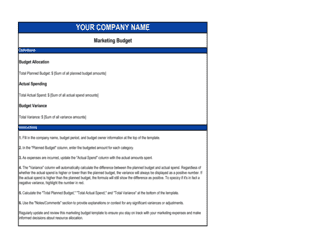
Seeking internal budget approval for a brand awareness campaignMarketing Budget Plan
Proposing a social media-only advertising strategySocial Media Marketing Proposal
Presenting a broader integrated marketing strategy beyond paid mediaMarketing Plan
Summarizing campaign performance after executionMarketing Report
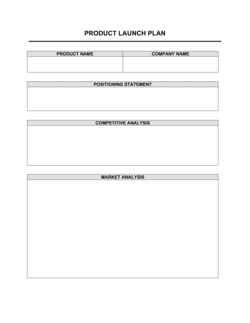
Outlining a new product launch campaign for stakeholder reviewProduct Launch Plan

Common mistakes to avoid

❌ Vague, unmeasurable campaign objectives

Why it matters: Objectives without numbers β€” 'increase awareness,' 'drive traffic' β€” give the client no basis to approve or reject the plan and give the agency no benchmark to be held to.

Fix: Attach a specific metric and target to every objective: 'generate 500 qualified leads at a CPL below $45 within 8 weeks.'

❌ No itemized budget breakdown

Why it matters: A single budget figure with no line items makes clients suspicious of how money is being split between media and fees, and routinely triggers renegotiation or rejection.

Fix: Break the budget into at minimum four categories β€” media spend, creative production, management fees, and contingency β€” with a dollar amount and percentage for each.

❌ Recommending channels without audience justification

Why it matters: Proposing TikTok to a B2B industrial client, or LinkedIn to a mass-market consumer brand, destroys proposal credibility and signals the recommendation is boilerplate.

Fix: Include one sentence of audience behavior evidence for each channel recommended β€” platform usage data, industry benchmarks, or client-specific analytics.

❌ Omitting a measurement and reporting plan

Why it matters: Without defined KPIs and a reporting cadence, the client has no way to evaluate campaign performance, and disputes about results are nearly inevitable.

Fix: Name the primary KPI for each objective, the attribution model, and the dates when weekly, mid-campaign, and final reports will be delivered.

❌ No creative direction in the proposal

Why it matters: Clients approving a budget need to understand what they are buying β€” a proposal with channels and numbers but no creative concept leaves too much undefined for sign-off.

Fix: Include at minimum a campaign theme, tone description, key message, and list of asset formats required β€” full creative does not need to be finished, but the direction must be clear.

❌ Missing or vague next steps

Why it matters: A proposal that ends with 'please let us know if you have questions' creates no urgency and no clear path to execution β€” most unanswered proposals stall at this point.

Fix: Close with a specific approval deadline, the authorization step, and the scheduled kickoff date so the client knows exactly what happens next.

The 10 key sections, explained

Executive Summary

Client Background and Campaign Objectives

Target Audience Profile

Proposed Media Mix and Channel Strategy

Creative Concept Overview

Campaign Schedule and Flight Dates

Budget Breakdown

Performance Metrics and Measurement Plan

Agency Credentials and Relevant Experience

Next Steps and Approval Process

How to fill it out

  1. 1

    Complete the client background and set measurable objectives

    Research the client's business, competitors, and current advertising activity before writing a single word. Translate the client's stated goals into SMART objectives β€” specific, measurable, achievable, relevant, and time-bound.

    πŸ’‘ Ask the client for their last 90 days of campaign data before building the proposal β€” past performance benchmarks make your projections far more defensible.

  2. 2

    Define the target audience with specifics

    Use the client's CRM data, existing analytics, or third-party audience research to define primary and secondary segments. Include age, income band, geography, interests, and media consumption habits.

    πŸ’‘ Platform audience-size tools (Meta Audience Insights, Google Keyword Planner) let you validate estimated reach before committing numbers to the proposal.

  3. 3

    Select and justify each media channel

    Choose channels based on where the target audience actively spends time and the campaign objective β€” awareness objectives favor reach-efficient channels; conversion objectives favor intent-based channels like paid search.

    πŸ’‘ Limit the initial proposal to two or three primary channels. A focused plan with strong rationale wins more approvals than a scattered multi-channel list.

  4. 4

    Outline the creative concept and asset requirements

    Describe the campaign theme, tone, and key message in plain language. List every creative asset format required by channel β€” sizes, lengths, and quantity β€” so production costs can be accurately estimated.

    πŸ’‘ Reference a specific audience insight in the creative concept (e.g., 'research shows [AUDIENCE] responds to [EMOTIONAL TRIGGER]') β€” it demonstrates strategic thinking beyond channel mechanics.

  5. 5

    Build the budget breakdown by line item

    Allocate total budget across media spend, creative production, agency management fee, ad serving technology, and a contingency reserve of 5–10%. Express each as a dollar amount and a percentage of total.

    πŸ’‘ Show the media spend net and gross if agency commission applies β€” clients unfamiliar with agency fee structures will ask, and proactively explaining it builds trust.

  6. 6

    Define KPIs and the reporting cadence

    Assign a primary KPI tied directly to each campaign objective. State the tracking method, attribution model, and reporting schedule β€” weekly dashboard, mid-campaign report, and final post-campaign analysis.

    πŸ’‘ Agree on KPI targets with the client before submitting the proposal, not after β€” negotiating benchmarks post-approval creates conflict when results come in.

  7. 7

    Write the executive summary last

    Pull the campaign objective, recommended approach, total budget, and top projected KPI from the completed sections into a single page that can stand alone as a summary for executives who will not read the full document.

    πŸ’‘ If the client has a specific business metric they care about most β€” revenue, new customers, app installs β€” lead the executive summary with how the campaign addresses that metric.

  8. 8

    Add a clear approval deadline and next steps

    State the date by which the client must approve to hit the proposed campaign launch date. Include the authorization process, deposit or PO requirement, and kickoff call scheduling step.

    πŸ’‘ Tie the approval deadline to a tangible consequence β€” 'approval by [DATE] ensures the campaign launches before [SEASONAL PEAK]' β€” to give the client a real reason to act.

Frequently asked questions

What is an advertising proposal?

An advertising proposal is a structured document that outlines a recommended advertising campaign for a client or internal stakeholder. It covers the campaign objectives, target audience, proposed media channels, creative concept, budget breakdown, performance KPIs, and project timeline. It is the primary document used to obtain approval and budget sign-off before a campaign goes into production.

What should an advertising proposal include?

A complete advertising proposal includes an executive summary, client background and measurable campaign objectives, target audience profile, recommended media mix with channel rationale, creative concept overview, a phased campaign schedule with flight dates, an itemized budget breakdown, a measurement and reporting plan, agency credentials relevant to the brief, and a clear approval process with a decision deadline.

How long should an advertising proposal be?

Most client-facing advertising proposals run 8–15 pages, excluding appendices. A proposal for a focused digital campaign with one or two channels can be as short as 6 pages; a multi-channel campaign with creative concepts and detailed media planning often runs to 20 pages. The goal is to answer every question a decision-maker needs answered without padding β€” include everything relevant, nothing decorative.

How is an advertising proposal different from a marketing plan?

A marketing plan is a broad strategic document covering all marketing activity β€” content, PR, events, partnerships, and paid media β€” typically for a 12-month period. An advertising proposal is narrower and more tactical: it focuses specifically on a defined paid advertising campaign, includes a detailed budget and media schedule, and is designed to secure approval and budget release for that campaign specifically.

Who writes an advertising proposal?

Advertising proposals are written by agencies pitching new or renewed campaigns to clients, media sales representatives packaging channel placements, freelance media planners or consultants recommending a paid strategy, and in-house marketing managers seeking internal budget approval. The document serves any situation where a paid advertising recommendation needs to be reviewed and signed off by a decision-maker.

How do I set a realistic advertising budget in a proposal?

Start with the client's revenue or lead target and work backward using industry-standard conversion rates and CPCs or CPMs for the proposed channels. Cross-check against the client's historical spend if available. Break the total into media spend (typically 70–80% of budget), creative production (10–15%), and agency fees (10–15%). Always include a 5–10% contingency reserve to absorb platform price fluctuations.

What KPIs should be included in an advertising proposal?

Include at least one primary KPI directly tied to each campaign objective. Awareness campaigns typically track reach, impressions, and frequency. Performance campaigns track cost per click, cost per lead, conversion rate, and ROAS. Always include at least one business-level metric β€” leads generated, sales attributed, or revenue driven β€” so campaign results can be tied directly to client outcomes rather than media metrics alone.

Can I use an advertising proposal template for digital and traditional media?

Yes. The core structure β€” objectives, audience, media mix, creative, budget, KPIs, and timeline β€” applies to both digital and traditional campaigns. The media mix section and budget breakdown fields adapt to the specific channels: a digital proposal names search, social, and programmatic placements; a traditional proposal specifies TV spots, radio dayparts, print placements, or out-of-home locations.

How do I make an advertising proposal more likely to be approved?

Three practices consistently improve approval rates: tie every recommendation to a client business goal rather than a media metric, show a line-item budget so clients see exactly where money goes, and close with a specific approval deadline linked to a campaign start date the client cares about β€” such as a product launch or seasonal peak. Proposals that answer the three questions every approver has β€” what will we get, how much will it cost, and when will we see results β€” get approved faster.

How this compares to alternatives

vs Marketing Plan

A marketing plan covers the full spectrum of marketing activity for a 12-month period β€” brand strategy, content, events, partnerships, and paid media combined. An advertising proposal focuses exclusively on a specific paid campaign: it includes a detailed media schedule, itemized budget, and channel-level KPIs. Use the marketing plan to set overall strategy; use the advertising proposal to execute and fund a specific campaign within that strategy.

vs Marketing Proposal

A marketing proposal covers the broader scope of marketing services an agency might provide β€” strategy, content, social media management, and advertising combined. An advertising proposal is narrower, covering only paid media placements and campaign execution. Choose the advertising proposal when the engagement is specifically about a paid campaign; use the marketing proposal when the scope includes ongoing strategy and multi-channel services.

vs Media Plan

A media plan is a tactical document produced after a proposal is approved β€” it details the specific placements, insertion orders, flight dates, and cost per placement for each channel. An advertising proposal is the upstream document that secures approval and budget. The proposal answers 'should we do this and why'; the media plan answers 'exactly how and where will the money be spent.'

vs Product Launch Plan

A product launch plan coordinates all activities across a launch β€” PR, sales enablement, pricing, distribution, and advertising. An advertising proposal addresses only the paid media component of a launch. For a product launch, use the launch plan to manage the full program and the advertising proposal to develop and approve the specific campaign that supports it.

Industry-specific considerations

Retail and E-commerce

Seasonal campaign proposals tied to peak shopping periods, with ROAS and conversion rate as primary KPIs and heavy weighting toward paid social and Google Shopping.

Healthcare and Wellness

Proposals must account for platform advertising restrictions on health claims and medical conditions, with compliant messaging reviewed before channel recommendations are finalized.

Financial Services

Regulated sector requiring compliance-approved ad copy and disclaimers; proposals typically include a compliance review milestone in the campaign schedule.

SaaS and Technology

Performance-focused proposals centered on cost per trial or demo request, with paid search and LinkedIn as dominant channels and a 90-day CAC payback benchmark.

Food and Beverage

Proposals emphasize visual creative formats β€” video and high-resolution image β€” across Instagram, TikTok, and programmatic display, with reach and frequency as primary awareness metrics.

Professional Services

Proposals focus on thought leadership and lead generation through LinkedIn and search, with cost per qualified lead and pipeline influenced as the primary business KPIs.

Template vs pro β€” what fits your needs?

PathBest forCostTime
Use the templateFreelance consultants, small agencies, and in-house marketers proposing straightforward digital or single-channel campaignsFree2–4 hours per proposal
Template + professional reviewMid-size agencies pitching multi-channel campaigns or accounts above $50K in spend where competitive review is expected$200–$500 for a strategist or account director review session1–2 days
Custom draftedLarge agencies or enterprise marketing teams pitching major retainer accounts with complex media mixes and formal RFP requirements$1,000–$5,000 for a full proposal team engagement1–2 weeks

Glossary

Media Mix
The combination of advertising channels β€” search, social, display, TV, radio, out-of-home β€” allocated across a campaign budget to reach a target audience.
Target Audience
The specific group of people a campaign is designed to reach, defined by demographics, psychographics, behaviors, or geography.
CPM (Cost Per Mille)
The cost an advertiser pays for one thousand impressions of an ad, used to compare the relative cost of reach across channels.
CPC (Cost Per Click)
The amount paid each time a user clicks on an ad, the standard pricing model for search and social performance campaigns.
Reach
The total number of unique individuals exposed to an advertising campaign within a defined period.
Frequency
The average number of times a single person is exposed to an ad within the campaign period.
Creative Brief
A short document that defines the campaign's messaging direction, tone, visual style, and key audience insight for the creative team.
Conversion Rate
The percentage of ad recipients who complete a desired action β€” purchase, sign-up, or inquiry β€” out of total clicks or impressions.
Flight Dates
The specific start and end dates during which an advertising campaign runs across its scheduled placements.
KPI (Key Performance Indicator)
A measurable value used to evaluate whether a campaign is achieving its stated objective, such as cost per lead or return on ad spend.
ROAS (Return on Ad Spend)
Revenue generated divided by total advertising spend β€” a direct measure of campaign revenue efficiency.

Part of your Business Operating System

This document is one of 3,000+ business & legal templates included in Business in a Box.

  • Fill-in-the-blanks β€” ready in minutes
  • 100% customizable Word document
  • Compatible with all office suites
  • Export to PDF and share electronically

Create your document in 3 simple steps.

From template to signed document β€” all inside one Business Operating System.
1
Download or open template

Access over 3,000+ business and legal templates for any business task, project or initiative.

2
Edit and fill in the blanks with AI

Customize your ready-made business document template and save it in the cloud.

3
Save, Share, Send, Sign

Share your files and folders with your team. Create a space of seamless collaboration.

Save time, save money, and create top-quality documents.

β˜…β˜…β˜…β˜…β˜…

"Fantastic value! I'm not sure how I'd do without it. It's worth its weight in gold and paid back for itself many times."

Managing Director Β· Mall Farm
Robert Whalley
Managing Director, Mall Farm Proprietary Limited
β˜…β˜…β˜…β˜…β˜…

"I have been using Business in a Box for years. It has been the most useful source of templates I have encountered. I recommend it to anyone."

Business Owner Β· 4+ years
Dr Michael John Freestone
Business Owner
β˜…β˜…β˜…β˜…β˜…

"It has been a life saver so many times I have lost count. Business in a Box has saved me so much time and as you know, time is money."

Owner Β· Upstate Web
David G. Moore Jr.
Owner, Upstate Web

Run your business with a system β€” not scattered tools

Stop downloading documents. Start operating with clarity. Business in a Box gives you the Business Operating System used by over 250,000 companies worldwide to structure, run, and grow their business.

Free Forever PlanΒ Β·Β No credit card required