Retirement Agreement Template

Free Word download • Edit online • Save & share with Drive • Export to PDF

5 pages25–35 min to fillDifficulty: ComplexSignature requiredLegal review recommended
Learn more ↓
FreeRetirement Agreement Template

At a glance

What it is
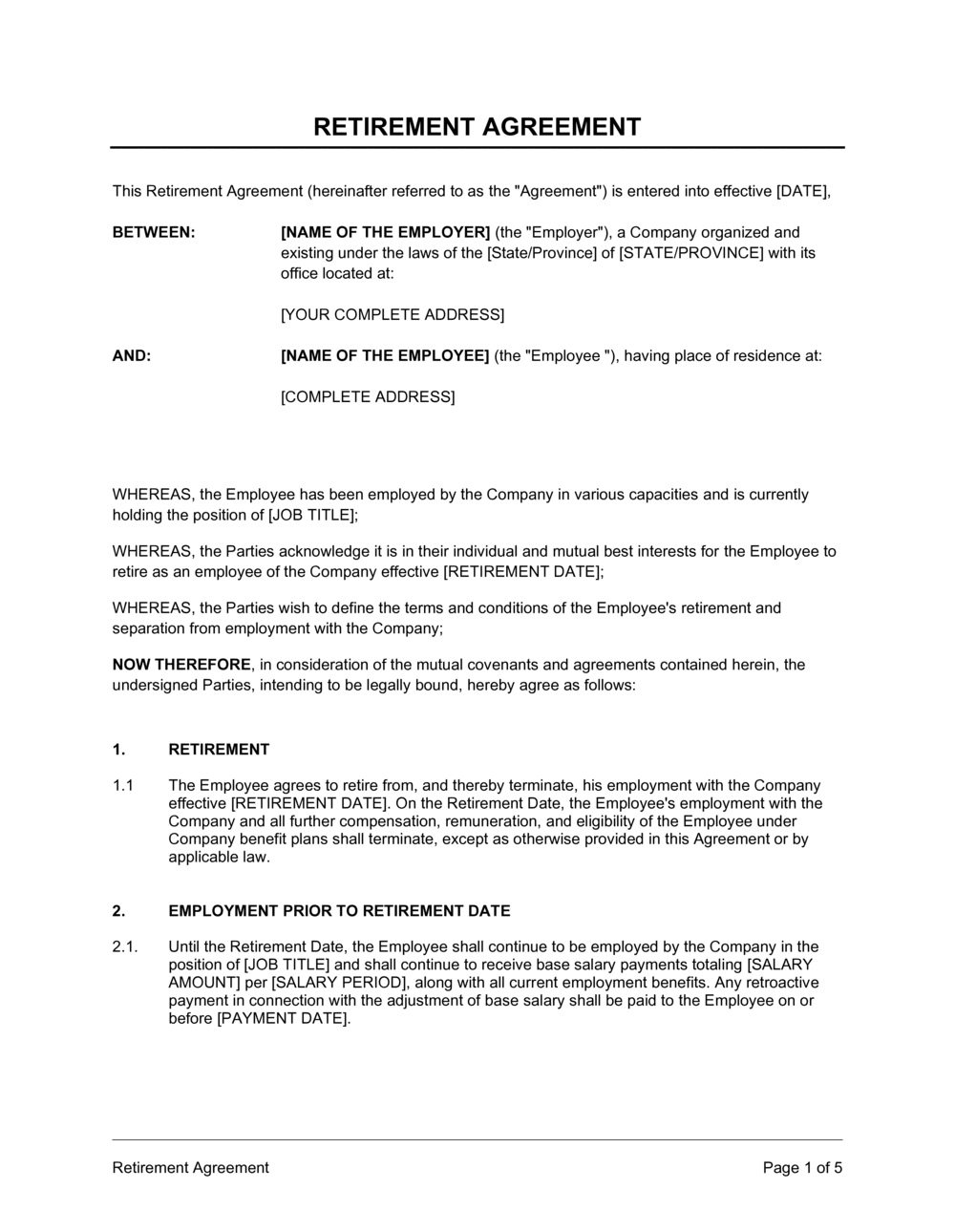
A Retirement Agreement is a legally binding document between an employer and a retiring employee that records every material term of the separation — the official last day of work, transition or severance payments, benefits continuation, a mutual release of claims, and any post-retirement consulting or advisory arrangement. This free Word download gives you a structured, attorney-ready starting point you can edit online and export as PDF to execute before the employee's retirement date.
When you need it
Use it whenever a long-tenured employee is retiring and both parties want a written record of agreed terms — especially when severance, equity vesting, benefits continuation, or a post-retirement consulting arrangement is part of the deal. It is also critical when the employer needs a valid release of employment claims in exchange for enhanced separation benefits.
What's inside
Retirement date, transition payment schedule, COBRA or benefits continuation terms, vesting acceleration or equity treatment, a mutual release of claims with ADEA/OWBPA-compliant language where required, non-disparagement and confidentiality obligations, and an optional post-retirement consulting or advisory scope.

What is a Retirement Agreement?

A Retirement Agreement is a legally binding document between an employer and a retiring employee that records every material term of the separation in writing: the official retirement date, any transition or separation payment, benefits continuation terms, the treatment of unvested equity, a release of employment-related legal claims, and any post-retirement consulting or advisory arrangement. Unlike a casual letter of acknowledgment or a simple resignation acceptance, a properly drafted retirement agreement creates enforceable obligations on both sides — protecting the employer from future claims and giving the employee documented confirmation of every benefit promised. For employees aged 40 or older in the United States, the agreement must also satisfy the specific requirements of the Age Discrimination in Employment Act and the Older Workers Benefit Protection Act to make the release of age-discrimination claims valid.

Why You Need This Document

Without a written retirement agreement, the employer has no enforceable release of employment claims — leaving the door open to age-discrimination, wrongful termination, or wage disputes long after the employee's last day. Verbal assurances about severance, benefits continuation, or consulting fees have no legal weight, and when the person who made those promises has left the company, the dispute becomes a credibility contest. Long-tenured employees frequently hold unvested equity worth significant sums; without explicit agreement language, the default plan terms govern — typically forfeiture — creating avoidable post-retirement litigation. The cost of getting this right is a one-time template review; the cost of getting it wrong can be a six-figure ADEA claim or a protracted dispute over a consulting retainer that was never put in writing.

Which variant fits your situation?

If your situation is…Use this template
Retiring employee is 40 or older and receives enhanced separation benefitsRetirement Agreement with ADEA/OWBPA Waiver
No severance is offered but both parties want a clean documented separationSeparation Agreement (No Severance)
Retiring C-suite executive with equity, golden parachute, or clawback termsExecutive Retirement Agreement
Post-retirement consulting or advisory engagement is the primary needConsulting Agreement
Employee is being separated involuntarily and a release of claims is neededSeverance Agreement and Release
Phased retirement with a reduced schedule over 6–12 monthsPhased Retirement Agreement
Group retirement incentive program offered to multiple employees simultaneouslyEarly Retirement Incentive Program (ERIP) Agreement

Common mistakes to avoid

❌ Skipping ADEA/OWBPA compliance for employees over 40

Why it matters: A release of age-discrimination claims that does not meet OWBPA requirements — 21-day consideration period, 7-day revocation, written attorney-consultation advisory — is void, exposing the employer to ADEA claims even after the agreement is signed.

Fix: Include the full OWBPA-compliant release block, explicitly state the 21-day review period and 7-day revocation right, advise the employee in writing to consult an attorney, and set the Effective Date as the eighth day following signature.

❌ Failing to define the transition period scope

Why it matters: Without a documented transition scope, the employer cannot demonstrate that the employee met their pre-retirement obligations, making it difficult to justify withholding or clawing back a separation payment.

Fix: List specific deliverables, handoff milestones, and knowledge-transfer tasks in a Schedule A attached to the agreement, and tie the final payment tranche to completion.

❌ Omitting equity award treatment entirely

Why it matters: If the agreement is silent on equity, the default terms of the equity plan govern — which typically means forfeiture of unvested grants, a short post-termination exercise window, and potential disputes if the employee expected different treatment.

Fix: Pull the employee's full equity schedule before drafting, document the agreed treatment of every grant explicitly, and confirm any acceleration requires board approval under the plan.

❌ Classifying post-retirement consulting as employment

Why it matters: Continuing to treat a retired consultant as an employee — same supervision, set hours, benefits eligibility — creates payroll tax liability, benefit-plan exposure, and potential re-employment claims that unwind the entire retirement separation.

Fix: State explicitly in the agreement and Schedule B that the post-retirement relationship is independent contractor, issue a 1099 rather than a W-2, and ensure the consultant controls their own hours and methods.

❌ Releasing separation payments before the OWBPA revocation period expires

Why it matters: Paying before the 7-day revocation window closes means the employer has disbursed funds the employee could still legally return — and if the employee does revoke, recouping the payment requires litigation.

Fix: Set the payment date as the later of the Effective Date (day 8 post-signature) or the next scheduled payroll cycle, and instruct payroll not to issue the payment before confirming the revocation window has closed.

❌ Using a one-sided non-disparagement clause

Why it matters: A clause that binds only the employee while leaving the employer free to comment on the circumstances of the retirement is increasingly challenged by employees and regulators as unconscionable, particularly in jurisdictions with strong implied-covenant protections.

Fix: Draft non-disparagement as a mutual obligation — both parties agree not to make negative public statements about the other — which is also more likely to be enforced by a court.

The 10 key clauses, explained

Parties, recitals, and retirement date

In plain language: Identifies the employer and retiring employee as legal parties, states the basis for the agreement, and records the official retirement date.

Sample language
This Retirement Agreement ('Agreement') is entered into as of [EXECUTION DATE] between [EMPLOYER LEGAL NAME], a [STATE] [ENTITY TYPE] ('Company'), and [EMPLOYEE FULL NAME] ('Employee'). Employee's employment will end on [RETIREMENT DATE] ('Retirement Date').

Common mistake: Using the employee's hire date or a trade name instead of the employer's registered legal entity name — this can create ambiguity about which entity is bound by the release and payment obligations.

Transition period and final duties

In plain language: Specifies whether the employee will continue in full capacity, on reduced duties, or on garden leave between execution and the retirement date, and what deliverables or knowledge transfer is expected.

Sample language
Between the Execution Date and the Retirement Date, Employee shall [continue in full duties / perform the transition duties set out in Schedule A / remain available for consultation only]. Employee shall complete [SPECIFIC DELIVERABLES] by [DATE].

Common mistake: Leaving the transition scope undefined, which leads to disputes about whether the retiring employee met their obligations — and whether the severance payment is owed.

Separation payment and schedule

In plain language: States the total separation payment, whether it is paid as a lump sum or in installments, the payment dates, and whether it is subject to standard payroll tax withholding.

Sample language
In consideration of Employee's execution of this Agreement, Company shall pay Employee a separation payment of $[AMOUNT], less applicable withholdings, payable as a lump sum on [DATE] / in [X] equal installments of $[AMOUNT] on the [DAY] of each month beginning [DATE].

Common mistake: Not specifying the withholding treatment. Separation payments are typically subject to ordinary income tax and FICA; failing to address this creates payroll compliance risk and surprises for the employee at tax time.

Benefits continuation

In plain language: Describes what health, dental, vision, life insurance, and retirement plan benefits continue after the retirement date, for how long, and who pays the premiums.

Sample language
Company shall continue Employee's group health coverage under COBRA for [X] months following the Retirement Date, with the Company paying [X]% of the premium. All other benefits terminate on the Retirement Date. Employee's 401(k) account shall be administered per plan terms.

Common mistake: Promising to 'continue benefits' without specifying which plans, the duration, and the premium-split — creating open-ended financial obligations the employer never intended to take on.

Equity treatment and vesting

In plain language: Addresses the fate of unvested stock options, RSUs, or other equity awards at retirement — whether they accelerate, lapse, or continue on their original schedule.

Sample language
Notwithstanding the terms of the [PLAN NAME] Equity Incentive Plan, all unvested stock options and RSUs held by Employee shall [vest in full on the Retirement Date / continue vesting per the original schedule for [X] months / be forfeited as of the Retirement Date]. Vested options shall remain exercisable for [X] months following the Retirement Date.

Common mistake: Omitting an equity clause entirely when the employee holds any equity awards — causing the employee to lose unvested grants with no agreed outcome, creating post-retirement disputes.

Release of claims

In plain language: The employee releases all employment-related legal claims against the employer in exchange for the separation benefits; for employees 40 or older, the release must comply with ADEA and OWBPA requirements.

Sample language
Employee, on behalf of themselves and their heirs, releases and forever discharges Company from any and all claims arising out of or relating to Employee's employment, including but not limited to claims under Title VII, the ADEA, the ADA, and any applicable state law. Employee acknowledges receipt of this Agreement at least 21 days before signing and understands their right to revoke within 7 days of signing.

Common mistake: Using a single-paragraph general release without ADEA/OWBPA-specific language for employees over 40 — making the entire release of age-discrimination claims legally invalid regardless of the other terms.

Confidentiality and non-disparagement

In plain language: Requires the employee to maintain confidentiality of the agreement's terms and the company's proprietary information, and prohibits either party from making disparaging public statements about the other.

Sample language
Employee agrees to keep the terms of this Agreement confidential, except as required by law or as necessary to consult with legal or financial advisors. Neither party shall make public statements that disparage the other party's reputation, products, or services.

Common mistake: Making the non-disparagement clause one-sided — applying only to the employee while leaving the employer free to comment on the retirement — which some jurisdictions treat as unconscionable.

Post-retirement consulting arrangement

In plain language: If agreed, sets out the scope of advisory services the retired employee will provide, the consulting fee or retainer, the term, and how either party can terminate the arrangement.

Sample language
Following the Retirement Date, Employee agrees to provide consulting services as described in Schedule B for a period of [X] months, at a retainer of $[AMOUNT] per month. Either party may terminate this arrangement with [30] days' written notice. Employee shall perform services as an independent contractor and shall not be entitled to employee benefits.

Common mistake: Failing to classify the post-retirement consulting relationship explicitly as independent contractor — exposing the employer to payroll tax liability, benefit claims, and workers' compensation obligations.

Return of company property

In plain language: Requires the employee to return all company equipment, credentials, documents, and confidential materials by the retirement date.

Sample language
On or before the Retirement Date, Employee shall return to Company all property, including but not limited to laptops, mobile devices, access credentials, client files, and any documents containing Confidential Information, in whatever form held.

Common mistake: No specific deadline for property return — employees sometimes keep equipment for months post-retirement, complicating device security, data compliance, and insurance coverage.

Governing law, integration, and revocation notice

In plain language: Specifies which jurisdiction's law governs, confirms the agreement supersedes all prior arrangements, and — for ADEA-compliant releases — restates the 7-day revocation right and effective date.

Sample language
This Agreement is governed by the laws of [STATE/PROVINCE/COUNTRY]. It constitutes the entire agreement between the parties and supersedes all prior agreements. This Agreement becomes effective on the eighth day following Employee's signature ('Effective Date'), provided Employee has not revoked it in writing within 7 days of signing.

Common mistake: Stating the agreement is 'effective upon signing' for a US employee over 40 — the OWBPA mandates a 7-day revocation period, and an immediate-effectiveness clause renders the ADEA waiver unenforceable.

How to fill it out

  1. 1

    Enter legal entity names and confirm the retirement date

    Use the employer's full registered corporate name and the employee's legal name as it appears on payroll records. Enter the exact retirement date — this is the anchor for every other timeline in the agreement.

    💡 Confirm the retirement date against pension plan, 401(k) vesting, and benefits plan cutoff dates before locking it in — a one-day difference can change entitlements significantly.

  2. 2

    Define the transition period and deliverables

    Specify whether the employee works full duties, reduced duties, or garden leave between execution and the retirement date. List specific knowledge-transfer tasks or deliverables in Schedule A.

    💡 Attach a written knowledge-transfer checklist as Schedule A — it sets clear expectations and gives the employer a documented basis to withhold separation payments if key handoffs are not completed.

  3. 3

    Set the separation payment amount and schedule

    Enter the total payment, whether lump sum or installments, and the exact payment dates. Confirm with payroll that the withholding treatment is correct — separation payments are subject to ordinary income tax and FICA.

    💡 If paying in installments, include a clause stating that future payments cease if the employee breaches the agreement — this gives the employer practical leverage to enforce the release and confidentiality terms.

  4. 4

    Complete the benefits continuation block

    Specify each benefit plan by name, the continuation period, and the premium split. For US employees, reference COBRA by statute and set the number of months the employer will subsidize the premium.

    💡 Do not promise to 'match active-employee benefits' — plan terms change annually. Reference benefits by category and include language stating continuation is subject to plan terms as amended.

  5. 5

    Address all equity awards explicitly

    Pull the employee's current equity schedule and document the treatment of each grant — vesting acceleration, forfeiture, or post-retirement exercise window. Cross-reference the equity plan document to confirm the agreement's terms are permitted under the plan.

    💡 Many equity plans require board approval for vesting acceleration. Confirm approval is in place before including acceleration language in the agreement.

  6. 6

    Draft the release of claims with ADEA compliance if applicable

    For any retiring employee aged 40 or older in the US, include ADEA/OWBPA-compliant release language with the 21-day consideration period and 7-day revocation right. State the Effective Date as the eighth day following signature.

    💡 The OWBPA also requires that the employee be advised in writing to consult an attorney. Include this advisory in the agreement — even one line suffices and is mandatory.

  7. 7

    Attach the consulting scope as Schedule B if applicable

    If a post-retirement consulting arrangement is agreed, describe the services, deliverables, fee, term, and termination rights in Schedule B. Classify the relationship explicitly as independent contractor.

    💡 Keep the consulting retainer separate from the separation payment and pay it on a monthly invoice cycle — commingling the two payments creates payroll tax ambiguity.

  8. 8

    Execute before the retirement date and observe the revocation window

    Both parties must sign before the retirement date. For ADEA-compliant releases, the agreement cannot become effective until the 7-day revocation period expires. Do not release separation payments until the Effective Date has passed.

    💡 Send the agreement at least 25–30 days before the retirement date to give the employee the full 21-day consideration period and still have time to process final payments before the last day.

Frequently asked questions

What is a retirement agreement?

A retirement agreement is a legally binding document between an employer and a retiring employee that records the terms of the separation — the official retirement date, any separation or transition payments, benefits continuation, equity treatment, a release of employment claims, and any post-retirement consulting arrangement. It protects both parties by converting informal understandings into enforceable written obligations before the employee's last day.

Is a retirement agreement the same as a severance agreement?

Not exactly. Both documents can include separation payments and releases of claims, but a retirement agreement is used for a planned, voluntary departure and often includes additional elements unique to retirement — equity vesting treatment, pension coordination, benefits continuation, and a post-retirement consulting scope. A severance agreement typically addresses involuntary terminations and focuses narrowly on the payment and release. If the retirement includes enhanced separation benefits, the documents overlap significantly and both should contain ADEA-compliant release language for employees over 40.

Does a retirement agreement need to comply with ADEA and OWBPA?

Yes, if the retiring employee is 40 or older and the agreement includes a waiver of age-discrimination claims in exchange for benefits, US law requires OWBPA compliance. That means a written release specifically referencing ADEA claims, a minimum 21-day period for the employee to consider the agreement, a written advisement to consult an attorney, and a 7-day revocation window after signing. A release that omits any of these elements is not enforceable with respect to ADEA claims, regardless of whether the employee accepts payment.

Can a retirement agreement include a non-compete clause?

Yes, but enforceability depends on the jurisdiction and the scope of the restriction. In most US states, a non-compete tied to a voluntary retirement is held to a reasonableness standard — duration typically 6–12 months, geography limited to markets the employee actually served, and activity limited to direct competitive roles. California, Minnesota, and several other states prohibit or severely limit post-employment non-competes. The consideration offered — enhanced severance or a consulting retainer — strengthens enforceability compared to a bare non-compete with no additional benefit.

What happens to unvested equity when an employee retires?

The default outcome is governed by the equity plan document — typically, unvested options and RSUs are forfeited upon separation and vested options must be exercised within 90 days. A retirement agreement can override these defaults by providing for vesting acceleration or an extended exercise window, but the plan itself must permit such modifications and board approval is often required. Omitting equity treatment from the retirement agreement almost always leads to post-retirement disputes.

What is the 21-day consideration period and can the employee sign early?

The OWBPA gives employees over 40 a minimum of 21 days to review a retirement or severance agreement before signing, specifically to ensure the release of ADEA claims is knowing and voluntary. The employee may choose to sign before the 21 days expire, but the employer cannot pressure or condition benefits on an early signature. For group separation programs involving multiple employees, the consideration period extends to 45 days.

Should the post-retirement consulting arrangement be in the same document?

It can be included as a schedule to the retirement agreement or executed as a separate consulting agreement. Including it as Schedule B in the same document simplifies execution and makes the overall package clear to both parties. However, for complex or long-term consulting arrangements, a standalone consulting agreement gives more flexibility to amend the scope and fee without triggering a formal amendment to the entire retirement agreement.

What consideration is required to make the release enforceable?

For a release of claims to be enforceable, the employer must provide consideration beyond what the employee is already entitled to receive at separation — final salary, accrued vacation, and vested retirement benefits are not sufficient consideration because the employee is owed them regardless. Typical valid consideration includes a separation payment, enhanced benefits continuation, vesting acceleration, or a consulting retainer. Without genuine additional consideration, courts in most jurisdictions will void the release.

Do I need a lawyer to prepare a retirement agreement?

For standard retirements of non-executive employees with straightforward severance and no complex equity, a well-drafted template reviewed by an employment attorney is typically sufficient. Legal review becomes essential when the employee is over 40 (ADEA compliance), when the package includes equity acceleration requiring board approval, when the employee works in a heavily regulated industry, or when the separation payment exceeds six figures. A 1–2 hour review typically costs $300–$700 and is worth it to confirm the release will hold.

How this compares to alternatives

vs Severance Agreement

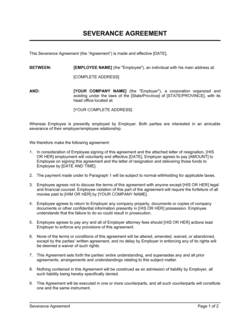
A severance agreement addresses involuntary termination — layoffs, restructuring, or mutual separations — and focuses on the payment and release of claims. A retirement agreement covers a planned voluntary departure and adds retirement-specific elements: equity treatment, pension coordination, benefits continuation planning, and an optional post-retirement consulting scope. Both require ADEA-compliant release language for employees over 40, but the context and tone differ significantly.

vs Separation Agreement

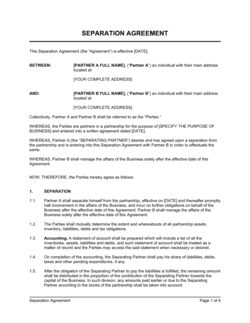
A separation agreement is a general-purpose document used for any employment ending — voluntary or involuntary — and typically omits retirement-specific provisions like consulting retainers, pension references, and vesting acceleration. A retirement agreement is narrower in scope but more detailed on the post-employment relationship and long-service benefits that apply only to planned retirements.

vs Consulting Agreement

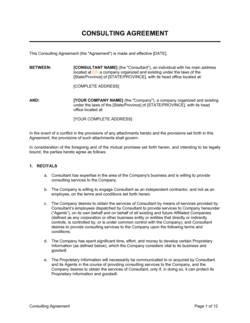
A consulting agreement governs an independent contractor engagement and addresses scope, deliverables, fees, IP, and termination — but does not cover the employment separation itself. A retirement agreement can incorporate a consulting arrangement as a schedule, but the core document also handles the release of employment claims, severance, and benefits — which a standalone consulting agreement does not. Use both when the post-retirement engagement is complex or long-term.

vs Employment Contract

An employment contract governs the active employment relationship from hire to termination. A retirement agreement governs the end of that relationship. The two documents should be consistent — the retirement agreement's severance and release clauses should not contradict existing contractual obligations — and the retirement agreement typically supersedes the employment contract on any point of conflict at separation.

Industry-specific considerations

Technology / SaaS

Equity vesting acceleration and extended option exercise windows are standard retirement negotiation points for senior engineers and executives with large unvested grants.

Financial Services

Client non-solicitation and book-of-business transition obligations, FINRA registration surrender, and deferred compensation or bonus clawback provisions are common retirement agreement elements.

Healthcare

Credentialing wind-down, patient transition protocols, and DEA registration surrender must be coordinated with the retirement date and documented in the transition scope.

Professional Services

Partner or shareholder buy-out terms, client transition obligations, and non-solicitation of firm clients are typically the most negotiated clauses in professional services retirement agreements.

Manufacturing

Pension plan coordination, union agreement interaction, and safety certification transfers are key operational considerations tied to the retirement date.

Retail / Hospitality

High proportion of hourly and long-tenured store managers retiring; agreements focus on accrued PTO payout, benefits termination timing, and any profit-sharing or bonus proration.

Jurisdictional notes

United States

The OWBPA requires that any waiver of ADEA claims by an employee 40 or older be accompanied by a 21-day consideration period, a 7-day revocation window, and a written advisement to consult an attorney. Group separation programs extend the consideration period to 45 days. Separation payments are subject to ordinary income tax and FICA withholding. Non-compete enforceability varies sharply by state — California bans most post-employment restrictions.

Canada

Provincial Employment Standards Acts set minimum termination and severance pay entitlements that apply regardless of the reason for separation — a retirement agreement must meet or exceed these floors. Common-law reasonable notice for long-tenured employees can reach 24 months, making documented voluntary retirement agreements particularly valuable. Quebec agreements must be in French for provincially-regulated employers, and the province has distinct rules on non-compete enforceability.

United Kingdom

There is no mandatory retirement age in the UK; employers cannot force retirement and must treat it as a voluntary resignation. A settlement agreement (the UK equivalent of a US separation agreement) must be signed with the benefit of independent legal advice to be binding — the employer typically contributes a fixed amount toward the employee's legal fees. Payments within the £30,000 statutory exemption may be tax-free; anything above is subject to income tax and NICs.

European Union

EU member states generally prohibit mandatory retirement ages below the statutory pension age, and several countries require consultation with works councils before executing individual retirement agreements. Separation payments above statutory minimums are often subject to social security contributions as well as income tax. Non-compete clauses in retirement agreements typically require financial compensation to the employee — ranging from 25% to 100% of salary for the restriction period depending on the member state.

Template vs lawyer — what fits your deal?

PathBest forCostTime
Use the templateStandard retirement of a non-executive employee under 40, or where no release of claims is neededFree30–60 minutes
Template + legal reviewEmployees over 40 requiring ADEA/OWBPA compliance, or packages including equity acceleration or extended benefits$300–$700 (1–2 hour employment attorney review)2–5 days
Custom draftedC-suite executives with complex equity, deferred compensation, golden parachute provisions, or multi-jurisdiction employment$2,000–$8,000+1–3 weeks

Glossary

Retirement Date
The specific calendar date on which the employee's active employment ends and retirement status begins.
Separation Payment
A lump sum or series of payments made by the employer to the retiring employee as part of the retirement package, beyond final salary.
COBRA Continuation Coverage
A US federal law allowing former employees to continue employer-sponsored health insurance for up to 18 months after separation, typically at full premium cost.
ADEA (Age Discrimination in Employment Act)
A US federal law prohibiting employment discrimination against individuals 40 and older — a retirement agreement's release of claims must comply with ADEA to be enforceable.
OWBPA (Older Workers Benefit Protection Act)
A US federal statute requiring that any waiver of ADEA claims be knowing and voluntary, with a 21-day consideration period and a 7-day revocation window.
Release of Claims
A contractual provision in which the employee waives the right to bring legal claims — such as discrimination or wrongful termination — against the employer in exchange for consideration.
Consideration
Something of value — money, benefits, or services — exchanged between parties to make a contract legally enforceable; in a retirement agreement, severance or enhanced benefits typically serve as consideration for the release.
Vesting Acceleration
A provision that causes unvested equity awards to vest immediately upon retirement, rather than on the original schedule.
Non-Disparagement Clause
A mutual or one-sided restriction preventing either party from making negative public statements about the other following separation.
Consulting Retainer
A fixed monthly or project fee paid to the retired employee for agreed advisory services performed after the retirement date.
Garden Leave
A paid notice period during which the employee does not perform active duties, preventing access to sensitive clients or information before the retirement date.
Integration Clause
A provision stating that the retirement agreement supersedes all prior agreements, offer letters, and verbal understandings between the parties.

Part of your Business Operating System

This document is one of 3,000+ business & legal templates included in Business in a Box.

  • Fill-in-the-blanks — ready in minutes
  • 100% customizable Word document
  • Compatible with all office suites
  • Export to PDF and share electronically

Create your document in 3 simple steps.

From template to signed document — all inside one Business Operating System.
1
Download or open template

Access over 3,000+ business and legal templates for any business task, project or initiative.

2
Edit and fill in the blanks with AI

Customize your ready-made business document template and save it in the cloud.

3
Save, Share, Send, Sign

Share your files and folders with your team. Create a space of seamless collaboration.

Save time, save money, and create top-quality documents.

★★★★★

"Fantastic value! I'm not sure how I'd do without it. It's worth its weight in gold and paid back for itself many times."

Managing Director · Mall Farm
Robert Whalley
Managing Director, Mall Farm Proprietary Limited
★★★★★

"I have been using Business in a Box for years. It has been the most useful source of templates I have encountered. I recommend it to anyone."

Business Owner · 4+ years
Dr Michael John Freestone
Business Owner
★★★★★

"It has been a life saver so many times I have lost count. Business in a Box has saved me so much time and as you know, time is money."

Owner · Upstate Web
David G. Moore Jr.
Owner, Upstate Web

Run your business with a system — not scattered tools

Stop downloading documents. Start operating with clarity. Business in a Box gives you the Business Operating System used by over 250,000 companies worldwide to structure, run, and grow their business.

Start free · No credit card required