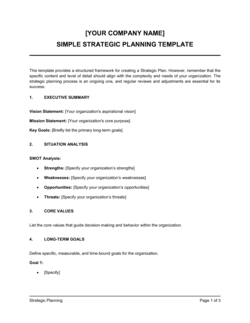
Restaurant Business Plan 2 Template

Free Word download β€’ Edit online β€’ Save & share with Drive β€’ Export to PDF

36 pagesβ€’2h 55m – 4h to fillβ€’Difficulty: Expert
Learn more ↓
FreeRestaurant Business Plan 2 Template

At a glance

What it is
A Restaurant Business Plan is a structured document that maps your restaurant concept, target market, competitive landscape, menu strategy, operations model, staffing plan, and 3–5 year financial projections into a single investor- and lender-ready package. This free Word download gives you a complete framework you can edit online and export as PDF to share with banks, investors, landlords, or franchise partners.
When you need it
Use it when opening a new restaurant, applying for an SBA loan or commercial real estate lease, seeking equity investment, or repositioning an existing location around a new concept or market.
What's inside
Executive summary, restaurant concept and brand story, market and competitive analysis, menu overview with food cost targets, marketing and sales strategy, operations and supplier plan, management team profiles, and full financial projections including P&L, cash flow, and startup cost breakdown.

What is a Restaurant Business Plan?

A Restaurant Business Plan is a structured operational and financial document that translates a restaurant concept into a concrete, reviewable roadmap covering market opportunity, competitive positioning, menu strategy, staffing model, startup costs, and 3–5 year financial projections. It functions simultaneously as an internal planning tool and an external-facing document submitted to SBA lenders, commercial banks, angel investors, landlords, and franchise partners. Unlike a general business plan, a restaurant-specific plan addresses the unique economics of food service β€” food cost percentage, prime cost, daily cover counts, table turn rates, and pre-opening capital requirements β€” in enough detail for a reviewer to evaluate whether the concept is financially viable before a single dollar is spent.

Why You Need This Document

Without a written restaurant business plan, financing conversations end at the first follow-up meeting β€” SBA lenders require one by application, and most commercial landlords expect it before negotiating a lease on a high-street location. The deeper cost of skipping it is operational: restaurant concepts that have never been subjected to a covers-per-day revenue model, a line-by-line startup cost budget, or a prime cost analysis regularly discover in Month 4 that they are running out of cash despite strong reviews and a full dining room. A well-structured plan forces you to test your average-check assumptions, confront your working capital requirements, and identify the break-even cover count before you sign a lease or commit to a build-out. This template gives you the complete framework to do that work β€” and the format lenders and investors expect to receive it in.

Which variant fits your situation?

If your situation is…Use this template
Opening a quick-service or fast-casual counter conceptRestaurant Business Plan
Launching a food truck or mobile catering businessFood Truck Business Plan
Starting a catering company or event food serviceCatering Business Plan
Opening a coffee shop or cafeCafe Business Plan
Seeking a single-page summary for early-stage ideationOne-Page Business Plan
Applying for an SBA or bank loan as a standalone documentBank Loan Business Plan
Expanding an existing restaurant into a second locationBusiness Expansion Plan

Common mistakes to avoid

❌ Projecting revenue from market share instead of daily covers

Why it matters: Claiming 2% of a $50M local market sounds plausible but tells a lender nothing about daily operations. It is impossible to verify and easy to dismiss.

Fix: Anchor all revenue projections to daily cover counts, average check size, and days of operation β€” numbers a reviewer can cross-check against your seating capacity.

❌ Underestimating pre-opening and working capital costs

Why it matters: Running out of cash in Month 3 or 4 is the most common cause of first-year restaurant failure, even when the concept and food are strong.

Fix: Reserve a minimum of 3 months of fixed operating costs as working capital. Get contractor bids, not estimates, before locking your startup cost figures.

❌ Omitting a competitive analysis or listing only national chains

Why it matters: A lender evaluating a neighborhood Italian restaurant wants to know about the three other Italian concepts within a mile β€” not that Olive Garden exists.

Fix: Walk your trade area and document at least four local competitors by cuisine, price point, estimated covers, and specific strengths and weaknesses.

❌ No food cost or prime cost analysis in the menu section

Why it matters: A beautiful menu with no cost data signals the owner does not yet understand whether the concept is financially viable at scale.

Fix: Calculate food cost percentage for every menu item and set a blended target per category. Include a prime cost summary showing labor plus food cost as a percentage of projected revenue.

The 9 key sections, explained

Executive Summary

Restaurant Concept and Brand

Market and Competitive Analysis

Menu Overview and Food Cost Strategy

Marketing and Guests Acquisition Strategy

Operations Plan

Staffing and Management Plan

Startup Costs and Funding Requirements

Financial Projections

How to fill it out

  1. 1

    Define your concept and brand story

    Write a one-paragraph concept statement covering cuisine, service format, atmosphere, target customer, and the specific market gap you fill. Avoid adjectives without evidence β€” 'unique' and 'authentic' are meaningless without specifics.

    πŸ’‘ Test your concept statement on someone with no restaurant experience. If they can't repeat back the key idea in one sentence, simplify it.

  2. 2

    Research your local trade area

    Pull demographic data for a 1–3 mile radius using census data or a site-selection tool. Identify and profile at least four direct competitors by cuisine, price point, seating capacity, and estimated covers per day.

    πŸ’‘ Visit each competitor during peak service and count covers β€” this gives you a local demand baseline that no market report can provide.

  3. 3

    Build your menu with food cost analysis

    List every menu item with its ingredient cost and selling price. Calculate food cost percentage per item and identify your five highest-margin items. Set a blended food cost target for each category.

    πŸ’‘ Build the menu around items that hit your food cost target, not around your personal favorites β€” a dish that doesn't pencil out will erode margins at volume.

  4. 4

    Project daily covers and average check

    Set a conservative estimate of covers per service period for lunch and dinner separately, multiplied by the days you are open. Multiply by your target average check to build a bottom-up revenue projection.

    πŸ’‘ Use 50–60% of capacity for Year 1 and 70–80% for Year 2 β€” most lenders will reduce whatever number you give them, so start from a defensible baseline.

  5. 5

    Complete the startup cost itemization

    Enter every pre-opening expense line by line: lease deposit, leasehold improvements, equipment, smallwares, permits, initial inventory, uniforms, POS setup, pre-opening payroll, and a working capital reserve of at least 3 months' fixed costs.

    πŸ’‘ Get actual contractor bids for build-out before finalizing this section β€” rule-of-thumb estimates for construction costs routinely understate actual spend by 20–40%.

  6. 6

    Build the three-statement financial model

    Model a monthly P&L for Year 1 using your cover and average-check assumptions. Build an annual P&L for Years 2–3. Derive cash flow from the P&L and reconcile ending cash to the balance sheet each month.

    πŸ’‘ Include a scenario in which revenue hits only 70% of your base case β€” if the business runs out of cash before Month 9 in that scenario, increase your working capital reserve.

  7. 7

    Write the executive summary last

    Pull the single strongest data point from each section β€” concept hook, market gap, projected Year 1 revenue, funding ask β€” and compress them into one to two pages.

    πŸ’‘ Lenders and investors read the executive summary and the financial projections first. If those two sections are weak, the rest of the plan will not be read.

Frequently asked questions

What is a restaurant business plan?

A restaurant business plan is a structured document that defines your restaurant concept, target market, competitive positioning, menu strategy, operations model, staffing structure, and 3–5 year financial projections. It serves as both an internal operating roadmap and an external document for securing bank loans, SBA financing, investor capital, or landlord approval for a commercial lease.

What financial projections should a restaurant business plan include?

A complete financial section includes monthly P&L for Year 1 and annual P&L for Years 2–3 or 2–5, a cash flow statement on the same cadence, a startup cost itemization, a projected balance sheet, and a break-even analysis. Revenue projections must be built from daily cover counts and average check β€” not market-share percentages. Include a downside scenario at 70% of projected revenue to demonstrate cash runway.

How long should a restaurant business plan be?

A lender- or investor-ready restaurant business plan typically runs 20–35 pages plus a financial model appendix. The executive summary should be no longer than two pages. SBA lenders and most angel investors want enough detail to evaluate market viability and financial soundness, but plans exceeding 40 pages before the appendix are rarely read in full.

Do I need a restaurant business plan to get an SBA loan?

Yes. SBA 7(a) and 504 lenders require a written business plan as part of the loan application package. At minimum, the plan must include a company overview, market analysis, management team profiles, a startup cost schedule, and full financial projections. Missing any of these will stall your application or result in an outright decline.

What is a realistic food cost target for a restaurant?

The typical food cost target is 28–35% of revenue for most full-service and fast-casual concepts. Fine-dining restaurants may run 30–38% with higher average checks compensating for the elevated ingredient quality. Fast food and counter-service concepts typically target 25–30%. Beverage programs β€” especially alcohol β€” run 18–25% and are a key lever for improving blended food cost.

What is prime cost and why does it matter in a restaurant business plan?

Prime cost is the combined total of food cost and labor cost β€” the two largest and most controllable expense categories in restaurant operations. Sustainable restaurants typically keep prime cost below 60–65% of revenue. Lenders and investors scrutinize the prime cost target because it directly determines whether the concept can generate sufficient cash flow to service debt and build reserves.

Can I write a restaurant business plan myself, or do I need a consultant?

A well-structured template handles the majority of the framework for most concepts. Hire a restaurant consultant or business plan writer ($2,000–$8,000) when the raise exceeds $500K, when the concept involves complex multi-unit projections, or when you need a certified financial model for an SBA preferred lender. For loans under $350K or early-stage investor conversations, a carefully completed template is typically sufficient.

What makes investors or lenders reject a restaurant business plan?

The most common rejection triggers are revenue projections built from market-share guesses rather than daily cover counts, startup cost budgets with no contractor bids to support them, a competitive analysis that ignores local competitors, and no working capital reserve beyond opening day. A prime cost target above 70% will also prompt immediate concern from any experienced lender.

How often should a restaurant business plan be updated?

Update the plan before every major financing event β€” new loan application, additional equity raise, or lease renewal negotiation. For operating restaurants, an annual review comparing projected versus actual financials is best practice. A plan built before opening that has never been updated against real revenue and cost data is a historical document, not a management tool.

How this compares to alternatives

vs Restaurant Business Plan (version 1)

Restaurant Business Plan 1 is a streamlined version suited for quick-service and early-stage concepts with simpler operational models. This template (version 2) includes expanded sections for competitive analysis, menu food cost strategy, and detailed staffing plans β€” making it better suited for full-service, investor-facing, or loan-application contexts.

vs One-Page Business Plan

A one-page plan is a rapid-alignment tool for early ideation or internal team discussions. It lacks the financial depth, market evidence, and operational detail that SBA lenders and investors require. Use it to test and validate your concept, then build the full restaurant business plan before any capital raise or lease application.

vs Financial Projections Template

A financial projections template covers only the numbers β€” P&L, cash flow, and balance sheet. A restaurant business plan provides the market, concept, operations, and team context that makes those numbers credible to an outside reviewer. Lenders and investors always evaluate projections in the context of the full plan.

vs Marketing Plan

A marketing plan focuses exclusively on guest acquisition channels, campaigns, and budget allocation. A restaurant business plan includes a marketing section but places it within the broader financial and operational context. Use the standalone marketing plan once the restaurant is open and you need a detailed annual guest acquisition strategy.

Industry-specific considerations

Full-Service Restaurants

Table service model requires detailed covers-per-turn analysis, FOH staffing ratios, and liquor license cost included in startup expenses.

Fast-Casual and Counter Service

Higher throughput targets, lower labor cost as a percentage of revenue, and technology investment in order-ahead and kiosk systems featured in the operations section.

Food Trucks and Mobile Catering

Commissary kitchen costs, permitting by municipality, event and market revenue modeling, and lower pre-opening capital requirements than brick-and-mortar.

Franchise Food Service

Royalty and marketing fee obligations built into the P&L, franchisor-mandated equipment and supplier costs, and territory market analysis required by the franchise disclosure document.

Template vs pro β€” what fits your needs?

PathBest forCostTime
Use the templateFirst-time owners, food truck operators, and SBA loan applications under $350KFree3–5 weeks (40–60 hours)
Template + professional reviewFull-service concepts seeking loans of $350K–$750K or early-stage equity investors$500–$2,500 for a financial model review or restaurant consultant session4–6 weeks
Custom draftedMulti-unit concepts, raises above $750K, or SBA preferred-lender applications requiring certified financials$2,500–$8,000 for a professional restaurant business plan writer5–8 weeks

Glossary

Food Cost Percentage
The ratio of ingredient costs to menu item revenue, expressed as a percentage β€” industry target is typically 28–35%.
Covers
The number of individual meals or guests served in a given period, used to measure dining room throughput and revenue capacity.
Table Turn Rate
How many times a table is occupied and vacated during a service period β€” a higher rate increases revenue without adding seats.
Prime Cost
The combined total of food cost and labor cost β€” the two largest expense categories in restaurant operations, ideally kept below 60–65% of revenue.
Break-Even Point
The monthly revenue level at which total sales exactly cover all fixed and variable costs, leaving zero profit or loss.
Average Check
Total revenue divided by the number of covers in a period β€” a key metric for forecasting revenue and evaluating pricing strategy.
Pre-Opening Costs
One-time startup expenses incurred before opening day, including build-out, equipment, permits, initial inventory, and staff training.
Gross Profit Margin
Revenue minus cost of goods sold (food and beverage costs), expressed as a percentage of revenue β€” before labor and overhead.
Concept Statement
A concise description of the restaurant's cuisine, service style, target customer, atmosphere, and competitive positioning.
Occupancy Cost
Total rent, common area maintenance, and property taxes as a percentage of revenue β€” sustainable range is typically 6–10% for full-service restaurants.

Part of your Business Operating System

This document is one of 3,000+ business & legal templates included in Business in a Box.

  • Fill-in-the-blanks β€” ready in minutes
  • 100% customizable Word document
  • Compatible with all office suites
  • Export to PDF and share electronically

Create your document in 3 simple steps.

From template to signed document β€” all inside one Business Operating System.
1
Download or open template

Access over 3,000+ business and legal templates for any business task, project or initiative.

2
Edit and fill in the blanks with AI

Customize your ready-made business document template and save it in the cloud.

3
Save, Share, Send, Sign

Share your files and folders with your team. Create a space of seamless collaboration.

Save time, save money, and create top-quality documents.

β˜…β˜…β˜…β˜…β˜…

"Fantastic value! I'm not sure how I'd do without it. It's worth its weight in gold and paid back for itself many times."

Managing Director Β· Mall Farm
Robert Whalley
Managing Director, Mall Farm Proprietary Limited
β˜…β˜…β˜…β˜…β˜…

"I have been using Business in a Box for years. It has been the most useful source of templates I have encountered. I recommend it to anyone."

Business Owner Β· 4+ years
Dr Michael John Freestone
Business Owner
β˜…β˜…β˜…β˜…β˜…

"It has been a life saver so many times I have lost count. Business in a Box has saved me so much time and as you know, time is money."

Owner Β· Upstate Web
David G. Moore Jr.
Owner, Upstate Web

Run your business with a system β€” not scattered tools

Stop downloading documents. Start operating with clarity. Business in a Box gives you the Business Operating System used by over 250,000 companies worldwide to structure, run, and grow their business.

Start freeΒ Β·Β No credit card required