Request for Verification of Receivable During Audit Template

Free Word download β€’ Edit online β€’ Save & share with Drive β€’ Export to PDF

1 pageβ€’20–25 min to fillβ€’Difficulty: Standard
Learn more ↓
FreeRequest for Verification of Receivable During Audit Template

At a glance

What it is
A Request for Verification of Receivable During Audit is a formal business letter sent to a customer or debtor asking them to confirm the balance they owe as of a specific date. This free Word download gives auditors and accountants a ready-to-use template they can edit online, address to each debtor, and dispatch as part of their accounts receivable audit procedures.
When you need it
Use it during a financial statement audit when the auditor needs third-party confirmation that an accounts receivable balance recorded in the client's books is accurate and exists. It is most commonly issued at the balance sheet date or as close to it as practicable.
What's inside
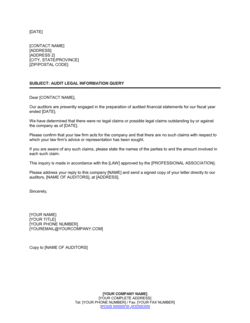
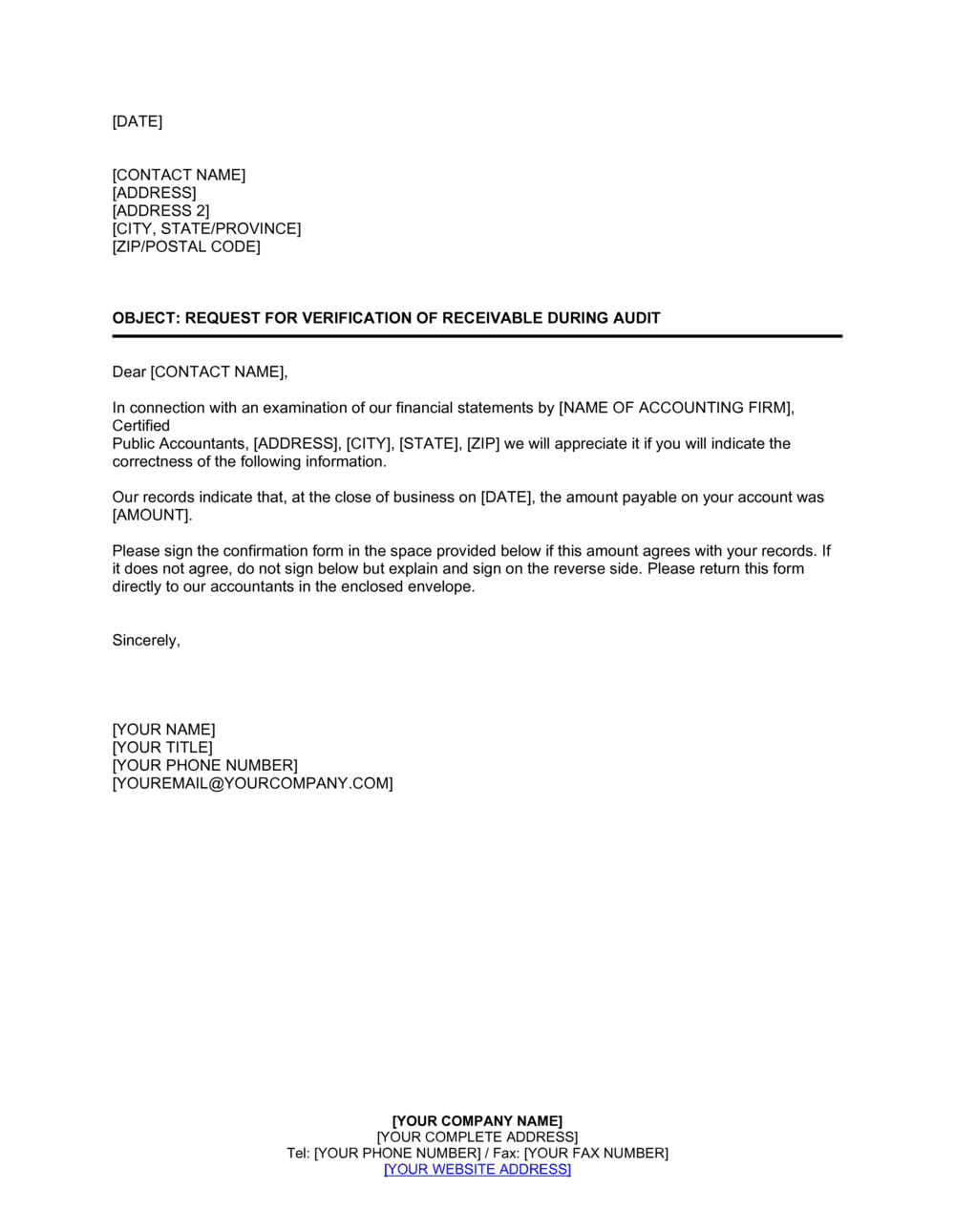
A formal header identifying the auditing firm and the client company, a clear statement of the balance to be confirmed, instructions for the debtor on how to respond, and a return reply section for the debtor to sign and return directly to the auditor.

What is a Request for Verification of Receivable During Audit?

A Request for Verification of Receivable During Audit is a formal letter sent by an auditor to one of an audited company's customers, asking that customer to confirm β€” directly to the auditor β€” the balance they owe as of a specific date. Because the response comes from an independent third party rather than from the client's own records, it is one of the most reliable categories of evidence an auditor can obtain when testing accounts receivable for existence and accuracy. The letter states the balance recorded in the client's books, instructs the debtor on whether to respond unconditionally (positive confirmation) or only in case of disagreement (negative confirmation), and routes replies straight to the audit firm to preserve independence.

Why You Need This Document

Accounts receivable is one of the most audit-sensitive line items on a balance sheet β€” it is also one of the most commonly misstated, whether through timing errors, fictitious invoices, or unrecorded credits. Without a properly formatted confirmation letter that directs responses to the auditor, the procedure fails to meet the independence requirements of ISA 505 and AU-C 505, leaving the working papers incomplete and the audit opinion exposed. A vague or poorly structured letter produces high non-response rates, ambiguous replies, and time-consuming follow-up calls that extend fieldwork unnecessarily. This template gives auditors and accountants a ready-to-use, professionally formatted letter that captures every required element β€” balance, confirmation date, difference-explanation section, authorized-signature block, and auditor return address β€” so the confirmation process moves efficiently and the evidence it generates stands up to professional scrutiny.

Which variant fits your situation?

If your situation is…Use this template
Requesting confirmation and asking the debtor to respond only if they disagreeNegative Confirmation Request
Requesting confirmation and requiring a response whether the balance agrees or notPositive Confirmation Request
Asking a supplier to confirm the balance the company owes themRequest for Verification of Payable During Audit
Confirming inventory held by a third-party warehouse or custodianInventory Confirmation Letter
Requesting bank confirmation of cash and loan balancesBank Confirmation Letter
Following up when no response has been received to the initial requestSecond Request Confirmation Letter

Common mistakes to avoid

❌ Routing responses back to the client instead of the auditor

Why it matters: When responses go to the client first, the auditor loses control of the evidence and the confirmation no longer meets independence standards under ISA 505 or AU-C 505.

Fix: Print the auditor's address β€” not the client's β€” on every return envelope and in the response instructions block of the letter.
❌ Using a rounded or estimated balance

Why it matters: A balance of '$15,000' when the ledger shows '$14,983.47' creates a false discrepancy that the debtor reports, triggering unnecessary follow-up work.

Fix: Always copy the exact balance from the accounts receivable subsidiary ledger, including cents, before printing the letters.

❌ Sending the letter to the wrong contact at the debtor

Why it matters: A confirmation addressed to a sales rep or project manager often goes unacknowledged because that person has no access to the payables system.

Fix: Address each letter to the accounts payable manager or controller by name, confirmed via a quick phone call or LinkedIn check before mailing.

❌ Setting too short a response deadline

Why it matters: Debtors that route incoming mail through a central AP team routinely take 10–14 business days to process and return confirmation letters, making a 5-day deadline ineffective.

Fix: Set the response deadline to at least 15 business days from mailing and calendar a second-request follow-up on day 16.

The 8 key clauses, explained

Auditor and client identification header

In plain language: Identifies the auditing firm sending the letter and the client company on whose behalf the confirmation is being requested.

Sample language
This letter is sent to you on behalf of [CLIENT COMPANY NAME] by [AUDITING FIRM NAME], who is conducting an audit of [CLIENT COMPANY NAME]'s financial statements.

Common mistake: Listing the client's own address as the return address β€” responses must go directly to the auditor, not the client, to preserve the independence of the confirmation.

Purpose statement

In plain language: Explains that the letter is an audit procedure, not a demand for payment, so the debtor understands why they are being contacted.

Sample language
In connection with an examination of the financial statements of [CLIENT COMPANY NAME], our auditors are requesting that you confirm the balance of your account as described below. This is not a request for payment.

Common mistake: Omitting the clarification that it is not a payment demand β€” debtors who mistake it for a collection notice either ignore it or respond defensively, slowing the process.

Balance statement as of confirmation date

In plain language: States the specific dollar balance recorded in the client's books as owed by the debtor, as of a named date.

Sample language
According to the books and records of [CLIENT COMPANY NAME], the amount owed by your organization as of [DATE] was $[AMOUNT].

Common mistake: Using an approximate or rounded balance instead of the exact figure from the general ledger β€” any discrepancy the debtor reports then becomes difficult to reconcile.

Agreement or disagreement instruction

In plain language: Tells the debtor what to do β€” either confirm the balance is correct or describe any differences β€” and directs them to respond to the auditor directly.

Sample language
Please confirm whether or not this amount is in agreement with your records as of [DATE] by signing and returning this letter directly to [AUDITING FIRM NAME] at [AUDITOR ADDRESS / EMAIL].
Difference explanation section

In plain language: Provides space for the debtor to note any discrepancy and explain the reason, such as payments in transit, unapplied credits, or disputed invoices.

Sample language
If the amount shown above is not in agreement with your records, please note the amount shown in your records: $[DEBTOR AMOUNT] and explain any differences: [EXPLANATION OF DIFFERENCE].

Common mistake: Leaving no space for explanations β€” debtors who disagree with the balance often simply mark it 'incorrect' without detail, requiring a time-consuming follow-up call.

Response deadline

In plain language: States the date by which the debtor must return the confirmation to the auditor to be useful within the audit timeline.

Sample language
Please return this confirmation by [RESPONSE DUE DATE]. Your prompt response will be greatly appreciated.

Common mistake: Setting the deadline fewer than 10 business days from the mailing date β€” debtors routing confirmation letters through accounts payable frequently need two weeks to respond.

Debtor signature and authorization block

In plain language: Provides a signature line, printed name, title, and date for an authorized representative of the debtor to sign, confirming the accuracy of their response.

Sample language
Authorized Signature: ___________________ | Printed Name: ___________________ | Title: ___________________ | Date: ___________________

Common mistake: Accepting a response signed by someone without authority to confirm financial balances β€” e.g., an administrative assistant rather than a controller or CFO β€” which weakens the audit evidence.

Return address and contact details

In plain language: Clearly states the auditor's mailing address, email, or fax number where the completed form must be sent, separate from the client.

Sample language
Please return this form directly to: [AUDITING FIRM NAME] | Attn: [AUDIT MANAGER NAME] | [ADDRESS] | [EMAIL] | [PHONE]

Common mistake: Routing the return to the client's office rather than directly to the audit firm β€” this breaks the independence requirement and renders the confirmation unreliable as audit evidence.

How to fill it out

  1. 1

    Enter the auditing firm's name and contact details

    Add the full name of the audit firm, the engagement manager's name, and the firm's direct mailing address, email, and phone number in the header and return address blocks.

    πŸ’‘ Use the audit firm's address β€” not the client's β€” in every return-address field, even if the letter is printed on client letterhead.

  2. 2

    Identify the client company

    Insert the client's full legal entity name in the purpose statement so the debtor knows which company's audit the letter relates to.

    πŸ’‘ If the client operates under a trade name different from the legal entity name, include both to avoid debtor confusion.

  3. 3

    State the confirmation date

    Enter the balance sheet date or the specific 'as of' date agreed with the engagement partner β€” this is the date the balance in the debtor's records must match.

    πŸ’‘ The confirmation date and the balance sheet date should be the same unless the audit plan specifies a different interim date.

  4. 4

    Insert the exact receivable balance

    Pull the balance directly from the client's aged accounts receivable report for the specific debtor, as of the confirmation date. Do not round or estimate.

    πŸ’‘ Cross-reference the balance against the general ledger subsidiary account, not just the aging report, to catch any posting discrepancies before the letter goes out.

  5. 5

    Set the response deadline

    Enter a specific calendar date β€” typically 15 business days from the expected mailing date β€” for the debtor to return the signed confirmation.

    πŸ’‘ Stagger your mailing dates so large batches of confirmations don't all expire on the same day, creating a workload spike during fieldwork.

  6. 6

    Address and send the letter

    Address the envelope to the accounts payable or finance department of the debtor organization β€” not to the sales contact. Include a pre-addressed reply envelope directed to the audit firm.

    πŸ’‘ Sending confirmations by registered mail or tracked courier creates a delivery record, which is useful if non-responses need to be documented in the working papers.

Frequently asked questions

What is a request for verification of receivable during audit?

It is a formal letter sent by an auditor to a company's customer asking that customer to confirm the balance they owe as of a specific date. The response comes directly back to the auditor β€” not the client β€” so it qualifies as independent third-party audit evidence. It is one of the primary procedures auditors use to test the existence and accuracy of accounts receivable balances.

What is the difference between a positive and a negative confirmation?

A positive confirmation requires the debtor to respond regardless of whether the balance agrees or disagrees β€” silence is not acceptable. A negative confirmation asks the debtor to respond only if they disagree; no response is treated as agreement. Auditing standards generally require positive confirmations for material balances, while negative confirmations may be used for low-value, high-volume receivables when the risk of material misstatement is low.

Why must responses go directly to the auditor and not to the client?

Audit standards β€” including ISA 505 and AU-C 505 β€” require that confirmation responses be received directly by the auditor to be treated as reliable evidence. If the client handles the responses, the independence of the evidence is compromised and the procedure may not satisfy audit requirements. The auditor must maintain control of the confirmation process from mailing to receipt.

What happens when a debtor does not respond?

The auditor sends a second request letter and attempts phone follow-up. If still no response is received, the auditor applies alternative procedures β€” such as reviewing subsequent cash receipts, inspecting shipping documents, or examining sales contracts β€” to gather sufficient evidence about the balance. Non-response rates and alternative procedures must be documented in the audit working papers.

Can the client prepare the confirmation letters?

Yes, the client can prepare the letters and address the envelopes to save the auditor time. However, the auditor must control the mailing process β€” confirming the letters are sent, maintaining custody of the return envelopes, and receiving all responses directly. The auditor should never hand sealed envelopes back to the client for mailing.

Which receivable balances should be selected for confirmation?

Auditors typically confirm balances that are individually significant (often the top 10–20 debtors by balance), any balances that are unusual or aged beyond normal terms, and a representative sample of smaller balances. The selection should also include zero-balance accounts and accounts written off, as these can reveal unrecorded receipts or fraudulent write-offs.

Does a receivable confirmation letter need to be signed by the auditor?

The letter is typically sent on the client's letterhead and signed by a senior officer of the client company, not the auditor. The auditor's name and return address appear in the response instructions so the debtor knows where to send their reply. Some firms send the letter on the audit firm's own letterhead β€” either approach is acceptable provided the return address directs responses to the auditor.

How this compares to alternatives

vs Accounts Receivable Statement

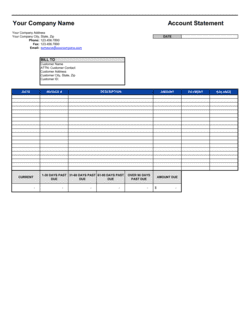
An accounts receivable statement is an operational document sent by the seller to a customer summarizing outstanding invoices and amounts due β€” it is a billing tool, not an audit procedure. A receivable confirmation letter is sent by the auditor during a formal audit to verify that the same balance exists in the debtor's records. One manages collections; the other provides independent audit evidence.

vs Request for Verification of Payable During Audit

A payable confirmation is the mirror image β€” the auditor contacts the client's suppliers to verify the balances the client owes them, testing completeness and existence of liabilities. A receivable confirmation tests balances owed to the client. Both are third-party confirmation procedures, but they address opposite sides of the balance sheet.

vs Debt Collection Letter

A debt collection letter is a formal demand for payment from an overdue customer and may carry legal consequences if ignored. A receivable confirmation letter explicitly states it is not a payment demand and carries no legal collection force. Mixing up the two β€” or sending a collection-style tone in a confirmation β€” can damage the client's customer relationship and compromise the audit.

vs Bank Confirmation Letter

A bank confirmation letter asks the client's bank to verify cash balances, loans, and contingent liabilities β€” it is addressed to a financial institution, not a trade debtor. A receivable confirmation targets customers who owe money for goods or services. Both are third-party confirmation procedures governed by the same auditing standards, but they test entirely different financial statement assertions.

Industry-specific considerations

Professional Services

High-value, few-client receivables make positive confirmations standard; slow-paying clients often generate discrepancies tied to disputed time entries or fee arrangements.

Manufacturing and Wholesale

Large volumes of trade receivables across many customers mean auditors use a stratified sampling approach, confirming 100% of balances above a materiality threshold.

Healthcare

Receivables from insurers and government payers require confirmations that reference specific claim or contract numbers to allow the payer to match and respond accurately.

Financial Services

Loan receivables and intercompany balances are subject to confirmation; regulatory audit requirements make independent third-party confirmation procedures particularly critical.

Template vs pro β€” what fits your needs?

PathBest forCostTime
Use the templateAuditors, accountants, and finance teams issuing standard receivable confirmations as part of routine audit fieldworkFree5 minutes per letter
Template + professional reviewEngagements involving complex or disputed receivables, public company audits, or first-time use of confirmation procedures$100–$300 (senior auditor or audit manager review)1–2 hours
Custom draftedSpecialized confirmation procedures for financial institutions, government audits, or cross-border receivables requiring translated versions$300–$1,000+1–3 days

Glossary

Accounts Receivable Confirmation
An audit procedure in which an auditor contacts a debtor directly to verify that the balance recorded in the client's books matches the debtor's records.
Positive Confirmation
A confirmation request that requires the debtor to respond whether or not the stated balance agrees with their records.
Negative Confirmation
A confirmation request that asks the debtor to respond only if the stated balance does not agree with their records; silence is treated as agreement.
Balance Sheet Date
The specific date as of which a company's financial statements are prepared β€” the point in time the receivable balance should reflect.
Third-Party Confirmation
Audit evidence obtained directly from an independent external source, considered more reliable than evidence from the client's own records.
Audit Assertion
A claim embedded in the financial statements β€” such as existence, completeness, or valuation β€” that the auditor is trying to verify.
Existence Assertion
The audit assertion that an asset or liability recorded in the financial statements actually exists at the balance sheet date.
Cutoff
The proper recording of transactions in the correct accounting period β€” a common risk area in accounts receivable where revenue may be recorded too early or too late.
Receivable Aging Report
A schedule grouping outstanding invoices by how long they have been unpaid β€” used by auditors to select balances for confirmation and assess collectability.
Reply Envelope
A pre-addressed envelope included with the confirmation request so the debtor can return their response directly to the auditor, not the client.

Part of your Business Operating System

This document is one of 3,000+ business & legal templates included in Business in a Box.

  • Fill-in-the-blanks β€” ready in minutes
  • 100% customizable Word document
  • Compatible with all office suites
  • Export to PDF and share electronically

Create your document in 3 simple steps.

From template to signed document β€” all inside one Business Operating System.
1
Download or open template

Access over 3,000+ business and legal templates for any business task, project or initiative.

2
Edit and fill in the blanks with AI

Customize your ready-made business document template and save it in the cloud.

3
Save, Share, Send, Sign

Share your files and folders with your team. Create a space of seamless collaboration.

Save time, save money, and create top-quality documents.

β˜…β˜…β˜…β˜…β˜…

"Fantastic value! I'm not sure how I'd do without it. It's worth its weight in gold and paid back for itself many times."

Managing Director Β· Mall Farm
Robert Whalley
Managing Director, Mall Farm Proprietary Limited
β˜…β˜…β˜…β˜…β˜…

"I have been using Business in a Box for years. It has been the most useful source of templates I have encountered. I recommend it to anyone."

Business Owner Β· 4+ years
Dr Michael John Freestone
Business Owner
β˜…β˜…β˜…β˜…β˜…

"It has been a life saver so many times I have lost count. Business in a Box has saved me so much time and as you know, time is money."

Owner Β· Upstate Web
David G. Moore Jr.
Owner, Upstate Web

Run your business with a system β€” not scattered tools

Stop downloading documents. Start operating with clarity. Business in a Box gives you the Business Operating System used by over 250,000 companies worldwide to structure, run, and grow their business.

Start freeΒ Β·Β No credit card required