- Accounts Receivable
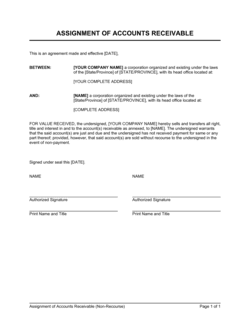
- Amounts owed to a business by its customers for goods delivered or services rendered but not yet paid.
- Repurchase Obligation
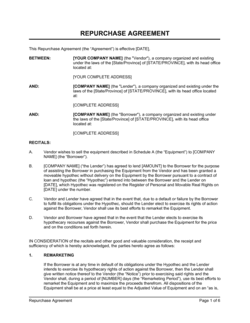
- A contractual duty requiring the original seller of receivables to buy back specific receivables from the purchaser upon defined trigger events.
- Repurchase Price
- The amount the seller must pay to reacquire a receivable, typically the outstanding face value plus any accrued fees or charges owed to the buyer.
- Trigger Event
- A specified condition — such as debtor default, dispute, dilution, or misrepresentation — that activates the seller's repurchase obligation.
- Recourse Factoring
- A receivables sale arrangement where the seller retains the risk of non-payment and must repurchase receivables the buyer cannot collect.
- Non-Recourse Factoring
- A receivables sale where the buyer absorbs the credit risk of debtor non-payment and the seller has no repurchase obligation for defaults.
- Dilution
- The reduction in the collectible value of a receivable due to credits, returns, disputes, set-offs, or contra accounts — a common repurchase trigger.
- Eligible Receivable
- A receivable that meets the buyer's criteria for purchase — typically undisputed, current, and free of encumbrances — as defined in the governing purchase agreement.
- Reserve Account
- A portion of the purchase price withheld by the buyer as a buffer against dilution and repurchase events, released to the seller after collection.
- Perfected Security Interest
- A security interest in receivables that has been properly filed and recorded under applicable law (e.g., UCC Article 9 in the US) so it is enforceable against third parties.
- Indemnification
- A contractual obligation requiring one party to compensate the other for losses, costs, or damages arising from defined events, such as a seller's breach of representations.