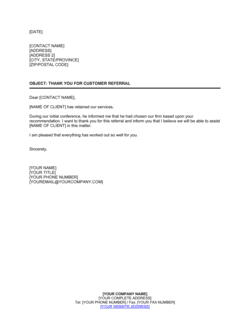
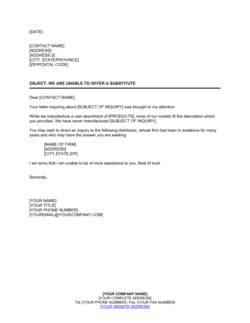
Reply and Referral to Distributor Template

Free Word download • Edit online • Save & share with Drive • Export to PDF

1 page20–30 min to fillDifficulty: StandardSignature requiredLegal review recommended
Learn more ↓
FreeReply and Referral to Distributor Template

At a glance

What it is
A Reply and Referral to Distributor is a formal written communication — with binding referral terms — that a manufacturer or supplier issues to redirect a customer, prospect, or third party to an authorized distributor for fulfillment, pricing, or support. This free Word download structures the referral clearly, identifies the designated distributor, limits the supplier's direct obligations, and protects existing channel agreements — ready to edit online and export as PDF.
When you need it
Use it when a customer or prospect contacts you directly but your distribution agreement requires you to route sales or service requests through an authorized channel partner. It is also appropriate when responding to unsolicited inquiries that fall within a distributor's exclusive territory or product scope.
What's inside
Identification of the referring party and authorized distributor, scope of the referral, effective date and expiry, limitations on the supplier's direct obligations, confidentiality of referral terms, governing law, and signature blocks for acknowledgment by all relevant parties.

What is a Reply and Referral to Distributor?

A Reply and Referral to Distributor is a formal written communication — typically carrying binding legal terms — issued by a manufacturer or supplier to redirect an inbound customer or third-party inquiry to an authorized distributor for fulfillment, quotation, or service. It acknowledges the inquiry, names the designated distributor, defines the scope and limits of the distributor's authority to act on the supplier's behalf, and expressly limits the supplier's direct obligations arising from the communication. Unlike a casual email redirect, a properly executed reply and referral creates a documented record of channel authority that can be relied upon in contract disputes, audit reviews, and competition law compliance assessments.

Why You Need This Document

Without a formal reply and referral, a supplier who responds to a direct inquiry risks two things simultaneously: inadvertently creating a direct contractual obligation to the inquiring party, and breaching an existing exclusivity commitment to the authorized distributor. Courts in common-law jurisdictions regularly find that a supplier's written response to an inquiry — even one that says "please contact our distributor" — can constitute an offer or a representation if it includes pricing, availability, or delivery information. A properly structured referral closes that gap by explicitly disclaiming direct obligations and confirming the distributor's authority in writing. It also gives the distributor a document they can present to the customer as proof of authorization, accelerating trust and closing velocity. For businesses operating multi-territory distribution networks, maintaining a register of executed referrals is often a contractual obligation under the distribution agreement itself — and this template makes that requirement straightforward to satisfy.

Which variant fits your situation?

If your situation is…Use this template
Redirecting a customer inquiry to a single exclusive regional distributorReply and Referral to Distributor (Exclusive Territory)
Acknowledging a reseller inquiry and referring to a master distributorReply and Referral to Master Distributor
Formally appointing a new distributor for a territoryDistributor Agreement
Documenting a referral fee payable to an intermediary for a distributor introductionReferral Fee Agreement
Responding to an unsolicited direct purchase order outside the channelOrder Acknowledgment and Redirect Letter
Setting up an ongoing authorized distributor network with territory rightsDistribution Network Agreement
Terminating a distributor relationship and redirecting customers to a replacementDistributor Termination Notice

Common mistakes to avoid

❌ Omitting an expiry date on a standing referral

Why it matters: An open-ended referral can be relied upon by a distributor or customer long after the distribution relationship has changed or been terminated, creating claims of ongoing authority that are difficult to refute.

Fix: Always include a specific expiry date or a clearly defined terminating event, and calendar a review 30 days before expiry.

❌ Failing to limit the distributor's authority in writing

Why it matters: Without explicit limits on what the distributor can negotiate or commit to, the supplier may be bound to price concessions, extended warranties, or credit terms the distributor agreed to on its behalf.

Fix: List the specific actions the distributor is authorized to take and set hard numerical limits — price floor, credit cap, maximum discount — in the authority clause.

❌ Using only trade names instead of registered legal entity names

Why it matters: If a dispute escalates to litigation or arbitration, the enforceability of the referral against the correct legal entity depends on it being named accurately. Trade names alone do not identify a legal party.

Fix: Verify the registered name of each party against their corporate registry filing and include both the registered name and any operating trade name.

❌ No signed acknowledgment from the distributor

Why it matters: A referral signed only by the supplier creates a one-sided record. If the distributor later disputes the scope of its authority or the limits on its actions, there is no executed document binding them to those terms.

Fix: Require the distributor to countersign the referral before acting on it, and withhold any formal introduction to the customer until the countersignature is received.

❌ Scope language that conflicts with the underlying distribution agreement

Why it matters: If the referral expands the distributor's territory or product scope beyond what the distribution agreement allows, it may inadvertently amend the agreement or create overlapping obligations with other distributors.

Fix: Review the relevant territory and product schedule in the distribution agreement before completing the scope clause, and ensure the referral falls squarely within — not beyond — the distributor's contracted authority.

❌ Including pricing guidance in a referral without a confidentiality clause

Why it matters: Referrals that include price floors, discount bands, or margin guidance become discoverable in litigation and can be obtained by competitors, undermining your pricing strategy across other channels.

Fix: Either exclude specific pricing guidance from the referral body and communicate it separately under an NDA, or include a robust confidentiality clause covering the entire contents of the referral.

The 9 key clauses, explained

Parties and Identification

In plain language: Names the referring party (supplier or manufacturer), the authorized distributor being referred to, and the recipient of the referral (customer or inquiring party).

Sample language
This Reply and Referral is issued by [SUPPLIER LEGAL NAME] ('Supplier') to [CUSTOMER / INQUIRY PARTY NAME] ('Recipient'), directing Recipient to [AUTHORIZED DISTRIBUTOR LEGAL NAME] ('Distributor') for all matters described herein.

Common mistake: Using trade names instead of registered legal entity names. If the distributor's trade name differs from its registered name, the referral may not bind the correct legal entity in a dispute.

Scope of Referral

In plain language: Defines exactly what the referral covers — specific products, services, territories, or customer categories — so there is no ambiguity about what the distributor is authorized to handle.

Sample language
This referral covers the supply, quotation, and fulfillment of [PRODUCT LINE / SKU LIST] within [TERRITORY / REGION], for the period commencing [DATE] and ending [DATE OR 'until further notice'].

Common mistake: Drafting the scope too broadly, implying the distributor can act on behalf of the supplier beyond the intended products or territory — creating unintended agency liability.

Effective Date and Term

In plain language: States when the referral takes effect and whether it is a one-time referral for a specific inquiry or an ongoing standing referral for a defined period.

Sample language
This referral is effective as of [DATE]. It applies to [the specific inquiry dated [DATE] / all inquiries received between [START DATE] and [END DATE]] and expires automatically upon [DATE OR EVENT].

Common mistake: Omitting an expiry date on a standing referral. An open-ended referral can be relied upon long after the distribution relationship has changed, creating disputes about the distributor's authority.

Supplier's Limitation of Direct Obligations

In plain language: Clarifies that by issuing the referral, the supplier is not accepting a direct order, making a direct price commitment, or assuming liability for the distributor's acts.

Sample language
This referral does not constitute a direct offer, acceptance, or commitment by Supplier to supply [PRODUCTS] to Recipient. Supplier accepts no liability for acts, omissions, pricing, or representations made by Distributor in connection with this referral.

Common mistake: Failing to include this clause, which leaves the supplier exposed to claims that the referral letter itself constitutes an offer or a binding obligation to supply at particular terms.

Distributor's Authority and Limitations

In plain language: Sets out what the distributor is and is not authorized to do following the referral — for example, quoting prices, accepting orders, or modifying product specifications.

Sample language
Distributor is authorized to quote, negotiate, and accept orders for [PRODUCTS] on behalf of Supplier within the Scope of Referral. Distributor has no authority to modify product specifications, grant credit beyond [AMOUNT], or bind Supplier to any warranty beyond the standard terms.

Common mistake: Granting authority to 'negotiate on behalf of Supplier' without limiting what can be negotiated. Unlimited negotiating authority can bind the supplier to terms it never intended to accept.

Confidentiality of Referral Terms

In plain language: Restricts the recipient and distributor from disclosing the existence or terms of the referral to third parties, protecting pricing relationships and channel structure.

Sample language
The terms of this referral, including the identity of Distributor and any pricing guidance provided, are confidential. Recipient agrees not to disclose these terms to any third party without Supplier's prior written consent.

Common mistake: No confidentiality clause on a referral that includes territory maps or pricing guidance. Competitors who obtain this information can use it to undercut the distributor or approach the supplier directly.

Non-Circumvention

In plain language: Prevents the recipient from bypassing the referred distributor and approaching the supplier directly for the same products or services covered by the referral.

Sample language
For a period of [12] months following this referral, Recipient agrees not to approach Supplier directly for the supply of [PRODUCTS] covered by this referral without first engaging Distributor in good faith.

Common mistake: Including non-circumvention language directed only at the customer, while omitting a corresponding obligation on the distributor not to circumvent the supplier's pricing or approval processes.

Governing Law and Jurisdiction

In plain language: Specifies which jurisdiction's law governs the referral and where any dispute arising from it will be heard.

Sample language
This referral and any dispute arising from it shall be governed by the laws of [STATE / PROVINCE / COUNTRY]. The parties submit to the exclusive jurisdiction of the courts of [CITY / JURISDICTION].

Common mistake: Selecting a governing law jurisdiction with no connection to either party's operations. Courts in several jurisdictions will apply local law regardless of a contrary choice-of-law clause if the contract has no real connection to the chosen jurisdiction.

Acknowledgment and Signature

In plain language: Records that all parties have received, read, and agreed to the terms of the referral — creating an enforceable written record.

Sample language
By signing below, the parties confirm receipt and acceptance of the terms of this Reply and Referral. Supplier: [SIGNATURE / NAME / TITLE / DATE]. Distributor: [SIGNATURE / NAME / TITLE / DATE]. Recipient (if applicable): [SIGNATURE / NAME / TITLE / DATE].

Common mistake: Having only the supplier sign. An unsigned referral by the distributor or recipient is harder to enforce if a dispute arises about whether the terms were accepted.

How to fill it out

  1. 1

    Identify all three parties by legal name

    Enter the full registered legal name of the supplier, the authorized distributor, and the recipient of the referral. Cross-reference company registration records to confirm names match official documents.

    💡 If the distributor operates under a trade name, include both the registered name and the trade name in brackets — e.g., '[REGISTERED NAME] trading as [TRADE NAME]' — to avoid enforcement ambiguity.

  2. 2

    Define the scope of referral precisely

    List the specific products, SKUs, or service categories covered by the referral, and identify the territory or customer segment it applies to. Avoid catch-all language like 'all products' unless your distribution agreement genuinely covers everything.

    💡 Match the scope language directly to the relevant clause in your existing distribution agreement — a mismatch between the two documents is a common source of channel disputes.

  3. 3

    Set the effective date and expiry

    Enter a specific start date and either a fixed end date or a clearly defined triggering event (such as the completion of a specific transaction). For standing referrals, 12 months is a typical term with an option to renew.

    💡 Calendar a review date 30 days before expiry so you can renew or revise the referral before the distributor's authority lapses mid-transaction.

  4. 4

    Complete the supplier's limitation of obligations clause

    Review the pre-drafted limitation language and confirm it accurately reflects what you are — and are not — committing to. If the referral is in response to a specific inquiry, reference that inquiry by date or reference number.

    💡 Keep a copy of the original inquiry that triggered the referral. If a dispute arises about what was promised, the inquiry and the referral together form the complete record.

  5. 5

    Define the distributor's authority and its limits

    Specify the actions the distributor is authorized to take — quoting, accepting orders, issuing invoices — and the hard limits — price floor, credit limit, warranty scope. Make these limits specific numbers and actions, not general descriptions.

    💡 If the distributor's authority is already defined in your distribution agreement, cross-reference that clause number rather than repeating terms that may drift out of sync over time.

  6. 6

    Review the non-circumvention period

    Set the non-circumvention period based on the typical sales cycle for the products involved. For fast-moving consumer goods, 6 months is often sufficient. For capital equipment or complex B2B sales, 12–24 months is more appropriate.

    💡 Check whether your distribution agreement already contains a non-circumvention clause — if it does, ensure the period in this referral is consistent with or shorter than the agreement's term.

  7. 7

    Obtain signatures from all relevant parties

    Circulate the signed referral to the distributor and, where appropriate, the recipient. Collect countersignatures before the distributor begins acting on the referral. Store the fully executed copy in your contract management system.

    💡 Use a timestamped e-signature platform to create an audit trail. If a dispute later arises about whether the referral was accepted, a timestamped execution record is far stronger than an email chain.

  8. 8

    File the referral with your distribution agreement records

    Store the executed referral alongside the underlying distribution agreement so that both documents can be reviewed together if a channel dispute arises. Notify your legal or compliance team if the referral establishes a new territory or expands a distributor's authority.

    💡 Maintain a referral register — a simple spreadsheet listing distributor name, scope, effective date, expiry, and signatory — so you can audit active referrals without opening every contract individually.

Frequently asked questions

What is a reply and referral to distributor?

A reply and referral to distributor is a formal written document — often with binding legal terms — that a manufacturer or supplier issues to redirect an inbound customer or prospect inquiry to an authorized distributor. It acknowledges the inquiry, identifies the distributor the recipient should engage, defines the scope of the distributor's authority, and limits the supplier's direct obligations. It protects existing channel relationships and creates a documented audit trail of the referral.

When should I use a reply and referral to distributor?

Use it whenever a customer or prospect contacts you directly for products or services that your distribution agreement requires to be handled through an authorized channel. It is also appropriate when responding to unsolicited direct purchase orders that fall within a distributor's exclusive territory, or when you need to formally document a referral for compliance, audit, or channel dispute purposes.

Is a reply and referral to distributor legally binding?

When signed by the relevant parties, the referral terms — including scope of authority, limitations on the supplier's direct obligations, and non-circumvention provisions — are generally enforceable as a written agreement in most common-law jurisdictions. The referral itself may not create a new contract for the supply of goods, but its terms about channel authority and confidentiality are typically binding upon execution. Consider consulting a lawyer to confirm enforceability under the governing jurisdiction's law.

What is the difference between a referral letter and a distributor agreement?

A distributor agreement is the master contract that appoints a distributor, defines their territory, sets pricing and performance obligations, and governs the entire ongoing relationship. A reply and referral to distributor is a transaction-level document issued under that master agreement to direct a specific inquiry or customer to the distributor. The referral derives its authority from the distribution agreement and should stay within the scope that agreement establishes.

Does the customer or recipient need to sign the referral?

It depends on the purpose. If the referral is simply a courtesy communication redirecting an inquiry, a signature from the recipient may not be required. However, if the referral includes a non-circumvention clause — preventing the recipient from bypassing the distributor and going directly back to the supplier — the recipient's signature is needed to make that obligation binding on them. When in doubt, obtaining all signatures creates the strongest record.

How long should a referral to distributor remain in effect?

For a one-time inquiry referral, the term can be as short as 30–90 days, expiring once the transaction is complete or the inquiry goes cold. For a standing referral covering all inquiries from a customer segment or region, 12 months is a common term, aligned to the distribution agreement's renewal cycle. Open-ended referrals without an expiry date create significant risk of ongoing claims of distributor authority after the relationship has changed.

What happens if the distributor acts outside the scope of the referral?

If the distributor commits to terms — pricing, warranties, delivery timelines — beyond the limits stated in the referral, the supplier may still be held liable to the customer under apparent authority principles in common-law jurisdictions. This is why clearly drafted authority limits with specific numerical caps are critical. The referral should also state that the distributor has no authority to bind the supplier beyond its express terms.

Can a referral to distributor create channel conflict if not drafted carefully?

Yes. If the referral's scope is broader than the distributor's contracted territory, or if it directs a customer to one distributor when another has an overlapping exclusive, the referral can trigger a channel conflict claim. Always review the territory and product schedules in all active distribution agreements before completing the referral's scope clause.

Do I need a lawyer to prepare a reply and referral to distributor?

For straightforward referrals under an existing distribution agreement with a domestic distributor, a well-drafted template is typically sufficient. Consider engaging a lawyer when the referral involves cross-border distribution, when the distributor's territory is exclusive and any ambiguity could trigger a dispute, when the referral includes pricing guidance or trade secrets, or when the distribution relationship is in a regulated industry. A one-hour legal review typically costs $200–$400 and is worthwhile for any referral with significant commercial value.

How this compares to alternatives

vs Distributor Agreement

A distributor agreement is the master contract appointing a distributor, defining their territory, obligations, pricing rights, and termination terms for the entire relationship. A reply and referral to distributor is a transaction-level document issued under that master agreement to direct a specific inquiry or customer. You need the distributor agreement first; the referral operates within the scope it establishes.

vs Referral Fee Agreement

A referral fee agreement governs a financial arrangement where one party is compensated for introducing a customer or business opportunity to another. A reply and referral to distributor does not typically involve a fee — it is a channel management tool that redirects an inquiry to an existing authorized distributor under an existing agreement. Use a referral fee agreement when compensation is involved; use this template when enforcing channel structure.

vs Letter of Authorization

A letter of authorization is issued by a supplier to confirm that a distributor is generally authorized to sell or represent the supplier's products — often provided to help the distributor win customer confidence. A reply and referral to distributor is a reactive document issued in response to a specific inquiry, directing a recipient to an authorized distributor and limiting the supplier's direct obligations. Both confirm distributor authority but serve different operational purposes.

vs Non-Circumvention Agreement

A standalone non-circumvention agreement is a dedicated contract preventing a party from bypassing an introducer or intermediary in a specific transaction. A reply and referral to distributor may include a non-circumvention clause as one of several terms, but its primary purpose is to formalize the referral itself. Use a standalone non-circumvention agreement when the circumvention risk is the central concern and warrants a dedicated, heavily negotiated document.

Industry-specific considerations

Manufacturing and Industrial Supply

Manufacturers regularly receive direct inquiries from end-users despite exclusive distributor territories; a formal referral protects the distribution relationship and avoids channel conflict claims.

Consumer Goods and FMCG

Brand owners use referral letters to redirect retail buyers and online marketplaces to authorized wholesalers, maintaining price integrity and MAP compliance across channels.

Technology and Hardware

Technology vendors with value-added reseller networks issue referrals to ensure direct enterprise inquiries are credited to the appropriate channel partner, protecting deal registration.

Import and Export / International Trade

Cross-border suppliers use referrals to route inquiries from buyers in specific countries to the regional authorized distributor, ensuring compliance with exclusive import rights.

Jurisdictional notes

United States

In the US, the apparent authority doctrine means a supplier can be bound by a distributor's representations to third parties if those representations were reasonably based on the supplier's conduct or documents. A clearly worded authority limitation clause in the referral is important to rebut apparent authority claims. State commercial law — including UCC Article 2 for goods — governs most distributor relationships, and choice-of-law clauses are generally enforced.

Canada

Canadian courts apply common-law agency principles similar to those in the US, meaning apparent authority risks are present if authority limits are not documented. Quebec's Civil Code applies different rules for agency and contracts — referrals involving Quebec distributors should be reviewed by a Quebec-qualified lawyer. Distribution agreements in regulated sectors (e.g., alcohol, pharmaceuticals) may require provincial licensing that affects how referrals are structured.

United Kingdom

The Commercial Agents (Council Directive) Regulations 1993 grant commercial agents in the UK specific rights to commission and compensation on termination that do not apply to independent distributors who buy and resell. If the party being referred to qualifies as a commercial agent rather than a distributor under UK law, significantly different obligations apply. Clearly distinguish the distributor's role in the referral to avoid misclassification risk.

European Union

EU competition law — specifically the Vertical Block Exemption Regulation (VBER) — regulates exclusive distribution arrangements and territory restrictions. Referrals that reinforce exclusive territorial protection are generally permissible under VBER where market share thresholds are met, but active sales restrictions on the distributor must comply with the regulation. GDPR applies if the referral communication involves processing personal data of the customer or recipient.

Template vs lawyer — what fits your deal?

PathBest forCostTime
Use the templateRoutine referrals to domestic authorized distributors under an existing distribution agreement with no exclusive territory complicationsFree15–30 minutes
Template + legal reviewReferrals involving exclusive territories, cross-border distribution, pricing guidance, or a distributor relationship that is commercially significant$200–$400 (1-hour lawyer review)1–2 days
Custom draftedMulti-jurisdiction distribution networks, regulated industries, referrals that materially expand or modify an existing distributor's contracted authority$800–$2,500+1–2 weeks

Glossary

Authorized Distributor
A business formally appointed by a manufacturer or supplier to sell, market, or service products within a defined territory or channel under a distribution agreement.
Referral
A formal direction from one party to another instructing them to engage a specific business or individual for a particular product, service, or inquiry.
Exclusive Territory
A defined geographic or market area in which only one distributor is permitted to sell or represent the supplier's products.
Channel Conflict
A situation in which a supplier competes directly with its own distributors or resellers for the same customers, undermining the distribution relationship.
Distribution Agreement
A contract between a supplier and a distributor that defines territory, pricing, obligations, exclusivity, and termination terms for the supply and resale of products.
Referring Party
The manufacturer, supplier, or principal that issues the referral and directs the recipient to an authorized distributor.
Referral Scope
The specific products, services, territories, or customer segments covered by a referral, beyond which the distributor has no authority to act.
Acknowledgment
A signed confirmation by the receiving party — often the customer or the distributor — that they have received and understood the terms of the referral.
Principal
The manufacturer or brand owner who grants distribution rights and on whose behalf the distributor acts in the relevant territory.
Non-Circumvention
A clause preventing a party from bypassing the designated channel — for example, a customer going directly back to the supplier after being referred to a distributor.
Letter of Authorization
A document issued by a supplier confirming that a specific distributor is authorized to sell, quote, or service the supplier's products in a defined scope.

Part of your Business Operating System

This document is one of 3,000+ business & legal templates included in Business in a Box.

  • Fill-in-the-blanks — ready in minutes
  • 100% customizable Word document
  • Compatible with all office suites
  • Export to PDF and share electronically

Create your document in 3 simple steps.

From template to signed document — all inside one Business Operating System.
1
Download or open template

Access over 3,000+ business and legal templates for any business task, project or initiative.

2
Edit and fill in the blanks with AI

Customize your ready-made business document template and save it in the cloud.

3
Save, Share, Send, Sign

Share your files and folders with your team. Create a space of seamless collaboration.

Save time, save money, and create top-quality documents.

★★★★★

"Fantastic value! I'm not sure how I'd do without it. It's worth its weight in gold and paid back for itself many times."

Managing Director · Mall Farm
Robert Whalley
Managing Director, Mall Farm Proprietary Limited
★★★★★

"I have been using Business in a Box for years. It has been the most useful source of templates I have encountered. I recommend it to anyone."

Business Owner · 4+ years
Dr Michael John Freestone
Business Owner
★★★★★

"It has been a life saver so many times I have lost count. Business in a Box has saved me so much time and as you know, time is money."

Owner · Upstate Web
David G. Moore Jr.
Owner, Upstate Web

Run your business with a system — not scattered tools

Stop downloading documents. Start operating with clarity. Business in a Box gives you the Business Operating System used by over 250,000 companies worldwide to structure, run, and grow their business.

Free Forever Plan · No credit card required