Reply Notice of Violation of Warranty Exclusion Template

Free Word download β€’ Edit online β€’ Save & share with Drive β€’ Export to PDF

1 pageβ€’15–20 min to fillβ€’Difficulty: Standard
Learn more ↓
FreeReply Notice of Violation of Warranty Exclusion Template

At a glance

What it is
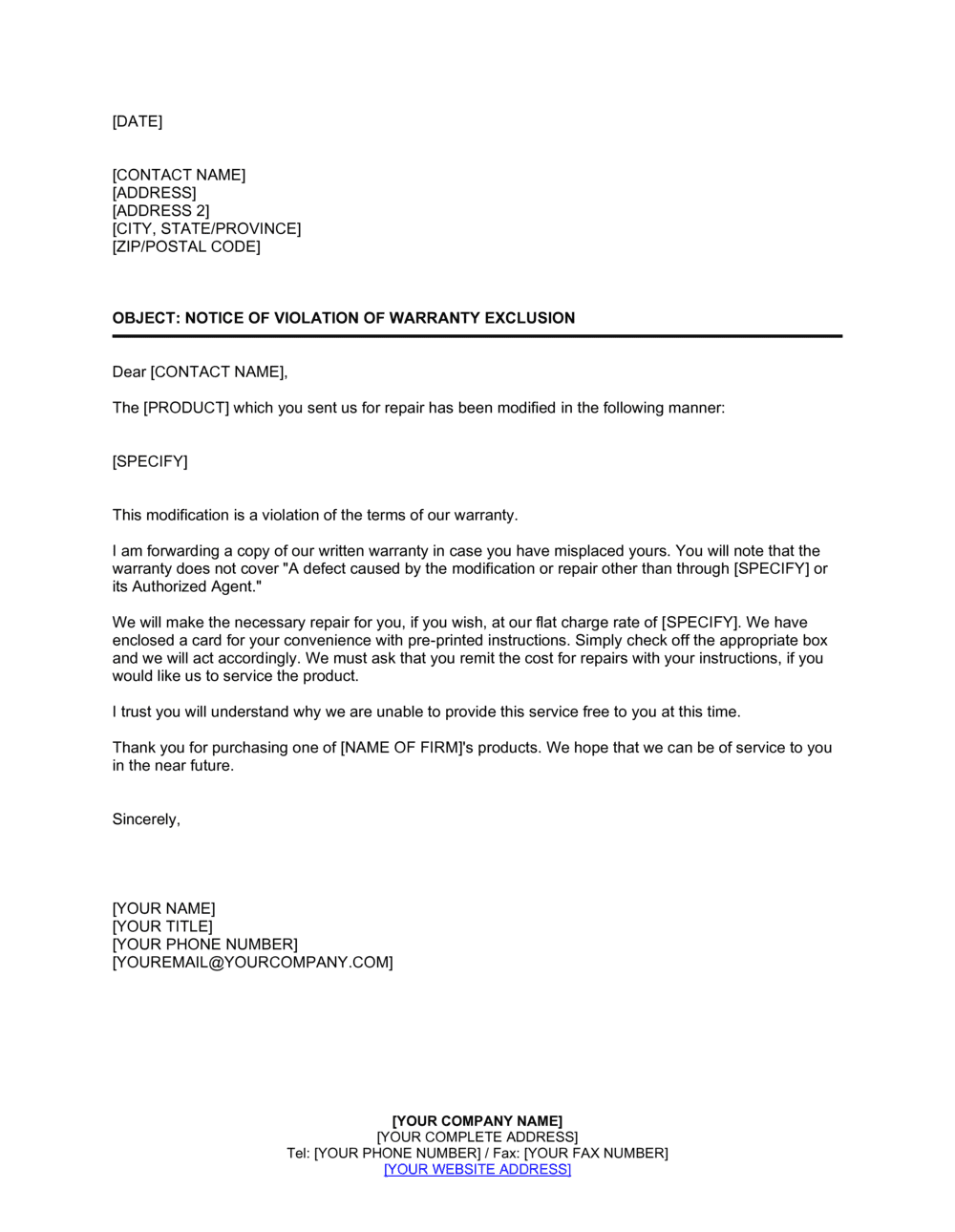
A Reply Notice of Violation of Warranty Exclusion is a formal business letter a seller, manufacturer, or service provider sends to a customer who has filed a warranty claim that falls outside the product's or service's covered terms. This free Word download lets you document your position clearly, cite the specific exclusion clause, and communicate the decision professionally β€” reducing the risk of escalation or dispute.
When you need it
Use it whenever a customer submits a warranty claim that your warranty terms expressly exclude β€” for example, damage caused by misuse, unauthorized modifications, or failure to follow maintenance requirements. Sending a written reply creates a timestamped record of the denial and the contractual basis for it.
What's inside
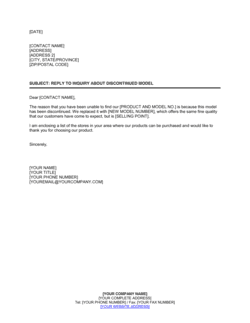
The letter covers the sender's and recipient's details, a reference to the original warranty claim, a citation of the applicable exclusion clause, a plain-language explanation of why the claim is denied, any remediation options available to the customer, and a professional closing with contact information for follow-up.

What is a Reply Notice of Violation of Warranty Exclusion?

A Reply Notice of Violation of Warranty Exclusion is a formal business letter a seller, manufacturer, or service provider sends to a customer whose warranty claim falls outside the scope of the product's or service's covered terms. It cites the specific exclusion clause from the warranty agreement, explains how the clause applies to the customer's particular situation, formally communicates the denial, and β€” where appropriate β€” offers an alternative path such as a paid repair. The letter functions as both a customer-facing communication and a timestamped legal record establishing that the denial was grounded in documented contract terms rather than an arbitrary decision.

Why You Need This Document

Without a written denial letter, a disputed warranty claim has no documented resolution β€” and the absence of documentation consistently favors the customer in chargeback disputes, consumer protection complaints, and small-claims proceedings. Verbal denials are difficult to prove and easy to misrepresent. A vague email carries little weight against a customer's account of the conversation. This template gives you a structured, professional response that cites the exact exclusion language, records the factual findings from your inspection, and creates a paper trail you can produce immediately if the matter escalates. For customer service teams handling multiple denials per week, a standardized template also ensures every letter meets the same documentation standard β€” reducing inconsistency, speeding up response times, and protecting the business from preventable disputes.

Which variant fits your situation?

If your situation is…Use this template
Claim denied because product was physically damaged by the customerReply Notice of Violation of Warranty Exclusion
Customer seeks warranty service on a product with an expired warranty periodWarranty Expiration Denial Letter
Claim involves a third-party repair voiding the original warrantyReply Notice of Violation of Warranty Exclusion
Offering a paid repair in lieu of warranty coverageRepair Estimate / Service Quotation Letter
Accepting the warranty claim and arranging a replacementWarranty Claim Acceptance Letter
Notifying a customer of a product recall or safety issueProduct Recall Notice

Common mistakes to avoid

❌ Quoting only the section number, not the clause text

Why it matters: Customers who cannot immediately find the relevant text in their own warranty copy will challenge the denial, slowing resolution and increasing the chance of a dispute.

Fix: Quote the exact exclusion language in the body of the letter and enclose a copy of the full warranty document so the customer can verify it themselves.

❌ Using vague findings to justify the denial

Why it matters: 'Based on our review' gives the customer nothing to verify and invites them to argue that the review was inadequate or biased.

Fix: Name the specific finding β€” liquid damage, unauthorized component replacement, impact cracks β€” and tie it directly to the cited exclusion clause.

❌ Hedging the denial with 'at this time' or 'currently'

Why it matters: Conditional language implies the decision is temporary or negotiable, prompting repeated follow-up and eroding the letter's authority.

Fix: State the denial as final and unambiguous. If an appeal process exists, describe it explicitly in a separate sentence rather than implying the denial may simply change.

❌ Omitting any remediation or next-step option

Why it matters: A flat denial with no alternative path leaves the customer with no constructive option except to escalate, complain publicly, or pursue a chargeback.

Fix: Always include at least one alternative β€” paid repair at a stated price, a parts discount, or a referral to an authorized service center β€” even when the denial is fully justified.

The 8 key clauses, explained

Sender and recipient identification

In plain language: States the full names, titles, and addresses of both the company issuing the denial and the customer who filed the claim.

Sample language
[COMPANY NAME] | [ADDRESS] | [CITY, STATE, ZIP] | [DATE] | Attn: [CUSTOMER FULL NAME] | [CUSTOMER ADDRESS]

Common mistake: Using a department name instead of the company's legal entity name β€” this weakens the letter's authority and can cause confusion if the matter escalates.

Reference line

In plain language: Identifies the original warranty claim by claim number, date submitted, and product or service in question.

Sample language
Re: Warranty Claim #[CLAIM NUMBER] β€” [PRODUCT NAME / MODEL NUMBER] β€” Claim Submitted [DATE]

Common mistake: Omitting the claim reference number. Without it, both parties lose the ability to trace the correspondence back to the original submission in recordkeeping systems.

Acknowledgment of the claim

In plain language: Confirms receipt of the customer's warranty claim and briefly summarizes what the customer requested.

Sample language
We have reviewed your warranty claim dated [DATE] requesting [REPAIR / REPLACEMENT / REFUND] for [PRODUCT NAME] purchased on [PURCHASE DATE].

Common mistake: Skipping acknowledgment and jumping straight to denial. Customers who feel unheard are more likely to dispute the decision or leave negative feedback.

Citation of the applicable warranty exclusion

In plain language: Quotes or paraphrases the specific section of the warranty agreement that excludes the customer's claim.

Sample language
Under Section [X] of your warranty agreement, coverage does not extend to damage resulting from '[EXACT EXCLUSION LANGUAGE].' A copy of the relevant warranty terms is enclosed for your reference.

Common mistake: Citing only the section number without quoting the exclusion language. Customers who cannot immediately locate the clause in their own copy are more likely to challenge the denial.

Explanation of the exclusion as applied to this claim

In plain language: Connects the cited exclusion to the specific facts of the customer's situation in plain language.

Sample language
Our inspection of the unit on [DATE] confirmed [SPECIFIC FINDING β€” e.g., evidence of unauthorized disassembly / liquid damage / modification]. This finding falls within the exclusion described above.

Common mistake: Using vague language like 'based on our review.' Specificity β€” naming the finding and how it maps to the exclusion β€” reduces the likelihood of a successful dispute.

Denial statement

In plain language: Formally states that the warranty claim cannot be honored, clearly and without ambiguity.

Sample language
Accordingly, we are unable to honor warranty claim #[CLAIM NUMBER] under the terms of the warranty provided with your [PRODUCT NAME].

Common mistake: Softening the denial with hedging language like 'at this time' or 'currently.' These phrases imply the decision may change and invite repeated follow-up.

Remediation options

In plain language: Offers the customer any available alternatives β€” paid repair, parts discount, or service referral β€” to demonstrate good faith.

Sample language
While we are unable to service this claim under warranty, we are pleased to offer [a paid repair at our standard rate of $[AMOUNT] / a [X]% discount on replacement parts / a referral to our authorized service network at [CONTACT]].

Common mistake: Omitting remediation options entirely. Even when a denial is fully justified, offering an alternative path reduces dispute escalation and preserves the customer relationship.

Contact information and closing

In plain language: Provides a specific point of contact for questions, expresses a professional closing sentiment, and identifies the signatory by name and title.

Sample language
If you have questions about this decision or would like to discuss repair options, please contact [NAME] at [PHONE] or [EMAIL]. We appreciate your business and remain available to assist. Sincerely, [NAME] | [TITLE] | [COMPANY NAME]

Common mistake: Providing only a general customer-service email with no named contact. An unattributed letter signals the company is deflecting accountability and makes escalation feel like the only option.

How to fill it out

  1. 1

    Enter your company and customer details

    Fill in your company's legal name, address, and the date. Then add the customer's full name and mailing or email address in the recipient block.

    πŸ’‘ Use the same company name and address that appear on the original warranty document so the customer can immediately match the correspondence.

  2. 2

    Insert the claim reference number and product details

    Enter the warranty claim number, the date the claim was submitted, and the product name and model number in the reference line.

    πŸ’‘ If your system does not auto-assign claim numbers, create a simple sequential format β€” e.g., WC-2026-0047 β€” and log it before sending.

  3. 3

    Acknowledge the claim and summarize the request

    Write one to two sentences confirming you received the claim and restating what the customer asked for β€” repair, replacement, or refund.

    πŸ’‘ Mirror the customer's own language when summarizing their request. It signals careful reading and reduces the chance they say they were misunderstood.

  4. 4

    Cite the specific exclusion clause

    Locate the applicable exclusion in your warranty agreement and quote the exact language. Reference the section number and enclose or link to the full warranty document.

    πŸ’‘ If your warranty uses dense legal language, add one plain-English sentence translating what the clause means before applying it to the claim.

  5. 5

    Connect the exclusion to the specific findings

    Describe the specific condition, damage, or circumstance found during your review that triggers the exclusion β€” be factual and precise, not judgmental.

    πŸ’‘ Where possible, attach or reference a photo, inspection report, or service technician's notes to substantiate the finding.

  6. 6

    State the denial clearly and offer remediation

    Write a single, unambiguous denial sentence, then immediately follow it with any paid-repair or parts-discount options you are prepared to offer.

    πŸ’‘ Placing the remediation option immediately after the denial β€” not at the end of the letter β€” softens the impact and increases the chance the customer engages constructively.

  7. 7

    Add a named contact and sign off

    Provide the name, direct phone, and email of the person handling the claim. Close professionally with the signatory's full name and title.

    πŸ’‘ A named contact reduces escalation calls to general support queues and makes the letter feel like a decision from a person, not a system.

Frequently asked questions

What is a reply notice of violation of warranty exclusion?

It is a formal written response a seller or manufacturer sends to a customer whose warranty claim falls outside the coverage terms. The letter cites the specific exclusion clause, explains how it applies to the customer's situation, formally denies the claim, and typically offers an alternative paid-service option. It creates a documented record of the denial and its contractual basis.

When should I send this letter?

Send it as soon as your review of the claim confirms that an exclusion applies β€” ideally within 5–10 business days of receiving the claim. Delays signal indecision and give the customer grounds to argue the denial was not timely. A prompt, well-documented response is also your best defense if the customer files a chargeback or formal complaint.

Does denying a warranty claim require a lawyer to draft the letter?

For routine exclusion denials β€” misuse, unauthorized modification, expired warranty period β€” a clear template is sufficient. Involve a lawyer when the product is subject to consumer protection regulations in the customer's jurisdiction, when the claim involves potential personal injury or property damage, or when the customer has already indicated they intend to pursue legal action.

What documentation should I retain after sending the letter?

Keep a copy of the letter, the original warranty claim, your inspection report or technician's notes, photographs of the product condition, and proof of delivery of the letter. If the matter escalates to a dispute, this file is your primary evidence that the denial was timely, specific, and grounded in the warranty terms.

Can a customer dispute a warranty exclusion after receiving this letter?

Yes β€” customers can file a complaint with a consumer protection agency, initiate a credit-card chargeback, or pursue small-claims court depending on the jurisdiction and the transaction amount. A well-written denial letter citing specific exclusion language and factual findings significantly strengthens your position in any of these channels.

Should I offer a refund if the warranty claim is denied?

Only if your internal policy or the applicable consumer protection law requires it. In most cases, a denied warranty claim does not obligate the seller to refund the purchase price. Offering a paid repair or parts discount is a common goodwill alternative that preserves the customer relationship without conceding the warranty denial.

What is the difference between a warranty exclusion and a voided warranty?

A warranty exclusion is a specific condition β€” such as water damage or commercial use β€” that was never covered by the warranty in the first place. A voided warranty occurs when a customer's action β€” such as unauthorized disassembly β€” triggers a provision that cancels coverage for the entire product going forward. Both result in denial, but the basis and communication differ slightly; a voided warranty letter should note that all future claims on the unit are also affected.

How should I deliver this letter to the customer?

Email delivery with a read receipt is standard for most consumer and B2B contexts and creates a timestamp automatically. For high-value claims or situations where legal escalation is possible, send a physical copy by certified mail with return receipt so you have documented proof of delivery that would hold up in a dispute proceeding.

How this compares to alternatives

vs Warranty Claim Acceptance Letter

A warranty claim acceptance letter confirms coverage and arranges repair or replacement. A reply notice of violation of warranty exclusion does the opposite β€” it denies the claim on contractual grounds. Both letters should cite the relevant warranty clause, but the tone and next steps differ substantially. Use the acceptance letter when coverage applies; use this template when it does not.

vs Customer Complaint Response Letter

A customer complaint response addresses dissatisfaction with a product or service experience and typically offers goodwill remedies. A warranty exclusion reply is a formal contractual denial tied to specific policy language, not a general service-recovery letter. Sending a complaint response instead of a formal exclusion notice leaves the warranty basis undocumented.

vs Notice of Breach of Contract

A notice of breach of contract is used when one party has failed to meet a contractual obligation and the other party is putting them on formal notice, often as a precursor to legal action. A warranty exclusion reply communicates that no obligation exists for the specific claim β€” it is a clarification of contract scope, not an allegation of breach.

vs Refund Denial Letter

A refund denial letter declines a customer's request for a monetary return, which may arise from a return-policy dispute, a non-refundable transaction, or a satisfaction complaint. A warranty exclusion reply specifically addresses a repair-or-replace claim and grounds the denial in the written warranty terms rather than a refund or return policy.

Industry-specific considerations

Consumer Electronics

Liquid damage, screen cracks from drops, and unauthorized chip modifications are the most common exclusion triggers, often verified by inspection stickers or internal diagnostic logs.

Appliances and Home Equipment

Exclusions commonly apply to damage from improper installation, use outside rated electrical specifications, or failure to perform scheduled maintenance as documented in the owner's manual.

Automotive and Power Equipment

Aftermarket parts, racing use, and missed oil-change intervals are standard exclusions; inspection reports from a certified technician are typically required to substantiate the finding.

Construction and Trades

Workmanship warranties exclude damage caused by client alterations after project completion or by subsequent contractors; written documentation of the original scope is essential to the denial.

Template vs pro β€” what fits your needs?

PathBest forCostTime
Use the templateRoutine warranty claim denials for products with clearly documented exclusion clausesFree10–15 minutes per letter
Template + professional reviewHigh-value claims, repeat disputes with the same customer, or industries with strong consumer protection regulations$100–$300 for a one-time legal review of your standard denial template1–2 business days
Custom draftedClaims involving potential personal injury, property damage, or explicit threats of litigation$300–$800 per letter2–5 business days

Glossary

Warranty Exclusion
A specific condition, cause, or circumstance listed in a warranty agreement that removes the seller's obligation to repair or replace the product.
Express Warranty
A written or spoken promise by a seller about a product's condition, quality, or performance that creates a legally enforceable obligation.
Implied Warranty of Merchantability
An unwritten guarantee, implied by law in most jurisdictions, that a product is fit for its ordinary intended purpose.
Voided Warranty
A warranty that is no longer in effect because the customer performed an action β€” such as unauthorized modification β€” that the warranty terms expressly prohibit.
Claim Reference Number
A unique identifier assigned to a warranty claim, used to link the customer's original submission to the seller's response for recordkeeping.
Misuse or Abuse
Use of a product in a manner inconsistent with the manufacturer's instructions, which typically constitutes a standard exclusion from warranty coverage.
Consequential Damages
Losses beyond the direct defect β€” such as lost profits or downstream equipment damage β€” that warranty agreements commonly disclaim liability for.
Remediation Option
An alternative the seller offers when a warranty claim is denied, such as a paid repair, a discount on replacement parts, or a referral to a service center.
Warranty Period
The defined window of time β€” e.g., 12 months from date of purchase β€” during which the seller's warranty obligations are active.
Proof of Purchase
Documentation β€” typically a receipt or invoice β€” required to validate that the product was bought from an authorized seller and is within the warranty period.

Part of your Business Operating System

This document is one of 3,000+ business & legal templates included in Business in a Box.

  • Fill-in-the-blanks β€” ready in minutes
  • 100% customizable Word document
  • Compatible with all office suites
  • Export to PDF and share electronically

Create your document in 3 simple steps.

From template to signed document β€” all inside one Business Operating System.
1
Download or open template

Access over 3,000+ business and legal templates for any business task, project or initiative.

2
Edit and fill in the blanks with AI

Customize your ready-made business document template and save it in the cloud.

3
Save, Share, Send, Sign

Share your files and folders with your team. Create a space of seamless collaboration.

Save time, save money, and create top-quality documents.

β˜…β˜…β˜…β˜…β˜…

"Fantastic value! I'm not sure how I'd do without it. It's worth its weight in gold and paid back for itself many times."

Managing Director Β· Mall Farm
Robert Whalley
Managing Director, Mall Farm Proprietary Limited
β˜…β˜…β˜…β˜…β˜…

"I have been using Business in a Box for years. It has been the most useful source of templates I have encountered. I recommend it to anyone."

Business Owner Β· 4+ years
Dr Michael John Freestone
Business Owner
β˜…β˜…β˜…β˜…β˜…

"It has been a life saver so many times I have lost count. Business in a Box has saved me so much time and as you know, time is money."

Owner Β· Upstate Web
David G. Moore Jr.
Owner, Upstate Web

Run your business with a system β€” not scattered tools

Stop downloading documents. Start operating with clarity. Business in a Box gives you the Business Operating System used by over 250,000 companies worldwide to structure, run, and grow their business.

Free Forever PlanΒ Β·Β No credit card required