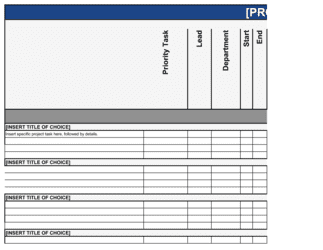
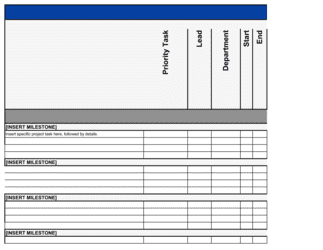
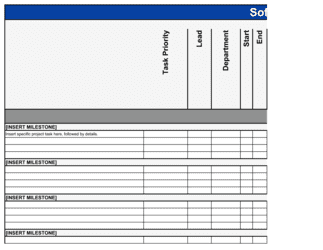
Project Transition Plan Template

Free Word download β€’ Edit online β€’ Save & share with Drive β€’ Export to PDF

11 pagesβ€’25–35 min to fillβ€’Difficulty: Complex
Learn more ↓
FreeProject Transition Plan Template

At a glance

What it is
A Project Transition Plan is a structured operational document that captures everything an incoming team, stakeholder, or owner needs to continue or close out a project without service disruption. This free Word download gives you a ready-to-edit framework covering scope summary, handover milestones, knowledge transfer, risk inventory, and stakeholder responsibilities β€” exportable as PDF for sharing with clients, sponsors, or successor teams.
When you need it
Use it when a project is transferring to a new owner, being handed off to an operations team at go-live, winding down at completion, or when a key team member leaves and continuity is at risk. It is equally valuable for IT system cutovers, agency-to-client handovers, and organizational restructuring.
What's inside
Project scope summary, transition objectives and timeline, roles and responsibilities matrix, knowledge transfer plan, risk and issue register, open items and decision log, stakeholder communication plan, and post-transition support terms β€” organized in a logical sequence the receiving team can follow from day one.

What is a Project Transition Plan?

A Project Transition Plan is a structured operational document that defines how a project, system, or operational function is safely transferred from one team or owner to another β€” covering scope context, handover milestones, roles and responsibilities, knowledge transfer, risk and issue tracking, and post-transition support terms. Unlike a project plan, which governs delivery, a transition plan governs continuity: it gives the receiving team everything they need to operate independently from day one, without relying on the institutional knowledge of the outgoing team. It is used at project completion, system go-live, staff departures, organisational restructuring, and agency-to-client handovers.

Why You Need This Document

Without a written transition plan, handovers rely on informal briefings, scattered email threads, and tribal knowledge that disappears the moment the outgoing team moves on. The consequences are predictable: inherited issues that no one documented become week-one escalations; system access is provisioned too late or to the wrong people; clients and external stakeholders notice a change in their point of contact before anyone tells them why; and the receiving team spends their first month solving problems the outgoing team already knew about. A complete transition plan forces both sides to surface open items, agree on a hard support exit date, and confirm that the receiving team can actually operate β€” not just that the documents were handed over. For consulting firms and agencies, a professional transition document is also a direct reflection of engagement quality at the moment a client's perception is most acute.

Which variant fits your situation?

If your situation is…Use this template
Handing off a completed software or IT project to a support teamIT Transition Plan
Transferring an ongoing project to a new project manager mid-lifecycleProject Handover Document
Documenting a departing employee's responsibilities and active workEmployee Transition Plan
Closing a project formally with lessons learned and sign-offProject Closure Report
Migrating systems or platforms with a cutover windowSystem Migration Plan
Managing a client-facing engagement handoff at contract endClient Offboarding Plan
Restructuring a department and reassigning project ownershipOrganizational Transition Plan

Common mistakes to avoid

❌ Treating document handover as the finish line

Why it matters: Handing over a folder of files does not mean the receiving team can operate independently. Gaps in operational knowledge cause incidents within days of cutover.

Fix: Define success as demonstrated independent operation β€” not document receipt. Include a parallel running phase where the receiving team executes processes with the outgoing team observing before the handover closes.

❌ No hard end date for post-transition support

Why it matters: Without a defined support exit date, the outgoing team remains informally on the hook for months, confusing accountability and preventing the receiving team from fully owning their role.

Fix: State a specific calendar date after which post-transition support ends, confirm it with all stakeholders in writing, and enforce it. Extend only via a formal agreement.

❌ Skipping the open items log

Why it matters: Undocumented inherited issues become surprise escalations in the receiving team's first month, damaging their confidence and the client or sponsor relationship.

Fix: Audit every active workstream and email thread in the week before cutover and log every unresolved item with a priority rating, owner, and target resolution date.

❌ Assigning multiple owners to the same transition task

Why it matters: Shared ownership means no single person monitors progress. Critical handover tasks β€” system access provisioning, SOP sign-off β€” are left incomplete on cutover day.

Fix: Assign exactly one Responsible owner to every task in the RACI. A second person can be Accountable for escalation, but operational execution must have a single named owner.

❌ Compressing or skipping the parallel running phase

Why it matters: Parallel running is where the receiving team surfaces the gaps between the documented process and the real one. Skipping it moves all surprises to after cutover, when the cost of fixing them is highest.

Fix: Protect at least one full business cycle β€” one sprint, one billing cycle, or one reporting period β€” for parallel running before the official cutover date.

❌ Omitting external stakeholders from the communication plan

Why it matters: Clients, vendors, or regulators who discover a change in their point of contact through a missed communication lose confidence immediately and escalate to senior management.

Fix: Audit every external party that interacts with the project and add them to the communication plan with a tailored message confirming continuity and new contacts before cutover day.

The 9 key sections, explained

Project summary and scope

Transition objectives and success criteria

Roles and responsibilities (RACI)

Transition timeline and milestones

Knowledge transfer plan

Risk and issue register

Open items and decision log

Stakeholder communication plan

Post-transition support terms

How to fill it out

  1. 1

    Complete the project summary and define what is in scope

    Fill in the project name, original objectives, current status, and explicitly list what is included and excluded in the handover. The receiving team will use this as their primary orientation document.

    πŸ’‘ Write the scope section assuming the reader has never been briefed on the project β€” every assumption you leave out will surface as a question during hypercare.

  2. 2

    Set measurable transition success criteria

    Define two to four specific, observable outcomes that confirm the transition is complete β€” not just that documents were handed over, but that the receiving team can operate independently.

    πŸ’‘ Include a formal acceptance sign-off by a named sponsor or client as one of the success criteria β€” this creates a clear close point and protects both parties.

  3. 3

    Build the RACI and assign every responsibility

    List every task, process, and ongoing responsibility that is transferring. For each, assign a single Responsible owner on the receiving side and confirm an Accountable stakeholder. Eliminate shared responsibility wherever possible.

    πŸ’‘ Walk through the RACI with both outgoing and incoming teams in the same session β€” disagreements surface immediately and can be resolved before they become operational problems.

  4. 4

    Map the transition phases and set milestone dates

    Break the transition into preparation, parallel running, cutover, and hypercare phases. Set target dates for each milestone, build in buffer between phases, and identify the dependencies that must be met before each phase can begin.

    πŸ’‘ Add a 10–15% time buffer to the parallel running phase β€” this is where most surprises emerge, and compressing it is the single most common cause of a failed cutover.

  5. 5

    Plan each knowledge transfer session individually

    List every process, system, and tacit skill that needs to transfer. For each, specify the format (shadowing session, written SOP, recorded walkthrough), the responsible trainer, the target completion date, and a sign-off requirement.

    πŸ’‘ Record screen-share walkthroughs for complex system processes β€” written documentation rarely captures the sequence of steps clearly enough for someone using the system for the first time.

  6. 6

    Populate the risk register with transition-specific risks

    Identify at least five risks specific to this transition β€” key person dependencies, system stability windows, customer sensitivity β€” and assign a mitigation action and owner to each.

    πŸ’‘ Ask the receiving team to contribute to the risk register independently before combining results; they will surface risks the outgoing team is too close to the project to see.

  7. 7

    Document all open items before handover day

    Log every unresolved issue, pending decision, and outstanding deliverable. Set a priority and target resolution date for each. Items with no resolution date before cutover should be formally deferred with an agreed process.

    πŸ’‘ Sort the open items log by priority and review it in the first post-cutover meeting β€” the receiving team's first two weeks will be shaped by what is on this list.

  8. 8

    Define the post-transition support window and hard exit date

    Specify the scope, duration, and response time of any hypercare support. Set a hard exit date after which no outgoing team support will be available, and communicate it clearly to all stakeholders.

    πŸ’‘ A hard exit date is not optional β€” without one, the outgoing team never fully disengages, and the receiving team never fully takes ownership.

Frequently asked questions

What is a project transition plan?

A project transition plan is a structured document that outlines the steps, timeline, responsibilities, and knowledge required to transfer a project, system, or operational function from one team or owner to another. It covers scope context, handover milestones, risk and issue tracking, stakeholder communication, and post-transition support terms β€” ensuring the receiving team can operate without the outgoing team's involvement.

When should a project transition plan be created?

Ideally, it should be started at least four to six weeks before the planned handover date β€” earlier for complex multi-system or multi-stakeholder transitions. Creating it too late compresses the preparation and parallel running phases, which are the most reliable protection against cutover failures. For projects where departure of a key person is the trigger, start it the moment the departure is confirmed.

What is the difference between a project transition plan and a project closure report?

A project closure report documents what the project achieved, lessons learned, and final sign-off β€” it looks backward. A project transition plan looks forward: it is an operational guide for the receiving team, covering what they need to know and do from handover day onward. Many projects require both, but they serve different audiences and purposes.

Who is responsible for writing a project transition plan?

The outgoing project manager or team lead typically owns the document, but it should be co-developed with the receiving team to ensure it reflects their actual needs and gaps. The project sponsor or client usually approves the final plan. For IT transitions, the delivery lead and the support manager should review it jointly before it is finalized.

What should the knowledge transfer section include?

It should cover every process, system, and decision-making pattern that the receiving team needs to operate independently β€” not just procedures documented in existing SOPs. Include the format of each transfer session (walkthrough, shadowing, recorded demo, written guide), who delivers it, who receives it, the completion date, and a sign-off confirmation. Tacit knowledge β€” why certain decisions are made, key contacts, and known workarounds β€” is often the most valuable and the most commonly omitted.

How long should the post-transition support (hypercare) period be?

Two to four weeks is the most common range for standard project handovers. Complex IT system migrations or large client engagements may warrant six to eight weeks. The support scope and response time commitments should be explicitly defined and limited β€” hypercare is not ongoing operations support. A hard end date must be agreed before cutover begins and communicated to all stakeholders.

How do you handle risks that cannot be mitigated before the transition?

Document them explicitly in the risk register with their likelihood, impact, and a contingency action the receiving team can execute if the risk materializes. Assign a named owner for each contingency. Risks that cannot be mitigated and carry high impact should be escalated to the project sponsor for a go/no-go decision on the cutover date β€” proceeding with a known high-impact unmitigated risk without sponsor awareness is the most avoidable cause of transition failure.

Can a project transition plan be used for an internal role handoff?

Yes. When a team member leaves or moves to a new role, a transition plan adapted for individual handoffs β€” covering active projects, regular processes, key relationships, and access and tooling β€” serves the same purpose. The document structure is identical; only the scope and audience change. HR teams often use a simplified version as part of offboarding to protect operational continuity.

What is the most important section of a project transition plan?

The open items and decision log is consistently the most undervalued but operationally critical section. The receiving team's first two to four weeks are largely determined by what unresolved issues they inherit. A complete, prioritized log with owners and resolution dates prevents inherited problems from becoming surprise escalations β€” which are the most common cause of a damaged relationship between outgoing and incoming teams in the weeks after cutover.

How this compares to alternatives

vs Project Closure Report

A project closure report is a backward-looking document that records what the project achieved, final costs, and lessons learned β€” it closes the project record. A transition plan is forward-looking, giving the receiving team an operational guide for what to do after handover. Both are typically produced at project end, but they serve different audiences: the closure report goes to the sponsor and PMO; the transition plan goes to the operational team taking ownership.

vs Project Plan

A project plan governs the execution of work from initiation through delivery β€” tasks, resources, timelines, and budgets. A transition plan picks up where the project plan ends, focusing on how the outputs of that work are safely handed to a new owner. A project plan is a delivery tool; a transition plan is a continuity tool.

vs Standard Operating Procedure (SOP)

An SOP documents how a specific process should be performed on an ongoing basis. A transition plan references and delivers the SOPs the receiving team needs, but its primary function is to manage the transfer event itself β€” timeline, risk, open items, and communication. SOPs are a product of a good transition; they are not a substitute for one.

vs Change Management Plan

A change management plan addresses the people side of an organizational or process change β€” resistance, adoption, training, and culture. A project transition plan focuses on the operational mechanics of handing over a specific project or system. Complex transitions often require both: the transition plan manages the handover logistics while the change management plan manages stakeholder adoption of the new state.

Industry-specific considerations

Technology / IT

System cutovers, infrastructure migrations, and support team handovers require access provisioning checklists, runbooks, and a defined hypercare window tied to deployment stability metrics.

Professional Services / Consulting

Agency and consulting engagements require formal client-facing transition documents that transfer relationship context, deliverable status, and institutional knowledge without disrupting client confidence.

Construction and Engineering

Project handovers to facilities or operations teams at practical completion include asset registers, warranty schedules, O&M manuals, and a defect liability period support structure.

Healthcare

Clinical system implementations and care pathway transitions require compliance documentation, staff competency sign-offs, and patient safety risk assessments built into every handover milestone.

Template vs pro β€” what fits your needs?

PathBest forCostTime
Use the templateProject managers, team leads, and consultants handling standard project or role handoversFree2–4 hours to complete; 2–4 weeks to execute
Template + professional reviewLarge-scale IT migrations, multi-vendor transitions, or client-facing handovers with contractual obligations$500–$2,000 for a PMO review or transition management consultant session1–2 weeks planning plus execution period
Custom draftedEnterprise-scale system decommissions, M&A integration handovers, or regulated-industry transitions requiring compliance sign-off$3,000–$15,000+ for a dedicated transition manager or programme management office engagement4–12 weeks

Glossary

Transition Plan
A document outlining the steps, timeline, and responsibilities required to transfer a project, system, or role from one owner to another with minimal disruption.
Knowledge Transfer
The process of documenting and communicating institutional knowledge, procedures, and context so a successor can operate effectively without the original owner.
Handover Milestone
A defined checkpoint in the transition timeline at which a specific deliverable, responsibility, or system access is formally transferred to the receiving party.
RACI Matrix
A responsibility assignment chart that maps each task to the person Responsible, Accountable, Consulted, and Informed β€” used to eliminate ambiguity during transitions.
Open Items Log
A tracked list of unresolved issues, pending decisions, and outstanding tasks that the receiving team must address after the handover is complete.
Go-Live
The point at which a project's output β€” a system, product, or process β€” is switched into active production and the transition team steps back.
Hypercare Period
A defined post-go-live window β€” typically 2–4 weeks β€” during which the outgoing team remains available to support the receiving team through early issues.
Risk Register
A structured log of identified transition risks, each with a likelihood rating, potential impact, and a nominated mitigation or contingency action.
Stakeholder Map
A documented list of all parties with interest in or impact on the transition, including their role, communication preferences, and level of involvement.
Escalation Path
A defined chain of contacts and thresholds that specifies when and to whom issues should be raised if they cannot be resolved at the operational level.

Part of your Business Operating System

This document is one of 3,000+ business & legal templates included in Business in a Box.

  • Fill-in-the-blanks β€” ready in minutes
  • 100% customizable Word document
  • Compatible with all office suites
  • Export to PDF and share electronically

Create your document in 3 simple steps.

From template to signed document β€” all inside one Business Operating System.
1
Download or open template

Access over 3,000+ business and legal templates for any business task, project or initiative.

2
Edit and fill in the blanks with AI

Customize your ready-made business document template and save it in the cloud.

3
Save, Share, Send, Sign

Share your files and folders with your team. Create a space of seamless collaboration.

Save time, save money, and create top-quality documents.

β˜…β˜…β˜…β˜…β˜…

"Fantastic value! I'm not sure how I'd do without it. It's worth its weight in gold and paid back for itself many times."

Managing Director Β· Mall Farm
Robert Whalley
Managing Director, Mall Farm Proprietary Limited
β˜…β˜…β˜…β˜…β˜…

"I have been using Business in a Box for years. It has been the most useful source of templates I have encountered. I recommend it to anyone."

Business Owner Β· 4+ years
Dr Michael John Freestone
Business Owner
β˜…β˜…β˜…β˜…β˜…

"It has been a life saver so many times I have lost count. Business in a Box has saved me so much time and as you know, time is money."

Owner Β· Upstate Web
David G. Moore Jr.
Owner, Upstate Web

Run your business with a system β€” not scattered tools

Stop downloading documents. Start operating with clarity. Business in a Box gives you the Business Operating System used by over 250,000 companies worldwide to structure, run, and grow their business.

Start freeΒ Β·Β No credit card required