- Stage Gate
- A structured review checkpoint in a product development process where a cross-functional team decides whether a project should proceed, be revised, or be cancelled before moving to the next phase.
- Product Roadmap
- A high-level visual plan that maps features, releases, and milestones on a timeline, communicating the direction of a product to internal teams and stakeholders.
- Minimum Viable Product (MVP)
- A version of a new product with just enough features to be usable by early customers, enabling the team to collect validated learning with minimal development effort.
- Product Lifecycle
- The stages a product passes through from introduction to decline — typically introduction, growth, maturity, and decline — each requiring a different management strategy.
- Voice of the Customer (VoC)
- A research process that captures customers' expectations, preferences, and pain points to inform product requirements and prioritization.
- Go-to-Market (GTM) Strategy
- The plan specifying how a product will be positioned, priced, distributed, and promoted to reach target customers at launch.
- Product-Market Fit
- The degree to which a product satisfies a strong market demand — typically evidenced by high retention, low churn, and organic word-of-mouth growth.
- Feature Prioritization
- The process of ranking proposed product features by business value, development effort, and strategic fit to determine what gets built and in what order.
- Technical Feasibility
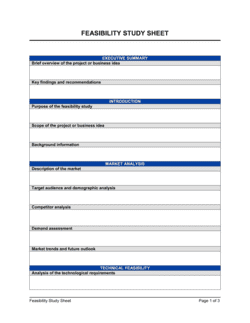
- An assessment of whether a product concept can be built with available technology, skills, and budget within the required timeframe.
- OKRs (Objectives and Key Results)
- A goal-setting framework pairing a qualitative objective with two to five measurable key results, used to align product teams around outcomes rather than outputs.