Procurement Plan Template

Free Word download β€’ Edit online β€’ Save & share with Drive β€’ Export to PDF

14 pagesβ€’25–35 min to fillβ€’Difficulty: Complex
Learn more ↓
FreeProcurement Plan Template

At a glance

What it is
A Procurement Plan is a structured operational document that defines how an organization will identify, evaluate, and acquire goods, services, or contractors needed to meet a project or business objective. This free Word download gives you a ready-to-edit framework covering sourcing strategy, vendor selection criteria, budget allocation, delivery timelines, and risk controls β€” exportable as PDF for stakeholder review.
When you need it
Use it at the start of a project, contract cycle, or fiscal period when you need to coordinate purchases across multiple suppliers, justify spending to leadership or a board, or comply with organizational procurement policies.
What's inside
Procurement objectives, scope of goods and services, sourcing approach, vendor evaluation criteria, budget and cost estimates, procurement timeline, contract and compliance requirements, risk assessment, and approval workflow.

What is a Procurement Plan?

A Procurement Plan is a structured operational document that defines how an organization will identify, source, evaluate, and acquire the goods, services, or contractors needed to meet a project or business objective. It maps every stage of the purchasing cycle β€” from scoping requirements and selecting a sourcing approach through vendor evaluation, contract award, and delivery β€” into a single governance document that the entire team can follow and that stakeholders and auditors can review. Unlike a purchase order, which records a single transaction, a procurement plan governs an entire acquisition cycle and documents the decision-making process behind every supplier relationship it covers.

Why You Need This Document

Without a written procurement plan, purchasing decisions are made informally β€” criteria shift between bids, budgets have no approved baseline, and no one can explain after the fact why a particular supplier was chosen. The consequences are concrete: budget overruns with no contingency to absorb them, supplier disputes with no documented SLA to enforce, and failed audits when grant administrators or compliance officers ask for evidence of competitive sourcing. A signed procurement plan locks in your evaluation criteria before proposals arrive, forces a realistic budget with contingency, and creates the paper trail that protects every award decision. This template gives you a complete, immediately usable framework so you can start any procurement cycle with clarity rather than scrambling to reconstruct your process after the fact.

Which variant fits your situation?

If your situation is…Use this template
Procuring goods or services for a defined, time-limited projectProject Procurement Plan
Managing recurring vendor relationships across an entire organizationVendor Management Plan
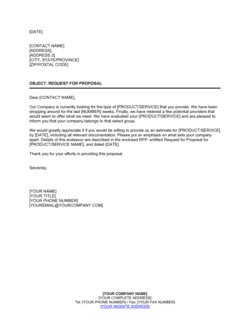
Issuing a formal request to suppliers for pricing and proposalsRequest for Proposal (RFP)
Comparing multiple supplier bids on a consistent set of criteriaVendor Comparison Matrix
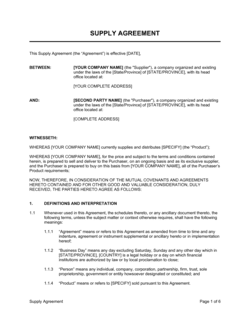
Formalizing the terms of engagement with a selected supplierSupplier Agreement
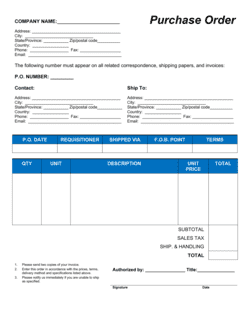
Tracking spend and purchase orders against a procurement budgetPurchase Order
Documenting IT or software acquisition needs and vendor evaluationIT Procurement Plan

Common mistakes to avoid

❌ Skipping the risk log entirely

Why it matters: Unidentified risks β€” supplier insolvency, price escalation, late delivery β€” hit the project budget and timeline with no contingency plan in place.

Fix: Complete the risk log before issuing the RFP, not after. Assign an owner and a mitigation action for every risk rated medium or higher.

❌ Setting evaluation criteria after reviewing proposals

Why it matters: Post-hoc criteria are almost impossible to defend in a challenge or audit and signal that the selection was predetermined.

Fix: Lock and document all evaluation criteria and weights in the procurement plan before any supplier contact begins.

❌ No contingency budget line

Why it matters: Procurement budgets routinely run 5–15% over estimate due to price changes, scope additions, or supplier substitutions β€” with no reserve, projects stall or overspend without approval.

Fix: Add a named contingency line of at least 10% for first-time procurements and 5% for repeat categories with stable pricing history.

❌ Omitting SLA and performance standards from the plan

Why it matters: Without measurable SLAs defined at the procurement stage, the contract often omits them too β€” leaving no basis to penalize or exit a non-performing supplier.

Fix: Define minimum acceptable performance thresholds (uptime, lead time, defect rate) in the plan so they are included in every RFP and resulting contract.

The 8 key sections, explained

Procurement objectives and scope

Sourcing approach

Vendor evaluation criteria

Budget and cost estimates

Procurement timeline and milestones

Contract and compliance requirements

Risk assessment and mitigation

Approval and authorization workflow

How to fill it out

  1. 1

    Define the procurement objective and scope

    Write a clear statement of what you need to buy, how much, and by when. Explicitly list what is out of scope to prevent scope creep later.

    πŸ’‘ Tie the procurement objective directly to a project deliverable or business KPI β€” this makes budget approval conversations significantly easier.

  2. 2

    Choose and justify your sourcing approach

    Select open competition, preferred vendor list, or sole source. Document the rationale for whichever method you choose, especially if bypassing a competitive process.

    πŸ’‘ Even when using a preferred vendor list, issuing a mini-competition among listed vendors keeps pricing sharp and strengthens audit defensibility.

  3. 3

    Set weighted evaluation criteria before contacting suppliers

    Define criteria and assign percentage weights before reviewing any proposals. Locking weights in advance prevents post-hoc rationalization of a preferred vendor.

    πŸ’‘ Run your draft criteria past the end-users who will live with the supplier β€” they often surface requirements the procurement team misses.

  4. 4

    Build the budget with a contingency line

    Estimate costs by category using at least two data points β€” a recent quote, a market benchmark, or a prior-year actual. Add a contingency of 10–15% for first-time procurements.

    πŸ’‘ Get an informal quote from one supplier before finalizing the budget. Nothing exposes a bad estimate faster than a real number.

  5. 5

    Map the timeline backward from the delivery date

    Start from the required delivery date and work backward through award, evaluation, proposal receipt, and RFP issue. Add buffer at each stage for revision rounds.

    πŸ’‘ Allow a minimum of 10 business days for supplier proposal response on anything above $25,000 β€” shorter windows reduce competition and bid quality.

  6. 6

    Specify contract type and mandatory compliance requirements

    Choose the contract structure (fixed price, time and materials, or cost plus) and list all non-negotiable terms β€” insurance minimums, SLAs, warranties, data security standards.

    πŸ’‘ List SLA metrics with specific thresholds (e.g., 99.5% uptime, 4-hour response time) rather than vague language like 'prompt service.'

  7. 7

    Complete the risk log with owners and mitigations

    Identify at least four procurement-specific risks. For each, rate likelihood and impact, name an owner, and state a concrete mitigation action or contingency.

    πŸ’‘ Single-source dependency is almost always a top-three risk β€” flag it even if you intend to sole-source, and document a backup supplier in case of failure.

  8. 8

    Route for approval and file the signed plan

    Submit the completed plan through the appropriate approval tiers per your organization's spending thresholds. File the signed version before issuing any RFP or purchase order.

    πŸ’‘ Store the approved plan alongside the resulting contract and purchase orders so auditors can trace every procurement decision back to the authorizing document.

Frequently asked questions

What is a procurement plan?

A procurement plan is a structured document that defines how an organization will source, evaluate, and acquire goods or services needed for a project or business operation. It covers the sourcing approach, vendor selection criteria, budget, timeline, contract requirements, and risk management β€” providing a transparent, auditable record of every purchasing decision.

When should a procurement plan be created?

A procurement plan should be completed before any RFP is issued or supplier contact begins. Ideally it is drafted during the project planning phase or at the start of a budget cycle. Creating it after supplier conversations have started undermines competitive fairness and creates audit exposure.

What is the difference between a procurement plan and a purchase order?

A procurement plan is a strategic document that governs how purchases will be made across a project or period. A purchase order is a transactional document that authorizes a specific purchase from a specific supplier at an agreed price. The plan comes first and authorizes the conditions under which purchase orders can be issued.

What contract types should a procurement plan reference?

The three most common types are fixed price (set total cost regardless of effort), time and materials (billed by hours and materials consumed), and cost plus (actual costs reimbursed plus a fee). Fixed-price contracts transfer cost risk to the supplier; time-and-materials contracts transfer it to the buyer. The plan should specify which type applies and why it suits the procurement category.

Who approves a procurement plan?

Approval tiers typically depend on total spend. Low-value procurements are approved by a department manager; mid-range purchases require a finance or operations director sign-off; high-value or strategic procurement requires executive or board approval. The plan itself should document these thresholds so every stakeholder knows what triggers escalation.

Do small businesses need a formal procurement plan?

Any business spending more than $10,000–$25,000 on a single vendor relationship benefits from a documented plan. It formalizes supplier selection, protects against post-hoc challenges, and creates the paper trail needed for accurate expense reporting and tax records. For government contracts, grants, or regulated industries, a written plan is typically mandatory regardless of spend size.

How does a procurement plan reduce supplier risk?

By requiring a formal risk log before award, the plan forces the team to identify single-source dependencies, financial instability signals, and delivery concentration before a contract is signed. Mitigation actions β€” such as qualifying a backup supplier or requiring performance bonds β€” can then be built into the contract rather than improvised after a failure occurs.

What is the difference between a procurement plan and an RFP?

A procurement plan is an internal governance document that defines the strategy and rules for a purchasing cycle. An RFP is an external document issued to potential suppliers to solicit proposals. The plan comes first and determines whether an RFP is the right sourcing tool β€” along with the evaluation criteria, budget, and timeline that the RFP will reflect.

How this compares to alternatives

vs Request for Proposal (RFP)

An RFP is an external solicitation document sent to potential suppliers to gather structured proposals. A procurement plan is the internal governance document that defines whether an RFP is needed, what criteria it should use, and what budget it operates within. The plan authorizes and shapes the RFP β€” not the reverse.

vs Purchase Order

A purchase order is a transactional document that commits the buyer to a specific purchase from a specific supplier at a stated price. A procurement plan is a strategic document covering the full sourcing cycle. The plan governs the conditions under which purchase orders can be issued; a PO is a single execution step within that cycle.

vs Supplier Agreement

A supplier agreement is the binding legal contract executed with a selected vendor after evaluation. A procurement plan documents the process used to reach that decision β€” sourcing approach, evaluation criteria, and budget. The plan is the audit trail that justifies why the supplier agreement was awarded to a particular vendor.

vs Project Plan

A project plan covers the full scope of a project β€” tasks, resources, schedule, and deliverables across all workstreams. A procurement plan is a subset focused exclusively on the acquisition of external goods and services. Large projects often contain a procurement plan as a dedicated section or companion document within the broader project plan.

Industry-specific considerations

Construction and Infrastructure

Material and subcontractor procurement tied to project phases, with lead times and delivery sequencing critical to avoiding site downtime.

Healthcare

Medical device and pharmaceutical procurement governed by regulatory compliance requirements, approved-vendor lists, and strict quality assurance standards.

Government and Public Sector

Mandatory competitive bidding thresholds, sole-source justification documentation, and public transparency requirements for contract award decisions.

Manufacturing

Raw material and component sourcing with lead-time buffers, supplier concentration risk management, and total-cost-of-ownership analysis across multi-tier supply chains.

Template vs pro β€” what fits your needs?

PathBest forCostTime
Use the templateProject managers, operations teams, and small businesses managing standard procurement cycles up to $250,000Free2–4 hours
Template + professional reviewOrganizations with compliance obligations, grant-funded programs, or first-time formal procurement processes$200–$800 for a procurement consultant or operations advisor review1–3 days
Custom draftedLarge capital procurement, government contracts, regulated industries, or multi-vendor programs above $1M$2,000–$8,000 for a specialist procurement consultant1–3 weeks

Glossary

Procurement
The end-to-end process of identifying a need, sourcing suppliers, evaluating options, awarding a contract, and managing delivery of goods or services.
Sourcing Strategy
The approach used to find and engage suppliers β€” options include open market competition, sole-source justification, preferred vendor lists, and reverse auctions.
Request for Proposal (RFP)
A formal document issued to potential suppliers inviting them to submit detailed proposals against a defined scope of work and evaluation criteria.
Total Cost of Ownership (TCO)
The full cost of acquiring, operating, maintaining, and disposing of a good or service over its useful life β€” not just the purchase price.
Sole-Source Justification
A documented rationale for awarding a contract to a single supplier without competitive bidding, typically used when only one vendor can meet the requirements.
Lead Time
The time between placing a purchase order and receiving the goods or services β€” a key variable in procurement scheduling.
Supplier Risk
The probability and impact of a supplier failing to deliver on time, at spec, or within budget β€” including financial instability, geopolitical exposure, and single-source dependency.
Purchase Order (PO)
A buyer-issued commercial document that formally authorizes a purchase, specifying item, quantity, agreed price, and delivery terms.
Preferred Vendor List
A pre-approved list of suppliers that have passed a vetting process, allowing faster procurement without repeating full competitive evaluation each time.
Contract Award
The formal decision to engage a specific supplier, typically documented by a signed agreement or issued purchase order following an evaluation process.

Part of your Business Operating System

This document is one of 3,000+ business & legal templates included in Business in a Box.

  • Fill-in-the-blanks β€” ready in minutes
  • 100% customizable Word document
  • Compatible with all office suites
  • Export to PDF and share electronically

Create your document in 3 simple steps.

From template to signed document β€” all inside one Business Operating System.
1
Download or open template

Access over 3,000+ business and legal templates for any business task, project or initiative.

2
Edit and fill in the blanks with AI

Customize your ready-made business document template and save it in the cloud.

3
Save, Share, Send, Sign

Share your files and folders with your team. Create a space of seamless collaboration.

Save time, save money, and create top-quality documents.

β˜…β˜…β˜…β˜…β˜…

"Fantastic value! I'm not sure how I'd do without it. It's worth its weight in gold and paid back for itself many times."

Managing Director Β· Mall Farm
Robert Whalley
Managing Director, Mall Farm Proprietary Limited
β˜…β˜…β˜…β˜…β˜…

"I have been using Business in a Box for years. It has been the most useful source of templates I have encountered. I recommend it to anyone."

Business Owner Β· 4+ years
Dr Michael John Freestone
Business Owner
β˜…β˜…β˜…β˜…β˜…

"It has been a life saver so many times I have lost count. Business in a Box has saved me so much time and as you know, time is money."

Owner Β· Upstate Web
David G. Moore Jr.
Owner, Upstate Web

Run your business with a system β€” not scattered tools

Stop downloading documents. Start operating with clarity. Business in a Box gives you the Business Operating System used by over 250,000 companies worldwide to structure, run, and grow their business.

Start freeΒ Β·Β No credit card required