- Guarantor
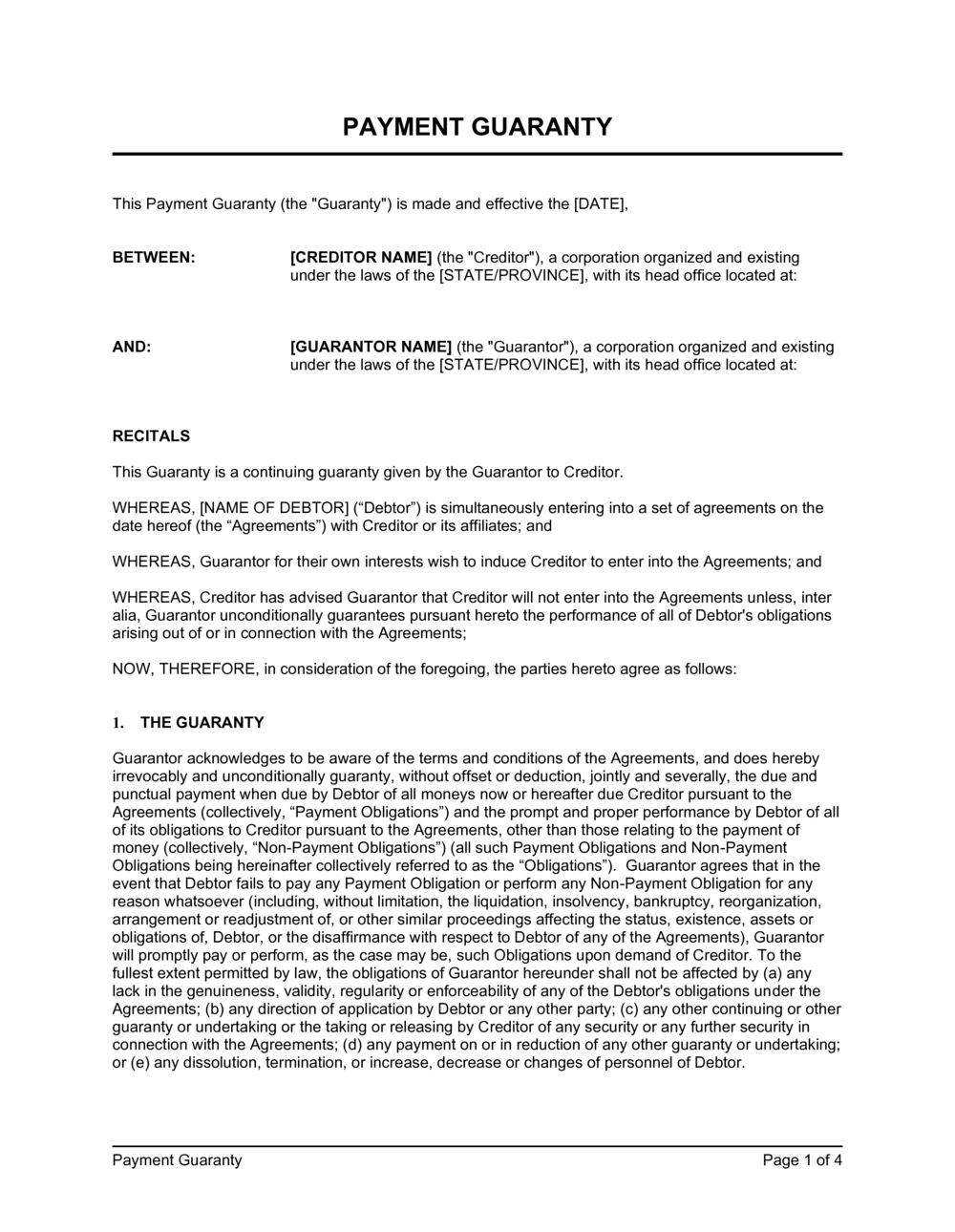
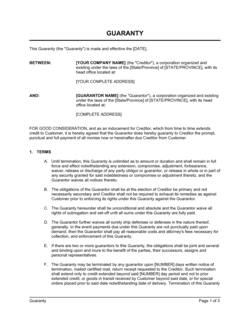
- The party who promises to pay the creditor if the primary debtor defaults — distinct from the borrower or obligor.
- Obligor (Principal Debtor)
- The primary party obligated to pay under the underlying agreement — the business or individual whose debt is being guaranteed.
- Creditor (Obligee)
- The party to whom payment is owed and who holds the benefit of the guaranty — a lender, landlord, or supplier.
- Underlying Obligation
- The specific debt, lease, or payment duty the guaranty is written to secure — identified by reference to the original agreement.
- Absolute and Unconditional Guaranty
- A guaranty that allows the creditor to demand payment from the guarantor immediately upon default, without first pursuing the primary debtor.
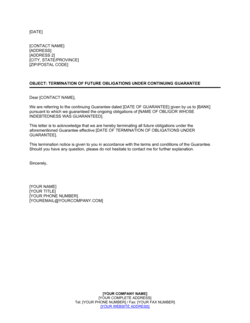
- Continuing Guaranty
- A guaranty that covers all obligations arising under an ongoing relationship rather than a single, fixed transaction.
- Surety
- A party who promises to be primarily responsible for a debt alongside the debtor — stricter than a guaranty, where the guarantor is secondarily liable.
- Waiver of Defenses
- A clause in which the guarantor gives up the right to raise certain legal defenses — such as lack of notice or modification of the underlying agreement — against the creditor's claim.
- Subrogation
- The guarantor's right, after paying the creditor, to step into the creditor's shoes and pursue the primary debtor for reimbursement.
- Indemnification
- A guarantor's right to be reimbursed by the primary debtor for any payment made to the creditor on the debtor's behalf.
- Limited Guaranty
- A guaranty capped at a specific dollar amount or time period, beyond which the guarantor bears no further liability.
- Joint and Several Liability
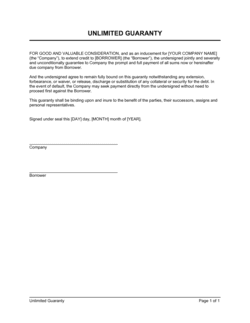
- When multiple guarantors are each individually responsible for the full guaranteed amount, allowing the creditor to collect the entire sum from any one of them.