Revocation of Guaranty Template

Free Word download • Edit online • Save & share with Drive • Export to PDF

1 page20–30 min to fillDifficulty: StandardSignature requiredLegal review recommended
Learn more ↓
FreeRevocation of Guaranty Template

At a glance

What it is
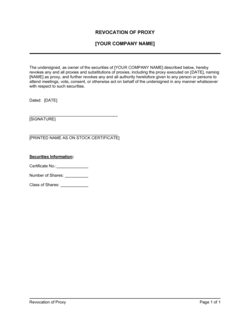
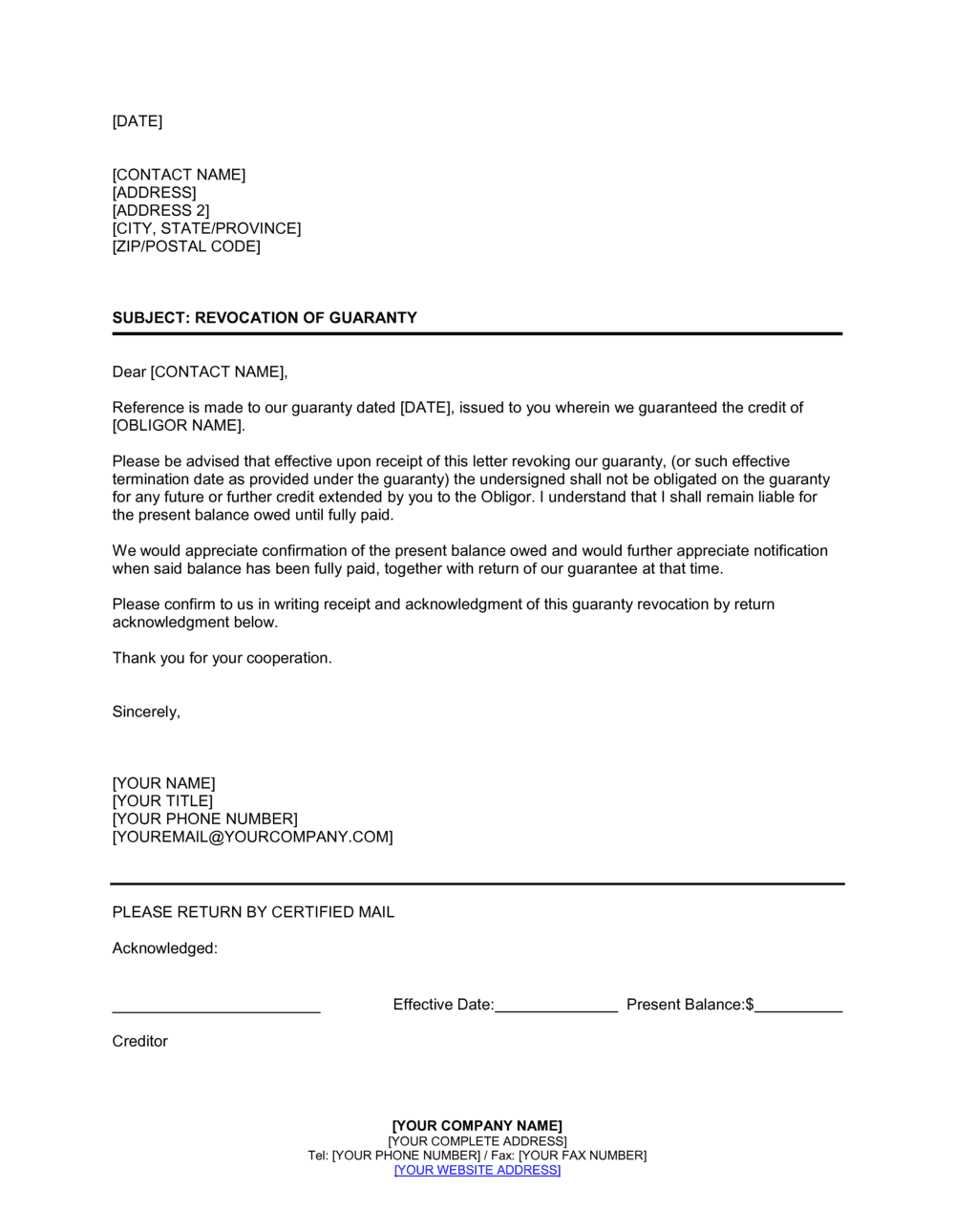
A Revocation of Guaranty is a formal written notice by which a guarantor terminates their obligation under a continuing or open-ended guaranty agreement. This free Word download gives you a professionally structured document you can edit online and export as PDF — covering the original guaranty reference, effective date of revocation, scope of future obligations, and delivery instructions.
When you need it
Use it when a guarantor wishes to stop being liable for future obligations under a continuing guaranty — such as a business credit line, commercial lease guarantee, or supplier account — and the original agreement permits revocation by written notice. It does not eliminate liability for obligations already incurred before the revocation is delivered.
What's inside
Identification of the parties and the original guaranty, a clear revocation declaration with effective date, a statement limiting liability to pre-revocation obligations, a notice-and-delivery clause, a representations block, and signature lines for the guarantor and a notarial or witness acknowledgment where required.

What is a Revocation of Guaranty?

A Revocation of Guaranty is a formal written notice by which a guarantor unilaterally terminates their prospective liability under a continuing or open-ended guaranty agreement. Unlike a fixed guaranty — which covers a single defined obligation — a continuing guaranty remains in force indefinitely, covering an ongoing series of transactions such as draws on a revolving credit line, rent payments under a commercial lease, or recurring trade credit purchases. The revocation cuts off the guarantor's exposure to any new obligations incurred after the notice is properly delivered; it does not, however, release the guarantor from amounts already owed as of the effective date. Governed by suretyship law and the specific terms of the original guaranty agreement, a properly executed and delivered revocation is the essential instrument for any guarantor who needs to end a continuing obligation while preserving their rights with the creditor.

Why You Need This Document

Without a formal, documented revocation, a continuing guaranty stays in force indefinitely — exposing the guarantor to every future advance, lease renewal, or trade-credit extension the primary obligor incurs, often without the guarantor's knowledge. Business partners who leave a company, directors who resign from a board, and owners who sell their stake have all faced collection actions on obligations incurred years after their departure — simply because no one filed a written revocation. A missing or defective revocation is also invisible: the creditor's records show an active guaranty, and they will rely on it in extending new credit. This template gives you a complete, jurisdictionally informed document that references the original guaranty correctly, states the Revocation Date unambiguously, preserves accrued-obligation language that protects both parties from future disputes, and includes delivery and notarization guidance that creditors and courts require. Using it properly closes the exposure window cleanly and creates the paper trail you need if the validity of the revocation is ever challenged.

Which variant fits your situation?

If your situation is…Use this template
Revoking a personal guarantee on a commercial bank credit lineRevocation of Guaranty (Bank Credit Facility)
Removing a guarantor from a commercial lease arrangementLease Guaranty Revocation Notice
Terminating a corporate parent's guarantee of a subsidiary's obligationsCorporate Guaranty Termination Agreement
Revoking a continuing trade-credit guarantee with a supplierRevocation of Continuing Guaranty (Trade Credit)
Providing notice to a creditor that a guarantor is deceased and the estate limits exposureNotice of Guarantor Death and Estate Limitation
Mutually releasing all parties from a guaranty by written agreementMutual Release of Guaranty
Substituting one guarantor for another in an existing credit arrangementGuarantor Substitution Agreement

Common mistakes to avoid

❌ Revoking a non-revocable guaranty

Why it matters: Some guaranties are written as irrevocable or contain explicit waiver-of-revocation language. Sending a revocation notice on a non-revocable instrument has no legal effect and may lull the guarantor into a false sense that their exposure has ended.

Fix: Read the original guaranty in full before preparing the revocation. If it contains irrevocability language, consult a lawyer before proceeding — the guarantor may need to negotiate a release directly with the creditor.

❌ Failing to account for the required notice period

Why it matters: A revocation sent without observing the contractual notice period (often 30–90 days) is ineffective until that period expires, meaning new obligations incurred during the notice window remain covered by the guaranty.

Fix: Identify the notice period in the original guaranty and set the Revocation Date accordingly. State both the delivery date and the Revocation Date clearly in the document.

❌ Not preserving proof of delivery

Why it matters: A revocation that cannot be proven delivered is legally equivalent to one that was never sent — the creditor can continue extending credit on the assumption the guaranty is still active.

Fix: Always use certified mail with return receipt, overnight courier with signature confirmation, or personal delivery with a written receipt. Retain the proof indefinitely alongside the revocation.

❌ Assuming revocation eliminates all existing liability

Why it matters: The guarantor remains fully responsible for all obligations that arose before the Revocation Date. Guarantors who stop paying on pre-revocation balances after revoking still face collection, judgment, and credit damage.

Fix: Include an explicit accrued-obligations clause in the revocation and obtain a current account statement from the creditor so both parties agree on the outstanding balance at the time of revocation.

❌ Using the wrong governing law

Why it matters: A revocation governed by a different state or province than the original guaranty can create a conflict that delays or invalidates the revocation, requiring court interpretation before the effective date is even reached.

Fix: Mirror the governing-law clause from the original guaranty in the revocation document. If the original guaranty specifies New York law, the revocation must also specify New York law.

❌ Omitting notarization when the creditor or jurisdiction requires it

Why it matters: Regulated lenders — banks, credit unions, and many institutional creditors — will not process an unnotarized revocation notice. The guaranty remains active in their records until a compliant document is received.

Fix: Contact the creditor's loan administration or legal department before signing to confirm their execution requirements. Build notarization into your process as the default rather than the exception.

The 10 key clauses, explained

Parties and recitals

In plain language: Identifies the guarantor by legal name, the creditor or obligee, and the primary obligor, and references the original guaranty by date and description.

Sample language
This Revocation of Guaranty ('Revocation') is given as of [DATE] by [GUARANTOR FULL LEGAL NAME] ('Guarantor') to [CREDITOR FULL LEGAL NAME] ('Creditor') with respect to that certain Continuing Guaranty dated [ORIGINAL GUARANTY DATE] ('Guaranty') in favor of Creditor, guaranteeing the obligations of [PRIMARY OBLIGOR NAME] ('Obligor').

Common mistake: Referencing the original guaranty by an informal description rather than its exact execution date and title — making it impossible for the creditor's records team to match the revocation to the correct instrument.

Revocation declaration

In plain language: The operative clause that formally withdraws the guarantor's commitment to cover any future obligations incurred after the effective date.

Sample language
Guarantor hereby revokes and terminates the Guaranty effective as of [EFFECTIVE DATE] ('Revocation Date'). From and after the Revocation Date, Guarantor shall have no obligation or liability under the Guaranty with respect to any new obligations, advances, extensions of credit, or transactions entered into between Creditor and Obligor.

Common mistake: Using vague language like 'Guarantor hereby cancels all obligations' without specifying the Revocation Date — creating a dispute about when liability actually ended.

Preservation of accrued obligations

In plain language: Confirms that the guarantor remains fully liable for any amounts or obligations already outstanding under the original guaranty as of the Revocation Date.

Sample language
This Revocation shall not affect or impair Guarantor's liability for any obligations, indebtedness, or liabilities of Obligor to Creditor that arose, were incurred, or were outstanding prior to the Revocation Date, all of which obligations shall remain in full force and effect and are not released hereby.

Common mistake: Omitting this clause entirely, which leaves ambiguity about pre-revocation amounts and can expose the guarantor to arguments that all liability — past and future — was released.

Delivery and notice requirements

In plain language: Specifies how the revocation must be delivered to the creditor to be legally effective, including method, address, and the date delivery is deemed to occur.

Sample language
This Revocation is delivered to Creditor by [CERTIFIED MAIL / OVERNIGHT COURIER / HAND DELIVERY / EMAIL WITH DELIVERY RECEIPT] at [CREDITOR ADDRESS / EMAIL]. Delivery shall be deemed effective upon [ACTUAL RECEIPT / THE NEXT BUSINESS DAY AFTER SENDING].

Common mistake: Sending the revocation by regular mail with no proof of delivery — giving the creditor grounds to argue they never received it and that the guaranty remains active.

Representations and warranties of the guarantor

In plain language: The guarantor confirms they have authority to revoke, that no insolvency or bankruptcy filing is pending, and that they are not revoking to defraud the creditor.

Sample language
Guarantor represents and warrants that (a) Guarantor has full legal capacity and authority to execute and deliver this Revocation; (b) no proceeding in bankruptcy, insolvency, or receivership is pending against Guarantor; and (c) this Revocation is not made with intent to hinder, delay, or defraud any creditor.

Common mistake: Skipping the fraud/insolvency warranty — creditors can challenge revocations made while the guarantor is insolvent as fraudulent conveyances in many jurisdictions.

Creditor's acknowledgment block (optional but recommended)

In plain language: A signature block for the creditor to confirm receipt of the revocation and the effective date — converting the notice into a bilaterally acknowledged document.

Sample language
Acknowledged and received by Creditor: [CREDITOR NAME], by [AUTHORIZED SIGNATORY NAME], Title: [TITLE], Date of Receipt: [DATE].

Common mistake: Treating acknowledgment as optional and skipping it — without the creditor's signature, the guarantor has only their own delivery evidence, which may be insufficient if the creditor disputes receipt.

Effect on related guaranties and documents

In plain language: Clarifies whether the revocation applies only to the specific guaranty referenced or also to any amendments, restatements, or related guarantee instruments.

Sample language
This Revocation applies solely to the Guaranty identified in the Recitals above and to any amendments or supplements thereto. It does not affect any separate or independent guaranty or surety obligation Guarantor may have provided to Creditor in connection with any other credit facility or agreement.

Common mistake: Not addressing related amendments or restatements, leaving open whether a later-amended version of the guaranty was also revoked.

Governing law and dispute resolution

In plain language: Specifies which jurisdiction's law governs the revocation and how any disputes about its validity or scope will be resolved.

Sample language
This Revocation shall be governed by and construed in accordance with the laws of the State of [STATE], without regard to conflicts-of-law principles. Any dispute arising hereunder shall be resolved in the courts of [COUNTY/CITY, STATE] or by binding arbitration before [ARBITRATION BODY] at the election of [CREDITOR / GUARANTOR].

Common mistake: Choosing a governing law different from the one in the original guaranty — creating a conflict that a court must resolve before reaching the merits of the revocation.

Entire agreement and no waiver

In plain language: States that this document is the complete expression of the revocation and that the creditor's acceptance does not waive any rights under the original guaranty for pre-revocation amounts.

Sample language
This Revocation constitutes the entire agreement of the parties with respect to the revocation of the Guaranty and supersedes all prior negotiations. Creditor's receipt of this Revocation shall not constitute a waiver of any right or remedy available to Creditor with respect to obligations of Guarantor accrued prior to the Revocation Date.

Common mistake: No entire-agreement clause, which leaves room for the guarantor to argue that verbal assurances from the creditor modified the scope of remaining liability.

Signature and notarization block

In plain language: Provides signature lines for the guarantor and, where required, a notarial acknowledgment confirming the guarantor's identity and voluntary execution.

Sample language
IN WITNESS WHEREOF, Guarantor has executed this Revocation as of the date first written above. [GUARANTOR SIGNATURE LINE] | Notary Acknowledgment: State of [STATE], County of [COUNTY]. Before me, the undersigned notary, personally appeared [GUARANTOR NAME], known to me, and acknowledged execution of the foregoing instrument.

Common mistake: Omitting notarization when the original guaranty required it or when the creditor is a regulated financial institution that will reject an unnotarized revocation.

How to fill it out

  1. 1

    Locate and review the original guaranty agreement

    Find the original guaranty document, note its exact title, execution date, and any revocation provisions — including required notice methods, notice periods, and to whom the notice must be sent.

    💡 Some guaranties prohibit revocation entirely or require 30–90 days advance written notice. Confirm this before drafting the revocation.

  2. 2

    Identify all parties using their full legal names

    Enter the guarantor's full legal name (individual or entity), the creditor or obligee's legal name, and the primary obligor's legal name exactly as they appear in the original guaranty.

    💡 Using a trade name or shortened form that differs from the original guaranty can give the creditor grounds to reject the revocation as improperly identified.

  3. 3

    Set the effective revocation date

    Choose a specific calendar date on which the revocation takes effect — not 'upon receipt' or 'immediately.' Factor in any notice period required by the original guaranty.

    💡 If the original guaranty requires 30 days' notice, the Revocation Date must be at least 30 days after the delivery date — set it explicitly and state both dates in the document.

  4. 4

    Confirm the scope of accrued obligations

    List or describe the categories of pre-revocation obligations the guarantor acknowledges remain outstanding — loan balances, lease arrears, trade payables — to avoid future disputes about what the guarantor still owes.

    💡 Request a current account statement from the creditor before signing so you know the exact outstanding balance as of the Revocation Date.

  5. 5

    Complete the representations and warranties block

    Review each warranty carefully — particularly the insolvency and fraud-avoidance representations — and confirm they are accurate before signing. Do not execute if any representation is false.

    💡 A revocation executed while the guarantor is insolvent can be unwound as a fraudulent transfer under US Uniform Fraudulent Transfer Act and equivalent statutes in Canada, the UK, and the EU.

  6. 6

    Arrange notarization if required

    Check whether the original guaranty, the creditor's standard procedures, or your jurisdiction requires notarization. If so, sign in front of a licensed notary before delivery.

    💡 Many banks and institutional lenders refuse to acknowledge guaranty revocations that are not notarized, regardless of what the original guaranty says — confirm the creditor's requirements in writing first.

  7. 7

    Deliver the revocation by traceable method

    Send the signed revocation by certified mail with return receipt, overnight courier with delivery confirmation, or personal hand delivery with a dated receipt — matching whatever method the original guaranty specifies.

    💡 Email delivery is increasingly accepted but carries risk if the creditor disputes receipt. Send a physical backup by certified mail on the same day and retain both proofs.

  8. 8

    Obtain and retain the creditor's written acknowledgment

    Request a signed acknowledgment from the creditor confirming receipt and the Revocation Date. File the fully executed revocation, proof of delivery, and the acknowledgment together with the original guaranty.

    💡 Store a copy in your entity's minute book or contract management system cross-referenced to the original guaranty — you may need it years later if the creditor pursues collection on a disputed post-revocation obligation.

Frequently asked questions

What is a revocation of guaranty?

A revocation of guaranty is a formal written notice by which a guarantor terminates their obligation to cover future debts or obligations of a primary debtor under a continuing guaranty. It is effective only from the date of delivery (or such later date as the notice period requires) and does not eliminate the guarantor's liability for obligations already incurred before that date. It is most commonly used to end exposure under open-ended business credit lines, commercial lease guaranties, and trade account guarantees.

Can any guaranty be revoked?

Only continuing or open-ended guaranties can typically be revoked. A guaranty that covers a single, fixed obligation — such as a specific term loan — is generally not revocable because the guaranteed amount is already determined. Some guaranty agreements also contain explicit irrevocability clauses or waivers of the right to revoke. Always review the original agreement before attempting revocation. If the guaranty is irrevocable, the guarantor must negotiate a release directly with the creditor.

Does a revocation of guaranty release me from existing debt?

No. A revocation of guaranty terminates liability only for new obligations incurred after the effective date. All amounts outstanding as of the Revocation Date — principal, interest, fees, and any other accrued obligations — remain fully guaranteed. Guarantors should obtain a current account statement from the creditor to document the exact balance they remain responsible for at the time of revocation.

How much notice is required to revoke a guaranty?

The notice period is determined by the original guaranty agreement — not by statute. Typical commercial guaranties require 30 to 90 days' advance written notice before revocation is effective. Some require no advance notice beyond delivery. A small number of guaranties contain no revocation provision at all, which courts in most jurisdictions interpret as permitting reasonable notice revocation for continuing obligations. Always check the original document first.

Does a revocation of guaranty need to be notarized?

It depends on the original guaranty and the creditor's requirements. Many regulated lenders — banks, credit unions, SBA lenders — require notarized execution to process a revocation. Some jurisdictions also require notarization for a revocation to be recorded or to be effective against third parties. As a practical matter, notarizing the revocation is advisable in most cases because it reduces the risk of the creditor rejecting the document on procedural grounds.

What happens if I revoke a guaranty without following the required notice procedure?

A defectively delivered revocation — wrong method, wrong address, or insufficient advance notice — is generally ineffective until the defect is cured. The guaranty remains active, and the guarantor continues to accrue liability for new obligations until a proper notice is given and the required period expires. Courts in most jurisdictions enforce notice provisions strictly in commercial guaranty contexts, so procedural compliance is not optional.

What is the difference between a revocation of guaranty and a release of guaranty?

A revocation is unilateral — the guarantor acts alone, under a right reserved in the original agreement, to stop future liability. A release is bilateral — the creditor agrees to discharge the guarantor from all or part of their obligation, including potentially pre-existing balances. A release typically requires negotiation and often some form of consideration (payment, substitute collateral, or a replacement guarantor). If you want to eliminate past-due liability, you need a release — not a revocation.

Do I need a lawyer to revoke a guaranty?

For straightforward continuing guaranties with a clear revocation clause, a professionally drafted template is often sufficient for most small business owners. You should engage a lawyer when the guaranty is on a large credit facility, when the outstanding balance is material, when the creditor is a regulated financial institution, when the guarantor is a corporate entity with complex authority requirements, or when there is any dispute about the scope of the revocation or the outstanding balance.

Can a creditor refuse to accept a revocation of guaranty?

A creditor cannot refuse a valid revocation delivered in compliance with the terms of the original guaranty — the revocation right is contractual and unilateral. However, a creditor can reject a revocation that is procedurally defective (wrong notice method, insufficient notice period, missing notarization). Once the defects are cured and a proper revocation is delivered, the creditor must treat the guaranty as terminated for future obligations, regardless of their preference.

How this compares to alternatives

vs Personal Guarantee

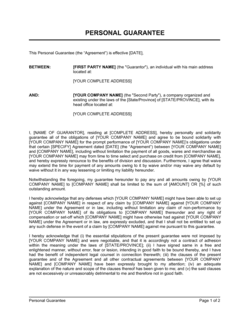
A personal guarantee is the originating instrument by which an individual assumes liability for another party's obligations. A revocation of guaranty is the termination document that ends a continuing personal guarantee's prospective effect. You need the personal guarantee to create the obligation and the revocation to end it — they are chronological counterparts in the same transaction lifecycle.

vs Release of Guaranty

A release of guaranty is a bilateral agreement by which the creditor discharges the guarantor from all or specified obligations — past, present, and future. A revocation is unilateral and eliminates only future liability, leaving pre-revocation balances intact. If the goal is to zero out all remaining liability, a negotiated release is the appropriate instrument, not a revocation.

vs Guaranty Agreement

A guaranty agreement is the original contract establishing the guarantor's obligations. A revocation of guaranty formally terminates those ongoing obligations prospectively. The revocation must reference the original guaranty by date and title, so both documents should be retained together as part of the same credit file.

vs Termination of Contract Letter

A termination of contract letter ends a general commercial agreement between contracting parties. A revocation of guaranty is a specialized legal instrument that ends a surety obligation — a distinct legal relationship governed by suretyship law, not ordinary contract law. Using a generic termination letter to revoke a guaranty is legally insufficient in most jurisdictions.

Industry-specific considerations

Banking and Commercial Lending

Guarantors on revolving credit facilities and lines of credit frequently need to revoke continuing guaranties when exiting a business or reducing personal exposure to fluctuating balances.

Commercial Real Estate

Personal guaranties on commercial leases are common for new tenants; revocation arises when a business is sold, a guarantor exits management, or a lease is assigned to a creditworthy successor tenant.

Wholesale and Trade Credit

Suppliers routinely require continuing guaranties for trade credit accounts; revocation is needed when a guaranteeing owner sells their stake or when the account is paid in full and closed.

Professional Services

Law firm, accounting, and consulting partnerships frequently require partner-level personal guaranties on office leases and equipment financing; partner departures trigger the need for timely revocation to limit ongoing exposure.

Jurisdictional notes

United States

Most US states recognize the right to revoke a continuing guaranty by written notice delivered to the creditor, provided the original agreement does not contain an irrevocability clause. The Uniform Commercial Code (Article 1) and state suretyship statutes govern interpretation. California, New York, and Texas each have specific case law on notice requirements and the treatment of accrued obligations. Revocations made while the guarantor is insolvent may be challenged as fraudulent transfers under the Uniform Voidable Transactions Act, enacted in most states.

Canada

Canadian courts recognize revocation of continuing guaranties under common-law suretyship principles in all common-law provinces. Ontario and British Columbia require strict compliance with the notice method specified in the original guaranty. In Quebec, guaranty (cautionnement) is governed by the Civil Code of Quebec, which has distinct rules on termination and notice. Federal and provincial consumer-protection statutes may impose additional requirements for guaranties given by individuals rather than corporations.

United Kingdom

Under English law, a continuing guaranty is generally revocable by reasonable written notice unless expressly stated to be irrevocable. The Statute of Frauds requires guaranties — and by extension their revocations — to be in writing and signed. Financial institutions regulated by the FCA may have their own procedural requirements for processing revocation notices. Scottish law, which is a separate legal system, applies distinct rules on cautionary obligations that differ from English suretyship principles.

European Union

EU member states each apply their own national law to guaranty revocation — there is no EU-wide harmonized suretyship regime. Germany (Bürgschaft), France (cautionnement), and the Netherlands each have civil-code provisions that may restrict or condition revocation rights, particularly for consumer guarantors. The EU Mortgage Credit Directive and Consumer Credit Directive impose disclosure and cooling-off requirements for guaranties given by individuals in consumer lending contexts, which may interact with revocation timing. Always verify national law in the specific member state where the guaranty was executed.

Template vs lawyer — what fits your deal?

PathBest forCostTime
Use the templateGuarantors revoking a simple continuing guaranty on a trade credit account or small business credit line with a clear revocation clause in the original agreementFree30–45 minutes
Template + legal reviewGuarantors on commercial lease or mid-size bank credit facility guaranties with outstanding balances above $25,000 or unclear revocation procedures$300–$700 for a lawyer review and delivery confirmation2–5 business days
Custom draftedCorporate guarantors, regulated financial institution relationships, guaranties on credit facilities above $500,000, or situations involving disputed accrued balances or insolvency risk$1,000–$3,500+1–2 weeks

Glossary

Guarantor
The person or entity that promises to satisfy a debt or obligation if the primary obligor defaults.
Continuing Guaranty
A guaranty that covers an open-ended series of future transactions or obligations, rather than a single fixed amount, and remains in force until formally revoked.
Revocation
A formal, written withdrawal of a guarantor's commitment to be liable for future obligations arising after the notice is delivered.
Primary Obligor
The borrower, tenant, or debtor whose obligation the guarantor has agreed to back — distinct from the guarantor themselves.
Creditor or Obligee
The lender, landlord, or supplier to whom the guaranty was given and to whom the revocation notice must be delivered.
Effective Date
The specific date on which the revocation takes effect and after which the guarantor incurs no new liability under the guaranty.
Accrued Obligations
Debts or liabilities already incurred under the original guaranty before the revocation's effective date, for which the guarantor remains responsible.
Notice Clause
The provision in the original guaranty or the revocation document specifying how, and to whom, a revocation notice must be delivered to be legally effective.
Suretyship
The legal relationship in which one party (the surety or guarantor) agrees to answer for the debt or default of another — the broader legal category that includes guaranty contracts.
Consideration
Something of value exchanged between parties to make a contract binding — in a revocation context, courts in some jurisdictions examine whether adequate consideration supports the release from future liability.
Notarization
Authentication of a document's execution by a licensed notary public, required by some lenders or jurisdictions to make a guaranty revocation effective against third parties.

Part of your Business Operating System

This document is one of 3,000+ business & legal templates included in Business in a Box.

  • Fill-in-the-blanks — ready in minutes
  • 100% customizable Word document
  • Compatible with all office suites
  • Export to PDF and share electronically

Create your document in 3 simple steps.

From template to signed document — all inside one Business Operating System.
1
Download or open template

Access over 3,000+ business and legal templates for any business task, project or initiative.

2
Edit and fill in the blanks with AI

Customize your ready-made business document template and save it in the cloud.

3
Save, Share, Send, Sign

Share your files and folders with your team. Create a space of seamless collaboration.

Save time, save money, and create top-quality documents.

★★★★★

"Fantastic value! I'm not sure how I'd do without it. It's worth its weight in gold and paid back for itself many times."

Managing Director · Mall Farm
Robert Whalley
Managing Director, Mall Farm Proprietary Limited
★★★★★

"I have been using Business in a Box for years. It has been the most useful source of templates I have encountered. I recommend it to anyone."

Business Owner · 4+ years
Dr Michael John Freestone
Business Owner
★★★★★

"It has been a life saver so many times I have lost count. Business in a Box has saved me so much time and as you know, time is money."

Owner · Upstate Web
David G. Moore Jr.
Owner, Upstate Web

Run your business with a system — not scattered tools

Stop downloading documents. Start operating with clarity. Business in a Box gives you the Business Operating System used by over 250,000 companies worldwide to structure, run, and grow their business.

Start free · No credit card required