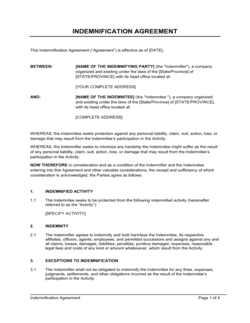
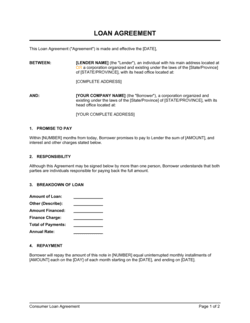
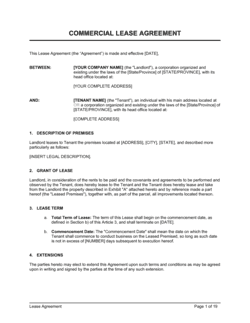
Guaranty Template

Free Word download β€’ Edit online β€’ Save & share with Drive β€’ Export to PDF

3 pagesβ€’25–30 min to fillβ€’Difficulty: Standardβ€’Signature requiredβ€’Legal review recommended
Learn more ↓
FreeGuaranty Template

At a glance

What it is
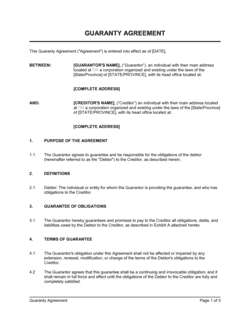
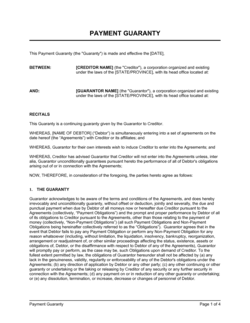
A Guaranty is a legally binding contract in which one party (the guarantor) agrees to be personally or corporately responsible for the debt, obligation, or performance of a second party (the principal debtor) if that party defaults. This free Word download gives you a structured, attorney-reviewed starting point you can edit online and export as PDF for use alongside loans, leases, credit facilities, and commercial contracts.
When you need it
Use it whenever a lender, landlord, or counterparty requires a creditworthy third party to backstop an obligation β€” most commonly when a borrower has limited credit history, when a newly formed entity lacks a track record, or when a principal creditor needs additional security before extending terms.
What's inside
Party identification, the guaranteed obligation and its scope, conditions triggering the guarantor's liability, payment and performance obligations, waivers of defenses, limitations on liability, representations and warranties, default and demand provisions, and governing law.

What is a Guaranty?

A Guaranty is a legally binding contract in which a guarantor β€” an individual or entity β€” agrees to assume responsibility for the debt, obligation, or performance of a principal debtor if that debtor defaults. Unlike a co-signer arrangement, a properly drafted guaranty creates a standalone secondary obligation: the creditor can demand payment or performance from the guarantor directly, without first exhausting remedies against the debtor, provided the guaranty waives that requirement. Guaranties are foundational instruments in commercial lending, commercial real estate leasing, franchise agreements, and any transaction where the primary obligor's creditworthiness alone is insufficient to satisfy the creditor's risk threshold.

Why You Need This Document

Without a signed guaranty, a creditor who extends a loan or lease to an entity with limited credit history has only that entity's assets as recourse β€” and newly formed LLCs and corporations often hold little of value. When the debtor defaults, the creditor is left pursuing an undercapitalized shell while the principals' personal assets remain untouched. A properly executed guaranty closes that gap by binding the guarantor's personal or corporate assets to the obligation from day one. For guarantors, a clearly drafted document is equally important: a vague or overbroad guaranty can expose a signatory to obligations they never intended to back, including future loans and amendments made without their knowledge. This template gives both sides a precise, enforceable starting point β€” covering scope, waivers, demand mechanics, and governing law β€” so the transaction can close with confidence on both sides of the table.

Which variant fits your situation?

If your situation is…Use this template
Individual guaranteeing a business loan or credit linePersonal Guaranty
Parent company backing a subsidiary's contractual obligationsCorporate Guaranty
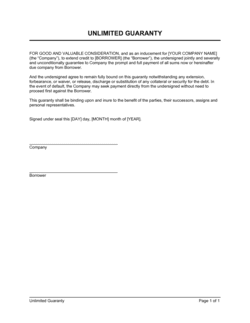
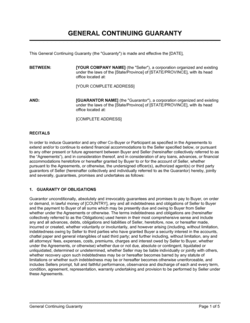
Guaranty covering all present and future obligations over timeContinuing Guaranty
Guarantor's liability capped at a specific dollar amountLimited Guaranty
Guarantor liable only after creditor has exhausted remedies against the debtorConditional Guaranty
Multiple guarantors each fully liable for the entire obligationJoint and Several Guaranty
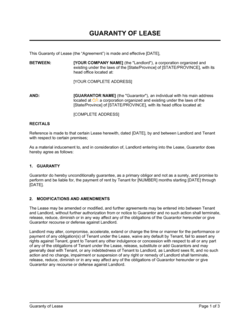
Guaranty securing a commercial real estate leaseLease Guaranty

Common mistakes to avoid

❌ Using a continuing guaranty when only one transaction was intended

Why it matters: A continuing guaranty covers all present and future obligations, meaning the guarantor remains liable for new loans or extensions made years later without their direct involvement.

Fix: If the guaranty is meant to cover a single transaction, expressly limit its scope to that specific obligation by title, date, and dollar amount, and include a termination clause.

❌ Omitting spousal consent in community-property states

Why it matters: In the nine US community-property states, a personal guaranty signed without the non-guarantor spouse's consent may be unenforceable against jointly held marital assets β€” potentially the guarantor's primary source of recovery.

Fix: Include a spousal consent block and have the guarantor's spouse or domestic partner sign it whenever the transaction is governed by California, Texas, Arizona, Nevada, Idaho, Louisiana, New Mexico, Washington, or Wisconsin law.

❌ Failing to enumerate specific waivers of defenses

Why it matters: A generic 'waives all defenses' clause is regularly construed narrowly by courts, allowing guarantors to raise defenses β€” such as lack of notice or creditor modification of the underlying loan β€” that the parties intended to waive.

Fix: List each waived defense individually: notice of default, presentment, demand, protest, modification of the underlying obligation, release of collateral, and the requirement to first exhaust remedies against the debtor.

❌ Setting a liability cap that excludes interest and enforcement costs

Why it matters: A cap stated as 'the principal amount of the loan' effectively shrinks as interest accrues, leaving the creditor underprotected and creating disputes about what the cap was meant to include.

Fix: Define whether the cap covers principal only, principal plus interest, or the full outstanding balance including fees β€” and state explicitly whether attorneys' fees and enforcement costs are inside or outside the cap.

❌ Signing after the underlying obligation is already in default

Why it matters: A guaranty signed after the debtor has already defaulted may lack consideration β€” the creditor gave nothing new in exchange for the guaranty β€” potentially voiding the guarantor's obligation.

Fix: Execute the guaranty simultaneously with or before the underlying loan, lease, or contract closes. If post-closing execution is necessary, document the fresh consideration being provided by the creditor.

❌ Not attaching the underlying obligation as an exhibit

Why it matters: If the guaranty references a loan agreement or lease without attaching it, disputes arise over which version of that document the guaranty covers β€” especially if the underlying agreement is later amended.

Fix: Attach a copy of the underlying obligation as Exhibit A to the guaranty at execution, and include a clause confirming the guaranty covers that specific version and any amendments the guarantor consents to in writing.

The 10 key clauses, explained

Parties and Recitals

In plain language: Identifies the guarantor, principal debtor, and obligee (creditor) by legal name, and sets out the background β€” the underlying transaction or obligation that the guaranty supports.

Sample language
This Guaranty is made as of [DATE] by [GUARANTOR FULL LEGAL NAME] ('Guarantor') in favor of [CREDITOR FULL LEGAL NAME] ('Creditor'). [PRINCIPAL DEBTOR NAME] ('Debtor') has entered into [DESCRIPTION OF UNDERLYING OBLIGATION] dated [DATE] (the 'Obligation').

Common mistake: Using a trade name or DBA instead of the guarantor's or creditor's full legal name. An enforcement action filed against the wrong entity name can be dismissed on procedural grounds.

Guaranty of Payment or Performance

In plain language: States whether the guarantor is guaranteeing payment of money, performance of contractual duties, or both β€” and makes clear this is an absolute, unconditional obligation.

Sample language
Guarantor unconditionally and irrevocably guarantees to Creditor the full and prompt payment when due of all amounts owed by Debtor under the Obligation, and the faithful performance of all terms, covenants, and conditions therein.

Common mistake: Failing to specify whether the guaranty covers payment, performance, or both. A guaranty of performance without a payment obligation may not allow the creditor to recover monetary damages directly.

Scope of Guaranteed Obligations

In plain language: Defines exactly which obligations are covered β€” a single transaction, all present and future obligations, or a capped subset β€” preventing disputes about what the guarantor agreed to back.

Sample language
This Guaranty covers all obligations of Debtor to Creditor arising under the Obligation, including principal, interest, fees, costs, and attorneys' fees, whether now existing or hereafter arising, up to a maximum aggregate amount of $[AMOUNT] [if limited].

Common mistake: Using a continuing guaranty form when only a single transaction was intended. A continuing guaranty exposes the guarantor to future obligations they may not have agreed to back.

Absolute and Unconditional Nature

In plain language: Confirms that the guaranty is enforceable regardless of changes to the underlying obligation, the debtor's insolvency, or the creditor's failure to pursue other remedies first.

Sample language
Guarantor's obligations hereunder are absolute and unconditional and shall not be affected by (a) any modification or amendment of the Obligation; (b) any insolvency, bankruptcy, or reorganization of Debtor; or (c) the release or substitution of any collateral.

Common mistake: Omitting the unconditional clause and then having the guarantor argue the creditor must first sue the debtor. Courts in most jurisdictions require explicit waiver language to prevent this defense.

Waiver of Defenses and Notice

In plain language: The guarantor expressly waives rights that would otherwise limit enforceability β€” including notice of default, presentment, demand, protest, and the right to require the creditor to pursue the debtor first.

Sample language
Guarantor waives (a) notice of acceptance of this Guaranty; (b) notice of the creation or existence of the Obligation; (c) notice of default by Debtor; (d) presentment, demand for payment, and protest; and (e) any requirement that Creditor first exhaust remedies against Debtor or any collateral.

Common mistake: Omitting individual waiver items and using a general 'waives all defenses' catch-all. Courts often require specific enumeration of each waived defense; a generic waiver may be narrowly construed.

Representations and Warranties of Guarantor

In plain language: The guarantor confirms they have authority to sign, that the guaranty does not conflict with other obligations, and that they have reviewed the underlying transaction and are financially capable of performing.

Sample language
Guarantor represents and warrants that: (a) Guarantor has full legal capacity to execute this Guaranty; (b) this Guaranty constitutes the legal, valid, and binding obligation of Guarantor; and (c) execution does not violate any agreement to which Guarantor is a party.

Common mistake: Skipping the representations block entirely. Without them, the guarantor can later claim they lacked authority or were misled about the terms of the underlying obligation.

Default and Demand Provisions

In plain language: Defines what triggers the guarantor's liability β€” typically the debtor's failure to pay or perform β€” and sets out how and when the creditor can make a demand on the guarantor.

Sample language
Upon the occurrence of a Default under the Obligation, Creditor may, at its option, make demand on Guarantor for payment or performance without prior demand on or notice to Debtor. Guarantor shall pay all amounts demanded within [NUMBER] business days of receipt of written demand.

Common mistake: Requiring the creditor to give the guarantor a cure period equal to the debtor's cure period. This delays enforcement and is unnecessary β€” guarantors are secondary obligors who have already accepted liability.

Subrogation and Contribution Rights

In plain language: Preserves the guarantor's right to recover from the debtor after paying the creditor, but subordinates that right to the creditor's full recovery to prevent the guarantor from competing with the creditor for the debtor's assets.

Sample language
Upon full payment of the Guaranteed Obligations, Guarantor shall be subrogated to the rights of Creditor against Debtor; provided, however, that Guarantor shall not exercise any such right until all obligations of Debtor to Creditor have been fully and finally satisfied.

Common mistake: Allowing the guarantor to exercise subrogation rights before the creditor is fully paid. If the debtor is insolvent, a guarantor exercising subrogation prematurely competes with the creditor for limited assets.

Limitation on Liability

In plain language: If the guaranty is limited rather than absolute, states the maximum dollar amount or category of obligations the guarantor is responsible for β€” and, if applicable, carves out obligations the guaranty does not cover.

Sample language
Notwithstanding any other provision hereof, Guarantor's aggregate liability under this Guaranty shall not exceed $[MAXIMUM AMOUNT]. This limitation does not apply to costs of enforcement, including reasonable attorneys' fees, incurred by Creditor.

Common mistake: Capping the guaranty at the original principal amount without accounting for interest, fees, and enforcement costs. The cap is often effectively lower than intended once these additions are excluded.

Governing Law, Jurisdiction, and Miscellaneous

In plain language: Specifies which state or country's law governs the guaranty, where disputes will be resolved, and includes standard boilerplate β€” severability, entire agreement, amendment requirements, and notice provisions.

Sample language
This Guaranty shall be governed by and construed in accordance with the laws of [STATE/COUNTRY], without regard to conflict-of-laws principles. Guarantor irrevocably consents to the jurisdiction of the courts of [STATE/COUNTRY] for any action arising hereunder. Notices shall be in writing and delivered to the addresses set forth above.

Common mistake: Choosing a governing law state solely based on the lender's home state, without confirming that state's guaranty enforcement rules are favorable. Some states impose additional notice requirements or anti-deficiency protections that limit recovery.

How to fill it out

  1. 1

    Identify all parties with full legal names

    Enter the guarantor's full legal name (individual or entity), the principal debtor's registered name, and the creditor's legal name in the parties block. For individual guarantors, include their address and, where required, their spousal consent acknowledgment.

    πŸ’‘ For LLC or corporate guarantors, confirm the entity has authority to issue a guaranty β€” check the operating agreement or board resolutions before signing.

  2. 2

    Define the underlying obligation precisely

    Reference the loan agreement, lease, or contract being guaranteed by its title, date, and parties. Attach a copy as an exhibit if the guaranty is part of a larger transaction package.

    πŸ’‘ Use the exact document title and execution date from the underlying agreement β€” inconsistencies in naming give guarantors grounds to dispute which obligation is covered.

  3. 3

    Choose absolute or conditional, and continuing or limited

    Decide whether the guaranty is absolute (creditor can demand directly) or conditional (must pursue debtor first), and whether it covers all present and future obligations (continuing) or a single transaction. Mark the appropriate provisions and delete alternatives.

    πŸ’‘ Lenders almost always require an absolute, unconditional, continuing guaranty. Landlords frequently accept a limited guaranty capped at 12–24 months' rent for creditworthy tenants.

  4. 4

    Set the liability cap if using a limited guaranty

    Enter the maximum dollar amount the guarantor can be required to pay. Confirm this amount includes interest and fees, or explicitly state it applies to principal only and that enforcement costs are additional.

    πŸ’‘ Negotiate the cap amount before execution β€” once signed, courts rarely rewrite a clear numerical limit, even if the creditor's actual loss exceeds it.

  5. 5

    Review and enumerate the waivers of defenses

    Work through each waiver provision and confirm each applies to the transaction. Do not delete waivers without consulting counsel β€” removing even one standard waiver can give the guarantor a defense that voids enforcement.

    πŸ’‘ If the guarantor is a spouse or domestic partner of the principal debtor, check whether your jurisdiction requires a separate spousal guaranty or consent to be enforceable against marital assets.

  6. 6

    Set the default trigger and demand mechanics

    Specify the exact event that triggers the guarantor's liability β€” typically the debtor's failure to pay by a specific date β€” and the number of business days the guarantor has to respond to a written demand.

    πŸ’‘ Three to five business days for demand response is standard in commercial lending. Longer periods unnecessarily delay the creditor's ability to enforce.

  7. 7

    Confirm governing law and jurisdiction

    Select the governing law state or country and the forum for dispute resolution. Confirm that the chosen jurisdiction's laws do not impose notice or exhaustion requirements that conflict with the unconditional clause.

    πŸ’‘ In transactions involving real property, use the jurisdiction where the property is located β€” anti-deficiency laws are property-specific and cannot be contracted around in most US states.

  8. 8

    Execute with witnesses or notarization if required

    Have the guarantor sign in the presence of a witness or notary if required by the governing jurisdiction or the transaction documents. Lenders frequently require notarization on personal guaranties as a condition of closing.

    πŸ’‘ Obtain a spousal consent signature where community-property rules apply β€” California, Texas, Arizona, and seven other US states treat marital assets as shared, and a guaranty without spousal consent may be unenforceable against those assets.

Frequently asked questions

What is a guaranty?

A guaranty is a legally binding contract in which a guarantor agrees to be responsible for the debt or obligations of a principal debtor if that debtor fails to pay or perform. It gives the creditor a second source of recovery β€” the guarantor's personal or corporate assets β€” beyond the debtor alone. Guaranties are commonly required alongside business loans, commercial leases, and credit facilities where the primary obligor lacks sufficient credit standing on its own.

What is the difference between a guaranty and a surety bond?

Both provide a secondary source of payment or performance security, but they work differently. A surety bond is a three-party arrangement issued by a licensed insurance company (the surety) guaranteeing a principal's performance to an obligee β€” commonly used in construction and government contracting. A guaranty is a two-party promise from an individual or entity directly to the creditor. Surety bonds typically require underwriting and a premium; personal guaranties do not.

What is the difference between a guaranty of payment and a guaranty of performance?

A guaranty of payment obligates the guarantor to pay money owed by the debtor β€” it is triggered by a monetary default and allows the creditor to demand payment directly. A guaranty of performance obligates the guarantor to ensure the debtor completes specific contractual duties, such as delivering goods or completing construction. Many commercial guaranties cover both payment and performance to give the creditor maximum protection.

Can a guaranty be limited in amount?

Yes. A limited guaranty caps the guarantor's maximum liability at a specified dollar amount. This is common in commercial real estate leases where a landlord accepts a guaranty capped at 12–24 months' rent rather than the full lease term value. The cap can apply to principal only or to the total exposure including interest and fees β€” the precise definition matters significantly and should be stated explicitly in the agreement.

What is a continuing guaranty?

A continuing guaranty covers all obligations of the principal debtor to the creditor arising over a period of time, not just a single defined transaction. Banks and institutional lenders frequently require continuing guaranties so that the guaranty automatically covers future advances, renewals, and modifications without requiring a new guaranty each time. Guarantors should understand they remain liable for obligations they may not know about unless the continuing guaranty is formally terminated.

When can a guarantor be released from liability?

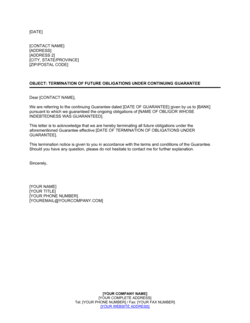
A guarantor can typically be released when the underlying obligation is fully paid and satisfied, when the creditor executes a written release, or when the guaranty itself contains a termination provision β€” such as a right to terminate on 30 days' written notice for future obligations under a continuing guaranty. Certain acts by the creditor β€” materially altering the underlying obligation without the guarantor's consent, or releasing collateral β€” may also release the guarantor in jurisdictions that have not adopted the waiver-of-defenses standard.

Does a personal guaranty expose the guarantor's personal assets?

Yes. A personal guaranty made by an individual pierces the corporate veil and allows the creditor to pursue the guarantor's personal bank accounts, real estate, investments, and other assets to satisfy the obligation. In community-property states, a guaranty signed without spousal consent may not reach jointly held marital assets. A corporate guaranty, by contrast, limits exposure to the signing entity's assets β€” not those of its shareholders or officers individually.

Is notarization required for a guaranty to be enforceable?

In most US jurisdictions, notarization is not legally required for a guaranty to be enforceable. However, many lenders and landlords require it as a practical matter β€” particularly for personal guaranties β€” because it verifies the guarantor's identity, reduces fraud risk, and strengthens enforcement if the guarantor later claims they did not sign. Some states require notarization when the guaranty is recorded or when it secures a real estate transaction.

Do I need a lawyer to draft a guaranty?

For straightforward commercial guaranties β€” such as a personal guaranty supporting a business lease or small business loan β€” a well-drafted template reviewed by counsel is generally sufficient. Legal review becomes important when the guaranty covers large sums, spans multiple jurisdictions, involves complex waiver provisions, or when the guarantor is an entity requiring board authorization. A 1–2 hour attorney review typically costs $300–$700 and is warranted for any guaranty exceeding $100,000 in exposure.

How this compares to alternatives

vs Surety Bond

A surety bond is a three-party arrangement issued by a licensed insurance company guaranteeing a principal's performance to an obligee, commonly used in construction and government contracting. A guaranty is a direct promise from the guarantor to the creditor with no insurance company involved and no premium required. Surety bonds are underwritten based on the principal's financials; guaranties depend entirely on the guarantor's creditworthiness.

vs Indemnity Agreement

An indemnity agreement broadly obligates one party to compensate another for losses, damages, or liabilities β€” it does not depend on a third-party debtor defaulting. A guaranty is specifically triggered by the principal debtor's failure to pay or perform. Indemnity is generally broader; guaranty is narrower and tied directly to a specific underlying obligation.

vs Letter of Credit

A letter of credit is a bank-issued instrument that guarantees payment to a beneficiary upon presentation of specified documents, independent of the applicant's solvency. A guaranty is a contractual promise directly between the guarantor and creditor and relies on the guarantor's personal or corporate assets. Letters of credit are more liquid and certain for international transactions; guaranties are simpler and more common in domestic lending and leasing.

vs Promissory Note

A promissory note is a direct promise by the borrower to repay a debt β€” it is the primary obligation. A guaranty is a secondary obligation in which the guarantor promises to pay if the primary obligor (the note maker) does not. Both documents are often executed together in a lending transaction, with the note governing the debt and the guaranty providing the creditor a backup source of recovery.

Industry-specific considerations

Commercial Real Estate

Landlords routinely require personal or corporate guaranties from principals of tenant LLCs, often capped at 12–24 months of base rent with a burn-down provision tied to lease performance.

Financial Services and Lending

Banks and SBA lenders require unconditional personal guaranties from all individuals owning 20% or more of a borrowing entity as a standard condition of any business loan.

Construction and Contracting

Owners and general contractors require performance guaranties from subcontractors or their principals when subcontractor financial strength is insufficient for the contract value at risk.

Franchise and Retail

Franchise agreements almost universally require the franchisee's individual principals to personally guarantee the franchise agreement, lease obligations, and any franchisor-provided financing.

Jurisdictional notes

United States

Guaranty law is primarily state-governed in the US, with significant variation in enforceability of waivers and anti-deficiency protections. In community-property states β€” California, Texas, Arizona, Nevada, Idaho, Louisiana, New Mexico, Washington, and Wisconsin β€” spousal consent is critical for a guaranty to reach marital assets. California's anti-deficiency statutes limit certain lender remedies after foreclosure even when a guaranty exists. The Statute of Frauds requires guaranties to be in writing in every US state.

Canada

In Canada, guaranties are governed by provincial law and the Statute of Frauds, which requires them to be in writing and signed. Most provinces require independent legal advice (ILA) for personal guarantors who are not shareholders or directors of the principal debtor β€” without documented ILA, courts may set aside the guaranty. Ontario's Guaranties Act and British Columbia's Law and Equity Act impose additional requirements, including notice to the guarantor of material changes to the underlying obligation.

United Kingdom

Under the UK Statute of Frauds 1677, a guaranty must be evidenced in writing and signed by the guarantor to be enforceable. UK courts distinguish between guaranties (secondary obligations) and indemnities (primary obligations) β€” the distinction affects enforceability when the underlying obligation is void or unenforceable. Regulated consumer guaranties are subject to the Consumer Credit Act 1974. Lenders routinely obtain independent legal advice evidence to guard against undue influence claims, particularly where guarantors are spouses or domestic partners of the principal debtor.

European Union

Guaranty law in the EU is not harmonized β€” requirements vary significantly by member state. France, Germany, and Spain each have distinct formality requirements: French law requires the guarantor to handwrite a specific statement of the guaranteed amount; German law distinguishes between BΓΌrgschaft (guaranty) and Schuldbeitritt (assumption of debt) with different consequences; Spanish courts apply proportionality limits to guarantor liability. Consumer protection directives may restrict enforcement of personal guaranties given by individuals outside a trade or profession, particularly where the creditor did not explain the risks.

Template vs lawyer β€” what fits your deal?

PathBest forCostTime
Use the templateStandard personal guaranties for commercial leases or small business loans under $100,000Free20–30 minutes
Template + legal reviewGuaranties over $100,000, multi-party guaranties, or transactions involving community-property or cross-border issues$300–$7001–3 days
Custom draftedComplex corporate guaranties, large credit facilities, regulated lenders, or guaranties requiring coordination with intercreditor agreements$1,500–$5,000+1–2 weeks

Glossary

Guarantor
The party who promises to fulfill the principal debtor's obligation if the debtor defaults.
Principal Debtor
The primary party responsible for the underlying obligation β€” the borrower, tenant, or contracting party whose performance is being guaranteed.
Obligee / Creditor
The party in whose favor the guaranty is given β€” the lender, landlord, or counterparty who receives the benefit of the guarantor's promise.
Continuing Guaranty
A guaranty that covers all obligations of the principal debtor arising over a period of time, not just a single specified transaction.
Absolute Guaranty
A guaranty under which the guarantor is immediately liable upon the debtor's default, without any requirement that the creditor first pursue the debtor.
Conditional Guaranty
A guaranty that becomes enforceable only after the creditor has taken specified steps β€” such as exhausting remedies against the principal debtor.
Joint and Several Liability
A liability structure in which each of multiple guarantors is individually responsible for the full amount of the obligation, not just their proportionate share.
Subrogation
The right of a guarantor who has paid the creditor to step into the creditor's position and recover that amount from the principal debtor.
Waiver of Defenses
A clause in which the guarantor surrenders specific legal defenses β€” such as notice of default, changes to the underlying agreement, or the creditor's release of collateral β€” that might otherwise reduce or void the guaranty.
Consideration
The benefit received by the guarantor in exchange for the guaranty β€” such as the creditor extending credit or entering into a contract with the principal debtor.
Indemnity
An obligation to compensate another party for a loss or liability; closely related to a guaranty but generally broader and not dependent on the principal debtor's default.
Limited Guaranty
A guaranty capped at a specified dollar amount or restricted to a defined category of obligations, limiting the guarantor's maximum exposure.

Part of your Business Operating System

This document is one of 3,000+ business & legal templates included in Business in a Box.

  • Fill-in-the-blanks β€” ready in minutes
  • 100% customizable Word document
  • Compatible with all office suites
  • Export to PDF and share electronically

Create your document in 3 simple steps.

From template to signed document β€” all inside one Business Operating System.
1
Download or open template

Access over 3,000+ business and legal templates for any business task, project or initiative.

2
Edit and fill in the blanks with AI

Customize your ready-made business document template and save it in the cloud.

3
Save, Share, Send, Sign

Share your files and folders with your team. Create a space of seamless collaboration.

Save time, save money, and create top-quality documents.

β˜…β˜…β˜…β˜…β˜…

"Fantastic value! I'm not sure how I'd do without it. It's worth its weight in gold and paid back for itself many times."

Managing Director Β· Mall Farm
Robert Whalley
Managing Director, Mall Farm Proprietary Limited
β˜…β˜…β˜…β˜…β˜…

"I have been using Business in a Box for years. It has been the most useful source of templates I have encountered. I recommend it to anyone."

Business Owner Β· 4+ years
Dr Michael John Freestone
Business Owner
β˜…β˜…β˜…β˜…β˜…

"It has been a life saver so many times I have lost count. Business in a Box has saved me so much time and as you know, time is money."

Owner Β· Upstate Web
David G. Moore Jr.
Owner, Upstate Web

Run your business with a system β€” not scattered tools

Stop downloading documents. Start operating with clarity. Business in a Box gives you the Business Operating System used by over 250,000 companies worldwide to structure, run, and grow their business.

Start freeΒ Β·Β No credit card required