Notification Policy Template

Free Word download β€’ Edit online β€’ Save & share with Drive β€’ Export to PDF

3 pagesβ€’20–25 min to fillβ€’Difficulty: Standard
Learn more ↓
FreeNotification Policy Template

At a glance

What it is
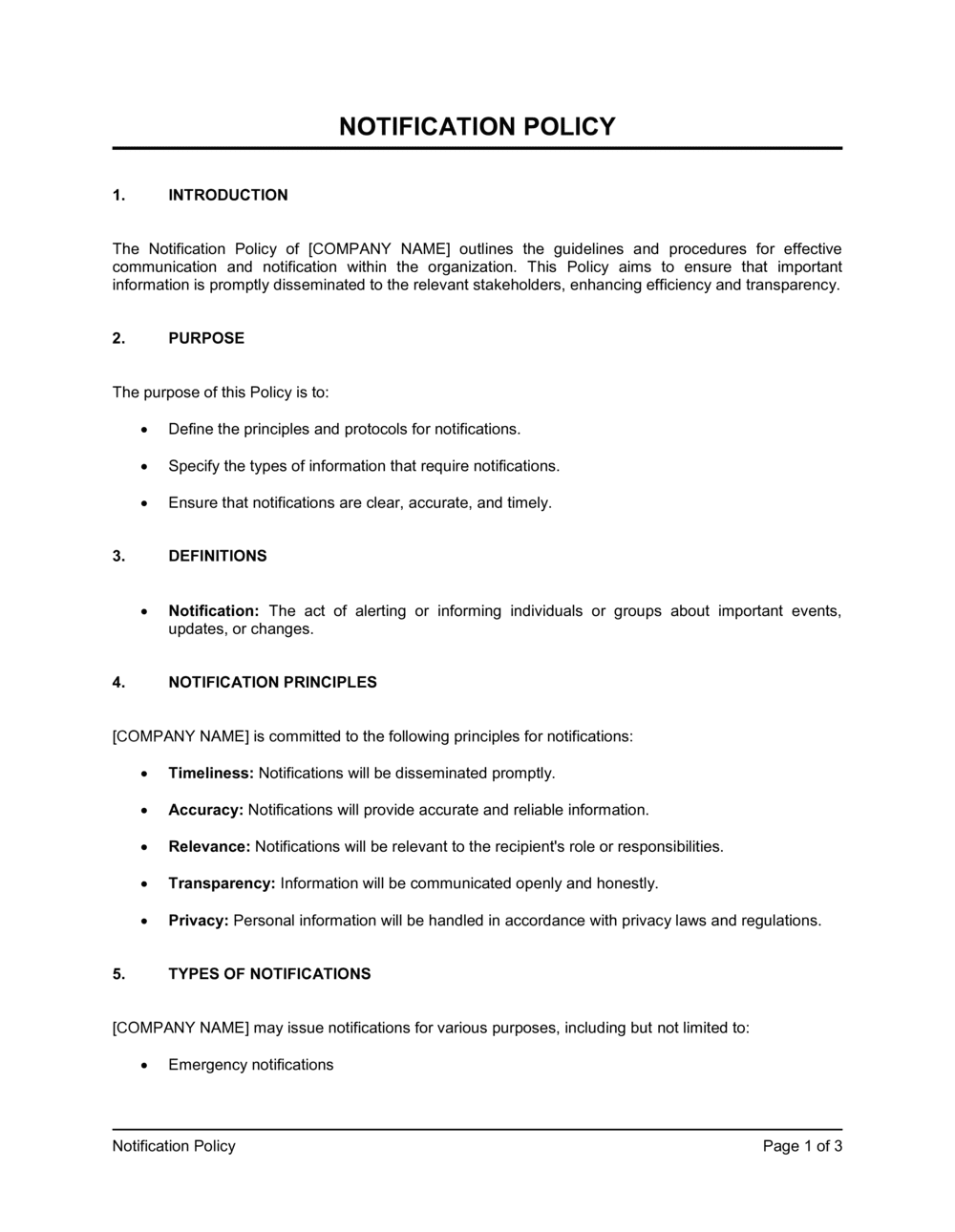
A Notification Policy is an internal operational document that defines which events require formal communication, who must be notified, in what timeframe, and through which channels. This free Word download gives you a structured, ready-to-edit template you can tailor to your organization and export as PDF for distribution to staff.
When you need it
Use it when your organization needs a consistent, documented process for communicating incidents, operational changes, or compliance-driven events to the right people at the right time. It is particularly critical before an audit, a systems rollout, or a period of regulatory scrutiny.
What's inside
Purpose and scope, definitions of notifiable events, stakeholder matrix, notification timeframes, communication channels, escalation procedures, documentation and recordkeeping requirements, and policy review schedule.

What is a Notification Policy?

A Notification Policy is an internal operational document that defines which events require formal communication, who must be informed, within what timeframe, and through which channels. It replaces ad hoc messaging and individual judgment with a consistent, repeatable process that every team member can follow β€” whether they are reporting a system outage at 2 a.m. or communicating a regulatory deadline to senior leadership. A well-structured notification policy includes a stakeholder matrix, severity classifications, escalation triggers, and recordkeeping requirements, making it both a day-to-day operations guide and a compliance document.

Why You Need This Document

Without a notification policy, critical events go unreported, get communicated to the wrong people, or arrive too late for anyone to act. The consequences range from operational β€” a system outage that lingers for hours because no one knew who to call β€” to regulatory, where a missed breach notification deadline triggers a fine that a documented policy would have prevented. Auditors routinely ask for evidence of notification procedures during compliance reviews; organizations that rely on informal practice cannot produce it. A clear policy also protects individuals: when an employee knows exactly what to report and to whom, they are far less likely to delay notification out of uncertainty or concern about overreacting. This template gives you a structured starting point that you can adapt to your organization in a matter of hours, covering everything from severity classifications to escalation paths and retention requirements.

Which variant fits your situation?

If your situation is…Use this template
Notifying employees of HR policy changes and workplace updatesHR Notification Policy
Documenting how data breaches or security incidents are escalatedIncident Response Policy
Defining communication procedures for service outages or IT failuresIT Incident Notification Policy
Setting rules for how regulators or auditors are notified of compliance eventsRegulatory Notification Policy
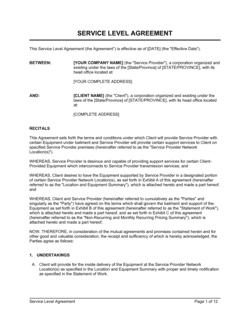
Establishing escalation paths for customer-facing service disruptionsService Level Agreement (SLA)
Communicating organizational changes such as layoffs or restructuringChange Management Communication Plan
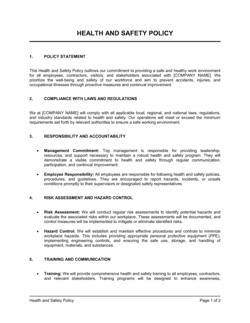
Outlining how employees report workplace safety incidentsHealth and Safety Policy

Common mistakes to avoid

❌ Assigning notification responsibility to a team, not a role

Why it matters: When everyone is responsible, no one acts. During a live incident, the absence of a named individual means the notification simply does not happen.

Fix: Name a specific role as the notification lead for each event category, with an equally specific backup. Embed this in the stakeholder matrix.

❌ Using vague timeframes like 'as soon as possible'

Why it matters: Different people interpret 'as soon as possible' as anywhere from 10 minutes to the next business day β€” the policy becomes unenforceable and auditors treat it as non-compliant.

Fix: Replace every instance of 'as soon as possible' with a specific number of hours or minutes, calibrated to the event's severity level.

❌ Failing to define what constitutes a notifiable event

Why it matters: Without a clear definition, staff self-assess whether an event qualifies β€” under-reporting is common, and material events go unnotified until they escalate.

Fix: Create a defined list of event types in Schedule A with threshold criteria. If an event meets the criteria, notification is mandatory, not discretionary.

❌ Not including an escalation procedure with time triggers

Why it matters: A policy that requires notification but says nothing about what happens when no one responds leaves incidents unmanaged for hours.

Fix: Add an escalation section with explicit time triggers β€” for example, escalate to the next level if no acknowledgment is received within 30 minutes of initial contact.

❌ Listing employee names instead of role titles in the matrix

Why it matters: Staff turnover renders the matrix obsolete within months. If the named person has left, no one knows who to contact, and the policy fails at its first real test.

Fix: Use role titles throughout β€” 'Head of IT' rather than '[PERSON NAME]' β€” and maintain a separate role-to-name reference that can be updated without amending the policy.

❌ Publishing the policy without a staff acknowledgment step

Why it matters: A policy that staff have not confirmed reading is difficult to enforce and provides weak evidence of communication during an audit or dispute.

Fix: Distribute the final policy with a formal acknowledgment step β€” email read receipt, an HR system sign-off, or a brief team briefing with a sign-in record.

The 9 key sections, explained

Purpose and scope

Definitions

Notifiable events and severity levels

Stakeholder notification matrix

Notification channels and methods

Escalation procedures

Documentation and recordkeeping

Roles and responsibilities

Policy review and update cycle

How to fill it out

  1. 1

    Define the scope and triggering events

    Start by listing every type of event your organization needs to communicate formally β€” system outages, HR changes, regulatory deadlines, safety incidents, and so on. Restrict scope to events where a missed notification has a real consequence.

    πŸ’‘ Interview department heads first β€” they know which communication gaps have caused problems in the past and will surface events you would not think of alone.

  2. 2

    Assign severity levels to each event type

    Group your events into three or four severity tiers based on impact and urgency. For each tier, define the maximum response window (e.g., 1 hour, 4 hours, 1 business day) and the minimum channel requirement.

    πŸ’‘ Three severity levels cover most organizations β€” four is appropriate for companies running 24/7 operations or regulated environments.

  3. 3

    Build the stakeholder notification matrix

    For each event type and severity level, list the specific roles β€” not names β€” who must be notified, in what order, and within what timeframe. Use a table format so the matrix can be scanned quickly under pressure.

    πŸ’‘ Use role titles rather than personal names so the matrix stays valid through staff turnover without requiring a policy amendment.

  4. 4

    Specify approved channels for each severity level

    Assign one or two approved channels per severity tier and state what minimum information must be included in each notification (event description, time of occurrence, current status, and next update time).

    πŸ’‘ For critical events, require a phone call as the primary channel β€” written notifications alone are too easily missed during a live incident.

  5. 5

    Write the escalation procedure with time triggers

    Define exactly how long the initial notifier waits before escalating, who they escalate to, and what happens if the second contact is also unreachable. Include at least two escalation levels.

    πŸ’‘ Set escalation timers shorter than you think necessary β€” in a real incident, 30 minutes of silence feels like an eternity.

  6. 6

    Set the recordkeeping requirements

    Name the system where notifications will be logged, specify the fields that must be completed for each entry, and state the retention period. Match the retention period to any applicable regulatory minimum.

    πŸ’‘ If your organization uses a ticketing or incident management platform, integrate the log requirement into that system rather than creating a separate spreadsheet.

  7. 7

    Assign named owners and backups

    Identify the policy owner by title, name the notification lead for each major event category, and document at least one backup for every critical role. Confirm these individuals are aware of their responsibilities.

    πŸ’‘ Conduct a tabletop walkthrough of one scenario with the assigned owners before the policy goes live β€” it reveals gaps in the matrix faster than any review meeting.

  8. 8

    Set the review date and publish

    Enter a specific review date (12 months from publication is the standard), assign the reviewer by name, and distribute the final policy to all staff it applies to with a read-receipt or acknowledgment step.

    πŸ’‘ Calendar the review date in your governance tracker on day one β€” policies that miss their review date are the first thing auditors flag.

Frequently asked questions

What is a notification policy?

A notification policy is an internal document that defines which events require formal communication, who must be informed, within what timeframe, and through which channels. It gives every employee a clear, consistent process to follow instead of relying on judgment or informal messaging when something goes wrong or needs to be escalated.

Who needs a notification policy?

Any organization with more than a handful of employees benefits from a notification policy β€” but it is essential for businesses operating in regulated industries, running IT or operational systems with uptime requirements, or managing remote or distributed teams. HR departments, IT and security teams, compliance functions, and operations managers are the most common owners and users.

What events should a notification policy cover?

Common categories include IT and system incidents, data security events, HR and employment changes (such as policy updates or workforce changes), regulatory or compliance deadlines, safety incidents, and significant operational disruptions. The policy should define threshold criteria so staff know whether a specific event triggers the policy or not.

How is a notification policy different from an escalation policy?

A notification policy defines the initial communication requirements β€” who to tell, when, and how. An escalation policy governs what happens when the initial notification is not acknowledged or when an event worsens. In practice, a well-written notification policy incorporates escalation procedures rather than maintaining two separate documents.

How specific should notification timeframes be?

Timeframes should always be expressed as specific hours or minutes, not vague phrases like 'promptly' or 'as soon as possible.' A practical approach is to tie timeframes to severity levels β€” for example, 1 hour for critical events, 4 hours for high-severity events, and 1 business day for standard notifications. This removes ambiguity and makes the policy auditable.

Does a notification policy need to be reviewed regularly?

Yes. An annual review is the minimum standard for most organizations. The policy should also be reviewed after any significant organizational change (restructuring, new systems, or staff turnover in key roles), a regulatory update affecting notification obligations, or a post-incident review that identifies a gap in the existing process.

How do I make sure staff actually follow the notification policy?

Three practices drive compliance: distribute the policy with a formal acknowledgment requirement so every relevant employee confirms they have read it; include the policy in onboarding for new hires; and conduct an annual tabletop walkthrough or simulation for the roles named in the stakeholder matrix. Policies that are never rehearsed are rarely followed correctly under pressure.

What should be included in the notification log?

At minimum: event description, date and time of occurrence, date and time of notification, the name or role of the person who sent the notification, the recipients notified, the channel used, and whether an acknowledgment was received. Logs should be stored in a centralized system and retained for the period specified in the policy, which should match any applicable regulatory retention requirement.

Can a notification policy cover external notifications to regulators or clients?

Yes, and for regulated industries it often must. The same policy can cover both internal and external notifications, provided the stakeholder matrix clearly distinguishes between the two audiences and applies different timeframes and channel requirements where appropriate. For notifications to regulators, confirm the specific statutory timeframe β€” many data protection laws, for example, require breach notification within 72 hours.

How this compares to alternatives

vs Incident Response Plan

An incident response plan covers the full lifecycle of managing an incident β€” detection, containment, recovery, and post-mortem. A notification policy is narrower, focusing specifically on who must be told about an event, when, and how. The notification policy is typically embedded within or referenced by the broader incident response plan.

vs Communication Plan

A communication plan outlines how a project or initiative will be communicated to stakeholders over time β€” it is proactive and campaign-oriented. A notification policy is reactive and event-driven, triggered by defined incidents or changes rather than scheduled communications. Organizations typically need both.

vs Escalation Policy

An escalation policy defines what happens when a problem is not resolved or acknowledged at the first level β€” it governs the handoff up the chain of command. A notification policy governs the initial communication of an event. In practice, the two are closely linked and are often combined into a single document.

vs Health and Safety Policy

A health and safety policy establishes the organization's overall commitment to workplace safety, risk management, and compliance. A notification policy specifically defines how safety incidents β€” once they occur β€” must be reported and to whom. The health and safety policy sets the framework; the notification policy provides the communication procedure.

Industry-specific considerations

Financial Services

Regulatory reporting obligations to bodies such as the SEC, FCA, or FINRA require documented, time-bound notification procedures that can be produced as evidence during examinations.

Healthcare

HIPAA breach notification rules mandate specific timeframes for notifying patients, the HHS, and in some cases the media β€” a formal policy is required to demonstrate compliance.

Technology / SaaS

Customer-facing SLA commitments and internal incident response processes both depend on a clear notification policy to coordinate engineering, support, and executive stakeholders during outages.

Manufacturing

Equipment failures, supply chain disruptions, and workplace safety incidents all require defined notification chains to operations leadership, safety officers, and in some cases regulatory bodies.

Template vs pro β€” what fits your needs?

PathBest forCostTime
Use the templateSmall to mid-sized businesses establishing their first formal notification processFree2–4 hours
Template + professional reviewOrganizations in regulated industries or those with external notification obligations to regulators or clients$300–$800 for a compliance consultant or legal review1–3 days
Custom draftedEnterprises with complex multi-system environments, multiple jurisdictions, or board-level governance requirements$1,500–$5,000+1–3 weeks

Glossary

Notifiable Event
A defined occurrence β€” such as a system failure, policy change, or regulatory trigger β€” that requires a formal communication to a specified audience within a set timeframe.
Stakeholder Matrix
A table mapping each event type to the individuals or groups who must be informed, their role in the notification chain, and the required timeframe.
Escalation Path
The ordered sequence of people or teams to be contacted when an initial notification is unanswered or when an event exceeds a defined severity threshold.
Notification Channel
The specific medium used to deliver a notification β€” such as email, phone, SMS, incident management platform, or formal written notice.
Response Window
The maximum time allowed between a triggering event and the required notification β€” commonly expressed as hours or business days.
Acknowledgment Requirement
A rule stipulating that the notified party must confirm receipt, often within a defined period, to close the notification loop.
Policy Owner
The named individual or role responsible for maintaining the policy, ensuring staff awareness, and triggering the scheduled review cycle.
Recordkeeping Obligation
The requirement to retain evidence of each notification β€” including who sent it, to whom, when, and through which channel β€” for audit or legal purposes.
Severity Level
A classification assigned to a notifiable event β€” typically P1 through P4 or High/Medium/Low β€” that determines which stakeholders are notified and how quickly.
Read Receipt
A technical or administrative confirmation that the intended recipient has opened or acknowledged a formal notification.

Part of your Business Operating System

This document is one of 3,000+ business & legal templates included in Business in a Box.

  • Fill-in-the-blanks β€” ready in minutes
  • 100% customizable Word document
  • Compatible with all office suites
  • Export to PDF and share electronically

Create your document in 3 simple steps.

From template to signed document β€” all inside one Business Operating System.
1
Download or open template

Access over 3,000+ business and legal templates for any business task, project or initiative.

2
Edit and fill in the blanks with AI

Customize your ready-made business document template and save it in the cloud.

3
Save, Share, Send, Sign

Share your files and folders with your team. Create a space of seamless collaboration.

Save time, save money, and create top-quality documents.

β˜…β˜…β˜…β˜…β˜…

"Fantastic value! I'm not sure how I'd do without it. It's worth its weight in gold and paid back for itself many times."

Managing Director Β· Mall Farm
Robert Whalley
Managing Director, Mall Farm Proprietary Limited
β˜…β˜…β˜…β˜…β˜…

"I have been using Business in a Box for years. It has been the most useful source of templates I have encountered. I recommend it to anyone."

Business Owner Β· 4+ years
Dr Michael John Freestone
Business Owner
β˜…β˜…β˜…β˜…β˜…

"It has been a life saver so many times I have lost count. Business in a Box has saved me so much time and as you know, time is money."

Owner Β· Upstate Web
David G. Moore Jr.
Owner, Upstate Web

Run your business with a system β€” not scattered tools

Stop downloading documents. Start operating with clarity. Business in a Box gives you the Business Operating System used by over 250,000 companies worldwide to structure, run, and grow their business.

Start freeΒ Β·Β No credit card required