1
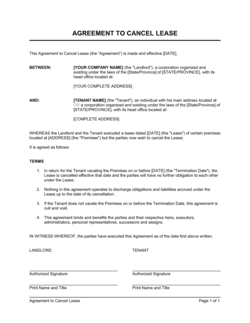
Identify the original lease and both parties
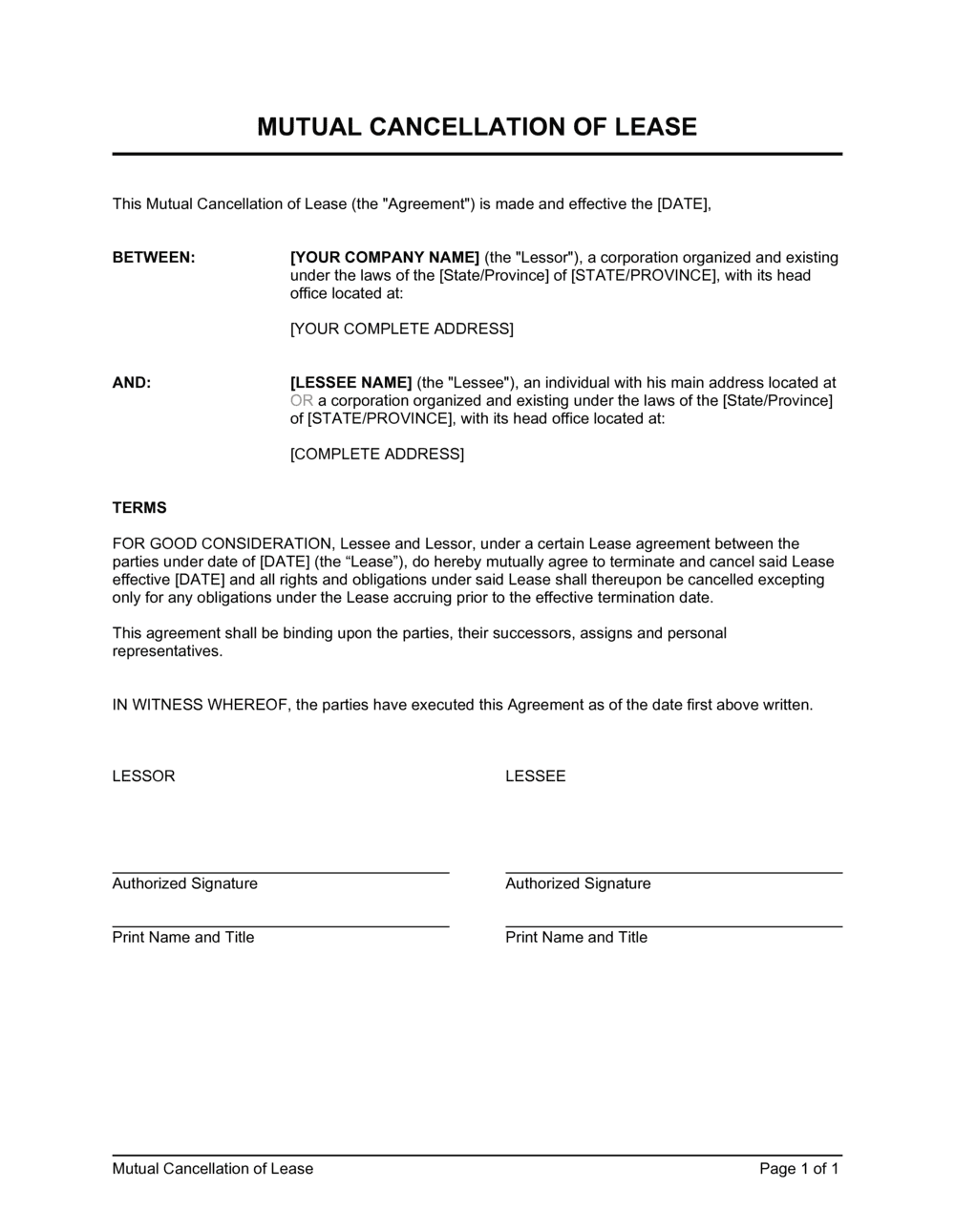
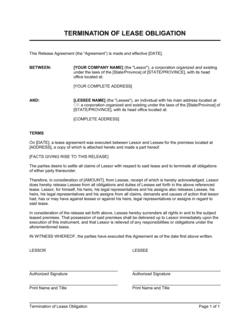
Enter the full legal names of the landlord and tenant exactly as they appear on the original lease. Include the property's full street address and the date the original lease was signed.
💡 If the landlord is a legal entity (LLC, corporation, trust), use the registered entity name — not an individual's name — to ensure the release binds the correct legal person.
2
Set the effective cancellation date
Agree on a specific calendar date for the lease to end and enter it in the effective date field. Confirm the tenant's move-out time on that date and document any grace period for key return.
💡 Align the cancellation date with the end of a rent period where possible — this simplifies the pro-rated rent calculation and reduces the risk of disputed final charges.
3
Calculate and record outstanding rent and utilities
Compute any rent owed from the last payment date through the cancellation date, including a pro-rated daily amount for partial months. List all utility accounts the tenant must close or transfer.
💡 Request final meter readings or account statements before signing so both parties agree on the utility balance at execution rather than after the tenant has vacated.
4
Document security deposit disposition
Enter the total deposit amount held, list each agreed deduction with a brief description and dollar amount, and state the net refund amount and return deadline.
💡 Check your jurisdiction's statutory deposit-return deadline — it typically runs from the date of move-out or the date of the cancellation agreement, whichever is later, and penalties for missing it can be significant.
5
Record any cancellation fee or consideration
If either party is paying a fee or providing a concession to secure the other's agreement, enter the amount, the payer, and the payment deadline. If no fee is being paid, include a statement that the mutual releases constitute sufficient consideration.
💡 Even a nominal $1 recital of consideration strengthens enforceability in jurisdictions that scrutinize contract modifications lacking clear exchange of value.
6
Schedule and document the joint inspection
Set the inspection date (on or before the cancellation date), identify who will conduct it, and specify how the written report will be signed off by both parties.
💡 Take dated photographs during the walkthrough and attach them to the signed inspection report — this is your primary evidence if a deposit deduction dispute reaches small claims court.
7
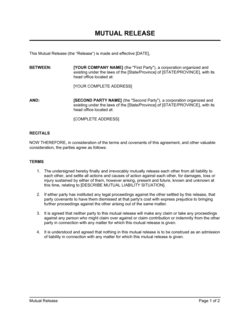
Review the mutual release and surviving obligations
Confirm that the mutual release carves out fraud, willful misconduct, and any statutory obligations. List each surviving obligation explicitly so neither party can later claim they did not know it persisted.
💡 If there are open insurance claims, pending repairs, or sub-tenants involved, have a lawyer review the release scope before signing — a broad mutual release can inadvertently close those matters.
8
Execute with dated signatures from both parties
Both the landlord (or authorized representative) and the tenant must sign and date the agreement. If either party is an entity, confirm the signatory has authority to bind the entity.
💡 Use Business in a Box eSign to capture timestamped signatures and store the fully executed copy in BIB Drive — a dated electronic record is sufficient in most jurisdictions and eliminates disputes about when the agreement was signed.