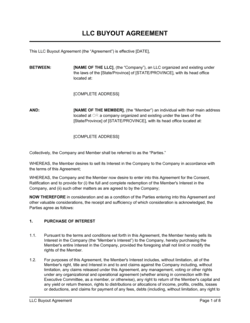
- Membership Interest
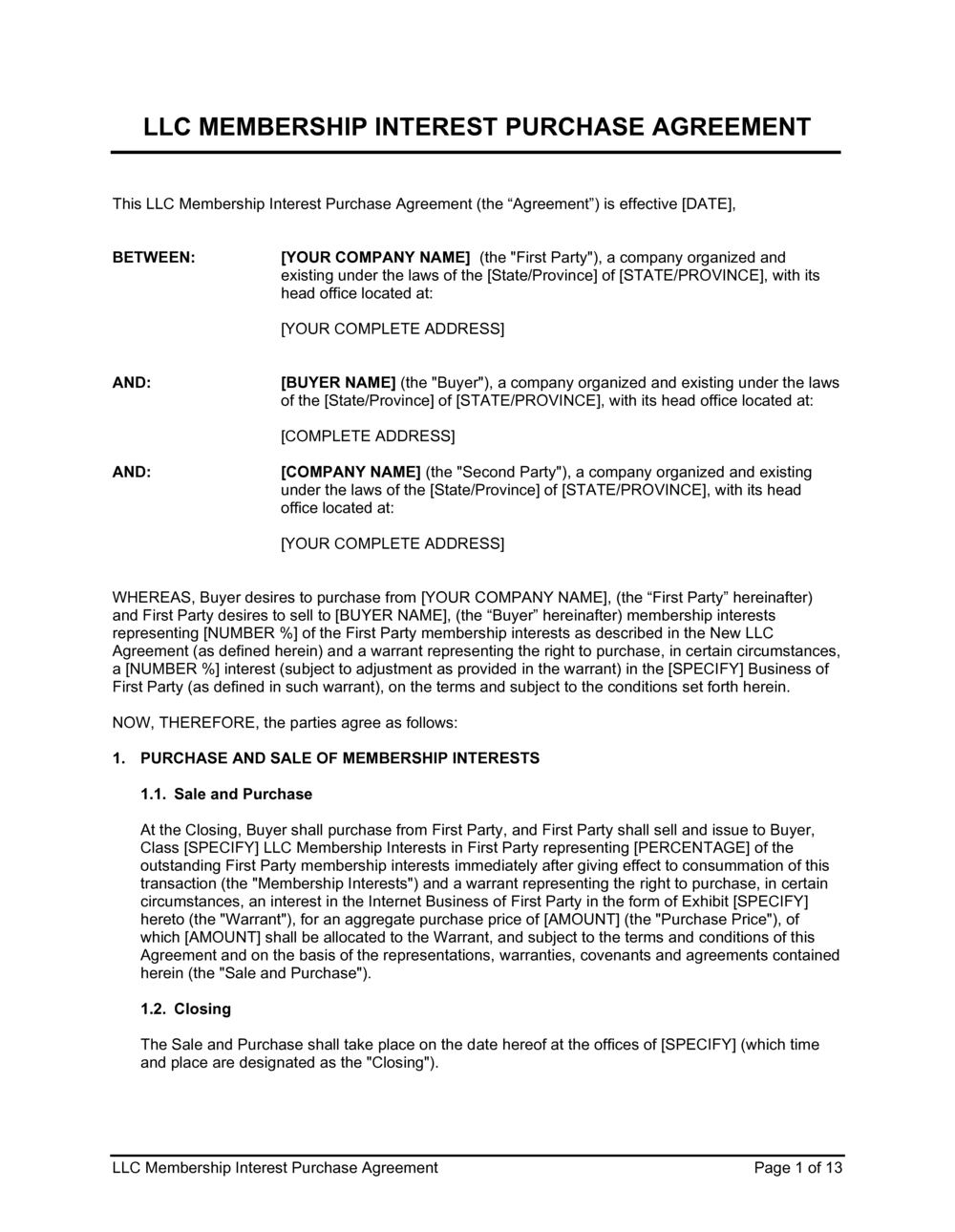
- An owner's proportional share of an LLC, including economic rights (profit and loss distributions) and governance rights (voting).
- Purchase Price
- The total consideration paid by the buyer for the membership interest, which may be cash, a promissory note, assumed liabilities, or a combination.
- Representations and Warranties
- Factual statements made by each party — particularly the seller — about the LLC's condition, ownership, and legal standing that the other party relies on to agree to the transaction.
- Closing
- The date on which all conditions to the purchase are satisfied, the purchase price is paid, and ownership of the membership interest formally transfers to the buyer.
- Indemnification
- A contractual obligation by one party to compensate the other for losses, liabilities, or costs arising from a breach of representations or specified post-closing events.
- Operating Agreement
- The LLC's governing document that controls member rights, voting, profit allocation, and transfer restrictions — which must be reviewed before any interest is sold.
- Right of First Refusal
- A provision — often in an operating agreement — giving existing members the right to purchase a selling member's interest on the same terms before it can be sold to an outside party.
- Due Diligence
- The buyer's pre-closing investigation of the LLC's financials, contracts, liabilities, and legal standing to confirm the accuracy of the seller's representations.
- Assignment
- The formal transfer of the membership interest from seller to buyer, typically recorded in a written assignment document attached to or executed alongside this agreement.
- Dilution
- A reduction in an existing member's ownership percentage caused by the admission of new members or the issuance of additional membership interests.
- Earnout
- A purchase price component contingent on the LLC meeting future performance targets, used when buyer and seller disagree on current valuation.
- Good Standing
- A status confirming the LLC is current on all state filings, fees, and taxes — typically evidenced by a certificate of good standing from the state of formation.