- Structured Interview
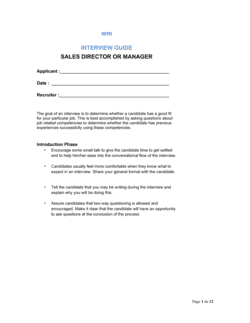
- An interview format in which every candidate is asked the same predetermined questions in the same order, enabling fair, comparable evaluation.
- Behavioral Question
- A question that asks candidates to describe a specific past experience, based on the premise that past behavior predicts future performance.
- Situational Question
- A hypothetical question that presents a realistic scenario and asks how the candidate would handle it in the role.
- Competency Framework
- A defined set of skills, behaviors, and attributes required for success in a specific role, used as the scoring basis for interview questions.
- STAR Method
- A structured answer format standing for Situation, Task, Action, and Result — used to evaluate the completeness and quality of a behavioral interview response.
- Scoring Rubric
- A numerical or descriptive scale that defines what a strong, average, or weak response looks like for each interview question.
- Interviewer Bias
- A systematic error in candidate evaluation caused by irrelevant factors — appearance, shared background, or first impressions — rather than job-related evidence.
- Candidate Scorecard
- A summary document that aggregates per-question scores across all interviewers to produce a comparable overall rating for each candidate.
- Adverse Impact
- A pattern in which a selection practice unintentionally screens out candidates from a protected group at a disproportionately higher rate than others.
- Probing Question
- A follow-up question used to draw out more detail from a candidate's initial response — for example, asking what specifically they did or what the measurable outcome was.