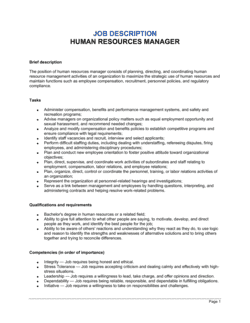
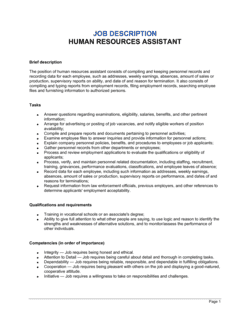
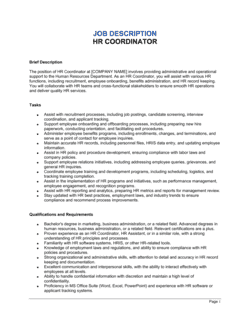
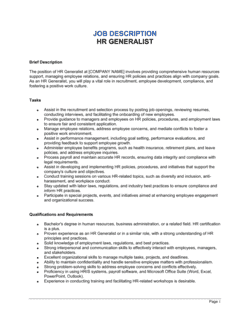
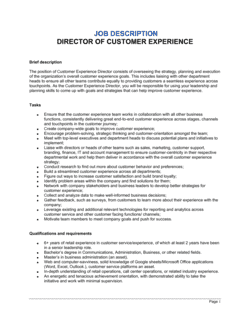
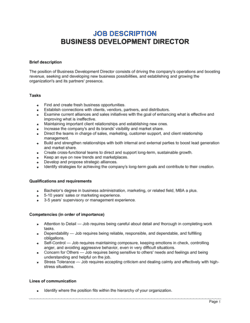
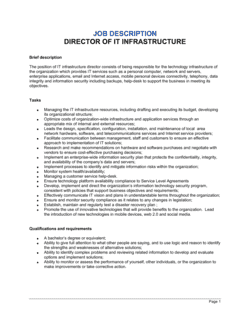
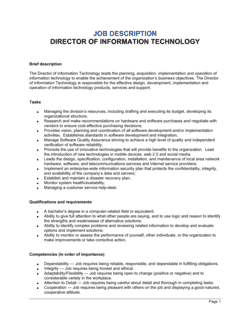
- Job Description
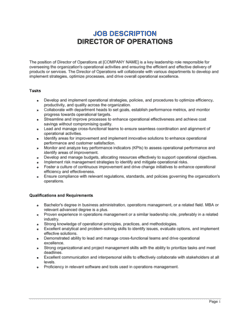
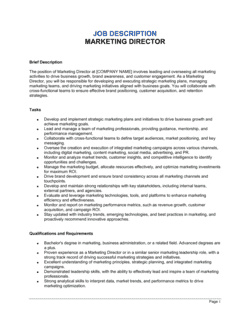
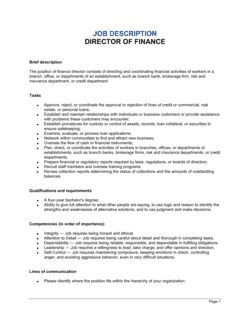
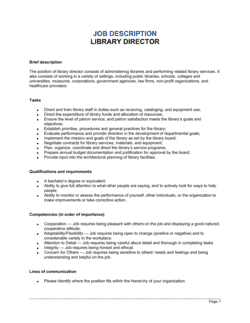
- A formal written document that defines the duties, qualifications, reporting relationships, and performance expectations for a specific role.
- Reporting Line
- The organizational relationship indicating which executive or body the HR Director reports to — typically the CEO, COO, or Board.
- Key Performance Indicators (KPIs)
- Measurable metrics used to evaluate how effectively the HR Director is fulfilling the role's core objectives — such as retention rate, time-to-hire, or engagement score.
- HRIS (Human Resources Information System)
- Software used to manage employee records, payroll, benefits enrollment, and HR analytics — a platform the HR Director typically owns or governs.
- Talent Acquisition
- The end-to-end process of identifying, attracting, assessing, and hiring candidates to fill open roles within the organization.
- Succession Planning
- A proactive process for identifying and developing internal candidates to fill critical leadership roles when they become vacant.
- Compensation Benchmarking
- The practice of comparing an organization's pay structures against market survey data to ensure salaries remain competitive and equitable.
- Organizational Development (OD)
- A planned, systematic approach to improving an organization's effectiveness through people, structure, and process interventions.
- DEIB
- Diversity, Equity, Inclusion, and Belonging — a set of strategic priorities the HR Director typically owns and reports on to senior leadership.
- Employment At-Will
- A US employment doctrine allowing either party to end the employment relationship at any time for any lawful reason, unless a contract provides otherwise.
- Constructive Dismissal
- A situation where an employer's unilateral and significant changes to a role's scope or conditions effectively force the employee to resign, treated legally as termination.