How To Cultivate Success

Free to read β€’ Save or share with one click

FreeHow To Cultivate Success Template

At a glance

What it is
How To Cultivate Success is a structured operational guide that walks individuals, teams, and organizations through the deliberate steps, habits, and systems required to build and sustain meaningful achievement. This free Word download gives you a ready-to-edit framework covering mindset, goal-setting, accountability, and performance measurement β€” exportable as PDF for sharing with teams, coaches, or leadership boards.
When you need it
Use it when launching a new initiative, onboarding a team around shared performance standards, or formalizing an organization's growth philosophy into a repeatable, teachable process. It is equally useful for individual professionals building a personal development roadmap.
What's inside
A foundation-setting overview, goal architecture, habit and routine design, accountability structures, resilience frameworks, team development practices, performance measurement, and a continuous improvement cycle β€” all organized into a single cohesive document.

What is a How To Cultivate Success Guide?

A How To Cultivate Success guide is a structured operational document that translates the principles of sustained achievement into a concrete, executable plan for individuals, teams, and organizations. It covers the full arc of deliberate growth: defining what success means, architecting goals across multiple time horizons, designing the daily and weekly habits that compound toward those goals, building external accountability structures, and establishing a continuous improvement cycle that keeps the plan alive over months and years. Unlike a motivational framework or a list of productivity tips, this document produces a written, measurable plan with named owners, specific KPIs, and pre-planned responses to the obstacles that derail most growth efforts before they produce results.

Why You Need This Document

Without a written success framework, growth remains reactive β€” driven by immediate pressures rather than deliberate direction. Teams lose alignment on what matters most, individuals work hard without measurable progress, and organizations execute strategies that nobody has translated into daily behavioral norms. The cost of skipping this document is concrete: performance conversations become vague, coaching relationships lack a shared reference point, and high-potential employees leave because they see no structured path forward. A completed How To Cultivate Success guide gives every person in your organization β€” or every client in your coaching practice β€” a single document that connects today's actions to tomorrow's outcomes, with accountability baked in from the start. This template provides the structure; you provide the specifics that make it real.

Which variant fits your situation?

If your situation is…Use this template
Planning individual professional growth over 12 monthsPersonal Development Plan
Setting measurable targets for a team or departmentPerformance Improvement Plan
Aligning an organization around a 3-to-5-year visionStrategic Plan
Tracking weekly and monthly progress against goalsAction Plan
Building structured habits into a daily or weekly routineDaily Planner Template
Coaching an employee through a specific performance challengePerformance Review
Defining company-wide values and behavioral standardsEmployee Handbook

Common mistakes to avoid

❌ Skipping the success definition and jumping to goals

Why it matters: Goals disconnected from a values-based definition of success generate achievement without satisfaction β€” a common source of burnout and strategic drift at both the individual and organizational level.

Fix: Complete the foundation section first. Spend at least 30 minutes writing and refining your success definition before a single goal is set.

❌ Setting goals at only one time horizon

Why it matters: Long-term-only goals feel abstract and unmotivating; short-term-only goals produce tactical busyness without strategic progress. Neither produces compound growth.

Fix: Always connect the three horizons explicitly: confirm that each weekly action maps to a 90-day objective, and each objective maps to the long-term ambition.

❌ Treating accountability as optional or self-directed

Why it matters: Self-accountability works for approximately 35% of people on a good week. For the remaining 65%, commitment to another person is the primary mechanism that converts intention into sustained action.

Fix: Name a specific accountability partner in the document and schedule the first check-in before the plan is finalized.

❌ Using activity metrics instead of outcome metrics as KPIs

Why it matters: Measuring inputs (hours worked, emails sent, tasks completed) creates the illusion of progress while outcomes β€” revenue, skill acquisition, relationship quality β€” remain unchanged.

Fix: For every activity metric in your KPI list, ask 'what result does this activity produce?' and replace the input measure with the output measure.

❌ Never completing the obstacle anticipation section

Why it matters: Plans without obstacle protocols are abandoned at the first significant setback, because the decision about how to respond must be made under stress with no preparation.

Fix: Treat obstacle anticipation as a required section, not an optional appendix. Three pre-planned responses per major goal is a reliable minimum.

❌ Scheduling reviews at the end of the quarter instead of throughout

Why it matters: A quarterly-only review cycle means misaligned habits, unproductive routines, and drifting KPIs go uncorrected for 90 days β€” by which point significant time and effort have been wasted.

Fix: Implement a weekly 15-minute review as the primary feedback mechanism and use the quarterly review only for strategic recalibration.

The 9 key sections, explained

Foundation: defining what success means to you

Goal architecture: long-term, medium-term, and immediate

Habit and routine design

Accountability structures

Resilience and obstacle management

Team and relationship development

Performance measurement and KPIs

Learning and skill development plan

Continuous improvement and review cycle

How to fill it out

  1. 1

    Define your personal or organizational success vision

    Write a clear, specific answer to the question: what does success look like in 3–5 years? Include the values and principles that are non-negotiable on the path to getting there.

    πŸ’‘ If you are completing this for a team, have each member write their individual answer first β€” then compare and build a shared definition together rather than starting with consensus.

  2. 2

    Set goals across all three time horizons

    Write one 3-to-5-year ambition, two or three 90-day objectives that move directly toward it, and one weekly priority action for each objective. Each level should connect explicitly to the one above it.

    πŸ’‘ 90-day objectives are the most important horizon to get right β€” they are long enough to produce meaningful results and short enough to maintain urgency.

  3. 3

    Design your core habits with specific implementation intentions

    Identify three to five daily or weekly habits that compound toward your goals. For each, write the trigger, the exact time and location, and the minimum viable version you will perform on a low-energy day.

    πŸ’‘ The minimum viable version β€” e.g., '10 minutes of reading instead of 30' β€” is what prevents habit streaks from breaking under pressure.

  4. 4

    Assign accountability partners and set a check-in schedule

    Name a specific person or group who will receive your progress updates. Define the frequency, format (written update, call, or in-person meeting), and the exact questions that each check-in will answer.

    πŸ’‘ The most effective accountability relationships involve a peer with a parallel goal β€” not just a coach or manager β€” because the obligation runs in both directions.

  5. 5

    Complete the obstacle anticipation section

    List the three most likely obstacles to each 90-day objective. For each, write a specific pre-planned response and a recovery protocol if the obstacle actually occurs.

    πŸ’‘ Use 'if-then' language: 'If [OBSTACLE] happens, then I will [RESPONSE].' This format activates the plan automatically under stress rather than requiring in-the-moment decision-making.

  6. 6

    Define KPIs with baselines and targets

    Assign one to three measurable outcome metrics to each 90-day objective. Record the current baseline value, the target value, and the date by which you expect to reach it.

    πŸ’‘ If you cannot measure it today, your first KPI task is to build the measurement system β€” a goal without a baseline is an estimate, not a commitment.

  7. 7

    Build your learning schedule

    Match each identified skill gap to a specific resource and block time on your calendar for learning β€” treating it as a non-negotiable appointment rather than a fill-in activity.

    πŸ’‘ Block learning time in the first half of your workday or week, not at the end. It is consistently the first thing dropped when schedules fill up.

  8. 8

    Schedule all review cadences before you begin

    Put daily, weekly, monthly, and quarterly review times on your calendar now β€” before you start executing the plan. Reviews not pre-scheduled reliably do not happen.

    πŸ’‘ Your first quarterly review should be treated as a plan rewrite, not a progress report. Expect to adjust goals, habits, and KPIs based on what you actually learned in the first 90 days.

Frequently asked questions

What is a 'How To Cultivate Success' document?

A How To Cultivate Success document is a structured operational guide that translates the principles of achievement β€” goal-setting, habit design, accountability, and resilience β€” into a concrete, executable plan. It functions as both a personal development roadmap and an organizational framework, giving individuals and teams a single reference point for aligning daily behavior with long-term outcomes.

Who should use this template?

Business owners building a growth framework, team leaders aligning performance norms, executive coaches guiding clients through structured development, HR professionals embedding success principles into onboarding, and individual professionals mapping a personal career trajectory all benefit from this document. It scales from a single person's 90-day plan to a company-wide operational philosophy.

How is this different from a business plan?

A business plan documents market opportunity, competitive positioning, and financial projections for external audiences β€” investors and lenders. A How To Cultivate Success guide is an internal operational and behavioral document focused on the habits, accountability structures, and daily practices that make any plan executable. The two documents are complementary: the business plan defines what you are building; this guide defines how you will build it.

How long should this document be?

For an individual professional, 4–8 pages covering the core sections is sufficient. For an organizational framework intended to guide a team or department, 10–15 pages with role-specific KPIs and team accountability protocols is more appropriate. Length should be determined by specificity, not aspiration β€” a short, concrete plan outperforms a long, generic one in every case.

How often should the plan be reviewed and updated?

Daily micro-reviews (5 minutes), weekly KPI check-ins (15 minutes), monthly habit and goal assessments (30–60 minutes), and a full quarterly rewrite are the recommended cadences. The quarterly review is treated as a plan revision, not a report β€” goals, habits, and KPIs should all be evaluated and adjusted based on what was learned in the prior period.

What is the most important section to complete first?

The foundation section β€” defining what success actually means β€” is the most important and most frequently skipped. Every other section depends on it. Goals set without a clear success definition tend to be borrowed from external benchmarks rather than personal values, which consistently predicts low motivation and high abandonment rates once initial momentum fades.

Can this template be used for a team rather than an individual?

Yes. The template adapts to team use by replacing individual habit and routine sections with shared behavioral norms and team KPIs, and by converting the accountability partner structure into a peer accountability or manager check-in format. Teams using a shared success framework report faster alignment on priorities and cleaner performance conversations because expectations are written down rather than assumed.

What makes a success plan fail in practice?

The four most common failure points are: no external accountability mechanism, activity-based KPIs that mask a lack of real progress, goals set at only one time horizon (typically long-term), and no obstacle anticipation protocol. Plans fail not because people lose motivation but because the structure was never designed to survive the first serious disruption. Pre-planning responses to predictable obstacles is the single highest-leverage fix.

How this compares to alternatives

vs Strategic Plan

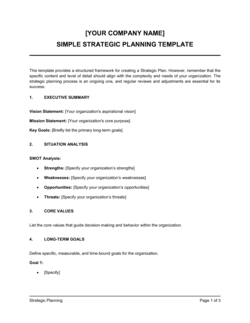
A strategic plan sets organizational direction, competitive positioning, and resource allocation across a 3-to-5-year horizon β€” it is primarily an external and leadership-level document. A How To Cultivate Success guide is a behavioral and operational document focused on the daily and weekly practices that make any strategy executable. Use the strategic plan to define where you are going; use this guide to define how you will get there.

vs Personal Development Plan

A personal development plan focuses specifically on individual skill-building, career progression, and learning objectives. A How To Cultivate Success guide is broader β€” covering mindset, habits, accountability, resilience, and team relationships in addition to skill development. Use the personal development plan when the goal is role-specific growth; use this template when the goal is a comprehensive life and work success system.

vs Performance Improvement Plan

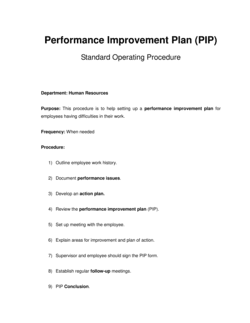
A performance improvement plan (PIP) is a formal HR document used to address specific performance deficiencies, typically with corrective consequences attached. A How To Cultivate Success guide is a proactive, aspirational framework designed for individuals or teams performing well and seeking to grow further. One is remedial; the other is developmental.

vs Action Plan

An action plan is a task-level document listing specific steps, owners, and deadlines for completing a defined project or objective. A How To Cultivate Success guide operates at a higher level β€” defining success, designing habits, and building accountability systems that govern many action plans over time. Use the action plan to execute a specific initiative; use this template to build the operating system that produces consistent results across all initiatives.

Industry-specific considerations

Professional Services

Billable utilization targets, client relationship development habits, and structured business development routines mapped to quarterly revenue milestones.

SaaS / Technology

Engineering and product team success frameworks tied to sprint velocity, feature delivery milestones, and individual skill development tracks.

Retail / E-commerce

Sales team habit design around daily outreach targets, conversion rate KPIs, and weekly pipeline review accountability structures.

Education and Coaching

Student or client success plans with learning milestones, progress review cadences, and coach-client accountability protocols built directly into the template.

Template vs pro β€” what fits your needs?

PathBest forCostTime
Use the templateIndividuals, small teams, and business owners building a personal or team success framework without external facilitationFree2–4 hours to complete
Template + professional reviewLeaders embedding a success framework into company culture who want an executive coach or consultant to review and customize the plan$300–$1,500 for a coaching session or facilitated workshop1–2 days with external review
Custom draftedOrganizations designing a proprietary success methodology for company-wide rollout, leadership programs, or client-facing coaching products$2,000–$8,000 for custom facilitation and documentation2–6 weeks

Glossary

Success Framework
A structured model that defines what success looks like, how it will be measured, and the specific actions required to achieve it.
Growth Mindset
The belief that abilities and intelligence can be developed through effort, learning, and persistence β€” as opposed to being fixed traits.
SMART Goals
Goals that are Specific, Measurable, Achievable, Relevant, and Time-bound β€” the standard format for setting actionable objectives.
Accountability Structure
A formal or informal system that creates obligation to report progress on commitments to another person, group, or record.
Key Performance Indicator (KPI)
A quantifiable metric used to evaluate progress toward a specific goal or outcome over a defined period.
Habit Loop
The neurological cycle of cue, routine, and reward that governs how habitual behaviors are formed and maintained.
Continuous Improvement
An ongoing organizational or personal practice of reviewing performance, identifying gaps, and making iterative adjustments.
Resilience
The capacity to recover from setbacks, adapt to changed circumstances, and continue progress toward goals without abandoning them.
Milestone
A specific, dated checkpoint that marks meaningful progress toward a larger goal β€” used to measure momentum and maintain motivation.
Feedback Loop
A recurring cycle in which outputs from a process are reviewed and used as inputs to adjust future actions or decisions.

Part of your Business Operating System

This document is one of 3,000+ business & legal templates included in Business in a Box.

  • Fill-in-the-blanks β€” ready in minutes
  • Compatible with all office suites
  • Export to PDF and share electronically

Create your document in 3 simple steps.

From template to signed document β€” all inside one Business Operating System.
1
Download or open template

Access over 3,000+ business and legal templates for any business task, project or initiative.

2
Edit and fill in the blanks with AI

Customize your ready-made business document template and save it in the cloud.

3
Save, Share, Send, Sign

Share your files and folders with your team. Create a space of seamless collaboration.

Save time, save money, and create top-quality documents.

β˜…β˜…β˜…β˜…β˜…

"Fantastic value! I'm not sure how I'd do without it. It's worth its weight in gold and paid back for itself many times."

Managing Director Β· Mall Farm
Robert Whalley
Managing Director, Mall Farm Proprietary Limited
β˜…β˜…β˜…β˜…β˜…

"I have been using Business in a Box for years. It has been the most useful source of templates I have encountered. I recommend it to anyone."

Business Owner Β· 4+ years
Dr Michael John Freestone
Business Owner
β˜…β˜…β˜…β˜…β˜…

"It has been a life saver so many times I have lost count. Business in a Box has saved me so much time and as you know, time is money."

Owner Β· Upstate Web
David G. Moore Jr.
Owner, Upstate Web

Run your business with a system β€” not scattered tools

Stop downloading documents. Start operating with clarity. Business in a Box gives you the Business Operating System used by over 250,000 companies worldwide to structure, run, and grow their business.

Start freeΒ Β·Β No credit card required