How To Buy A Small Business

Free to read β€’ Save or share with one click

FreeHow To Buy A Small Business Template

At a glance

What it is
How To Buy A Small Business is a structured operational guide that walks a prospective buyer through every phase of a business acquisition β€” from defining acquisition criteria and sourcing deals to conducting due diligence, negotiating price, securing financing, and closing. This free Word download gives you a ready-to-use framework you can edit online and export as PDF to share with advisors, lenders, or business partners.
When you need it
Use it when you are actively evaluating one or more businesses for purchase and need a systematic process to assess risk, determine fair value, and structure the transaction. It is equally useful for first-time buyers who need a roadmap and experienced operators who want a repeatable acquisition framework.
What's inside
Acquisition criteria and target profile, deal sourcing methods, preliminary screening and LOI guidance, financial and operational due diligence checklists, valuation methodologies, financing options, purchase agreement overview, transition planning, and post-close integration steps.

What is a How To Buy A Small Business guide?

A How To Buy A Small Business guide is a structured operational framework that walks a prospective buyer through every phase of a small business acquisition β€” from defining what you are looking for and sourcing deal flow, through due diligence, valuation, financing, and closing, to the first 90 days of ownership. Unlike a single transaction document such as a purchase agreement or letter of intent, this guide functions as the master process document that connects every step of the acquisition into a logical, trackable sequence. It gives buyers a repeatable methodology for evaluating deals consistently, identifying risks before they become costly, and closing with confidence.

Why You Need This Document

Buying a business without a structured process is one of the most expensive mistakes a first-time or repeat buyer can make. Deals fall apart β€” or worse, close at the wrong price with undisclosed liabilities β€” when buyers skip valuation discipline, start financing late, or accept verbal transition promises instead of written obligations. A single missed due diligence item, such as a non-assignable lease or an undisclosed lawsuit, can erase the entire value of a transaction after closing. This guide prevents those outcomes by giving you a phase-by-phase checklist that professionals use on every deal, regardless of size. It keeps advisors, lenders, and sellers aligned on the same timeline, and it ensures you arrive at close knowing exactly what you are buying, what you are paying, and how the business will run on day one under your ownership.

Which variant fits your situation?

If your situation is…Use this template
Buying a franchise instead of an independent businessFranchise Business Plan
Acquiring a business and needing a formal integration planBusiness Integration Plan
Formalizing the agreed purchase terms before full documentationLetter of Intent (Business Acquisition)
Documenting the final sale and transfer of ownershipBusiness Purchase Agreement
Assessing the seller's business before making an offerBusiness Due Diligence Checklist
Structuring seller financing as part of the dealPromissory Note
Projecting post-acquisition financial performanceFinancial Projections Template

Common mistakes to avoid

❌ Skipping an independent valuation and anchoring to the asking price

Why it matters: Asking prices for small businesses are set by sellers, not by market data. Without your own SDE recalculation and comparable sales research, you risk overpaying by 20–50% on a deal where the earnings were inflated by undisclosed add-backs.

Fix: Calculate SDE from raw financial data β€” tax returns, not the seller's recast P&L β€” before making any offer. Apply a market multiple from IBBA or BizBuySell transaction data for the specific industry.

❌ Starting SBA financing after signing the LOI

Why it matters: SBA 7(a) approvals take 45–90 days from a complete application. Deals signed under 60-day exclusivity routinely collapse because the buyer runs out of time before the lender clears the loan.

Fix: Get SBA pre-qualified before you make any offers. Submit the full application to your lender within 48 hours of the signed LOI.

❌ Accepting verbal transition commitments instead of written obligations

Why it matters: Once the seller has the proceeds, their motivation to train you, introduce customers, or transfer credentials drops to near zero. A seller who verbally committed to 60 days of help may disappear after 2 weeks.

Fix: Specify the seller's post-close obligations β€” hours per week, duration, specific introduction milestones, and credential handover deadlines β€” in the purchase agreement, with a portion of the purchase price held in escrow until obligations are met.

❌ Conducting financial diligence but skipping legal and operational reviews

Why it matters: Undisclosed lawsuits, personal guarantees on equipment leases, lease non-assignment clauses, or a business that depends on a single employee can eliminate the business's value entirely β€” none of these appear on a P&L.

Fix: Run a UCC lien search, pull any pending litigation, review every contract for assignment restrictions, and identify key-person dependencies in the first two weeks of due diligence.

The 10 key sections, explained

Acquisition Criteria and Buyer Profile

Deal Sourcing and Target Identification

Preliminary Screening and NDA

Business Valuation

Letter of Intent (LOI)

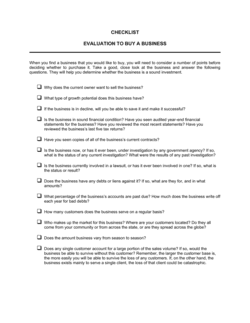
Due Diligence Checklist

Financing Structure

Purchase Agreement and Closing Checklist

Transition and Training Plan

Post-Close Integration and 90-Day Plan

How to fill it out

  1. 1

    Define your acquisition criteria before searching

    Fill in the target profile section with your industry focus, geographic limits, SDE or revenue range, maximum purchase price, and deal structure preferences. Be specific β€” criteria like 'profitable service business under $1M' are too broad to generate focused deal flow.

    πŸ’‘ Add a 'hard pass' list of deal types you will not consider regardless of price β€” absentee ownership requirements, regulated industries you lack experience in, or businesses with more than 20% customer concentration in a single account.

  2. 2

    Activate at least three sourcing channels simultaneously

    List the brokers you are contacting, the marketplaces you are monitoring, and the direct outreach strategy you are using. Log every deal you review with a status and the reason for passing or advancing.

    πŸ’‘ Call three to five regional business brokers directly rather than only browsing their listings online. Brokers surface off-market or pre-listed deals to buyers they know.

  3. 3

    Complete preliminary screening before requesting confidential data

    For each deal that meets your surface criteria, execute an NDA before requesting tax returns or customer lists. Fill in the screening section with the financials you received and your adjusted SDE calculation.

    πŸ’‘ Ask the seller or broker for the last 12 months of bank statements alongside the P&L β€” bank deposits are harder to manipulate than accounting records.

  4. 4

    Run your own valuation independently of the asking price

    Use the valuation section to calculate SDE from the seller's P&L, apply your add-backs, then multiply by the appropriate industry range. Compare your indicated value to the asking price before deciding whether to make an offer.

    πŸ’‘ Research comparable sales on BizBuySell or IBBA data to confirm your multiple assumptions β€” multiples for the same SDE can vary by 1Γ— or more between industries.

  5. 5

    Draft and submit an LOI with a 45-day exclusivity period

    Use the LOI section to confirm purchase price, structure, earnout conditions if any, and a hard exclusivity deadline. State your financing contingency explicitly so the seller understands the timeline.

    πŸ’‘ Include a 'no-shop' clause requiring the seller to take the business off the market during exclusivity in exchange for your commitment to move quickly on diligence.

  6. 6

    Execute due diligence systematically using the checklist

    Work through the due diligence checklist category by category β€” financial, legal, operational, customer, and employee. Log every item as received, pending, or a concern requiring follow-up.

    πŸ’‘ Hire a CPA to perform a Quality of Earnings analysis for any deal over $500K. A QoE catches adjusted earnings claims that simple P&L review misses.

  7. 7

    Confirm financing before the LOI exclusivity period expires

    Submit your SBA or bank loan application within the first week of exclusivity. Fill in the financing section with your lender contact, loan amount, terms, and the documents they require from the seller.

    πŸ’‘ Give your lender the seller's last three years of tax returns and a current balance sheet on day one of exclusivity β€” incomplete packages are the primary cause of SBA approval delays.

  8. 8

    Set transition and 90-day plan expectations before close

    Complete the transition plan section with the seller's specific obligations β€” hours per week, duration, customer introduction deadlines, and credential handover dates β€” and confirm these terms are written into the purchase agreement.

    πŸ’‘ Negotiate at least 2–4 weeks of full-time seller training as a condition of close, especially if the business has technical operations or strong customer relationships tied to the owner.

Frequently asked questions

How do you buy a small business?

Buying a small business involves six sequential phases: defining your acquisition criteria, sourcing and screening targets, valuing the business and making an offer via a Letter of Intent, conducting due diligence on financials and operations, securing financing, and closing with a signed Purchase Agreement. Each phase builds on the last β€” skipping due diligence or starting financing late are the two most common reasons deals fall apart. A structured guide like this template keeps each phase on track.

How much does it cost to buy a small business?

Small businesses typically sell for 2–4Γ— the owner's Seller's Discretionary Earnings (SDE). A business generating $150,000 in SDE might list for $375,000–$600,000. Buyers typically contribute 10–30% as a down payment with the remainder financed through an SBA 7(a) loan, seller financing, or a combination. Beyond the purchase price, budget for closing costs (attorney, lender fees, and broker commission if applicable) of $10,000–$30,000 on a typical deal.

What is due diligence when buying a business?

Due diligence is the formal investigation phase after the LOI is signed, during which the buyer verifies the seller's financial statements, reviews legal documents and contracts, inspects operations, and identifies undisclosed liabilities. Financial diligence confirms that reported earnings are real and recurring. Legal diligence uncovers pending litigation, lease restrictions, and contract assignment issues. Operational diligence reveals key-person dependencies, equipment condition, and supplier concentration risks.

What is the difference between an asset sale and a stock sale?

In an asset sale, the buyer purchases specific assets β€” inventory, equipment, customer lists, trade name, and goodwill β€” without assuming the seller's corporate liabilities or history. In a stock sale, the buyer purchases the owner's shares and inherits the entire legal entity, including undisclosed liabilities. Asset sales are standard for small business acquisitions because they give the buyer a clean start. Stock sales are more common in larger transactions where contracts, licenses, or permits cannot be easily transferred.

How do you value a small business before making an offer?

The most common method for small businesses is the SDE multiple: calculate the owner's Seller's Discretionary Earnings by adding the owner's salary, personal expenses, and one-time costs back to net income, then multiply by an industry-specific range β€” typically 2–4Γ— for service businesses and 1.5–3Γ— for retail. Compare your result to recent comparable sales using IBBA transaction data or BizBuySell market reports. Asset-heavy businesses may also be valued on a replacement-cost basis for equipment and inventory.

Can I buy a small business with an SBA loan?

Yes. The SBA 7(a) loan program is specifically designed for business acquisitions and can finance up to 90% of the purchase price for qualifying transactions, with repayment terms up to 10 years and a minimum 10% equity injection from the buyer. The business must meet SBA size standards, demonstrate sufficient cash flow to service the debt, and have been in operation for at least two years in most cases. Pre-qualifying with an SBA preferred lender before you make offers significantly speeds the approval process.

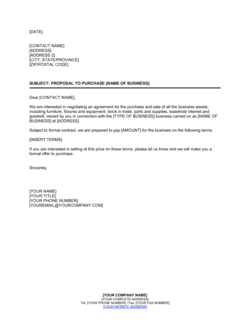
What should be in a Letter of Intent to buy a business?

A Letter of Intent should state the proposed purchase price, deal structure (asset or stock sale), payment terms including any seller financing or earnout component, exclusivity period during which the seller cannot negotiate with other buyers, key due diligence contingencies, and a target closing date. The LOI is typically non-binding except for the exclusivity and confidentiality provisions. It signals serious intent and gives both parties a framework for negotiating the final purchase agreement.

How long does it take to buy a small business?

From first contact to closing, most small business acquisitions take 3–6 months. Sourcing and screening a suitable target can take 1–3 months depending on how active you are in the market. Due diligence runs 4–8 weeks after the LOI is signed. SBA financing adds 45–90 days from application to approval. Buyers who start lender pre-qualification before making offers and who move quickly on diligence close faster.

What is a non-compete agreement in a business acquisition?

A non-compete agreement prevents the seller from opening or joining a competing business in the same industry and geography for a defined period after the sale β€” typically 2–5 years within a reasonable radius. It protects the buyer's investment in goodwill, customer relationships, and brand by ensuring the seller does not immediately rebuild a competing operation. Non-competes are a standard component of small business purchase agreements and are generally considered the most critical protective clause in the deal.

How this compares to alternatives

vs Business Purchase Agreement

A Business Purchase Agreement is the binding legal contract that executes the sale β€” it transfers ownership, records final price and terms, and is signed at close. This guide is the buyer-side process framework used before and up to that point. You use this guide to prepare for and negotiate the deal; you sign the Purchase Agreement to close it.

vs Letter of Intent to Purchase a Business

A Letter of Intent captures the agreed headline terms β€” price, structure, exclusivity β€” at a single point in the process. This guide covers the entire acquisition lifecycle, of which the LOI is one step. Use this guide to prepare the analysis that justifies the terms you put into the LOI.

vs Business Valuation Report

A Business Valuation Report is a standalone document presenting the formal value conclusion for a specific business, often prepared by a certified valuator. This guide's valuation section gives the buyer a working methodology for arriving at an offer range before engaging a formal valuator for larger or more complex deals.

vs Business Due Diligence Checklist

A Due Diligence Checklist is a focused document listing every document and verification required during the investigation phase. This guide places due diligence in context alongside sourcing, valuation, financing, and closing. Use both together β€” this guide as the process map, the checklist as the diligence workbook.

Industry-specific considerations

Professional Services

Valuation is driven primarily by recurring client relationships and key-person risk β€” buyer must assess client concentration and whether relationships transfer with the business or the individual owner.

Food and Beverage

Lease terms, health department licenses, and equipment condition are critical diligence items; asset values can be significant and franchise re-sale rules may restrict buyers.

Retail and E-commerce

Inventory valuation at close, supplier agreement transferability, and seasonal revenue patterns all affect true purchase price and working capital requirements.

Construction and Trades

Contractor licensing, bonding, equipment condition, and project backlog are the primary value drivers; buyers must verify that licenses transfer or can be re-obtained under new ownership.

SaaS / Technology

Recurring revenue quality (churn rate, contract terms), source code ownership, IP assignment, and technical debt assessment are central to diligence for any software business acquisition.

Healthcare

Regulatory licenses, payer contracts, credentialing requirements, and HIPAA compliance status must all be verified and confirmed transferable before any acquisition closes.

Template vs pro β€” what fits your needs?

PathBest forCostTime
Use the templateFirst-time buyers and entrepreneurs evaluating straightforward acquisitions under $500K with SBA financingFree3–6 months from sourcing to close
Template + professional reviewDeals above $500K, businesses with complex financials, or buyers without prior M&A experience$2,000–$8,000 (business broker buyer-side advisory or CPA Quality of Earnings review)3–5 months with advisor support
Custom draftedAcquisitions above $2M, regulated industries, multi-location businesses, or deals requiring institutional financing$10,000–$50,000+ (M&A attorney, QoE accountant, full advisor team)4–9 months

Glossary

Letter of Intent (LOI)
A non-binding document outlining the buyer's proposed price, structure, and key conditions before a formal purchase agreement is drafted.
Due Diligence
The structured investigation of a target business's financials, operations, legal standing, and liabilities before completing a purchase.
Seller's Discretionary Earnings (SDE)
A measure of total cash benefit to a full-time owner-operator, calculated by adding the owner's salary and personal expenses back to net income β€” the standard valuation basis for small businesses.
EBITDA Multiple
A valuation method that multiplies a business's Earnings Before Interest, Taxes, Depreciation, and Amortization by an industry-specific multiplier to estimate purchase price.
Asset Sale
A transaction structure in which the buyer purchases specific assets and liabilities of a business, rather than the legal entity itself β€” common for small business acquisitions.
Stock Sale (Share Purchase)
A transaction in which the buyer acquires the seller's ownership shares, taking on all the entity's existing assets and liabilities β€” more common in larger deals.
Working Capital
Current assets minus current liabilities at the time of close β€” typically negotiated as a target amount the seller must leave in the business for normal operations.
Earnout
A portion of the purchase price contingent on the acquired business hitting defined revenue or profit targets in the months or years after close.
Non-Compete Agreement
A clause or standalone agreement preventing the seller from opening or joining a competing business in the same market for a defined period after the sale.
Quality of Earnings (QoE)
An independent analysis of a business's financial statements to verify that reported earnings are sustainable, recurring, and accurately stated.
Transition Services Agreement (TSA)
A post-close arrangement in which the seller continues to provide operational support β€” customer introductions, system access, supplier relationships β€” for a defined period.
SBA 7(a) Loan
A US Small Business Administration loan program commonly used to finance small business acquisitions, covering up to 90% of the purchase price for qualifying transactions.

Part of your Business Operating System

This document is one of 3,000+ business & legal templates included in Business in a Box.

  • Fill-in-the-blanks β€” ready in minutes
  • Compatible with all office suites
  • Export to PDF and share electronically

Create your document in 3 simple steps.

From template to signed document β€” all inside one Business Operating System.
1
Download or open template

Access over 3,000+ business and legal templates for any business task, project or initiative.

2
Edit and fill in the blanks with AI

Customize your ready-made business document template and save it in the cloud.

3
Save, Share, Send, Sign

Share your files and folders with your team. Create a space of seamless collaboration.

Save time, save money, and create top-quality documents.

β˜…β˜…β˜…β˜…β˜…

"Fantastic value! I'm not sure how I'd do without it. It's worth its weight in gold and paid back for itself many times."

Managing Director Β· Mall Farm
Robert Whalley
Managing Director, Mall Farm Proprietary Limited
β˜…β˜…β˜…β˜…β˜…

"I have been using Business in a Box for years. It has been the most useful source of templates I have encountered. I recommend it to anyone."

Business Owner Β· 4+ years
Dr Michael John Freestone
Business Owner
β˜…β˜…β˜…β˜…β˜…

"It has been a life saver so many times I have lost count. Business in a Box has saved me so much time and as you know, time is money."

Owner Β· Upstate Web
David G. Moore Jr.
Owner, Upstate Web

Run your business with a system β€” not scattered tools

Stop downloading documents. Start operating with clarity. Business in a Box gives you the Business Operating System used by over 250,000 companies worldwide to structure, run, and grow their business.

Start freeΒ Β·Β No credit card required