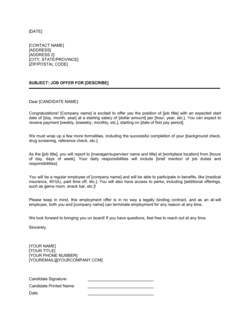
Checklist Health and Disability Insurance

Free download β€’ Use as a template β€’ Print or share

1 pageβ€’15–20 min to useβ€’Difficulty: Standard
Learn more ↓
FreeChecklist Health and Disability Insurance Template

At a glance

What it is
A Health and Disability Insurance Checklist is a structured form that guides employees and HR administrators through reviewing, comparing, and confirming health and disability coverage options during enrollment or plan changes. This free Word download lets you edit fields online and export as PDF for distribution during open enrollment, new-hire onboarding, or annual benefits reviews.
When you need it
Use it during open enrollment periods, when onboarding a new employee, or when a qualifying life event β€” such as marriage, a new dependent, or a disability diagnosis β€” triggers a coverage change. It also serves as a reference document when auditing existing coverage gaps.
What's inside
Employee identification details, health plan options with premium and deductible comparisons, dependent coverage elections, short-term and long-term disability coverage fields, beneficiary designations, and enrollment confirmation. Each section prompts the user to verify key details before submitting to HR or a benefits administrator.

What is a Health and Disability Insurance Checklist?

A Health and Disability Insurance Checklist is a structured form that guides employees and HR administrators through reviewing, selecting, and confirming health, dental, vision, short-term disability, and long-term disability coverage elections. It captures every required data point β€” plan selection, premium amounts, dependent details, beneficiary designations, and effective dates β€” in a single organized document before that information is submitted to a benefits carrier or entered into an HRIS. The checklist functions as both a preparation tool and a record of what each employee elected, making it easy to resolve disputes and satisfy audit requests throughout the plan year.

Why You Need This Document

Benefits enrollment errors are among the most common and costly HR administration problems: a missing date of birth delays a dependent's coverage, a blank disability field leaves an employee unknowingly uninsured, and an undocumented waiver turns into a billing dispute months later. Without a standardized checklist, HR teams rely on memory, email threads, and informal conversations to reconstruct what was elected and when β€” a process that fails every time it is tested. This template gives employees a clear path through every election decision and gives HR a complete, signed record to submit to carriers and retain on file. For small businesses without a dedicated HRIS, it replaces an expensive software workflow with a five-minute form that any team member can use on day one.

Which variant fits your situation?

If your situation is…Use this template
Annual open enrollment for a group of employeesEmployee Benefits Enrollment Form
Onboarding a single new hire with full benefits packageNew Employee Onboarding Checklist
Reviewing all company-wide benefits offerings annuallyEmployee Benefits Summary
Tracking a qualifying life event change mid-yearBenefits Change Request Form
Comparing multiple carrier quotes for group coverageInsurance Comparison Worksheet
Documenting employee acknowledgment of coverage termsEmployee Benefits Acknowledgment Form
Managing COBRA continuation coverage after separationCOBRA Election Notice

Common mistakes to avoid

❌ Leaving waived coverage fields blank

Why it matters: A blank field is indistinguishable from an incomplete form, creating confusion about whether the employee intended to waive or simply forgot to respond.

Fix: Include an explicit 'Waive coverage' option for every benefit line and require a checkmark even for declined benefits.

❌ Missing dependent dates of birth

Why it matters: Carriers use date of birth to verify dependent eligibility β€” missing it stalls enrollment processing and may cause the dependent to miss the effective date.

Fix: Make date of birth a required field for each dependent and validate it is present before submitting the form to the carrier.

❌ Not recording the elimination period for disability plans

Why it matters: Employees who file a claim without knowing their elimination period may stop working before benefits activate, creating financial hardship and an HR dispute.

Fix: Display the elimination period prominently next to the STD and LTD election fields, and include it in any benefits confirmation email sent after enrollment.

❌ Naming an estate as the sole beneficiary

Why it matters: Proceeds payable to an estate are subject to probate, which delays distribution, reduces the net payout through legal fees, and exposes benefits to creditors.

Fix: Train HR staff to flag estate-only designations at submission and prompt employees to name an individual beneficiary instead.

The 8 key fields, explained

Employee identification

Health plan election

Dependent coverage

Dental and vision elections

Short-term disability election

Long-term disability election

Beneficiary designation

Coverage effective date and enrollment confirmation

How to fill it out

  1. 1

    Enter employee identification details

    Fill in the employee's full legal name, ID number, department, hire date, and email address at the top of the checklist. These fields link the document to the correct payroll and HR record.

    πŸ’‘ Cross-reference the name against the most recent W-4 or government-issued ID before submitting to the carrier.

  2. 2

    Select the health plan and record premium details

    Choose the plan tier β€” HMO, PPO, or HDHP β€” and enter both the total monthly premium and the employer contribution so the employee cost is visible. Note the deductible and out-of-pocket maximum for reference.

    πŸ’‘ Include the plan's summary of benefits and coverage (SBC) document as an attachment so employees can compare before selecting.

  3. 3

    Add dependent information if applicable

    For each dependent being added, enter the full name, relationship, date of birth, and the last four digits of their Social Security number as required by the carrier.

    πŸ’‘ Gather dependent documentation β€” birth certificates, marriage certificates β€” before open enrollment opens to avoid last-minute delays.

  4. 4

    Complete dental and vision elections separately

    Check the appropriate coverage tier for dental and vision independently. Record the premium for each tier so the employee's total benefits cost is clear.

    πŸ’‘ Pre-calculate the combined monthly deduction total so employees can verify it against their first post-enrollment paycheck.

  5. 5

    Elect or waive short-term and long-term disability

    Record the benefit percentage, elimination period, and maximum benefit duration for both STD and LTD. If the employee is waiving, note the waiver explicitly rather than leaving the field blank.

    πŸ’‘ Attach a one-paragraph plain-English summary of the difference between own-occupation and any-occupation LTD definitions for employees electing voluntary coverage.

  6. 6

    Designate beneficiaries with complete details

    Enter at least one primary beneficiary with name, relationship, date of birth, and 100% allocation. Add a contingent beneficiary so there is no gap if the primary predeceases the insured.

    πŸ’‘ Remind employees to update beneficiaries after major life events β€” divorce, remarriage, or the birth of a child β€” since beneficiary designations override wills.

  7. 7

    Confirm elections and submit before the deadline

    Review every field for completeness, check the confirmation box, and submit the completed checklist to HR by the stated enrollment deadline. Record the submission date.

    πŸ’‘ Retain a completed copy in the employee's digital HR file and send the employee a PDF copy as acknowledgment of their elections.

Frequently asked questions

What is a health and disability insurance checklist?

A health and disability insurance checklist is a structured form that guides employees and HR administrators through reviewing and confirming coverage elections for health, dental, vision, short-term disability, and long-term disability plans. It ensures every required field β€” premiums, dependent details, beneficiaries, and effective dates β€” is completed accurately before submission to the benefits carrier.

When should employees complete this checklist?

Employees should complete it during annual open enrollment, when starting a new job, or when a qualifying life event β€” such as marriage, the birth of a child, or the loss of other coverage β€” allows a mid-year change. HR teams also use it as an audit tool to confirm that all employee records match current carrier enrollment data.

What is the difference between short-term and long-term disability insurance?

Short-term disability (STD) replaces a portion of income β€” typically 60–70% β€” for a limited period after a covered illness or injury, usually up to 6 months, with an elimination period of 7–30 days. Long-term disability (LTD) activates after the STD benefit ends and can continue for several years or until retirement age, with a longer elimination period of 90–180 days. Both are recorded separately on this checklist because employees may elect different levels for each.

Can an employee waive health coverage entirely?

Yes. Employees who have coverage through a spouse, domestic partner, or another plan may waive employer-sponsored health coverage during enrollment. The checklist includes an explicit waiver field for this purpose. Some employers require proof of other coverage before approving a waiver, so HR should note any documentation requirements on the form.

How does the checklist handle dependent coverage?

The dependent section captures each dependent's full name, relationship, date of birth, and the last four digits of their Social Security number. This information is required by most carriers to verify eligibility and process enrollment. Adding a dependent also changes the premium tier β€” employee-only, employee plus spouse, or family β€” which is reflected in the health plan election field.

How should HR store completed checklists?

Completed checklists contain personally identifiable information (PII) and should be stored in a secure, access-controlled HR document system β€” not in shared drives or unencrypted email folders. Retain completed forms for a minimum of 3 years after the coverage year ends to support any enrollment disputes, audit requests, or ERISA compliance reviews.

Does this checklist replace the carrier's enrollment form?

No. This checklist is an internal HR tool to ensure completeness and accuracy before data is entered into the carrier's system or submitted via a benefits administration platform. It does not replace official carrier enrollment forms or HRIS data entry but significantly reduces errors and omissions in those submissions.

What happens if an employee misses the enrollment deadline?

Employees who miss open enrollment typically cannot make changes until the next open enrollment period unless they experience a qualifying life event. Using this checklist with a clearly stated deadline and a confirmation field reduces the likelihood of missed submissions. HR teams should send reminder emails referencing the checklist's due date at least two weeks before the deadline closes.

How this compares to alternatives

vs Employee Benefits Enrollment Form

An enrollment form is the official submission document sent to the carrier to activate coverage. This checklist is the internal preparation tool used before that submission to verify all elections and details are complete and accurate. Use the checklist first, then transfer confirmed data to the enrollment form.

vs New Employee Onboarding Checklist

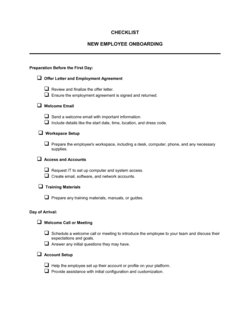
An onboarding checklist covers the full range of first-day and first-week tasks β€” equipment, system access, orientation, and paperwork. This insurance checklist focuses exclusively on health and disability elections. For new hires, both documents are used together, but each covers a distinct scope.

vs Employee Benefits Summary

A benefits summary is a reference document that describes what each plan covers and costs. This checklist is an action document β€” it records what the employee actually elects. The summary informs the decision; the checklist documents the outcome.

vs HR Audit Checklist

An HR audit checklist reviews the full spectrum of HR compliance β€” hiring, payroll, records, and benefits administration at a process level. This insurance checklist operates at the individual employee level for a single enrollment event. Both are used by HR teams, but at different scopes and frequencies.

Industry-specific considerations

Professional Services

Firms with knowledge workers in desk-based roles use disability coverage heavily because income replacement is critical when a professional cannot practice due to illness or injury.

Healthcare

Healthcare employers must track licensure and credentialing alongside benefits, making a structured checklist essential for ensuring disability coverage aligns with the employee's clinical role and income level.

Construction and Trades

High rates of occupational injury make short-term disability elections and elimination periods a primary concern; the checklist ensures workers understand the waiting period before benefits activate.

Retail / Hospitality

High staff turnover and seasonal hiring mean HR teams process large volumes of checklists during onboarding windows, making a standardized form critical for processing speed and accuracy.

Template vs pro β€” what fits your needs?

PathBest forCostTime
Use the templateHR managers, small business owners, and individual employees completing standard annual enrollmentFree10–20 minutes per employee
Template + professional reviewCompanies with 25+ employees or those adding voluntary disability riders for the first time$0–$300 (benefits broker review)1–2 hours
Custom draftedEnterprises with complex multi-state plans, union agreements, or ERISA compliance requirements$500–$2,000+ (benefits consultant or ERISA attorney)1–5 days

Glossary

Deductible
The amount an insured person pays out of pocket for covered services before the insurance plan begins to pay.
Premium
The fixed monthly or bi-weekly amount paid to maintain insurance coverage, regardless of whether any claims are made.
Short-Term Disability (STD)
Insurance that replaces a portion of an employee's income β€” typically 60–70% β€” for a defined period after an illness, injury, or qualifying medical event, usually up to 6 months.
Long-Term Disability (LTD)
Income-replacement coverage that activates after short-term disability ends and can continue for years or until retirement age, depending on the policy.
Open Enrollment
A defined annual window during which employees may enroll in, change, or drop health and benefits coverage without a qualifying life event.
Qualifying Life Event (QLE)
A change in personal circumstances β€” marriage, divorce, birth of a child, or loss of other coverage β€” that allows mid-year adjustments to benefits elections outside open enrollment.
Beneficiary
The person or entity designated to receive insurance benefits in the event of the insured's death or disability.
Elimination Period
The waiting period between the onset of a disability and the date when disability benefits begin to be paid β€” typically 7–14 days for STD and 90–180 days for LTD.
Co-payment (Copay)
A fixed dollar amount an insured pays at the time of a medical service, separate from the deductible or coinsurance.
Out-of-Pocket Maximum
The most an insured person will pay for covered services in a plan year; once this cap is reached, the insurer covers 100% of remaining eligible costs.

Part of your Business Operating System

This document is one of 3,000+ business & legal templates included in Business in a Box.

  • Fill-in-the-blanks β€” ready in minutes
  • 100% customizable Word document
  • Compatible with all office suites
  • Export to PDF and share electronically

Create your document in 3 simple steps.

From template to signed document β€” all inside one Business Operating System.
1
Download or open template

Access over 3,000+ business and legal templates for any business task, project or initiative.

2
Edit and fill in the blanks with AI

Customize your ready-made business document template and save it in the cloud.

3
Save, Share, Send, Sign

Share your files and folders with your team. Create a space of seamless collaboration.

Save time, save money, and create top-quality documents.

β˜…β˜…β˜…β˜…β˜…

"Fantastic value! I'm not sure how I'd do without it. It's worth its weight in gold and paid back for itself many times."

Managing Director Β· Mall Farm
Robert Whalley
Managing Director, Mall Farm Proprietary Limited
β˜…β˜…β˜…β˜…β˜…

"I have been using Business in a Box for years. It has been the most useful source of templates I have encountered. I recommend it to anyone."

Business Owner Β· 4+ years
Dr Michael John Freestone
Business Owner
β˜…β˜…β˜…β˜…β˜…

"It has been a life saver so many times I have lost count. Business in a Box has saved me so much time and as you know, time is money."

Owner Β· Upstate Web
David G. Moore Jr.
Owner, Upstate Web

Run your business with a system β€” not scattered tools

Stop downloading documents. Start operating with clarity. Business in a Box gives you the Business Operating System used by over 250,000 companies worldwide to structure, run, and grow their business.

Free Forever PlanΒ Β·Β No credit card required