Cover Letter For RFP Template

Free Word download β€’ Edit online β€’ Save & share with Drive β€’ Export to PDF

1 pageβ€’15–25 min to fillβ€’Difficulty: Standard
Learn more ↓
FreeCover Letter For RFP Template

At a glance

What it is
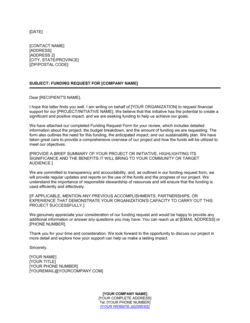
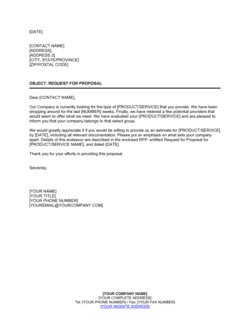
A Cover Letter for RFP is a one-page formal letter a vendor attaches to the front of a proposal submission in response to a client's Request for Proposal. This free Word download gives you a structured, professional starting point β€” edit online in minutes and export as PDF to submit alongside your full proposal package.
When you need it
Use it any time you are submitting a vendor proposal in response to a formal RFP, whether for a government contract, corporate procurement process, or institutional tender. Most RFPs explicitly require a cover letter as part of the submission package.
What's inside
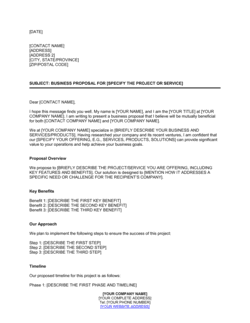
Addressee and submission date, a reference line citing the RFP number and title, an opening statement of intent, a summary of your key differentiators, a compliance confirmation, contact information, and a professional closing with authorized signature block.

What is a Cover Letter for RFP?

A Cover Letter for RFP is a formal one-page letter a vendor attaches to the front of a proposal submission in response to a client's Request for Proposal. It identifies both parties, cites the RFP by number and title, confirms that the enclosed proposal is compliant with all stated requirements, and surfaces the two or three strongest reasons the vendor should be selected β€” all before the evaluator reads a single page of the full proposal. Unlike a general business letter, an RFP cover letter operates within a structured procurement framework where compliance, precision, and direct alignment with stated evaluation criteria carry real scoring weight.

Why You Need This Document

Skipping a cover letter β€” or submitting a generic one β€” is one of the most common and most costly mistakes in competitive bidding. In formal procurement processes, a missing or non-compliant cover letter can disqualify an otherwise strong proposal before evaluation begins. Even when it is not explicitly required, a well-written cover letter signals professional bid management and gives your proposal the clearest possible opening in an evaluator's inbox. This template gives you the correct structure β€” reference line, compliance confirmation, differentiators, validity period, and authorized signature block β€” so you can focus on customizing the content to each RFP rather than rebuilding the format from scratch every time.

Which variant fits your situation?

If your situation is…Use this template
Responding to a government or public-sector RFPGovernment Proposal Cover Letter
Submitting an unsolicited proposal without a formal RFP numberBusiness Proposal Cover Letter
Responding to a Request for Information (RFI) rather than a full RFPRFI Response Letter
Submitting a grant proposal to a foundation or public funderGrant Proposal Cover Letter
Responding to a Request for Quotation (RFQ) focused on pricing onlyQuotation Cover Letter
Following up after a proposal submission to confirm receiptProposal Follow-Up Letter
Covering a full formal business proposal sent to a corporate prospectBusiness Proposal Template

Common mistakes to avoid

❌ Misquoting or omitting the RFP number

Why it matters: Procurement systems route submissions by RFP number. An incorrect or missing number can delay processing or result in automatic disqualification before an evaluator ever reads the proposal.

Fix: Copy the RFP number directly from the issuing document and verify it against your submission checklist before sending.
❌ Writing vague differentiators with no supporting data

Why it matters: Phrases like 'we deliver quality results' appear in every competing cover letter and provide evaluators no basis for differentiation.

Fix: Replace every adjective with a number or named reference β€” delivery time reduced by 20%, 14 completed engagements in the same sector, or cost 12% below the RFP's budget ceiling.

❌ Having an unauthorized person sign the letter

Why it matters: Many RFPs require the cover letter signatory to have legal authority to bind the organization. A signature from a project manager instead of an officer can render the submission non-compliant.

Fix: Confirm the required signatory authority in the RFP instructions and obtain internal approval from the correct executive before the submission deadline.

❌ Ignoring the RFP's cover letter format requirements

Why it matters: Some RFPs specify page limits, required headings, or mandatory statements for the cover letter. Non-compliant formatting can disqualify a submission outright in formal procurement processes.

Fix: Review the RFP's submission instructions section before drafting and build a compliance checklist that includes every cover letter requirement.

The 9 key clauses, explained

Header and addressee block

In plain language: Your company's letterhead, the submission date, and the procurement officer's full name, title, organization, and address.

Sample language
[COMPANY NAME] | [STREET ADDRESS] | [CITY, STATE ZIP] | [DATE] | Attn: [PROCUREMENT OFFICER NAME], [TITLE] | [ISSUING ORGANIZATION] | [ADDRESS]

Common mistake: Addressing the letter generically to 'To Whom It May Concern' when the RFP names a specific procurement contact β€” this signals the vendor did not read the document carefully.

Reference line (RE:)

In plain language: A single line citing the RFP number, title, and any other identifiers the issuing organization requires for tracking.

Sample language
RE: Response to RFP No. [RFP NUMBER] β€” [RFP TITLE], Issued [ISSUE DATE]

Common mistake: Omitting or misstating the RFP number. Evaluators file proposals by RFP number; an incorrect reference can delay routing or result in disqualification.

Opening statement of intent

In plain language: A direct first paragraph confirming your company's interest in the opportunity and formal intent to submit a compliant proposal.

Sample language
[COMPANY NAME] is pleased to submit this proposal in response to RFP No. [RFP NUMBER] issued by [ISSUING ORGANIZATION] on [DATE]. We are highly interested in the opportunity to [BRIEF DESCRIPTION OF SCOPE] and confident in our ability to meet your requirements.

Common mistake: Opening with a generic company history paragraph instead of a direct statement of intent β€” evaluators read dozens of letters and skip slow openings.

Company credentials summary

In plain language: Two to three sentences positioning your organization's relevant experience, certifications, or track record as it relates to the RFP's scope.

Sample language
[COMPANY NAME] has [X] years of experience delivering [SERVICE/PRODUCT TYPE] to [INDUSTRY/CLIENT TYPE], including [REFERENCE ENGAGEMENT OR CERTIFICATION]. We hold [RELEVANT CERTIFICATION] and have successfully completed [NUMBER] engagements of comparable scope.

Common mistake: Listing every credential the company holds regardless of relevance. Evaluators score against RFP criteria β€” unrelated certifications dilute the message.

Key differentiators paragraph

In plain language: A focused paragraph naming two or three specific advantages of your proposal β€” methodology, price, timeline, team, or technology β€” tied directly to the RFP's stated evaluation criteria.

Sample language
Our proposal offers three distinct advantages: (1) a proven [METHODOLOGY NAME] that reduced delivery time by [X]% for [CLIENT TYPE]; (2) a dedicated project team with an average of [X] years of [DOMAIN] experience; and (3) a total cost of [PRICE RANGE] within the budget outlined in the RFP.

Common mistake: Writing vague differentiators like 'quality,' 'responsiveness,' or 'commitment to excellence' with no supporting specifics β€” these phrases appear in every competing letter and carry no evaluative weight.

Compliance confirmation

In plain language: A brief, explicit statement that the enclosed proposal addresses all mandatory requirements in the RFP, including format, content, and any required attachments.

Sample language
Our proposal fully complies with the requirements set out in RFP No. [RFP NUMBER], including [SPECIFIC REQUIREMENT β€” e.g., Section 4 technical format, Exhibit B pricing schedule, and required certifications in Appendix C].

Common mistake: Saying 'we have addressed all requirements' without referencing specific RFP sections. A specific citation reassures evaluators without requiring them to verify it manually.

Validity and availability statement

In plain language: States how long your proposal pricing and terms remain valid and confirms team availability to begin work within the RFP's expected start window.

Sample language
The pricing and terms in this proposal are valid for [90] days from the submission date. Our proposed team is available to commence work by [PROJECTED START DATE] and commit to the project timeline outlined in Section [X] of the enclosed proposal.

Common mistake: Omitting a validity period, which leaves the proposal open indefinitely and can expose the vendor to acceptance at outdated pricing months later.

Contact information and next steps

In plain language: Names the primary point of contact for questions, provides direct phone and email, and invites the issuing organization to reach out during the evaluation period.

Sample language
For questions regarding this proposal, please contact [PRIMARY CONTACT NAME], [TITLE], at [EMAIL] or [PHONE NUMBER]. We welcome the opportunity to clarify any aspect of our submission or participate in an oral presentation at your convenience.

Common mistake: Listing only a general company email or main phone line. Evaluators who cannot reach a named contact quickly may mark the submission down for responsiveness.

Closing and authorized signature block

In plain language: A professional closing paragraph expressing appreciation and commitment, followed by the authorized signatory's name, title, and wet or electronic signature.

Sample language
We appreciate the opportunity to present this proposal and look forward to the possibility of serving [ISSUING ORGANIZATION]. | Respectfully submitted, | [AUTHORIZED SIGNATORY NAME] | [TITLE] | [COMPANY NAME] | [DATE]

Common mistake: Having a non-authorized employee sign the cover letter. Many RFPs require the signatory to have authority to bind the organization β€” an incorrect signature can render the entire submission non-compliant.

How to fill it out

  1. 1

    Read the RFP cover letter requirements first

    Before opening the template, scan the RFP for any formatting, page limit, or content requirements specific to the cover letter. Some RFPs specify font size, margin width, or mandatory language.

    πŸ’‘ Create a simple checklist of every RFP requirement for the cover letter before you draft a single sentence.

  2. 2

    Complete the header and reference line

    Enter your company letterhead details, the submission date, and the procurement officer's exact name and title as they appear in the RFP. Enter the RFP number and title in the RE: line verbatim.

    πŸ’‘ Copy and paste the RFP number directly from the source document β€” a transposed digit is a common disqualification trigger.

  3. 3

    Write the opening statement of intent

    State in the first sentence that your company is submitting a proposal in response to the named RFP. Name the issuing organization and the scope in plain terms.

    πŸ’‘ Keep the opening paragraph to three sentences maximum β€” evaluators decide whether to read on within seconds.

  4. 4

    Summarize credentials relevant to the RFP scope

    Pull two or three credentials β€” years of experience, named past clients, relevant certifications β€” that map directly to the RFP's scope of work and evaluation criteria.

    πŸ’‘ Mirror the RFP's own language where possible. If the RFP says 'cloud migration services,' use that phrase β€” not 'IT modernization.'

  5. 5

    State your key differentiators with specifics

    Identify two or three concrete advantages of your proposal and tie each to a stated evaluation criterion. Use numbers β€” delivery time, cost savings, team experience β€” rather than adjectives.

    πŸ’‘ If the RFP weights price at 40%, lead with your pricing advantage. Match your emphasis to the evaluation weighting.

  6. 6

    Add the compliance confirmation and validity period

    Write one sentence confirming full compliance with the RFP's requirements, citing specific sections. Add your proposal validity period β€” typically 60 or 90 days from submission.

    πŸ’‘ 90 days is the most common validity window for mid-size procurements. For large government contracts, 120–180 days may be expected.

  7. 7

    Insert contact details and sign with an authorized signatory

    Add a named primary contact with direct email and phone. Have the letter signed by someone with authority to bind your organization to the proposal's terms.

    πŸ’‘ Confirm the signatory's authorization in writing internally before submission β€” a post-award challenge to the signatory's authority can void the contract.

Frequently asked questions

What is a cover letter for an RFP?

A cover letter for an RFP is a one-page formal letter a vendor attaches to the front of a proposal submission in response to a client's Request for Proposal. It frames the enclosed proposal, confirms compliance with RFP requirements, summarizes key differentiators, and provides a named contact for the evaluation team. Most formal procurement processes require it as part of the complete submission package.

Is a cover letter required for every RFP response?

Most formal procurement processes β€” particularly government and institutional RFPs β€” explicitly require a cover letter as part of a compliant submission. Even when not mandated, a cover letter is strongly recommended because it gives evaluators immediate context before reading the full proposal and demonstrates professional bid management. Check the RFP's submission instructions section to confirm requirements.

What should an RFP cover letter include?

At minimum: the issuing organization's name and procurement officer, submission date, RFP number and title in the reference line, a statement of intent, a brief credentials summary, two or three specific differentiators, a compliance confirmation, proposal validity period, primary contact details, and an authorized signature. The entire letter should fit on one page.

How long should an RFP cover letter be?

One page is the standard for most RFP cover letters. If the RFP sets a specific page limit, follow it exactly. A single page forces you to prioritize your strongest points, which serves you better than a two-page letter that buries the lead. The full proposal is where detail belongs β€” the cover letter is a summary and framing document.

What is the difference between an RFP cover letter and a business proposal cover letter?

An RFP cover letter is written in response to a specific, formal procurement document with an assigned RFP number, mandatory requirements, and a structured evaluation process. A business proposal cover letter accompanies an unsolicited or informally requested proposal with no RFP framework. The RFP cover letter must explicitly reference compliance with the issuing document's requirements β€” the business proposal letter does not.

Who should sign the RFP cover letter?

The letter should be signed by a person with legal authority to bind the organization to the proposal's terms β€” typically a CEO, president, managing director, or another officer named in your corporate documents. Many RFPs explicitly require an authorized signatory. A signature from a project manager or coordinator without that authority can make the submission non-compliant.

Can I use the same cover letter for multiple RFPs?

You can reuse the structure and boilerplate language, but every RFP cover letter must be individually customized with the correct RFP number, procurement officer's name, issuing organization, compliance citations, and differentiators matched to that RFP's evaluation criteria. Submitting a letter with the wrong RFP number or a mismatched scope is one of the most common and most avoidable disqualification triggers.

How do I identify the right differentiators to highlight?

Read the RFP's evaluation criteria section and note the weighting of each factor β€” technical approach, price, past performance, team qualifications. Lead your differentiators with advantages that address the highest-weighted criteria first. Use specific numbers, named past clients (if permitted), and certifications that map directly to what the issuing organization said it values most.

What happens if my cover letter is non-compliant with the RFP?

In formal procurement processes, non-compliant submissions are often disqualified before evaluation begins. Common compliance failures include missing or incorrect RFP reference numbers, unsigned letters, letters exceeding the specified page limit, and missing mandatory statements required by the RFP. Always compare your completed cover letter against a checklist derived from the RFP's submission requirements before sending.

How this compares to alternatives

vs Business Proposal Cover Letter

A business proposal cover letter accompanies an unsolicited or informally requested proposal and focuses on relationship-building and problem framing. An RFP cover letter is written within a formal procurement framework and must explicitly confirm compliance with stated requirements, cite the RFP number, and address the issuer's evaluation criteria. Use the RFP version any time a formal RFP document has been issued.

vs Business Proposal

The business proposal is the full submission document β€” scope, methodology, team, pricing, and timeline. The cover letter is a one-page introduction that frames the proposal, confirms compliance, and names a contact. They are submitted together; the cover letter is never a substitute for the full proposal.

vs Letter of Intent

A letter of intent notifies the issuing organization that your company intends to submit a proposal β€” typically required days before the submission deadline. The cover letter accompanies the actual proposal at submission. They serve different purposes in the procurement timeline and should not be confused or combined.

vs Executive Summary (Proposal)

An executive summary is typically a multi-page section inside the proposal that details your approach, team, and value proposition at length. The cover letter is a single page that precedes the entire package and does not replace the executive summary. Most RFPs require both as distinct components of a compliant submission.

Industry-specific considerations

Government and Public Sector

Federal, state, and municipal RFPs often mandate specific cover letter language, signature requirements, and page limits β€” non-compliance results in automatic disqualification.

Information Technology

IT vendors responding to software, systems integration, or managed services RFPs use the cover letter to surface certifications such as ISO 27001, SOC 2, or FedRAMP that directly address security evaluation criteria.

Professional Services

Consulting, legal, and accounting firms use the cover letter to establish team credentials and cite comparable named engagements within the issuing organization's industry.

Construction and Engineering

Construction RFPs require the cover letter to reference bonding capacity, licensing, insurance certificates, and compliance with prevailing wage or DBE participation requirements.

Template vs pro β€” what fits your needs?

PathBest forCostTime
Use the templateVendors of any size responding to standard corporate or institutional RFPsFree30–60 minutes per submission
Template + professional reviewHigh-value government contracts or first-time formal procurement submissions$150–$500 for a bid writer or proposal consultant review1–2 days
Custom draftedLarge federal procurements, defense contracts, or submissions requiring legal sign-off$500–$2,000 for a specialist proposal writer3–5 days

Glossary

Request for Proposal (RFP)
A formal document issued by a buyer inviting vendors to submit competitive proposals for a defined scope of goods or services.
RFP Number
A unique identifier assigned by the issuing organization to track a specific procurement process β€” always referenced in the cover letter.
Submission Deadline
The date and time by which proposals must be received; missing it typically results in automatic disqualification.
Compliance Statement
A declaration in the cover letter confirming that the enclosed proposal meets all mandatory requirements specified in the RFP.
Key Differentiators
The two or three specific advantages β€” experience, methodology, pricing, certifications β€” that distinguish your proposal from competing bids.
Authorized Signatory
The individual with legal authority to bind the organization to the proposal's terms β€” the person whose name and title appear above the signature line.
Procurement Officer
The designated contact at the issuing organization who manages the RFP process, receives submissions, and coordinates evaluation.
Scope of Work
The detailed description of deliverables, tasks, and outcomes the vendor is expected to provide, as defined in the RFP.
Evaluation Criteria
The weighted factors β€” technical approach, price, past performance, team qualifications β€” the issuing organization uses to score proposals.
Letter of Intent
A brief notice some RFPs require vendors to submit before the deadline to confirm they plan to respond β€” distinct from the cover letter itself.

Part of your Business Operating System

This document is one of 3,000+ business & legal templates included in Business in a Box.

  • Fill-in-the-blanks β€” ready in minutes
  • 100% customizable Word document
  • Compatible with all office suites
  • Export to PDF and share electronically

Create your document in 3 simple steps.

From template to signed document β€” all inside one Business Operating System.
1
Download or open template

Access over 3,000+ business and legal templates for any business task, project or initiative.

2
Edit and fill in the blanks with AI

Customize your ready-made business document template and save it in the cloud.

3
Save, Share, Send, Sign

Share your files and folders with your team. Create a space of seamless collaboration.

Save time, save money, and create top-quality documents.

β˜…β˜…β˜…β˜…β˜…

"Fantastic value! I'm not sure how I'd do without it. It's worth its weight in gold and paid back for itself many times."

Managing Director Β· Mall Farm
Robert Whalley
Managing Director, Mall Farm Proprietary Limited
β˜…β˜…β˜…β˜…β˜…

"I have been using Business in a Box for years. It has been the most useful source of templates I have encountered. I recommend it to anyone."

Business Owner Β· 4+ years
Dr Michael John Freestone
Business Owner
β˜…β˜…β˜…β˜…β˜…

"It has been a life saver so many times I have lost count. Business in a Box has saved me so much time and as you know, time is money."

Owner Β· Upstate Web
David G. Moore Jr.
Owner, Upstate Web

Run your business with a system β€” not scattered tools

Stop downloading documents. Start operating with clarity. Business in a Box gives you the Business Operating System used by over 250,000 companies worldwide to structure, run, and grow their business.

Start freeΒ Β·Β No credit card required