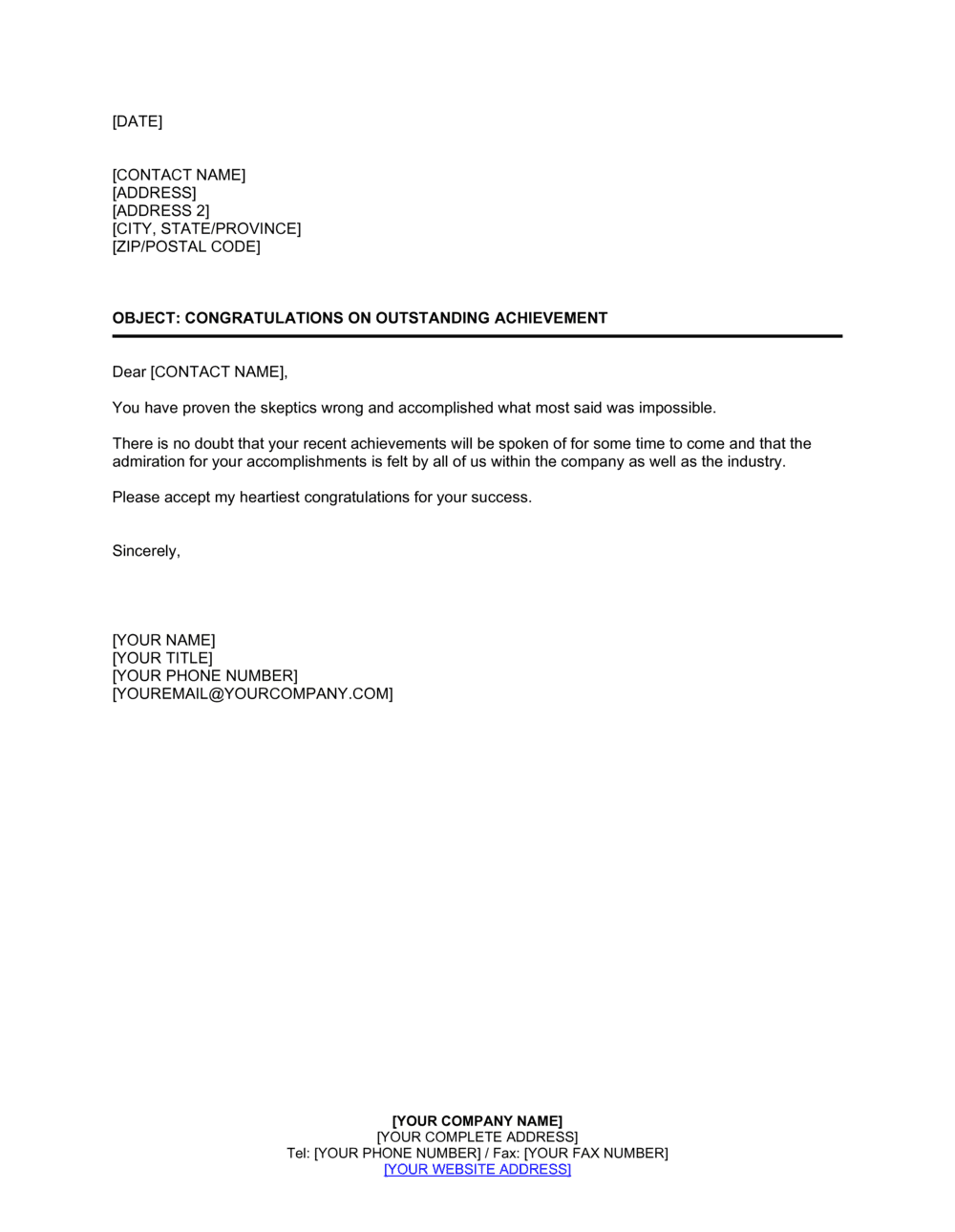
Congratulations on Outstanding Achievement Template

Free Word download β€’ Edit online β€’ Save & share with Drive β€’ Export to PDF

1 pageβ€’20–30 min to fillβ€’Difficulty: Standardβ€’Signature requiredβ€’Legal review recommended
Learn more ↓
FreeCongratulations on Outstanding Achievement Template

At a glance

What it is
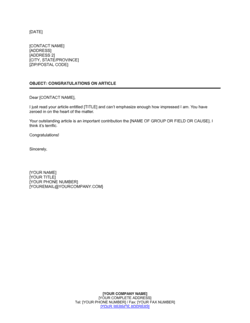
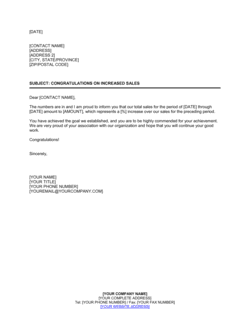
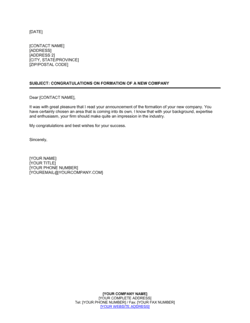
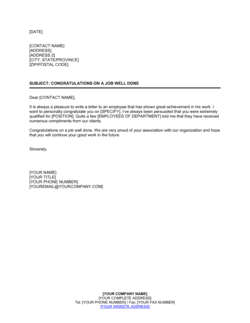
A Congratulations On Outstanding Achievement letter is a formal written communication from an employer, organization, or senior official to an individual or team recognizing a specific, documented accomplishment. This free Word download gives you a professionally structured template you can edit online, personalize with specific details, and export as PDF for delivery or filing in personnel records.
When you need it
Use it when formally acknowledging a measurable achievement β€” such as exceeding a sales target, completing a major project, earning a professional certification, or receiving an industry award β€” where a documented record of recognition is valuable for HR files, performance reviews, or public communication.
What's inside
Sender and recipient details, a formal salutation, a specific description of the achievement being recognized, the organizational impact of that achievement, an expression of appreciation, and a closing with authorized signature. The letter is structured to serve both as a personal acknowledgment and as a formal HR or organizational record.

What is a Congratulations On Outstanding Achievement Letter?

A Congratulations On Outstanding Achievement Letter is a formal written communication issued by an employer, manager, or organizational leader to recognize an individual or team for a specific, documented accomplishment. Unlike an informal email or verbal acknowledgment, a properly drafted and signed achievement letter serves dual purposes: it delivers a personal expression of appreciation, and it creates a formal HR record that can be filed in a personnel file and referenced in performance reviews, promotion decisions, and employment proceedings. The letter identifies both parties, describes the achievement in measurable terms, connects it to an organizational outcome, and is signed by an authorized representative with the authority to issue recognition on behalf of the organization.

Why You Need This Document

Recognizing achievement informally β€” through a verbal mention in a meeting or a quick email β€” leaves no documentary trail and carries no weight when it matters most: during a promotion review, a compensation negotiation, or an employment dispute. A formally structured, signed recognition letter filed in the employee's personnel record creates an evidence-based record of high performance that strengthens the case for advancement and demonstrates a culture of documented accountability. For HR teams, a consistent recognition letter process also reduces the risk of perceived inequity claims, since each letter ties recognition to a specific, measurable outcome rather than subjective impressions. Organizations that skip formal recognition documentation routinely find themselves without the paper trail they need when a high-performing employee raises a compensation grievance or a termination is challenged. This template gives you a professionally structured starting point that takes 10 minutes to complete and produces a letter that holds up in a personnel file for the duration of the employment relationship.

Which variant fits your situation?

If your situation is…Use this template
Recognizing an employee for exceeding a specific sales or revenue targetEmployee Sales Achievement Recognition Letter
Acknowledging a team for completing a major project on time and under budgetTeam Achievement Congratulations Letter
Congratulating an employee on earning a professional certification or degreeCongratulations On Certification Letter
Recognizing a long-serving employee for years of serviceEmployee Service Award Letter
Acknowledging a promotion alongside a recognition of past performancePromotion Congratulations Letter
Formally recognizing a partner or vendor for outstanding collaborationBusiness Partner Recognition Letter
Congratulating an employee on receiving an external industry awardIndustry Award Congratulations Letter

Common mistakes to avoid

❌ Vague achievement descriptions with no measurable details

Why it matters: A letter that says 'thank you for your hard work' carries no weight in a performance review, promotion decision, or dispute. It reads as a form letter, not a formal record.

Fix: Name the specific accomplishment, the date range, and at least one quantified outcome before drafting. If the data is not available, request it from the relevant manager or finance team.

❌ Implying future promotion or compensation in the letter body

Why it matters: Language such as 'We know great things are ahead for you' or 'This will be reflected in your compensation' can be interpreted as a binding commitment, creating liability if no promotion or raise follows.

Fix: Keep the forward-looking statement focused on upcoming projects and continued contributions, not career trajectory or compensation. Any compensation change should be communicated separately in writing.

❌ Having an unauthorized person sign the letter

Why it matters: A letter signed by a peer or junior employee has no organizational authority and cannot be filed as a formal HR record. It may also create confusion about who issued the recognition.

Fix: Confirm the signatory's authority before drafting. The signatory should hold at least a manager or director title and have direct or organizational responsibility for the recipient's work.

❌ Failing to copy HR or file the letter in the personnel record

Why it matters: Recognition that is not filed has no evidentiary value in future performance reviews, promotion decisions, or disciplinary proceedings. The employee also has no formal record to reference.

Fix: Establish a standard procedure: every signed recognition letter is cc'd to HR on the day of delivery and filed within 24 hours. Document the filing date in your HR system.

❌ Sending the letter weeks after the achievement occurred

Why it matters: Recognition delayed by more than two weeks loses motivational impact and signals that the acknowledgment is administrative rather than genuine. It can also feel patronizing if the achievement has been publicly discussed without formal recognition.

Fix: Set a policy that formal recognition letters are issued within 5 business days of the achievement or the public announcement of the result.

❌ Using identical boilerplate language for every recipient

Why it matters: When employees compare recognition letters and find identical wording, it signals that the recognition is a checkbox exercise rather than genuine acknowledgment, eroding the cultural value of the program.

Fix: Personalize at minimum the achievement description and impact statement for each recipient. Even if the structure is templated, the specifics must be unique.

The 9 key clauses, explained

Sender and date block

In plain language: Identifies the organization issuing the letter, the sender's title, the date of issue, and the full contact address.

Sample language
[COMPANY NAME] | [SENDER TITLE] | [STREET ADDRESS], [CITY], [STATE/PROVINCE] [POSTAL CODE] | [DATE]

Common mistake: Omitting the sender's official title. Without it, the letter lacks organizational authority and may not be accepted as a formal HR record.

Recipient identification

In plain language: Names the individual or team being recognized, including their title, department, and direct address.

Sample language
[RECIPIENT FULL NAME] | [JOB TITLE] | [DEPARTMENT] | [COMPANY OR INSTITUTION NAME]

Common mistake: Using a nickname or informal name instead of the recipient's legal name. Personnel file documents must match payroll and HR system records exactly.

Formal salutation

In plain language: Opens the letter with a professional greeting addressed to the recipient by title and last name.

Sample language
Dear [TITLE] [LAST NAME],

Common mistake: Using 'To Whom It May Concern' on a personalized recognition letter. This signals the letter is a form document and undermines the sincerity of the acknowledgment.

Achievement description

In plain language: States the specific accomplishment being recognized, including measurable outcomes, dates, and the context in which it occurred.

Sample language
On behalf of [COMPANY NAME], I am pleased to formally recognize your outstanding achievement in [SPECIFIC ACCOMPLISHMENT], completed on [DATE], resulting in [MEASURABLE OUTCOME β€” e.g., a 23% increase in quarterly revenue / on-time delivery of the [PROJECT NAME] project under the $[X] budget target].

Common mistake: Writing a vague description such as 'your hard work and dedication.' Vague language has no evidentiary value in a performance review or dispute and fails to motivate the recipient.

Organizational impact statement

In plain language: Explains how the achievement benefited the team, department, or organization, connecting individual effort to measurable business outcomes.

Sample language
Your contribution directly [IMPACT β€” e.g., enabled the company to secure a $[X]M contract / reduced operational costs by [X]% in [QUARTER] / positioned [COMPANY NAME] as the leading provider of [SERVICE] in [MARKET]].

Common mistake: Skipping the impact statement entirely. Without it, the letter reads as personal praise rather than a formal business document, reducing its value in performance reviews and promotion decisions.

Expression of appreciation

In plain language: Conveys the organization's gratitude and acknowledges the effort or dedication behind the achievement in professional language.

Sample language
We are grateful for the commitment, expertise, and initiative you have demonstrated throughout [PROJECT / PERIOD]. Your efforts reflect the values of [COMPANY NAME] and set a benchmark for excellence within [DEPARTMENT / TEAM].

Common mistake: Overly effusive language such as 'You are the most amazing employee we have ever had.' Superlatives create comparative claims that can cause equity issues with other employees.

Forward-looking statement

In plain language: Acknowledges the recipient's future potential or the organization's expectations going forward, reinforcing continued engagement.

Sample language
We look forward to your continued contributions as [COMPANY NAME] pursues [STRATEGIC GOAL / NEXT PHASE OF PROJECT / UPCOMING INITIATIVE], and we are confident that your leadership will continue to drive exceptional results.

Common mistake: Making implied promises of promotion or compensation in the forward-looking statement. Language such as 'We know this will lead to great things for your career here' can be construed as a contractual commitment.

Closing and authorized signature

In plain language: Closes the letter with a formal complimentary close, the sender's handwritten or electronic signature, printed name, and official title.

Sample language
Sincerely, [HANDWRITTEN OR ESIGN SIGNATURE] | [SENDER FULL NAME] | [OFFICIAL TITLE] | [COMPANY NAME]

Common mistake: Having an unauthorized employee sign the letter. If the signatory does not have HR or management authority over the recipient, the letter carries no formal organizational weight.

Cc and enclosure notations

In plain language: Lists additional recipients who receive a copy β€” typically HR and the recipient's direct manager β€” and notes any accompanying documents such as an award certificate.

Sample language
cc: [HR DIRECTOR NAME], Human Resources | [RECIPIENT'S MANAGER NAME], [TITLE] | Enclosure: [AWARD CERTIFICATE / BONUS CONFIRMATION MEMO]

Common mistake: Sending the letter without copying HR. Without an HR copy, the recognition may not be filed in the personnel record, losing its value for future performance reviews, promotion decisions, or disputes.

How to fill it out

  1. 1

    Enter the sender and organization details

    Fill in the company's legal name, the sender's full name and official title, the complete mailing address, and the date the letter is being issued.

    πŸ’‘ Use the same legal entity name that appears on the employee's employment contract and pay stubs to ensure consistency across HR documents.

  2. 2

    Identify the recipient accurately

    Enter the recipient's full legal name, job title, department, and location. If the letter is addressed to a team, list the team name and the team lead's name.

    πŸ’‘ Cross-check the spelling of the recipient's name against your HR system β€” a misspelling on a formal recognition letter is noticed and creates a poor impression.

  3. 3

    Describe the achievement with specific, measurable details

    Name the exact accomplishment, the date or period it occurred, and a quantified outcome β€” revenue generated, cost saved, project delivered, or certification earned. Avoid adjectives without data.

    πŸ’‘ If you cannot state the achievement in a single sentence with at least one number or specific outcome, you need more information before drafting the letter.

  4. 4

    Write the organizational impact statement

    Connect the individual's achievement to a concrete business result: a won contract, a retained client, a launched product, or a resolved operational problem. Be specific about the scope and scale.

    πŸ’‘ One specific impact sentence β€” 'Your analysis identified $420K in recoverable costs' β€” is more powerful than three paragraphs of general praise.

  5. 5

    Draft the expression of appreciation

    Acknowledge the effort, expertise, or leadership the individual demonstrated. Keep the tone professional and avoid superlatives that create comparative claims across employees.

    πŸ’‘ Mirror the language used in your company's values or leadership principles if they exist β€” it reinforces cultural alignment and makes the recognition feel institutional, not just personal.

  6. 6

    Add a forward-looking statement without implied promises

    Express confidence in the recipient's continued contributions and tie the forward-looking statement to a specific upcoming project, goal, or strategic initiative β€” not a vague career trajectory.

    πŸ’‘ Have your HR lead review this sentence specifically. Phrases like 'This will open doors for you here' have been cited in wrongful-dismissal cases as evidence of an implied contract.

  7. 7

    Obtain the authorized signature and route copies

    Have the letter signed by a manager, director, or executive with direct or organizational authority over the recipient. Send cc copies to HR and the recipient's direct manager if different from the signatory.

    πŸ’‘ Use Business in a Box eSign to timestamp the signature and automatically file a copy in BIB Drive, creating an auditable record without a paper chase.

  8. 8

    File the executed letter in the personnel record

    Deliver the signed original to the recipient and confirm that a copy has been filed in the employee's personnel file. Note the filing date in your HR system.

    πŸ’‘ Send the letter within 5 business days of the achievement or public announcement. Recognition that arrives weeks later loses motivational impact and can appear performative.

Frequently asked questions

What is a congratulations on outstanding achievement letter?

A congratulations on outstanding achievement letter is a formal written communication from an employer, manager, or organizational leader to an individual or team recognizing a specific, documented accomplishment. It serves both as a personal acknowledgment and as an official HR record, documenting the achievement, its organizational impact, and the company's formal recognition of it. Unlike an informal email, a signed letter can be filed in a personnel record and referenced in future performance reviews or promotion decisions.

Is a congratulations letter a legally binding document?

On its own, a congratulations letter is typically not a legally binding contract β€” it does not create enforceable obligations unless it contains language that implies a specific promise, such as a guaranteed bonus or promotion. However, carelessly worded forward-looking statements have been cited in employment disputes as evidence of implied contractual commitments. In most jurisdictions, courts assess the totality of communications, so precise, promise-free language is important even in non-binding letters.

Should a recognition letter be signed?

Yes. A signed recognition letter carries organizational authority and can be filed as a formal HR record. An unsigned letter or an informal email does not constitute a formal document and has limited evidentiary value in performance reviews, promotion decisions, or employment disputes. The signatory should hold at least a manager or director title with authority over the recipient's work.

Who should receive a copy of the recognition letter?

The original goes to the recipient. A copy should be routed to HR for filing in the employee's personnel record, and to the recipient's direct manager if the signatory is a senior executive rather than the direct manager. Some organizations also route a copy to a recognition committee or leadership team for tracking patterns of high performance across departments.

How specific does the achievement description need to be?

Specific enough that someone reading the letter in two years, without any background knowledge, understands exactly what was accomplished, when, and to what measurable effect. Include the project or initiative name, the time period, and at least one quantified outcome β€” a revenue figure, cost saving, percentage improvement, or delivered milestone. Vague descriptions like 'excellent performance' have no evidentiary value and reduce the motivational impact of the letter.

How soon after the achievement should the letter be sent?

Within 5 business days of the achievement or its public announcement. Recognition that arrives more than two weeks after the event loses motivational impact and can feel administrative rather than genuine. If the achievement is tied to a quarterly or annual review cycle, issue the letter at the close of the cycle β€” not months later.

Can I use this template for recognizing contractors or external partners?

Yes, with modifications. For contractors, omit any references to personnel files or employment benefits and ensure the letter does not use language associated with an employment relationship β€” such as 'employee,' 'team member,' or 'reporting to' β€” as this can contribute to misclassification exposure. For external partners, the letter functions as a relationship-building document rather than an HR record, and the organizational impact statement should focus on the business relationship rather than internal performance outcomes.

Does this letter need to be notarized?

No. A congratulations on outstanding achievement letter does not typically require notarization in any major jurisdiction. A handwritten or electronic signature from an authorized organizational representative is sufficient for the letter to serve as a formal record. If the letter accompanies a formal award or financial recognition subject to specific regulatory requirements, consult a legal or compliance advisor in your jurisdiction.

How this compares to alternatives

vs Congratulations on promotion letter

A promotion congratulations letter accompanies a formal change in job title and compensation and documents the transition. An outstanding achievement letter recognizes a specific accomplishment without necessarily involving a role change. Use the achievement letter when the recognition stands alone; use the promotion letter when a structural employment change is being confirmed.

vs Congratulations on years of service letter

A years-of-service letter marks a tenure milestone β€” typically 5, 10, or 25 years β€” and focuses on loyalty and longevity rather than a specific accomplishment. An outstanding achievement letter is triggered by a measurable event or outcome. Use the service letter for tenure recognition programs; use the achievement letter when a specific result warrants formal acknowledgment.

vs Employee performance review

A performance review is a periodic, comprehensive evaluation of an employee's overall conduct, competencies, and goal attainment over a full review period. An achievement letter is a targeted, event-driven document recognizing one specific accomplishment. The two complement each other β€” an achievement letter filed in the personnel record strengthens the evidentiary basis for a positive performance review.

vs Employee appreciation letter

An employee appreciation letter expresses general gratitude for an employee's attitude, effort, or cultural contribution without necessarily referencing a specific measurable achievement. An outstanding achievement letter is documentation-oriented and ties recognition to a concrete, quantifiable outcome. Use the appreciation letter for culture and morale; use the achievement letter when you need a formal HR record of a specific result.

Industry-specific considerations

Financial Services

Recognition letters for exceeding AUM targets, closing major deals, or earning regulatory certifications such as CFA or CFP require careful language to avoid implying guaranteed future compensation or bonuses subject to compliance approval.

Healthcare

Achievement letters recognizing clinical staff for patient outcome improvements, safety record milestones, or research contributions often need to reference specific credentialing or accreditation bodies to carry weight in professional portfolios.

Technology / SaaS

Engineering and product teams are frequently recognized for shipping releases, reducing downtime, or hitting growth metrics β€” letters should reference the specific product, version, or KPI to be useful in performance calibration cycles.

Professional Services

Client-facing professionals recognized for winning mandates or delivering exceptional engagements may want letters worded for dual use β€” as an internal HR record and as a reference document for client-facing profiles or award nominations.

Jurisdictional notes

United States

In the US, recognition letters are generally not legally binding contracts, but forward-looking language implying guaranteed compensation or continued employment can be cited in at-will employment disputes or promissory estoppel claims. Several states, including California and New York, have broader implied-contract doctrines β€” review forward-looking language carefully before issuing letters to employees in these states.

Canada

Canadian courts apply a broad implied-contract doctrine, and language suggesting ongoing employment security or promised compensation in recognition letters can be raised in wrongful dismissal proceedings. Quebec employers must ensure all formal HR correspondence issued to French-speaking employees complies with the Charter of the French Language. In Ontario and British Columbia, recognition letters filed in personnel records are accessible to employees on request under employment standards legislation.

United Kingdom

In the UK, recognition letters are not contractual documents unless they incorporate terms by reference to an employment contract or collective agreement. However, consistent patterns of recognition tied to specific performance thresholds can be cited as evidence of custom and practice in Employment Tribunal proceedings. Ensure any financial recognition referenced in the letter is documented separately under a formal bonus or reward scheme.

European Union

Across EU member states, formal HR documents including recognition letters may be subject to GDPR data retention obligations β€” employers must establish a documented retention policy for personnel file records, including how long recognition letters are held and when they are destroyed. In Germany and the Netherlands, works councils may have consultation rights over formal employee recognition programs, which can affect how recognition letters are structured and distributed.

Template vs lawyer β€” what fits your deal?

PathBest forCostTime
Use the templateHR managers and business owners issuing standard employee or team recognition lettersFree10–15 minutes per letter
Template + legal reviewSenior executive recognition letters, letters accompanying significant financial awards, or situations involving complex employment relationships$100–$300 for an HR advisor or employment lawyer review1–2 business days
Custom draftedHigh-stakes recognition tied to equity, deferred compensation, regulatory milestones, or publicly announced awards in regulated industries$500–$1,500+3–5 business days

Glossary

Formal Recognition Letter
A signed, written communication from an authorized party that officially acknowledges an individual's specific achievement or contribution.
Personnel File
The official employer-maintained record for an employee containing performance reviews, disciplinary notices, recognition letters, and employment history.
Authorized Signatory
The individual who has organizational authority to issue the letter on behalf of the company or institution, typically a manager, director, or executive.
Achievement Specificity
The practice of naming the exact accomplishment β€” with measurable details such as dates, metrics, or outcomes β€” rather than offering a generic compliment.
Organizational Impact Statement
A sentence or paragraph that connects the recognized achievement to a concrete business or organizational outcome, such as revenue growth, cost savings, or team morale.
Cc (Carbon Copy)
The notation at the bottom of a formal letter listing additional recipients who receive a copy, often used to route recognition letters to HR or senior leadership.
Enclosure Notation
A line at the bottom of a business letter indicating that one or more supporting documents β€” such as an award certificate or bonus confirmation β€” are included.
Salutation
The formal opening greeting of a business letter, typically 'Dear [TITLE] [LAST NAME],' which sets the professional tone of the correspondence.
Closing Compliment
The phrase before the signature that closes the letter, such as 'Sincerely' or 'With appreciation,' which should match the formal register of the letter body.
Performance Documentation
Written records β€” including recognition letters, appraisals, and commendations β€” that form an evidence trail of an employee's conduct and contributions over time.

Part of your Business Operating System

This document is one of 3,000+ business & legal templates included in Business in a Box.

  • Fill-in-the-blanks β€” ready in minutes
  • 100% customizable Word document
  • Compatible with all office suites
  • Export to PDF and share electronically

Create your document in 3 simple steps.

From template to signed document β€” all inside one Business Operating System.
1
Download or open template

Access over 3,000+ business and legal templates for any business task, project or initiative.

2
Edit and fill in the blanks with AI

Customize your ready-made business document template and save it in the cloud.

3
Save, Share, Send, Sign

Share your files and folders with your team. Create a space of seamless collaboration.

Save time, save money, and create top-quality documents.

β˜…β˜…β˜…β˜…β˜…

"Fantastic value! I'm not sure how I'd do without it. It's worth its weight in gold and paid back for itself many times."

Managing Director Β· Mall Farm
Robert Whalley
Managing Director, Mall Farm Proprietary Limited
β˜…β˜…β˜…β˜…β˜…

"I have been using Business in a Box for years. It has been the most useful source of templates I have encountered. I recommend it to anyone."

Business Owner Β· 4+ years
Dr Michael John Freestone
Business Owner
β˜…β˜…β˜…β˜…β˜…

"It has been a life saver so many times I have lost count. Business in a Box has saved me so much time and as you know, time is money."

Owner Β· Upstate Web
David G. Moore Jr.
Owner, Upstate Web

Run your business with a system β€” not scattered tools

Stop downloading documents. Start operating with clarity. Business in a Box gives you the Business Operating System used by over 250,000 companies worldwide to structure, run, and grow their business.

Free Forever PlanΒ Β·Β No credit card required