Board Resolution Approving Job Description & Code of Conduct Template

Free Word download β€’ Edit online β€’ Save & share with Drive β€’ Export to PDF

3 pagesβ€’20–30 min to fillβ€’Difficulty: Standard
Learn more ↓
FreeBoard Resolution Approving Job Description & Code of Conduct Template

At a glance

What it is
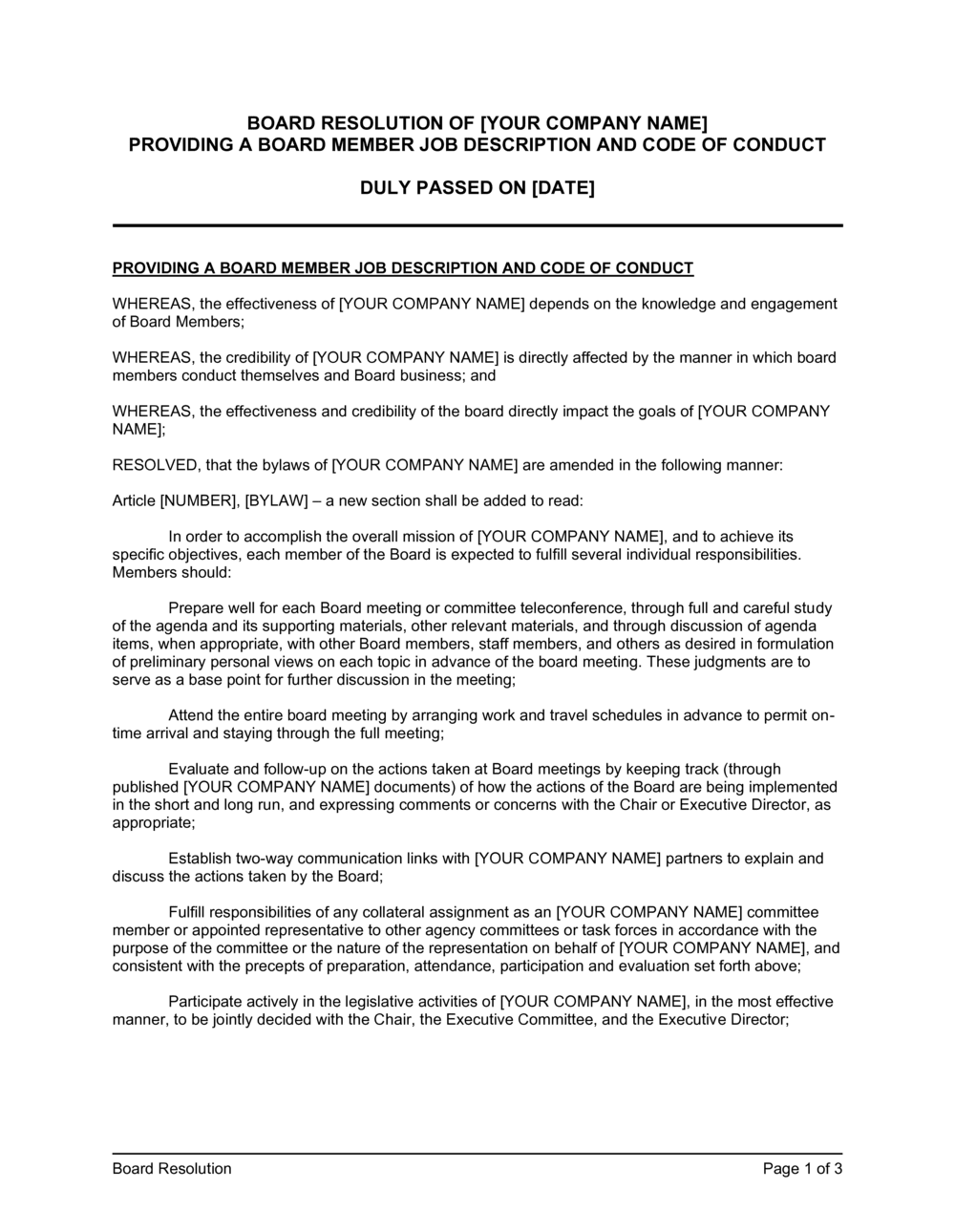
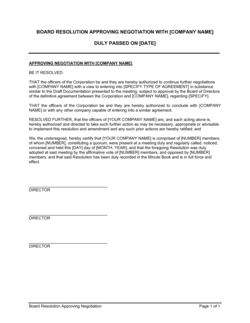
A Board Resolution Approving Job Description Code of Conduct is a formal governance document in which a company's board of directors officially records its vote to adopt a code of conduct that governs employee roles, responsibilities, and ethical obligations. This free Word download gives you a ready-to-use resolution you can edit online and export as PDF for board minutes, regulatory filings, or corporate recordkeeping.
When you need it
Use it when the board is formally adopting, updating, or ratifying a code of conduct tied to employee job descriptions β€” typically at company formation, ahead of a funding round, during an audit, or when regulators or investors request evidence of governance policies in writing.
What's inside
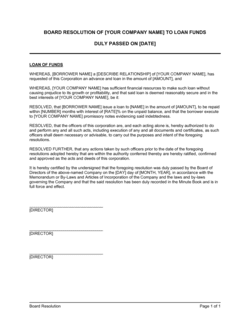
Recitals establishing board authority, a resolved clause adopting the code of conduct, an effective date, designation of the responsible officer, provisions for distribution and acknowledgment, and the board secretary's certification confirming the vote.

What is a Board Resolution Approving Job Description Code of Conduct?

A Board Resolution Approving Job Description Code of Conduct is a formal governance document in which a company's board of directors officially records its decision to adopt a code of conduct governing employee roles, responsibilities, and ethical standards as defined by their job descriptions. It translates a management-drafted policy into a board-authorized corporate directive β€” creating an auditable record that the company's highest governing body reviewed, approved, and empowered an officer to implement the policy. The document combines operative resolved clauses with supporting recitals, a vote record, and a corporate secretary certification, making it suitable for minute books, regulatory submissions, and investor due diligence packages.

Why You Need This Document

Without a board resolution, even a well-written code of conduct lacks the formal corporate authority that regulators, auditors, lenders, and investors look for. A code distributed by HR without board approval can be challenged as an informal management guideline rather than a binding company policy β€” weakening its enforceability in employment disputes and compliance investigations. Investors conducting due diligence routinely request evidence that ethical standards were adopted at the board level, and regulatory bodies in financial services, healthcare, and nonprofit sectors explicitly require it. This template gives you a complete, structured resolution in under an hour β€” capturing the recitals, operative clauses, responsible officer designation, and secretary certification that transform a draft policy into a governance-backed corporate standard.

Which variant fits your situation?

If your situation is…Use this template
Adopting a standalone company-wide code of conduct without job description specificsBoard Resolution Adopting Code of Conduct
Approving a new employee handbook that incorporates the code of conductBoard Resolution Approving Employee Handbook
Approving individual job descriptions without a code of conduct componentJob Description Template
Documenting a board vote on a compensation or benefits policyBoard Resolution Approving Compensation Policy
Recording board approval for a general corporate policy or procedureBoard Resolution (General)
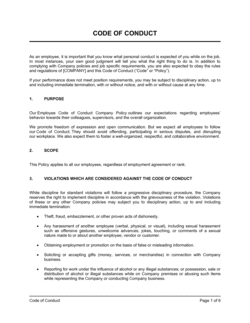
Creating the underlying code of conduct document the resolution referencesCode of Conduct
Adopting governance policies for a newly formed nonprofit boardNonprofit Board Resolution

Common mistakes to avoid

❌ Approving an unattached or unnamed policy document

Why it matters: A resolution that refers to 'the code of conduct' without attaching or specifically identifying it creates an unenforceable gap β€” any document could later be claimed to be the one approved.

Fix: Attach the finalized code of conduct as a labeled exhibit, reference it by title and date in the resolved clause, and initial each page of the exhibit at signing.

❌ Omitting the quorum confirmation

Why it matters: A resolution adopted without a quorum is void under most state corporate statutes and company bylaws β€” the policy adoption has no legal effect.

Fix: Always include an explicit statement that a quorum was present, and confirm the quorum threshold in your bylaws before circulating the resolution for signature.

❌ Leaving the effective date blank

Why it matters: Without a stated effective date, neither the company nor employees know when the code of conduct obligations began β€” making enforcement and compliance investigations ambiguous.

Fix: Set a specific calendar date as the effective date, and confirm it is the same date referenced in the code of conduct document itself.

❌ Using unanimous written consent without confirming all directors signed

Why it matters: A unanimous written consent is only valid when every director has signed β€” a single missing signature voids the entire action under most corporate statutes.

Fix: Before filing the consent in the minute book, verify that every director signature is present and dated. Chase outstanding signatures before the effective date.

❌ Skipping the responsible officer designation

Why it matters: Without a named accountable officer, distribution of the code of conduct, collection of acknowledgments, and enforcement often fall through the cracks β€” turning a board decision into an unfulfilled directive.

Fix: Always designate a specific officer title in a 'Resolved Further' clause, and confirm that officer is aware of and has accepted the mandate.

❌ Never revisiting the resolution after adoption

Why it matters: A code of conduct that is adopted once and never reviewed becomes outdated as laws, regulations, and the company's workforce evolve β€” creating compliance gaps the board has officially blessed.

Fix: Include an annual or biennial review provision in the resolution and schedule it as a recurring item on the board's governance calendar.

The 9 key sections, explained

Resolution header and meeting details

Recitals (Whereas clauses)

Resolved clause β€” adoption of the code of conduct

Designation of responsible officer

Employee acknowledgment requirement

Amendment and review provision

Ratification of prior actions

Vote record

Corporate secretary certification

How to fill it out

  1. 1

    Enter the company's legal name and meeting details

    Fill in the registered legal entity name at the top of the resolution. Record the date, meeting type (regular, special, or unanimous written consent), and the location or virtual platform used.

    πŸ’‘ Confirm the entity name against your certificate of incorporation or articles of organization β€” even a small variation can invalidate corporate records during due diligence.

  2. 2

    Complete the recitals with specific background facts

    In each 'Whereas' clause, reference the specific code of conduct document by title and date, and state concisely why the board is adopting it β€” for example, regulatory compliance, investor requirements, or company growth.

    πŸ’‘ Reference the version number or date of the code of conduct document in the recitals so the resolution is tied to a specific, identifiable policy version.

  3. 3

    Draft the resolved clause and attach the code of conduct as Exhibit A

    In the operative 'Resolved' paragraph, name the policy being adopted and set the effective date. Attach the finalized code of conduct document as Exhibit A and ensure the exhibit is referenced consistently throughout.

    πŸ’‘ Finalize the code of conduct before drafting the resolution β€” amending an exhibit after the resolution is signed requires a new resolution or amendment.

  4. 4

    Name the responsible officer and define implementation duties

    Designate by title (not just by name) the officer responsible for distributing the policy, collecting acknowledgments, and reporting compliance back to the board.

    πŸ’‘ Using a title rather than an individual name ensures the resolution remains valid if the person in that role changes.

  5. 5

    Set the acknowledgment deadline and retention requirement

    Specify the number of days employees have to sign their acknowledgments (30 days is standard) and confirm that signed copies will be retained in personnel files.

    πŸ’‘ Set a calendar reminder to audit acknowledgment completion at the deadline β€” incomplete rollout undermines the resolution's effectiveness.

  6. 6

    Record the vote accurately

    After the meeting, enter the name of each director and their vote β€” in favor, against, or abstaining. Confirm quorum is stated explicitly.

    πŸ’‘ Record abstentions separately from votes against β€” they have different legal and governance implications depending on your bylaws.

  7. 7

    Have the corporate secretary sign the certification

    The corporate secretary β€” not the CEO or another officer β€” signs the certification block, dates it, and retains the original in the minute book.

    πŸ’‘ Store a certified copy of the resolution with the attached code of conduct together, never separately β€” third parties requesting proof of adoption need both documents.

Frequently asked questions

What is a board resolution approving a job description code of conduct?

It is a formal written record of a board of directors' vote to officially adopt a code of conduct that governs employee roles, responsibilities, and ethical standards as they relate to job descriptions. The resolution creates an auditable governance record, designates the officer responsible for implementation, and sets the effective date on which the policy binds employees. It is typically stored in the corporate minute book alongside the adopted policy.

Why does a code of conduct need board approval?

Board approval transforms a code of conduct from an internal HR document into an official corporate policy with the full weight of board authority behind it. This matters for regulatory compliance, investor due diligence, and employment disputes β€” each of which may require evidence that ethical standards were formally adopted at the highest governance level, not simply drafted by management and distributed informally.

What is the difference between a board resolution and board meeting minutes?

Board meeting minutes are a running record of everything discussed at a board meeting β€” agenda items, presentations, debates, and decisions. A board resolution is a standalone document that records a single specific decision and is designed to be extracted and presented independently as proof of that decision. Minutes may contain one or more resolutions, but a certified resolution is what banks, auditors, and regulators typically require as evidence of a board action.

Does a board resolution require signatures from all directors?

Not necessarily. A resolution adopted at a duly called meeting with a quorum present requires only the signatures of the directors who were present and voted, plus the corporate secretary's certification. A unanimous written consent, by contrast, requires signatures from every director regardless of quorum rules. Check your bylaws to confirm which threshold applies to policy adoptions.

Can a board resolution be adopted without a formal meeting?

Yes. Most corporate statutes allow boards to act by unanimous written consent β€” a document circulated to all directors for signature in lieu of a meeting. This is common for routine governance actions like policy approvals. Every director must sign for the consent to be valid, and the signed document must be filed in the corporate minute book as if it were a formal meeting record.

How long should we retain a board resolution?

Board resolutions are permanent corporate records and should be retained indefinitely in the corporate minute book. Many jurisdictions require retention for the life of the corporation plus a number of years after dissolution β€” commonly 7 to 10 years. For resolutions tied to employment policies, retaining them for the duration of the policy plus the applicable employment records retention period (typically 3–7 years depending on jurisdiction) is prudent practice.

What happens if we amend the code of conduct after the resolution is adopted?

Any material amendment to the code of conduct requires a new board resolution approving the revised version. Minor administrative updates β€” correcting a typo or updating a contact name β€” may not require a full resolution, but a new or materially changed policy always does. The original resolution and original policy should be retained in the minute book alongside the amending resolution and revised policy.

Do employees need to sign the code of conduct after the board approves it?

Yes. Board approval establishes the policy at the corporate governance level, but individual employee acknowledgments confirm that each person received, read, and understood the code of conduct. Signed acknowledgments are essential for enforcement β€” without them, an employee can credibly claim they were never informed of the policy. Acknowledgments are typically collected within 30 days of the effective date and retained in each employee's personnel file.

Is a board resolution the same as a corporate policy?

No. A board resolution is the governance act that approves a policy; the policy itself is a separate document. The resolution records the board's decision and authority. The code of conduct is the operational document employees are actually bound by. Both documents should be stored together and cross-referenced, but they serve different functions in the corporate records.

How this compares to alternatives

vs Code of Conduct

A code of conduct is the substantive policy document that defines employee ethical obligations and behavioral standards. The board resolution is the governance act that formally adopts that policy. You need both β€” the code of conduct establishes the rules; the resolution gives those rules corporate authority and creates the auditable record of adoption.

vs Board Resolution (General)

A general board resolution template covers any board action β€” equipment purchases, officer appointments, banking authority. This template is specifically structured for policy adoptions tied to employee job descriptions and conduct standards, with sections for responsible officer designation, acknowledgment requirements, and review cycles that a general resolution omits.

vs Employee Handbook

An employee handbook is a comprehensive operational document covering all HR policies, benefits, and workplace rules β€” often incorporating the code of conduct as one chapter. A board resolution is the formal governance record approving a specific policy. The resolution authorizes the policy; the handbook is the delivery vehicle through which employees encounter it.

vs Job Description Template

A job description template defines the duties, qualifications, and reporting structure for a specific role. This board resolution approves the code of conduct that governs how those job descriptions are applied and how employees within those roles are expected to conduct themselves. The two documents work in tandem β€” job descriptions define what employees do; the code of conduct governs how they do it.

Industry-specific considerations

Technology / SaaS

Investor and SOC 2 audit requirements frequently mandate documented board approval of ethical standards and acceptable-use policies tied to employee roles.

Financial Services

Regulatory bodies including FINRA and the SEC expect broker-dealers and investment advisers to maintain board-approved codes of conduct governing employee conduct and conflicts of interest.

Healthcare

HIPAA compliance programs and healthcare accreditation standards require board-level adoption of conduct policies covering patient privacy, billing integrity, and clinical role responsibilities.

Nonprofit

IRS Form 990 asks whether the organization has a written conflict-of-interest and conduct policy adopted by the governing board β€” making this resolution a tax compliance document as well as a governance one.

Template vs pro β€” what fits your needs?

PathBest forCostTime
Use the templateStartups, small businesses, and nonprofits adopting a standard code of conduct with a straightforward board structureFree30–60 minutes
Template + professional reviewCompanies in regulated industries, those undergoing investor due diligence, or organizations with multiple classes of directors$200–$500 for a corporate attorney review1–3 days
Custom draftedPublic companies, heavily regulated financial or healthcare entities, or organizations with complex governance structures requiring tailored policy language$1,000–$3,000+1–2 weeks

Glossary

Board Resolution
A formal written record of a decision made by a company's board of directors, binding on the organization once passed by the required vote.
Recital
A 'Whereas' clause at the opening of a resolution that states the background facts and rationale the board relied on to reach its decision.
Resolved Clause
The operative 'Be It Resolved' or 'Resolved That' paragraph in a board resolution that states the actual decision being made.
Quorum
The minimum number or percentage of board members who must be present for a vote to be legally valid, as defined in the company's bylaws.
Code of Conduct
A formal policy document that defines the ethical standards, behavioral expectations, and professional obligations applicable to employees within an organization.
Job Description
A written statement of the duties, responsibilities, qualifications, and reporting relationships associated with a specific role within the organization.
Effective Date
The calendar date on which the approved code of conduct takes legal effect and employees become bound by its terms.
Corporate Secretary
The officer responsible for maintaining official corporate records, including board meeting minutes, resolutions, and governance documents.
Unanimous Written Consent
A mechanism that allows a board resolution to be adopted without a formal meeting, provided all directors sign a written consent approving the action.
Certification
A signed statement by the corporate secretary confirming that a resolution was duly adopted by the board with the required quorum and vote.
Responsible Officer
The executive β€” typically the CEO, COO, or CHRO β€” designated by the board to implement, distribute, and enforce the adopted policy.

Part of your Business Operating System

This document is one of 3,000+ business & legal templates included in Business in a Box.

  • Fill-in-the-blanks β€” ready in minutes
  • 100% customizable Word document
  • Compatible with all office suites
  • Export to PDF and share electronically

Create your document in 3 simple steps.

From template to signed document β€” all inside one Business Operating System.
1
Download or open template

Access over 3,000+ business and legal templates for any business task, project or initiative.

2
Edit and fill in the blanks with AI

Customize your ready-made business document template and save it in the cloud.

3
Save, Share, Send, Sign

Share your files and folders with your team. Create a space of seamless collaboration.

Save time, save money, and create top-quality documents.

β˜…β˜…β˜…β˜…β˜…

"Fantastic value! I'm not sure how I'd do without it. It's worth its weight in gold and paid back for itself many times."

Managing Director Β· Mall Farm
Robert Whalley
Managing Director, Mall Farm Proprietary Limited
β˜…β˜…β˜…β˜…β˜…

"I have been using Business in a Box for years. It has been the most useful source of templates I have encountered. I recommend it to anyone."

Business Owner Β· 4+ years
Dr Michael John Freestone
Business Owner
β˜…β˜…β˜…β˜…β˜…

"It has been a life saver so many times I have lost count. Business in a Box has saved me so much time and as you know, time is money."

Owner Β· Upstate Web
David G. Moore Jr.
Owner, Upstate Web

Run your business with a system β€” not scattered tools

Stop downloading documents. Start operating with clarity. Business in a Box gives you the Business Operating System used by over 250,000 companies worldwide to structure, run, and grow their business.

Start freeΒ Β·Β No credit card required