1
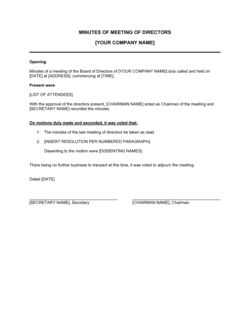
Insert the company's registered legal name and details
Enter the full registered name, company registration number, and jurisdiction of incorporation exactly as they appear in the company's constitutional documents. Include the meeting date, time, and location or remote-meeting platform.
💡 Cross-check the company name against the current certificate of incorporation — even a minor spelling difference can create problems with banks and tax authorities.
2
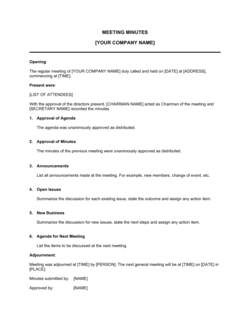
List attending directors and confirm quorum
Name every director present, note any apologies for absence, and confirm that the number present meets the quorum requirement in your articles of association or bylaws. State who chaired the meeting.
💡 If using a written resolution instead of a formal meeting, replace this section with the date of circulation and confirm all required signatories have signed.
3
Reference the source of authority
Identify the specific article number in your articles of association or the statutory provision that authorizes the board to declare dividends. This step is often skipped but is legally significant when the resolution is scrutinized.
💡 If your articles require prior shareholder approval for a final dividend above a certain threshold, confirm that approval has been obtained before completing this resolution.
4
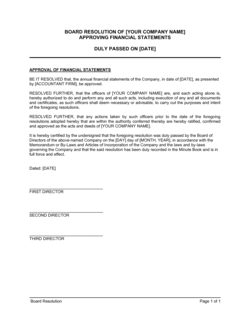
Confirm distributable profits from the financial statements
Review the most recent audited or management accounts and record the distributable profit figure. Confirm in the resolution that this amount is sufficient to cover the full dividend payout.
💡 Ask your CFO or auditor to provide a written confirmation of distributable reserves before the board meeting — a verbal confirmation at the meeting is not sufficient documentation if the dividend is later challenged.
5
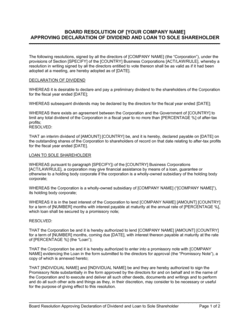
State the dividend per share, total amount, and eligible share class
Enter the exact dividend per share (e.g., $0.25 per ordinary share), calculate and record the aggregate total, and specify which class or classes of shares are entitled. Cross-reference the share register to ensure the calculation is accurate.
💡 If the company has multiple share classes with different dividend rights, prepare a separate schedule showing the entitlement per class and attach it to the resolution.
6
Set the record date and payment date
Enter a specific calendar date for each. The record date must fall before the payment date, and both should allow enough operational time for the finance team to process payments and notify shareholders.
💡 Allow at least 10–14 business days between the resolution date and the payment date to process the share register, calculate withholding, prepare bank instructions, and issue dividend vouchers.
7
Address withholding tax obligations
Confirm the applicable withholding tax rate for each shareholder class and jurisdiction. Instruct the company to deduct and remit the required amount before paying the net dividend to shareholders.
💡 For companies with shareholders in multiple countries, prepare a withholding tax schedule by shareholder residency — rates vary by tax treaty and can range from 0% to 30%.
8
Sign and file the resolution
Have the chairperson or company secretary sign the resolution. File the original in the company's minute book within the timeframe required by your jurisdiction's company law, and distribute certified copies to relevant officers and advisors.
💡 Scan and store a certified digital copy alongside the original — auditors and future investors will request board resolutions as part of due diligence, and a missing minute book entry can delay transactions.