Balance Sheet_Monthly Template

Free Excel download • Use online • Print or share

4 pages25–30 min to useDifficulty: ComplexSignature requiredLegal review recommended
Learn more ↓
FreeXLSBalance Sheet_Monthly Template

At a glance

What it is
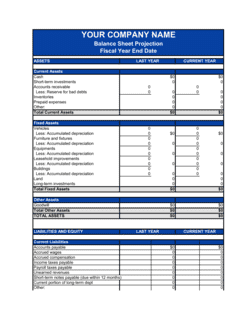
A Balance Sheet Monthly is a formal financial statement that captures a company's total assets, liabilities, and shareholders' equity as of the last day of each calendar month. This free Word download gives you a structured, lender-ready format you can edit online and export as PDF — covering current and non-current accounts, reconciliation totals, and the equity section in a single signed document.
When you need it
Use it at month-end close to report financial position to investors, lenders, or your board, to satisfy loan covenant reporting requirements, or to maintain the documented financial history required by auditors and tax authorities.
What's inside
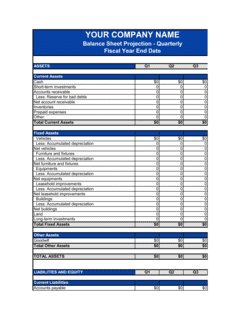
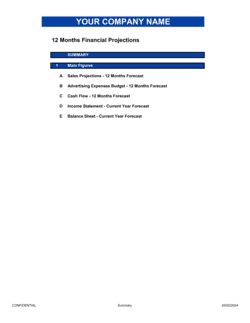
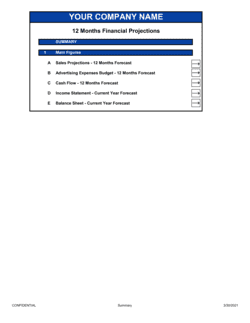
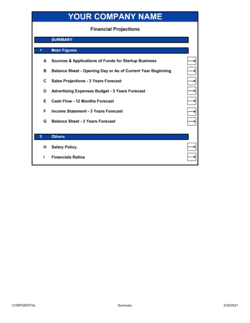
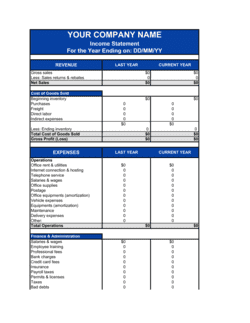
Current and non-current assets, current and long-term liabilities, shareholders' equity with retained earnings and paid-in capital, reconciliation totals confirming the accounting equation balances, period identification, and a certification block for authorized signatories.

What is a Balance Sheet Monthly?

A Balance Sheet Monthly is a formal financial statement that records a company's total assets, total liabilities, and shareholders' equity as of the final day of each calendar month. It is one of the three core financial statements — alongside the income statement and cash flow statement — and is the only one that captures a company's complete financial position at a single point in time rather than over a period. Governed by GAAP in the United States and equivalent standards in other jurisdictions, a properly prepared and certified monthly balance sheet satisfies lender covenant reporting obligations, supports investor transparency requirements, and provides the documented financial history that auditors and tax authorities rely on at year-end.

The document derives its legal weight from the certification block: when signed by an authorized officer — CFO, CEO, or controller — it constitutes a formal representation that the figures are accurate and complete. That certification creates accountability and is what distinguishes a signed monthly balance sheet from an informal management report.

Why You Need This Document

Operating without a signed, structured monthly balance sheet creates risk on several fronts simultaneously. Most commercial bank credit agreements and SBA loan facilities require a certified balance sheet within 30 to 45 days of each month-end; missing a submission triggers a covenant breach, which can give the lender the right to call the loan. Investors under equity or convertible note agreements typically have similar contractual reporting rights — failing to deliver exposes the company to a breach of the investment agreement. Beyond compliance, a monthly balance sheet is the earliest warning system for deteriorating working capital, overleveraging, or receivables problems that would otherwise remain invisible until year-end. This template gives you a standardized, lender-ready format with the certification block, the correct current vs. non-current splits, and the accounting equation confirmation built in — so every monthly submission is consistent, complete, and signed by the right person.

Which variant fits your situation?

If your situation is…Use this template
Annual financial reporting for auditors or tax filingBalance Sheet Annual
Quarterly reporting to investors or board membersBalance Sheet Quarterly
Reporting all three core financial statements togetherFinancial Statements Package
Projecting future financial position for a funding roundPro Forma Balance Sheet
Tracking monthly revenue and expenses alongside positionMonthly Income Statement
Monitoring cash inflows and outflows each monthMonthly Cash Flow Statement
Presenting a full financial package to a bank or lenderBusiness Financial Statement

Common mistakes to avoid

❌ Preparing the balance sheet before month-end close

Why it matters: An open period means accruals, depreciation, and bank reconciliations are incomplete. The resulting statement misrepresents the company's financial position and may violate loan covenant accuracy requirements.

Fix: Establish a formal month-end close checklist that must be completed before the balance sheet is drafted. Typical close procedures take 3–10 business days after month-end.

❌ Omitting the current portion of long-term debt from current liabilities

Why it matters: Burying the 12-month principal repayment obligation in long-term liabilities overstates working capital and understates current liabilities — misleading lenders who use these figures to calculate the current ratio.

Fix: Review every loan amortization schedule at month-end and reclassify the next 12 months of principal payments as a current liability. Update this split each month as payments reduce the balance.

❌ Using gross accounts receivable instead of net

Why it matters: Reporting receivables before the allowance for doubtful accounts overstates current assets and overstates total assets, giving lenders and investors an inflated view of liquidity.

Fix: Maintain an allowance for doubtful accounts updated monthly based on aging analysis, and always present receivables net of this allowance on the face of the statement.

❌ Having an unauthorized employee certify the statement

Why it matters: A certification signed by someone without financial signing authority may be invalid for lender covenant purposes, triggering a technical default or requiring a restated submission.

Fix: Confirm signing authority in your corporate bylaws or operating agreement before circulation. Only officers with documented financial authority — CFO, CEO, or controller — should certify monthly statements.

❌ Not updating retained earnings with the current month's net income

Why it matters: Carrying forward a stale retained earnings balance causes the equity section to be understated and breaks the accounting equation, producing a statement that does not balance.

Fix: Tie retained earnings to the prior month's closing balance plus current month net income from the income statement before finalizing the equity section.

❌ Rounding line items inconsistently across sections

Why it matters: Independent rounding of individual figures — rather than rounding only at the total level — creates a balance sheet that is off by a few dollars, signaling sloppy preparation to auditors and lenders.

Fix: Keep all calculations in full dollars (or cents, if required) throughout and apply rounding only to display figures. Use a single rounding rule — always round totals rather than individual line items.

The 10 key clauses, explained

Period identification and statement date

In plain language: Identifies the company by legal name, states the reporting period, and confirms the statement reflects the financial position as of a specific month-end date.

Sample language
Balance Sheet of [COMPANY LEGAL NAME] as of [MONTH END DATE, e.g., April 30, 2026]. Prepared by [PREPARER NAME / TITLE] on [PREPARATION DATE].

Common mistake: Using an approximate date such as 'end of April' instead of a specific calendar date. Lenders and auditors require the exact date to tie the statement to general ledger records.

Current assets

In plain language: Lists all assets expected to be converted to cash or used within 12 months — cash and equivalents, accounts receivable, inventory, prepaid expenses, and other short-term assets — with a subtotal.

Sample language
Cash and Cash Equivalents: $[AMOUNT] | Accounts Receivable (net of $[ALLOWANCE] allowance): $[AMOUNT] | Inventory: $[AMOUNT] | Prepaid Expenses: $[AMOUNT] | Total Current Assets: $[TOTAL]

Common mistake: Reporting gross accounts receivable without deducting the allowance for doubtful accounts. Overstating receivables inflates total assets and misrepresents liquidity to lenders.

Non-current assets

In plain language: Lists long-term assets including property, plant and equipment (net of accumulated depreciation), intangible assets, long-term investments, and other non-current items, with a subtotal.

Sample language
Property, Plant & Equipment (gross): $[AMOUNT] | Less: Accumulated Depreciation: ($[AMOUNT]) | Net PP&E: $[AMOUNT] | Intangible Assets: $[AMOUNT] | Total Non-Current Assets: $[TOTAL]

Common mistake: Listing PP&E at gross cost without showing accumulated depreciation. This hides the true book value of fixed assets and overstates total assets.

Total assets reconciliation

In plain language: Sums current and non-current assets into a single Total Assets figure that must equal Total Liabilities plus Total Equity.

Sample language
Total Current Assets: $[AMOUNT] + Total Non-Current Assets: $[AMOUNT] = TOTAL ASSETS: $[TOTAL]

Common mistake: Rounding individual line items independently, which causes the total to be off by a few dollars. Even a one-dollar imbalance signals a preparation error and can delay lender approval.

Current liabilities

In plain language: Lists all obligations due within 12 months — accounts payable, accrued liabilities, deferred revenue, income taxes payable, and the current portion of long-term debt — with a subtotal.

Sample language
Accounts Payable: $[AMOUNT] | Accrued Liabilities: $[AMOUNT] | Current Portion of Long-Term Debt: $[AMOUNT] | Deferred Revenue: $[AMOUNT] | Total Current Liabilities: $[TOTAL]

Common mistake: Omitting the current portion of long-term debt from current liabilities. Burying it in the long-term section misrepresents working capital and violates GAAP classification rules.

Long-term liabilities

In plain language: Lists obligations not due within the next 12 months, including term loans, bonds, capital lease obligations, and deferred tax liabilities, net of any current portions already classified above.

Sample language
Long-Term Debt (net of current portion): $[AMOUNT] | Deferred Tax Liability: $[AMOUNT] | Capital Lease Obligations: $[AMOUNT] | Total Long-Term Liabilities: $[TOTAL]

Common mistake: Including the full outstanding loan balance in long-term liabilities without splitting out the current portion. This understates current liabilities and inflates the apparent working capital position.

Total liabilities reconciliation

In plain language: Sums current and long-term liabilities into a single Total Liabilities figure used in the final accounting equation check.

Sample language
Total Current Liabilities: $[AMOUNT] + Total Long-Term Liabilities: $[AMOUNT] = TOTAL LIABILITIES: $[TOTAL]

Common mistake: Presenting total liabilities without the subtotal breakdown by current vs. long-term. Lenders and credit analysts rely on this split to calculate working capital ratios and debt-service coverage.

Shareholders' equity

In plain language: Breaks down equity into paid-in capital (common and preferred stock), additional paid-in capital, retained earnings (or accumulated deficit), and any accumulated other comprehensive income, with a subtotal.

Sample language
Common Stock ($[PAR VALUE] par, [SHARES AUTHORIZED] authorized, [SHARES ISSUED] issued): $[AMOUNT] | Additional Paid-In Capital: $[AMOUNT] | Retained Earnings: $[AMOUNT] | Total Shareholders' Equity: $[TOTAL]

Common mistake: Combining all equity components into a single undifferentiated 'owner's equity' line. This prevents readers from distinguishing invested capital from accumulated profits, which matters for dividend calculations and investor analysis.

Accounting equation confirmation

In plain language: The final balancing check confirming that Total Assets equals Total Liabilities plus Total Shareholders' Equity — the mathematical proof that the statement is internally consistent.

Sample language
TOTAL ASSETS: $[AMOUNT] = TOTAL LIABILITIES: $[AMOUNT] + TOTAL SHAREHOLDERS' EQUITY: $[AMOUNT] | Statement balances: [YES / NO — if NO, identify discrepancy]

Common mistake: Skipping this confirmation line and simply hoping the numbers balance. A missing reconciliation check means errors are discovered by the reader — lender, auditor, or investor — rather than caught in preparation.

Certification and authorized signature block

In plain language: A declaration by an authorized officer or owner certifying that the information presented is accurate and complete to the best of their knowledge, with signature, title, and date.

Sample language
I, [SIGNATORY NAME], [TITLE] of [COMPANY LEGAL NAME], certify that the foregoing balance sheet fairly presents the financial position of the Company as of [STATEMENT DATE] and has been prepared in accordance with [GAAP / IFRS / APPLICABLE BASIS OF ACCOUNTING]. Signature: _______________ Date: [DATE]

Common mistake: Having an unauthorized employee sign the certification. Only an officer with financial signing authority — CEO, CFO, or designated controller — should certify the statement. An unauthorized signature may invalidate the document for lender reporting or covenant compliance purposes.

How to fill it out

  1. 1

    Enter the company's legal name and statement date

    Use the full registered legal name at the top of the template and set the statement date to the last calendar day of the reporting month — e.g., April 30, 2026.

    💡 The statement date must match the date your general ledger is closed for the period. Preparing a balance sheet before month-end close will produce inaccurate figures.

  2. 2

    Populate current assets from your general ledger

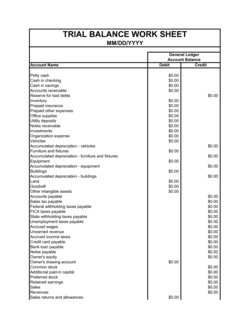
    Pull cash, accounts receivable (net of allowance), inventory, and prepaid balances directly from your trial balance as of month-end. Record the net receivables figure after subtracting your allowance for doubtful accounts.

    💡 Reconcile your bank statement to your cash general ledger balance before entering it — an unreconciled cash figure is the most common source of balance sheet errors.

  3. 3

    Record non-current assets with accumulated depreciation

    Enter gross PP&E and subtract accumulated depreciation to show net book value. List intangibles separately and note any amortization applied during the month.

    💡 Update your depreciation schedule before completing this section. Even one missed monthly depreciation entry will cause the balance sheet to overstate assets.

  4. 4

    List current liabilities and split long-term debt correctly

    Enter accounts payable, accrued liabilities, and deferred revenue, then isolate the current portion of any long-term loans — the amount due within the next 12 months — as a current liability line item.

    💡 Review your loan amortization schedules monthly to confirm the correct current vs. long-term split; the split changes each month as principal payments are made.

  5. 5

    Complete the long-term liabilities section

    Record the remaining outstanding balance of term loans, leases, and other long-term obligations net of the current portions already classified above.

    💡 If you have deferred tax liabilities, confirm with your accountant whether any portion has become current — this is frequently missed in monthly statements.

  6. 6

    Fill in the shareholders' equity section

    Enter paid-in capital, additional paid-in capital, and retained earnings. Update retained earnings by adding the current month's net income (from the income statement) and subtracting any distributions paid during the month.

    💡 Retained earnings must roll forward from the prior month's closing balance — do not use a year-to-date P&L figure without confirming the opening balance is correct.

  7. 7

    Verify the accounting equation balances

    Confirm that Total Assets equal Total Liabilities plus Total Shareholders' Equity. If the statement does not balance, trace the discrepancy to a specific line item before proceeding.

    💡 Run a T-account check on any line that changed significantly from the prior month — unexplained variances almost always flag a posting error in the general ledger.

  8. 8

    Obtain certification signature from an authorized officer

    Have the CFO, controller, or CEO sign and date the certification block. Confirm the signatory has financial signing authority per your corporate bylaws or operating agreement.

    💡 For lender submissions, file both the signed PDF and your supporting trial balance in the same folder — auditors and loan officers will request the tie-out.

Frequently asked questions

What is a monthly balance sheet?

A monthly balance sheet is a formal financial statement that records a company's total assets, liabilities, and shareholders' equity as of the last day of each calendar month. It provides a snapshot of financial position at a specific point in time and is used for lender reporting, investor updates, internal management review, and regulatory compliance. Unlike the income statement — which covers a period — the balance sheet reflects a single moment in time.

Why do businesses prepare a balance sheet every month?

Monthly balance sheets give management, lenders, and investors timely visibility into working capital, debt levels, and equity position. Many loan agreements include monthly reporting covenants requiring a signed balance sheet within 30 to 45 days of month-end. Monthly preparation also catches posting errors and accrual omissions before they accumulate into larger year-end problems.

What is the difference between a balance sheet and an income statement?

A balance sheet shows what a company owns and owes at a single point in time — it is a position statement. An income statement shows revenue, expenses, and net income over a defined period. The two are linked: net income from the income statement flows into retained earnings on the balance sheet each period. Both documents are needed for a complete picture of financial health.

Does a balance sheet need to be signed?

For lender covenant compliance, investor reporting under equity or debt agreements, and formal audit submissions, yes — a certified and signed balance sheet is typically required. The certification confirms that the figures are accurate to the best of the signatory's knowledge. Internal management-use-only statements do not legally require a signature, but best practice is to have the controller or CFO sign every month-end statement regardless of audience.

What accounting standard should a monthly balance sheet follow?

Most US-based businesses use US GAAP (Generally Accepted Accounting Principles). Companies with international operations or investors may use IFRS (International Financial Reporting Standards). Smaller businesses that do not need full GAAP compliance may use the AICPA's Financial Reporting Framework for Small- and Medium-Sized Entities (FRF for SMEs). The chosen standard should be stated in the certification block and applied consistently month over month.

What is working capital and how do I calculate it from the balance sheet?

Working capital is Current Assets minus Current Liabilities. A positive working capital figure means the company can cover its near-term obligations from existing short-term assets. A negative figure signals a potential liquidity problem. Lenders typically require a minimum current ratio (Current Assets divided by Current Liabilities) of 1.0 to 1.5 as a covenant condition, making this the most closely watched metric on a monthly balance sheet.

How does a monthly balance sheet differ from an annual one?

The structure and accounting equation are identical. The difference is frequency and level of audit scrutiny. Annual balance sheets are subject to external audit or review and must be prepared on a fully closed, reconciled basis. Monthly balance sheets are typically internally prepared on a management-reporting basis and may use estimates for certain accruals. Annual statements carry greater legal weight for statutory filings and formal representations to lenders.

Can a small business use this template without an accountant?

A small business owner with basic bookkeeping knowledge can use this template to prepare a monthly balance sheet from a reconciled trial balance. However, for lender submissions, investor reporting, or any statement that will be certified and signed as accurate, having an accountant or CPA review the completed document is strongly recommended. A single misclassification or missed accrual can result in a covenant breach or restatement request.

What is the relationship between retained earnings and the balance sheet?

Retained earnings is the cumulative total of all net income earned since the company's founding, minus all dividends or distributions paid to shareholders. Each month, the current period's net income from the income statement is added to (or subtracted from) the prior period's retained earnings balance. This linkage is how the income statement and balance sheet are connected, and it is the most common source of balance sheet errors when the roll-forward is not performed correctly.

How this compares to alternatives

vs Balance Sheet Annual

An annual balance sheet is prepared once at fiscal year-end and is typically subject to external audit or CPA review. A monthly balance sheet uses the same structure but is prepared 12 times per year on an internally managed, management-reporting basis. Monthly statements catch errors early; the annual statement provides the audited or reviewed record for statutory and tax purposes. Businesses subject to loan covenants or investor reporting requirements typically need both.

vs Income Statement Monthly

A monthly income statement covers revenue and expenses over the reporting month, producing a net income or net loss figure for the period. A monthly balance sheet captures the cumulative financial position — assets, liabilities, and equity — as of month-end. The two are complementary: net income from the income statement flows directly into retained earnings on the balance sheet. Neither document is complete without the other.

vs Cash Flow Statement Monthly

A monthly cash flow statement tracks actual cash inflows and outflows during the period — operating, investing, and financing activities. A monthly balance sheet shows the stock of assets and liabilities at month-end, including non-cash items like depreciation and accruals. Cash flow statements explain why the cash balance on the balance sheet changed from one month to the next. Lenders and investors typically require all three statements together.

vs Business Financial Statement

A business financial statement is a combined package presenting the balance sheet, income statement, and cash flow statement together in a single lender-facing document. A standalone monthly balance sheet covers only the position statement. Use the combined package when a lender or investor requires all three statements in a single submission; use the standalone balance sheet for monthly covenant reporting when only the position statement is required.

Industry-specific considerations

Professional Services

Accounts receivable aging is the dominant current asset; monthly balance sheets track unbilled work-in-progress and client retainer liabilities separately.

Retail and E-commerce

Inventory valuation method (FIFO, LIFO, or weighted average) has a direct and material impact on current assets and must be applied consistently month over month.

Manufacturing

Raw materials, work-in-process, and finished goods are reported as separate inventory line items; PP&E and accumulated depreciation are typically the largest asset categories.

SaaS and Technology

Deferred revenue from annual subscriptions billed upfront is a significant current liability; capitalized software development costs appear as intangible assets subject to monthly amortization.

Construction

Costs in excess of billings and billings in excess of costs are unique balance sheet line items driven by percentage-of-completion accounting on long-term contracts.

Healthcare

Patient accounts receivable net of contractual adjustments and allowances for bad debt require careful monthly estimation; medical equipment depreciation schedules dominate non-current assets.

Jurisdictional notes

United States

US-based businesses typically prepare monthly balance sheets under US GAAP as promulgated by the FASB. Private companies may use the AICPA's FRF for SMEs as a simplified alternative. SBA loan agreements and most commercial bank covenants require monthly or quarterly certified balance sheets within 30–45 days of period-end. State-chartered corporations in some states must maintain current financial statements for shareholder inspection on demand.

Canada

Canadian private enterprises typically follow ASPE (Accounting Standards for Private Enterprises) rather than full IFRS, which is required for publicly accountable entities. Monthly balance sheets submitted to Canadian lenders under credit facilities must conform to the accounting policy elected in the loan agreement. Quebec-based businesses dealing with provincially-regulated institutions may face French-language documentation requirements under the Charter of the French Language.

United Kingdom

UK companies must prepare annual statutory accounts under FRS 102 (UK GAAP) or IFRS as adopted in the UK. Monthly management accounts, including a balance sheet, are not statutory requirements but are standard under most UK bank facility agreements. Directors have a legal duty under the Companies Act 2006 to maintain adequate accounting records, which in practice means keeping monthly financial statements that can be produced on request by HMRC or Companies House.

European Union

EU member state companies preparing consolidated financial statements must use IFRS as adopted by the EU for publicly traded entities. Private company requirements vary by member state — Germany uses HGB (Handelsgesetzbuch), France uses Plan Comptable Général, and the Netherlands uses Dutch GAAP. Monthly balance sheets certified by management are routinely required under EU bank facility agreements. GDPR considerations arise only when balance sheets contain personally identifiable information about individuals.

Template vs lawyer — what fits your deal?

PathBest forCostTime
Use the templateSmall businesses and startups preparing monthly statements for internal management review or straightforward lender covenant reportingFree1–3 hours per month after initial setup
Template + legal reviewBusinesses submitting certified statements to lenders, investors, or franchise agreements where accuracy is a contractual obligation$150–$500 per month for accountant or CPA review3–7 business days after month-end close
Custom draftedPublic companies, regulated industries, or businesses preparing audited GAAP or IFRS statements for statutory filing or major capital raises$5,000–$50,000+ per year for external audit or review engagement4–8 weeks after year-end or quarter-end

Glossary

Accounting Equation
The foundational rule that Total Assets must equal Total Liabilities plus Total Equity — if the balance sheet does not balance, an entry error exists.
Current Assets
Assets expected to be converted to cash or consumed within 12 months, including cash, accounts receivable, and inventory.
Non-Current Assets
Assets held for longer than 12 months, such as property, equipment, and intangible assets like patents or goodwill.
Current Liabilities
Obligations due within 12 months, including accounts payable, accrued expenses, and the current portion of long-term debt.
Long-Term Liabilities
Obligations not due within the next 12 months, such as term loans, bonds payable, and deferred tax liabilities.
Shareholders' Equity
The residual interest in the company's assets after all liabilities are deducted — consisting of paid-in capital, retained earnings, and any accumulated other comprehensive income.
Retained Earnings
Cumulative net income earned since inception minus all dividends or distributions paid to shareholders to date.
Working Capital
Current Assets minus Current Liabilities — a measure of short-term liquidity indicating whether the business can meet its near-term obligations.
Depreciation
The systematic allocation of a tangible asset's cost over its useful life, reducing the asset's book value on the balance sheet each period.
Goodwill
An intangible asset recorded when one company acquires another for more than the fair value of its identifiable net assets.
Accrued Liabilities
Expenses incurred but not yet paid as of the statement date — such as unpaid wages, interest, or taxes — recorded to match costs to the correct period.
Liquidity Ratio
A metric derived from balance sheet figures — such as the current ratio or quick ratio — measuring the company's ability to pay short-term obligations.

Part of your Business Operating System

This document is one of 3,000+ business & legal templates included in Business in a Box.

  • Fill-in-the-blanks — ready in minutes
  • 100% customizable Word document
  • Compatible with all office suites
  • Export to PDF and share electronically

Create your document in 3 simple steps.

From template to signed document — all inside one Business Operating System.
1
Download or open template

Access over 3,000+ business and legal templates for any business task, project or initiative.

2
Edit and fill in the blanks with AI

Customize your ready-made business document template and save it in the cloud.

3
Save, Share, Send, Sign

Share your files and folders with your team. Create a space of seamless collaboration.

Save time, save money, and create top-quality documents.

★★★★★

"Fantastic value! I'm not sure how I'd do without it. It's worth its weight in gold and paid back for itself many times."

Managing Director · Mall Farm
Robert Whalley
Managing Director, Mall Farm Proprietary Limited
★★★★★

"I have been using Business in a Box for years. It has been the most useful source of templates I have encountered. I recommend it to anyone."

Business Owner · 4+ years
Dr Michael John Freestone
Business Owner
★★★★★

"It has been a life saver so many times I have lost count. Business in a Box has saved me so much time and as you know, time is money."

Owner · Upstate Web
David G. Moore Jr.
Owner, Upstate Web

Run your business with a system — not scattered tools

Stop downloading documents. Start operating with clarity. Business in a Box gives you the Business Operating System used by over 250,000 companies worldwide to structure, run, and grow their business.

Free Forever Plan · No credit card required