Permission to Use Unsolicited Testimonial Template

Free Word download β€’ Edit online β€’ Save & share with Drive β€’ Export to PDF

1 pageβ€’20–30 min to fillβ€’Difficulty: Standardβ€’Signature requiredβ€’Legal review recommended
Learn more ↓
FreePermission to Use Unsolicited Testimonial Template

At a glance

What it is
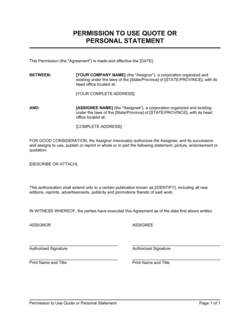
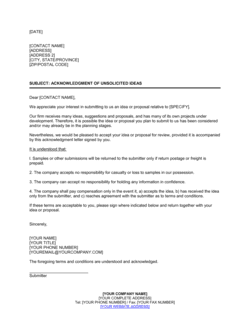
A Permission To Use Unsolicited Testimonial is a legally binding agreement in which a business obtains written authorization from a customer, user, or third party to reproduce, publish, and distribute a testimonial that was submitted without a prior solicitation request. This free Word download covers the rights grant, permitted channels, attribution preferences, and liability terms β€” ready to edit online and export as PDF in minutes.
When you need it
Use it whenever a customer sends you an unsolicited review, social media post, email, or comment you intend to use in marketing materials, advertising, or public-facing content. Obtaining signed permission before publication protects you from endorsement regulation violations and unauthorized-use claims.
What's inside
Identification of both parties, a description of the original testimonial, the scope of rights granted, approved publication channels, attribution and editing permissions, a revocation clause, representations and warranties from the testimonial author, a liability limitation, and governing law.

What is a Permission To Use Unsolicited Testimonial?

A Permission To Use Unsolicited Testimonial is a legally binding agreement in which a business obtains formal written authorization from a customer or third party to reproduce, publish, and distribute a testimonial that was submitted voluntarily β€” without any prior request, survey, or incentive from the business. The document grants the business a defined license to use the testimonial across specified channels, establishes how the author will be credited, limits what edits are permissible, and sets out the conditions under which the author can revoke consent. It also captures the author's warranty that the testimonial is their genuine, original statement β€” a representation that is increasingly required by advertising regulators in the US, UK, Canada, and the EU.

Why You Need This Document

Publishing a customer's words without a signed permission agreement exposes your business to copyright infringement claims β€” the author owns the original statement regardless of how publicly it was posted. Beyond copyright, advertising regulators including the FTC and the UK ASA can take action against businesses that publish testimonials without documented authorization, particularly when those testimonials appear in paid advertising. A missing permission form also leaves you vulnerable if the author later demands removal: without a contractual notice-and-removal procedure, you may have no managed timeline and no evidence of prior consent. This template closes all three gaps β€” establishing your right to publish, capping your liability if the author later disputes use, and creating the paper trail regulators expect. Because the cost of getting it right is 15 minutes and the cost of getting it wrong can be a cease-and-desist or FTC inquiry, a signed permission form should be a non-negotiable step in any testimonial publishing workflow.

Which variant fits your situation?

If your situation is…Use this template
Using a testimonial that was actively solicited by the businessTestimonial Release Agreement
Obtaining permission to use a customer photo alongside a testimonialPhoto and Testimonial Release Form
Publishing a full written case study featuring a named clientCase Study Authorization Agreement
Using a video testimonial recorded by the customer unpromptedVideo Testimonial Release Form
Licensing a customer's social media post for paid advertisingUser-Generated Content License Agreement
Collecting ongoing permission to use future reviews across a platformOngoing Testimonial and Review Authorization
Publishing an endorsement from a public figure or influencerCelebrity Endorsement Agreement

Common mistakes to avoid

❌ Publishing before obtaining signed permission

Why it matters: Using an unsolicited testimonial without authorization can constitute copyright infringement of the author's original statement and expose the business to a cease-and-desist or damages claim.

Fix: Treat every unsolicited testimonial as unpublishable until a signed permission form is on file. Build this step into your marketing approval workflow.

❌ Omitting paid advertising from the permitted channels list

Why it matters: Using a testimonial in paid social or display ads without explicit permission β€” and without proper FTC disclosures β€” can trigger both a breach of contract claim from the author and a regulatory enforcement action.

Fix: List paid advertising explicitly in the channels clause and add the FTC compliance acknowledgment if paid placements are intended.

❌ Using broad editing rights without a 'meaning not materially altered' qualifier

Why it matters: Significantly changing a testimonial's meaning and publishing it under the author's name can expose the business to false advertising claims and reputational damage for both parties.

Fix: Limit editing to grammar, formatting, and length, and include the qualifier that the substantive meaning must be preserved.

❌ No revocation or removal procedure

Why it matters: An author can demand removal under EU GDPR, UK data protection law, or moral rights doctrine in several jurisdictions β€” without a contractual process, the business has no managed timeline and no documentation of compliance.

Fix: Include a 30-day written revocation notice and a corresponding removal window, with a carve-out for materials already in active distribution.

❌ Relying on implied permission from a public social media post

Why it matters: The fact that content is publicly visible on social media does not grant the business a license to reproduce it in marketing materials. The author retains copyright regardless of the post's visibility.

Fix: Always obtain a signed permission agreement, even for posts the author published publicly. A direct message asking for permission is not a substitute for a signed document.

❌ Failing to archive the original testimonial before contacting the author

Why it matters: Authors sometimes delete posts or modify them after granting permission β€” without an archived original, the business cannot prove what was authorized.

Fix: Screenshot and timestamp the original source the moment you identify a testimonial you want to use, before reaching out for authorization.

The 9 key clauses, explained

Parties and testimonial identification

In plain language: Names the business receiving the permission and the individual granting it, and attaches or quotes the exact testimonial content being authorized.

Sample language
This Agreement is entered into between [BUSINESS LEGAL NAME] ('Company') and [TESTIMONIAL AUTHOR FULL NAME] ('Author'). The testimonial subject to this Agreement is the statement set out in Schedule A, originally submitted by Author on [DATE] via [CHANNEL].

Common mistake: Failing to attach or reproduce the exact testimonial text. If the content is described vaguely, the business may end up with permission to use an entirely different version than the author intended.

Grant of rights

In plain language: Specifies exactly what the business is permitted to do with the testimonial β€” reproduce, adapt, publish, distribute β€” and whether those rights are exclusive or non-exclusive.

Sample language
Author hereby grants Company a non-exclusive, royalty-free, worldwide license to reproduce, publish, distribute, and display the Testimonial in whole or in part in connection with the promotion and marketing of Company's products and services.

Common mistake: Using the word 'exclusive' without meaning to. An exclusive grant prevents the author from sharing their own testimonial anywhere, which can create goodwill problems and is rarely what either party intends.

Permitted channels and media

In plain language: Lists the specific platforms, formats, and channels where the testimonial may be used β€” website, email, print, social media, paid advertising β€” to avoid disputes about scope.

Sample language
The license granted herein covers use in the following channels: Company's website, email marketing, social media accounts, printed collateral, paid digital advertising, and trade show materials. Use in any other channel requires separate written consent.

Common mistake: Omitting paid advertising as a channel. Using a testimonial in paid ads triggers additional FTC and ASA disclosure requirements, and an author may object to their name appearing in paid placements they did not expect.

Attribution and editing

In plain language: States how the author will be credited β€” full name, first name and last initial, or anonymous β€” and whether the business may edit the testimonial for length, grammar, or clarity.

Sample language
Company may attribute the Testimonial to Author as: [FULL NAME / FIRST NAME AND LAST INITIAL / ROLE AND COMPANY ONLY / ANONYMOUS]. Company may edit the Testimonial for length, grammar, or formatting provided the meaning is not materially altered.

Common mistake: Granting unlimited editing rights without the 'meaning not materially altered' qualifier. Courts in several jurisdictions treat significant changes as creating a false impression, which can expose the business to consumer protection liability.

Author's representations and warranties

In plain language: The author confirms they wrote the testimonial themselves, that it reflects their genuine opinion, that they have the right to grant permission, and that it does not infringe any third party's rights.

Sample language
Author represents and warrants that: (a) the Testimonial is Author's own original statement; (b) it reflects Author's honest opinion based on genuine experience; (c) Author has full authority to grant the rights herein; and (d) the Testimonial does not infringe any third party's intellectual property rights.

Common mistake: Omitting the 'genuine experience' warranty. The FTC and equivalent regulators require testimonials to reflect real customer experiences β€” without this representation, the business cannot rely on the author if a regulator later challenges the claim.

Revocation and duration

In plain language: Sets the term of the license β€” perpetual or time-limited β€” and describes how the author can withdraw permission for future use, along with any cure period for the business to remove the testimonial.

Sample language
This license is perpetual unless revoked by Author with [30] days' written notice to Company. Upon receipt of a revocation notice, Company shall cease new uses of the Testimonial within [30] days but is not required to remove it from materials already printed or distributed.

Common mistake: No revocation mechanism at all. Without one, authors in some jurisdictions β€” particularly the EU β€” may exercise moral rights or data rights to demand removal at any time and without notice, leaving the business with no managed wind-down period.

Disclosure and FTC / regulatory compliance

In plain language: Confirms that the business will make any required disclosures about the testimonial's source, and that no compensation was provided (or, if it was, that this will be disclosed).

Sample language
Company acknowledges that the Testimonial was submitted without compensation. Company shall make any disclosures required by applicable law or regulatory guidance, including the FTC Guides Concerning the Use of Endorsements and Testimonials in Advertising, when publishing the Testimonial in paid media.

Common mistake: Treating an unsolicited testimonial as automatically exempt from disclosure rules. Even organic testimonials require disclosure in paid advertising if the endorser has a material connection to the brand, such as a loyalty program membership or prior paid relationship.

Limitation of liability

In plain language: Caps the business's maximum liability to the author for any claim arising from the agreement, and excludes consequential damages.

Sample language
In no event shall Company's liability to Author under this Agreement exceed [AMOUNT β€” e.g., $500]. Neither party shall be liable to the other for indirect, consequential, or punitive damages arising from use of the Testimonial.

Common mistake: No liability cap at all. Even for a simple testimonial permission, an uncapped liability clause exposes the business to disproportionate claims if the author later argues the publication caused reputational harm.

Governing law and dispute resolution

In plain language: Specifies which jurisdiction's law governs the agreement and how disputes will be resolved β€” typically small claims, mediation, or arbitration given the low dollar amounts involved.

Sample language
This Agreement is governed by the laws of [STATE / PROVINCE / COUNTRY]. Any dispute arising under this Agreement shall be submitted to binding arbitration in [CITY] under [AAA / JAMS] rules, except that either party may seek injunctive relief in a court of competent jurisdiction.

Common mistake: Choosing a governing law in a different state or country from where the author lives without considering whether local consumer protection laws apply regardless β€” particularly relevant in the EU and California.

How to fill it out

  1. 1

    Identify both parties accurately

    Enter the business's full registered legal name and the testimonial author's full legal name and contact details. Do not use trade names or social media handles as the party identifier.

    πŸ’‘ Ask the author to confirm the exact name they want used for attribution β€” it may differ from their legal name, and both pieces of information belong in the agreement.

  2. 2

    Attach or reproduce the exact testimonial

    Copy the verbatim text of the testimonial into Schedule A or the body of the agreement. Include the date it was submitted and the platform or channel where it appeared.

    πŸ’‘ Screenshot or archive the original source before reaching out for permission β€” social media posts can be deleted, and you need a preserved record of the original.

  3. 3

    Define the scope of the rights grant

    Choose non-exclusive rights (standard for testimonials) and specify whether the license is worldwide or geographically limited. Confirm the royalty-free nature of the grant.

    πŸ’‘ Non-exclusive is almost always the right choice β€” it lets the author continue sharing their own experience while giving you full marketing rights.

  4. 4

    List every intended publication channel

    Check each channel where you plan to use the testimonial β€” website, email, social, print, paid ads β€” and list them explicitly. If paid advertising is included, note the FTC disclosure obligation in the compliance clause.

    πŸ’‘ When in doubt, add 'and other digital and print marketing materials' as a catch-all after the specific list to avoid needing a new agreement if you launch a new channel.

  5. 5

    Set the attribution format and editing scope

    Confirm with the author how they want to be credited and document it in the attribution clause. Limit editing rights to grammar, formatting, and length β€” not substance.

    πŸ’‘ If the author requests anonymity, note that in the attribution clause and confirm you will not publish any metadata or context that could identify them.

  6. 6

    Include the revocation procedure

    Set a 30-day written notice period for revocation and a corresponding 30-day removal window for the business. Carve out materials already printed or in active distribution.

    πŸ’‘ Email is sufficient for revocation notice β€” include both parties' email addresses in the notice provision to avoid disputes about how notice must be delivered.

  7. 7

    Obtain signatures before publication

    Have both parties sign the agreement β€” electronically or in wet ink β€” before the testimonial appears in any public-facing material. Keep a signed copy on file indefinitely.

    πŸ’‘ Use an e-signature tool and timestamp the execution β€” if a regulator ever audits your testimonial practices, a dated signed agreement is your primary evidence of authorization.

Frequently asked questions

What is a permission to use unsolicited testimonial?

A Permission To Use Unsolicited Testimonial is a written agreement in which a business obtains formal authorization from a customer or third party to reproduce and publish a testimonial that was submitted without being requested. It documents the scope of the rights granted, the permitted channels, how the author will be credited, and how permission can be revoked. Without it, using the testimonial may constitute copyright infringement or violate the author's rights.

Do I need permission to use a public social media post as a testimonial?

Yes. The fact that a social media post is publicly visible does not grant anyone else a license to reproduce it in marketing materials. The author retains copyright in the original text. Reproducing it on your website, in an email, or in an ad without a signed permission agreement is copyright infringement, regardless of how positive the post is or how many people can see it.

What is the difference between a solicited and an unsolicited testimonial?

A solicited testimonial is one the business specifically requested β€” through a follow-up email, survey, or incentive campaign. An unsolicited testimonial is one the customer submitted voluntarily, without being asked. Both require written permission before use in marketing materials, but solicited testimonials may also require an FTC disclosure if any incentive was offered in exchange for the review.

Does the FTC regulate how I use customer testimonials?

Yes. The FTC Guides Concerning the Use of Endorsements and Testimonials require that published testimonials reflect the genuine, typical experience of the endorser. If the testimonial reflects an atypical result, a disclosure such as 'results not typical' is generally required. Additionally, any material connection between the business and the endorser β€” including loyalty program membership, discounts, or prior paid work β€” must be disclosed when the testimonial appears in advertising.

Can the testimonial author revoke permission after signing?

Yes, in most jurisdictions the author can revoke permission for future use by providing written notice. A well-drafted permission agreement includes a notice period β€” typically 30 days β€” and a corresponding removal window for the business. However, the business is generally not required to pull testimonials from materials already printed or distributed before the revocation notice was received.

Does a permission to use testimonial need to be signed by both parties?

In most jurisdictions, a binding contract requires offer, acceptance, and consideration from both parties. Having only the author sign creates an ambiguity about whether the business accepted the terms. Best practice is to have an authorized representative of the business co-sign the agreement, confirming its obligations β€” particularly the attribution commitment and the FTC compliance undertaking.

Can I edit a testimonial after I receive permission?

You may edit for grammar, formatting, and length if the permission agreement grants that right β€” but you generally cannot change the substantive meaning without creating a false advertising risk. The permission agreement should explicitly state that edits will not materially alter the testimonial's meaning, and any edited version should still accurately reflect the author's genuine experience.

Is this document relevant for video testimonials?

A standard testimonial permission covers written text. Video testimonials involve additional rights β€” performance rights, image rights, and synchronization if music is present β€” and typically require a separate Video Testimonial Release Form. If a customer sends an unsolicited video review, use the appropriate video release rather than a text-only permission template.

How long should I keep signed testimonial permission forms on file?

Retain signed permission forms for as long as you continue to use the testimonial in any form, plus at least three to five years after the last use. This covers the typical statute of limitations for contract and copyright claims in most jurisdictions. If a regulator requests evidence of authorization during an advertising audit, a dated signed agreement is your primary documentation.

How this compares to alternatives

vs Testimonial Release Agreement

A Testimonial Release Agreement is used when the business actively solicited the testimonial β€” through a review request, survey, or incentive offer. A Permission To Use Unsolicited Testimonial is specifically designed for content the customer submitted voluntarily. The unsolicited form places greater weight on the author's warranty of genuineness and typically does not include compensation provisions.

vs User-Generated Content License Agreement

A UGC License Agreement grants rights to reproduce any user-created content β€” photos, videos, posts β€” not just written testimonials. It is broader in scope and is typically used by brands running UGC campaigns or social media contests. If the unsolicited content is a written review or quote only, the more focused testimonial permission is simpler and easier for authors to sign.

vs Photo and Image Release Form

A Photo Release Form authorizes use of an individual's likeness or image, not their written statement. If a business wants to publish both a customer quote and a photo of the customer, it needs both documents β€” or a combined photo-and-testimonial release that covers both rights in a single agreement.

vs Celebrity Endorsement Agreement

A Celebrity Endorsement Agreement governs a paid, negotiated arrangement with a public figure or influencer, and typically includes exclusivity, compensation, appearance obligations, and morality clauses. A Permission To Use Unsolicited Testimonial covers organic statements from ordinary customers with no compensation involved. Paid influencer relationships should never be governed by a testimonial permission form.

Industry-specific considerations

E-commerce and retail

Product pages frequently feature organic customer reviews; signed permissions are needed before pulling reviews from third-party platforms into owned marketing channels.

SaaS and technology

User tweets, LinkedIn posts, and G2 or Capterra reviews often become social proof on pricing pages and in paid ads, each requiring individual authorization.

Healthcare and wellness

Patient or client testimonials are subject to HIPAA in the US and equivalent regulations elsewhere β€” permission must confirm no protected health information is disclosed.

Professional services

Client praise used in proposals, pitch decks, or websites must be authorized, and confidentiality obligations to the referenced client must be reviewed before any publication.

Education and coaching

Student and participant success stories used in course sales pages require clear attribution permissions and must comply with FTC rules on results disclosures.

Food and beverage

Organic social media posts and Yelp reviews used in advertising require author permission; health or efficacy claims embedded in testimonials carry additional regulatory scrutiny.

Jurisdictional notes

United States

The FTC Guides Concerning the Use of Endorsements and Testimonials (updated 2023) require that testimonials reflect genuine, typical customer experiences. Atypical results require a clear disclosure. Any material connection between the endorser and the brand β€” including loyalty rewards or prior business relationships β€” must be disclosed in paid advertising. State consumer protection laws (notably California's) add additional requirements for health and performance claims.

Canada

Canada's Competition Act prohibits the publication of testimonials that create a misleading impression of a product's performance. PIPEDA and provincial privacy laws (including Quebec's Law 25) require that personal information β€” including a customer's name and likeness β€” be collected and used only with informed consent, making a signed permission agreement essential for any identifying testimonial. Quebec-regulated businesses must ensure documents are available in French.

United Kingdom

The UK Advertising Standards Authority (ASA) and CAP Code require that testimonials be genuine and held by the person making them. The Consumer Rights Act 2015 and Consumer Protection from Unfair Trading Regulations 2008 prohibit misleading endorsements. UK authors retain moral rights in their written statements under the Copyright, Designs and Patents Act 1988, giving them the right to be identified as the author and to object to derogatory treatment.

European Union

The EU Unfair Commercial Practices Directive prohibits presenting paid testimonials as genuine consumer opinions. GDPR requires a lawful basis for processing personal data β€” including a customer's name and review content β€” and authors in EU member states have data subject rights including the right to erasure, making a revocation clause in the agreement practically essential. The EU Digital Services Act adds transparency requirements for online platforms republishing user-generated endorsements.

Template vs lawyer β€” what fits your deal?

PathBest forCostTime
Use the templateBusinesses publishing standard written customer testimonials on owned channels β€” website, email, organic socialFree10–15 minutes per permission
Template + legal reviewTestimonials used in paid advertising, healthcare or regulated industries, or where the author is a public figure$150–$400 for a lawyer review1–2 days
Custom draftedEnterprise brands managing hundreds of testimonials, influencer-adjacent situations, or cross-border campaigns with complex regulatory exposure$500–$2,000+3–7 days

Glossary

Unsolicited Testimonial
A testimonial, review, or endorsement voluntarily submitted by a third party without being requested or incentivized by the receiving business.
Rights Grant
The specific permission given by the testimonial author allowing the business to use, reproduce, and distribute the testimonial content.
Attribution
How the testimonial author's identity is credited alongside the published testimonial β€” full name, first name only, initials, or anonymous.
Revocation Clause
A provision allowing the testimonial author to withdraw permission for future use of the testimonial after giving written notice, typically within a defined period.
Endorsement
Any message that consumers are likely to believe reflects the opinions or experiences of an individual, as defined by the FTC Guides Concerning the Use of Endorsements and Testimonials.
Material Connection
A relationship between an endorser and a brand β€” financial, familial, or employment β€” that must be disclosed to consumers under FTC guidelines.
Moral Rights
An author's right to be credited for their work and to object to modifications that harm their reputation β€” recognized in the EU, Canada, and the UK but limited in the US.
Warranty of Originality
The testimonial author's representation that the testimonial is their own original statement and does not infringe any third party's rights.
Indemnification
A clause requiring one party to compensate the other for losses arising from a breach of the agreement β€” here, typically the author indemnifying the business if the testimonial contains false claims.
Perpetual License
A rights grant with no expiration date, allowing the licensee to continue using the content indefinitely unless the agreement is revoked or terminated.

Part of your Business Operating System

This document is one of 3,000+ business & legal templates included in Business in a Box.

  • Fill-in-the-blanks β€” ready in minutes
  • 100% customizable Word document
  • Compatible with all office suites
  • Export to PDF and share electronically

Create your document in 3 simple steps.

From template to signed document β€” all inside one Business Operating System.
1
Download or open template

Access over 3,000+ business and legal templates for any business task, project or initiative.

2
Edit and fill in the blanks with AI

Customize your ready-made business document template and save it in the cloud.

3
Save, Share, Send, Sign

Share your files and folders with your team. Create a space of seamless collaboration.

Save time, save money, and create top-quality documents.

β˜…β˜…β˜…β˜…β˜…

"Fantastic value! I'm not sure how I'd do without it. It's worth its weight in gold and paid back for itself many times."

Managing Director Β· Mall Farm
Robert Whalley
Managing Director, Mall Farm Proprietary Limited
β˜…β˜…β˜…β˜…β˜…

"I have been using Business in a Box for years. It has been the most useful source of templates I have encountered. I recommend it to anyone."

Business Owner Β· 4+ years
Dr Michael John Freestone
Business Owner
β˜…β˜…β˜…β˜…β˜…

"It has been a life saver so many times I have lost count. Business in a Box has saved me so much time and as you know, time is money."

Owner Β· Upstate Web
David G. Moore Jr.
Owner, Upstate Web

Run your business with a system β€” not scattered tools

Stop downloading documents. Start operating with clarity. Business in a Box gives you the Business Operating System used by over 250,000 companies worldwide to structure, run, and grow their business.

Start freeΒ Β·Β No credit card required