7 Business Risk Management Tips For The Entrepreneur

Free to read β€’ Save or share with one click

Free7 Business Risk Management Tips For The Entrepreneur Template

At a glance

What it is
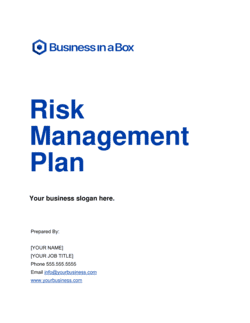
This document is a structured, entrepreneur-focused guide that walks business owners through seven proven risk management practices β€” from identifying operational and financial exposures to building contingency plans and monitoring risk on an ongoing basis. It is a free Word download you can edit online and adapt to your specific business context, then share with partners, advisors, or your leadership team.
When you need it
Use it when launching a new venture, scaling into a new market, applying for financing, or after any significant operational disruption that revealed gaps in your risk preparedness. It is also a practical tool for annual strategic reviews.
What's inside
Seven actionable risk management tips covering risk identification, probability and impact assessment, mitigation strategy selection, insurance coverage review, contingency planning, cash-flow stress testing, and ongoing risk monitoring β€” each presented with explanatory context, practical guidance, and implementation checklists.

What is a Business Risk Management Guide for Entrepreneurs?

A Business Risk Management Guide for Entrepreneurs is a structured operational document that walks business owners through the core practices of identifying, assessing, and mitigating the risks most likely to threaten their company's survival or growth. Unlike enterprise risk frameworks designed for large organizations with dedicated compliance teams, this guide is calibrated for the entrepreneur who manages risk alongside every other function β€” presenting seven concrete, actionable tips covering risk identification, probability and impact scoring, mitigation strategy selection, insurance auditing, contingency planning, cash-flow stress testing, and ongoing monitoring. This free Word download gives you a ready-made framework you can complete in a single working session and adapt as your business evolves.

Why You Need This Document

Most small businesses fail not because their product was wrong or their market was too small, but because an entirely foreseeable risk β€” a single customer departure, a cash flow gap, a key-person illness, a supplier failure β€” arrived without a plan to absorb it. Without a written risk management process, these events force reactive decisions under pressure, when options are fewest and costs are highest. A structured guide forces you to surface exposures while the business is stable, assign ownership before a crisis demands it, and build the financial buffers and contingency plans that convert potential crises into manageable setbacks. This template gives entrepreneurs the same disciplined risk thinking that investors and lenders expect β€” without the complexity or cost of a full enterprise risk framework.

Which variant fits your situation?

If your situation is…Use this template
Conducting a full formal risk assessment for a new ventureRisk Management Plan
Evaluating a specific project's risk exposure before kickoffProject Risk Assessment
Documenting business continuity procedures after a disruptionBusiness Continuity Plan
Stress-testing financial resilience for a lender or investorFinancial Risk Analysis
Identifying supply chain vulnerabilities for a product-based businessSupply Chain Risk Assessment
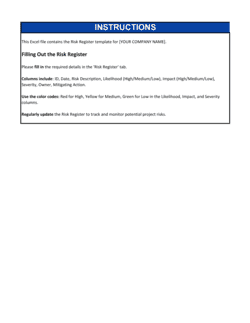
Creating a risk register to track and assign ownership of known risksRisk Register
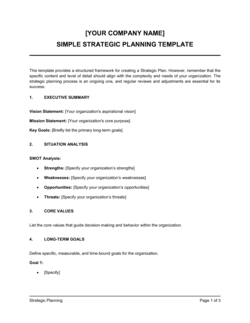
Preparing an annual strategic review that includes risk horizon scanningStrategic Planning Template

Common mistakes to avoid

❌ Treating the document as a one-time exercise

Why it matters: A risk management document completed at launch and never updated reflects a business that no longer exists within 12–18 months. New hires, new products, and new markets create new exposures.

Fix: Schedule a named owner and a specific calendar date for quarterly updates and an annual full review before the document is filed.

❌ Scoring all risks as high-impact

Why it matters: When every risk is labeled critical, none gets prioritized. The mitigation budget and management attention get spread so thin that the genuinely existential risks receive the same response as minor inconveniences.

Fix: Apply the probability-impact matrix honestly and accept that most risks will score in the medium or low range β€” that is the expected outcome of a well-calibrated assessment.

❌ Assigning all contingency plan actions to the founder

Why it matters: During the exact moments when a risk event materializes, the founder is most stretched. A plan that requires founder-only execution collapses when it is most needed.

Fix: Assign at least one response step to a non-founder team member for every contingency plan, and confirm they have the access and authority to execute it.

❌ Skipping the cash-flow stress test because the business feels stable

Why it matters: Businesses that feel financially stable are often one large customer departure or one 90-day payment delay away from a cash crisis. Stability is not the same as resilience.

Fix: Complete the 70%-revenue downside scenario even if you expect never to need it β€” the act of modeling it surfaces expense cuts and credit options you can prepare in advance.

❌ Confusing risk identification with risk mitigation

Why it matters: Many entrepreneurs complete a thorough risk list and consider the job done. A list without mitigation strategies, owners, and deadlines is a catalog of problems, not a management system.

Fix: For every risk that scores above a defined threshold, the document must contain a mitigation strategy, an assigned owner, and a completion date before it is considered complete.

❌ Ignoring insurance gaps during the annual review

Why it matters: A business that has doubled revenue, added employees, or moved into a new product category since the last insurance review is almost certainly underinsured β€” the original policy limits were set for a smaller, simpler operation.

Fix: Add an insurance audit to the annual risk review as a mandatory step, not an optional one, with a scheduled broker conversation to validate coverage against the current business profile.

The 8 key sections, explained

Tip 1 β€” Identify your risks systematically

Tip 2 β€” Assess probability and impact

Tip 3 β€” Choose the right mitigation strategy for each risk

Tip 4 β€” Review your insurance coverage annually

Tip 5 β€” Build contingency plans for your top five risks

Tip 6 β€” Stress-test your cash flow

Tip 7 β€” Monitor risks on a scheduled cadence

Implementation checklist

How to fill it out

  1. 1

    Gather your business context before opening the template

    Collect your latest financial statements, org chart, key supplier contracts, and insurance policy summaries. Having these at hand lets you complete the risk identification and insurance sections accurately rather than from memory.

    πŸ’‘ Block two to three uninterrupted hours for the initial completion β€” half-finished risk documents provide false comfort without real protection.

  2. 2

    Complete Tip 1 by category, not by brainstorm

    Work through each of the six risk categories (operational, financial, strategic, legal, reputational, technology) in sequence. Set a five-minute timer per category to force specificity and prevent the exercise from stalling.

    πŸ’‘ Involve at least one other person β€” a business partner, senior employee, or advisor β€” in the identification session. Blind spots are common when founders assess their own risks alone.

  3. 3

    Score every identified risk on the probability-impact matrix

    Rate each risk 1–5 for both probability and impact. Multiply the two scores to get a priority number. Sort your list from highest to lowest before moving to Tip 3.

    πŸ’‘ If you have more than 20 risks after scoring, focus mitigation planning on the top 10 β€” the rest go into a monitoring list.

  4. 4

    Select and document a mitigation strategy for each top-10 risk

    For each high-priority risk, choose one of the four strategies (avoid, reduce, transfer, accept) and write a specific action, assign an owner, and set a deadline. Vague strategies like 'improve processes' are not acceptable β€” name the process and the change.

    πŸ’‘ If 'transfer' is the right strategy, schedule the insurance audit in the same session β€” don't leave it as a separate to-do that never gets done.

  5. 5

    Audit your insurance policies against the risk list

    Lay your completed risk list next to your current insurance certificates. For each high-impact risk, confirm whether it is covered, the coverage limit, and whether the limit is adequate given your current revenue and asset base.

    πŸ’‘ Ask your broker specifically about cyber liability and professional indemnity β€” these are the two most commonly underinsured areas for small businesses.

  6. 6

    Write a one-page contingency plan for your five highest-scoring risks

    For each of the top five risks, document the trigger condition, the first three response actions, the owner of each action, and who gets notified. Keep each plan to one page β€” longer plans do not get read under pressure.

    πŸ’‘ Store the contingency plans somewhere every key team member can access without relying on the founder β€” a shared drive folder, not the founder's laptop.

  7. 7

    Build the cash-flow stress-test model

    Using your current monthly P&L, model the base case, 70%-revenue downside, and zero-revenue-for-30-days scenario. Calculate cash runway in each and identify the minimum monthly expense reduction needed to extend runway by 60 days.

    πŸ’‘ If your severe-disruption runway is under 45 days, prioritize building a cash reserve or securing a credit line before any other risk action.

  8. 8

    Set your monitoring calendar and assign owners

    Enter specific dates for monthly KRI reviews, quarterly risk register updates, and the annual full reassessment into your calendar before closing the document. Assign a named person β€” not a role β€” to each review.

    πŸ’‘ Add a recurring 30-minute monthly risk review to your team meeting agenda so it becomes routine rather than an annual scramble.

Frequently asked questions

What is business risk management for entrepreneurs?

Business risk management is the practice of identifying, assessing, and responding to events that could harm a company's ability to operate or achieve its goals. For entrepreneurs specifically, it means working through financial, operational, strategic, and reputational exposures without a dedicated risk team β€” using structured frameworks to make decisions under uncertainty. This template gives you those frameworks in a practical, seven-step format.

What are the most common risks for small business owners?

The most common risks for small businesses are cash flow shortfalls from late-paying customers, key-person dependency where the business halts if the founder is unavailable, customer concentration where a single client represents more than 20% of revenue, cybersecurity breaches, and supply-chain disruptions. Regulatory changes and unexpected liability claims round out the top risks for most sectors.

What is the difference between risk management and a business continuity plan?

Risk management is the ongoing practice of identifying, assessing, and mitigating exposures before they become crises. A business continuity plan is the specific operational playbook for keeping core functions running during and after a disruption β€” it is one output of a risk management process, not a substitute for it. You need both: risk management prevents and reduces events; a continuity plan governs the response when events occur anyway.

How often should an entrepreneur review their risk management plan?

Monthly KRI tracking, quarterly risk register updates, and an annual full reassessment is the standard cadence. After any significant business change β€” a new hire in a key role, a new product launch, a major contract win or loss, or a market disruption β€” the relevant sections should be reviewed immediately rather than waiting for the next scheduled review.

Do I need risk management software, or is a Word template sufficient?

For most small businesses and early-stage startups, a well-structured Word or spreadsheet document is sufficient. Dedicated risk management software becomes worthwhile when you have more than 50 employees, operate across multiple locations or jurisdictions, or are subject to regulatory reporting requirements. Until then, the cost of software rarely justifies the benefit over a consistently maintained template.

What is a probability-impact matrix and how do I use it?

A probability-impact matrix is a grid that scores each identified risk on two dimensions: how likely it is to occur (1 = rare, 5 = almost certain) and how severe the consequences would be if it did (1 = negligible, 5 = existential). Multiplying the two scores gives a priority number from 1 to 25. Risks scoring 15 or above require immediate mitigation plans; risks scoring 6–14 need documented contingencies; risks scoring below 6 are logged and monitored.

What are the four risk mitigation strategies?

The four standard strategies are: avoid (eliminate the activity that creates the risk), reduce (implement controls that lower probability or impact), transfer (shift the financial consequence to a third party through insurance or contract), and accept (consciously carry the risk because the cost of mitigation exceeds the expected loss). Every identified risk should be assigned one of these strategies with a named owner and a deadline.

How does cash flow stress testing relate to risk management?

Cash flow stress testing is the financial component of risk management. It models how long the business can survive under adverse revenue or expense scenarios, identifying the cash runway in a 70%-of-plan downside and a severe disruption scenario. The output tells you whether you need a credit facility, a cash reserve, or expense cuts before a crisis β€” not during one, when options are limited and terms are worse.

Is this template suitable for a startup with no dedicated risk function?

Yes β€” this template is specifically designed for entrepreneurs and small business owners who manage risk alongside every other function. Each tip is self-contained and actionable without specialized training. The document is proportionate in scope: it covers the exposures that matter most to early-stage and growth-stage businesses without the complexity of enterprise risk frameworks that require a full-time team to maintain.

How this compares to alternatives

vs Risk Management Plan

A risk management plan is a formal, comprehensive policy document covering governance, methodology, roles, and a complete risk register β€” typically 15–25 pages. This tips guide is a practical, entrepreneur-focused action document that teaches the core practices and prompts immediate implementation. Use the tips guide to build risk literacy; use the plan when a stakeholder, lender, or board requires a formal risk governance document.

vs Business Continuity Plan

A business continuity plan focuses specifically on maintaining operations during and after a disruption event. This risk management guide addresses the broader upstream work β€” identifying, assessing, and mitigating risks before they become disruptions. The two documents complement each other: risk management reduces the frequency of crises; a continuity plan governs the response when they occur.

vs Risk Register

A risk register is a structured log β€” typically a spreadsheet β€” that tracks identified risks, scores, owners, and mitigation status on an ongoing basis. This tips guide is the educational and strategic layer that tells you how to populate and use a risk register effectively. Most entrepreneurs need both: the guide to understand the methodology, and the register to operationalize it.

vs Strategic Planning Template

A strategic plan defines goals, initiatives, and resource allocation over a 3–5 year horizon. Risk management is a critical input to strategic planning β€” it identifies the threats most likely to derail the strategy β€” but the two documents serve different functions. A strategic plan is forward-looking and aspirational; a risk management guide is protective and scenario-focused. Both are standard annual planning outputs for growth-stage businesses.

Industry-specific considerations

Technology / SaaS

Cybersecurity breaches, vendor lock-in for cloud infrastructure, and customer churn concentration risk require dedicated risk sections beyond standard operational frameworks.

Retail / E-commerce

Inventory overstock, single-supplier dependency, payment fraud, and platform policy changes (e.g., Amazon or Shopify terms) are the highest-frequency risks to address.

Professional Services

Key-person dependency, professional liability claims, and client concentration risk β€” where one client exceeds 25% of revenue β€” dominate the risk register for service firms.

Construction and Trades

Project cost overruns, subcontractor non-performance, worksite liability, and materials price volatility require scenario-specific contingency plans with financial buffers built in.

Template vs pro β€” what fits your needs?

PathBest forCostTime
Use the templateFounders and small business owners building their first risk management process without a dedicated risk functionFree3–5 hours for initial completion
Template + professional reviewBusinesses raising capital, applying for loans, or operating in regulated sectors where a risk advisor review adds credibility$300–$800 for a business advisor or risk consultant session1–2 weeks
Custom draftedMid-market businesses, regulated industries (healthcare, fintech, construction), or companies with board-level risk governance requirements$2,000–$8,000 for a professional risk management consultant engagement3–6 weeks

Glossary

Risk Identification
The process of systematically listing every internal and external event that could negatively affect the business's objectives or operations.
Risk Register
A living document that records each identified risk, its likelihood, potential impact, assigned owner, and the mitigation action in place.
Probability-Impact Matrix
A grid that plots risks by their likelihood of occurring against the severity of their consequences, used to prioritize which risks demand immediate action.
Risk Mitigation
Actions taken to reduce either the probability that a risk occurs or the magnitude of damage if it does β€” such as adding a backup supplier or requiring two-factor authentication.
Risk Transfer
Shifting the financial consequences of a risk to a third party, most commonly through insurance policies or contractual indemnification clauses.
Contingency Plan
A pre-documented set of actions a business will execute if a specific risk event materializes, designed to minimize response time and decision paralysis.
Cash Flow Stress Test
A financial exercise that models business performance under adverse scenarios β€” such as a 30% revenue drop or a 60-day payment delay β€” to identify the point at which cash runs out.
Risk Appetite
The level of risk a business owner is deliberately willing to accept in pursuit of growth objectives, used as a benchmark when evaluating new opportunities.
Residual Risk
The exposure that remains after mitigation controls have been applied β€” the risk a business consciously carries after doing everything practical to reduce it.
Key Risk Indicator (KRI)
A metric tracked on a regular schedule to provide early warning that a specific risk is increasing, such as customer concentration percentage or days sales outstanding.

Part of your Business Operating System

This document is one of 3,000+ business & legal templates included in Business in a Box.

  • Fill-in-the-blanks β€” ready in minutes
  • Compatible with all office suites
  • Export to PDF and share electronically

Create your document in 3 simple steps.

From template to signed document β€” all inside one Business Operating System.
1
Download or open template

Access over 3,000+ business and legal templates for any business task, project or initiative.

2
Edit and fill in the blanks with AI

Customize your ready-made business document template and save it in the cloud.

3
Save, Share, Send, Sign

Share your files and folders with your team. Create a space of seamless collaboration.

Save time, save money, and create top-quality documents.

β˜…β˜…β˜…β˜…β˜…

"Fantastic value! I'm not sure how I'd do without it. It's worth its weight in gold and paid back for itself many times."

Managing Director Β· Mall Farm
Robert Whalley
Managing Director, Mall Farm Proprietary Limited
β˜…β˜…β˜…β˜…β˜…

"I have been using Business in a Box for years. It has been the most useful source of templates I have encountered. I recommend it to anyone."

Business Owner Β· 4+ years
Dr Michael John Freestone
Business Owner
β˜…β˜…β˜…β˜…β˜…

"It has been a life saver so many times I have lost count. Business in a Box has saved me so much time and as you know, time is money."

Owner Β· Upstate Web
David G. Moore Jr.
Owner, Upstate Web

Run your business with a system β€” not scattered tools

Stop downloading documents. Start operating with clarity. Business in a Box gives you the Business Operating System used by over 250,000 companies worldwide to structure, run, and grow their business.

Free Forever PlanΒ Β·Β No credit card required