How To Create An Employee Retention Program To Keep Your Best Employees

Free Word download β€’ Edit online β€’ Save & share with Drive β€’ Export to PDF

3 pagesβ€’20–30 min to fillβ€’Difficulty: Standard
Learn more ↓
FreeHow To Create An Employee Retention Program To Keep Your Best Employees Template

At a glance

What it is
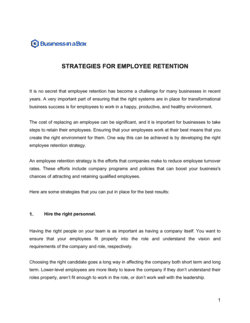
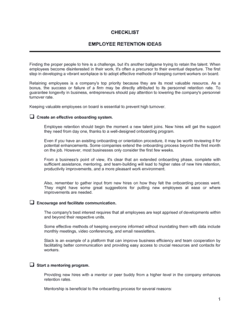
An Employee Retention Program is a structured operational plan that defines the initiatives, incentives, and processes a company uses to reduce voluntary turnover and keep high-performing employees engaged over the long term. This free Word download gives you a ready-to-edit framework covering everything from compensation benchmarking to career development pathways, which you can customize and export as PDF for HR and leadership use.
When you need it
Use it when voluntary turnover exceeds your industry benchmark, when a key employee or team has recently resigned, or when you are scaling headcount and need a proactive strategy to protect your investment in talent. It is also useful during annual HR planning cycles to formalize retention goals alongside hiring targets.
What's inside
The program covers a retention diagnostic, compensation and benefits review, career development pathways, recognition and engagement initiatives, manager effectiveness guidelines, and a measurement framework with key retention KPIs. Each section includes guidance, sample language, and editable action plans.

What is an Employee Retention Program?

An Employee Retention Program is a structured operational plan that defines the specific initiatives, policies, and processes a company uses to reduce voluntary turnover and keep high-performing employees engaged over the long term. It combines a data-driven diagnostic of current turnover with actionable frameworks covering compensation benchmarking, career development pathways, recognition systems, manager training, and a measurement cadence β€” giving HR leaders and business owners a single document that coordinates every major lever affecting whether employees stay or leave. Unlike reactive counter-offers or one-off perks, a formal retention program addresses the structural reasons employees depart before they have decided to go.

Why You Need This Document

Every voluntary departure costs between 50% and 200% of that employee's annual salary in recruiting, onboarding, and productivity loss β€” and the institutional knowledge that walks out the door is rarely captured in a job description. Without a written retention program, turnover interventions are ad hoc, inconsistent across managers, and impossible to measure or improve. Leadership cannot allocate budget to retention without evidence it is working, and managers without clear guidance default to doing nothing until a resignation letter arrives. This template gives you the baseline data structure, goal-setting framework, and initiative library to build a retention program in days rather than months β€” and a measurement system that lets you demonstrate its financial return to stakeholders.

Which variant fits your situation?

If your situation is…Use this template
High turnover in a single department or teamEmployee Retention Program (Departmental)
Retaining employees through a merger or acquisitionChange Management Plan
Designing a formal career growth and promotion frameworkCareer Development Plan
Addressing disengagement identified through a surveyEmployee Engagement Survey
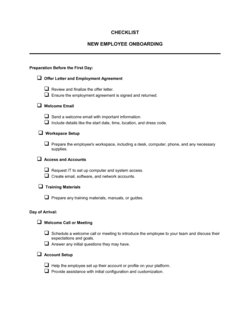
Creating a structured onboarding experience for new hiresEmployee Onboarding Plan
Documenting compensation bands and pay equityCompensation and Benefits Plan
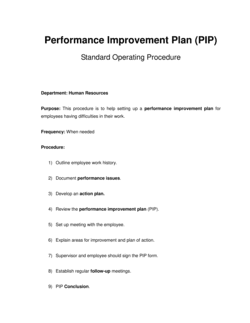
Setting up a formal performance review process to support retentionPerformance Improvement Plan

Common mistakes to avoid

❌ Launching initiatives without baseline data

Why it matters: Without a measured starting point, you cannot determine which initiatives are working or justify continued investment to leadership. Programs without data get cut first when budgets tighten.

Fix: Run the retention diagnostic before writing a single initiative. Even a rough voluntary turnover rate and three exit themes give you enough to prioritize.

❌ Treating retention as an HR-only function

Why it matters: Research consistently shows direct managers account for the majority of factors employees cite when leaving. An HR-only program cannot address manager behavior, workload, or team culture.

Fix: Assign retention KPIs to department managers and include manager effectiveness as a formal section of the program with training, accountability, and measurement.

❌ Building the program once and never updating it

Why it matters: Compensation benchmarks, employee expectations, and labor market conditions shift every 12–18 months. A static program loses relevance and signals to employees that the company is not paying attention.

Fix: Schedule a formal annual review of the program with a named owner, and trigger an off-cycle review whenever voluntary turnover spikes more than 3 percentage points in a single quarter.

❌ Relying solely on financial incentives

Why it matters: Pay is a threshold factor β€” employees leave when pay is below market, but above-market pay does not prevent departures driven by poor management, lack of growth, or toxic culture.

Fix: Address career development, manager quality, and workplace culture as explicitly as compensation β€” retention programs that skip these sections address less than half the problem.

❌ Ignoring flight risk signals until resignation

Why it matters: Employees who are disengaged typically signal their intent 3–6 months before resigning through reduced output, increased absenteeism, or withdrawal from team activities. Waiting for the resignation letter forfeits the intervention window.

Fix: Define specific, observable flight risk signals in the program and train managers to escalate them to HR within a defined timeframe.

❌ Announcing culture initiatives without follow-through

Why it matters: Launching an engagement survey and not sharing results, or introducing a flexibility policy that managers informally override, actively damages trust and accelerates departures among the employees you most want to keep.

Fix: Only commit to initiatives the organization is prepared to sustain. Share survey results within 30 days of collection and publish the action items the company will take in response.

The 9 key sections, explained

Retention Diagnostic and Baseline Data

Retention Goals and KPIs

Compensation and Benefits Review

Career Development and Growth Pathways

Recognition and Rewards Framework

Manager Effectiveness and Training

Engagement and Workplace Culture Initiatives

Flight Risk Identification and Intervention

Measurement, Reporting, and Program Review

How to fill it out

  1. 1

    Run the retention diagnostic

    Pull 12 months of turnover data by department, tenure band, and role level. Gather exit interview themes and any available engagement survey scores. These numbers define your starting point and determine which sections of the program to prioritize.

    πŸ’‘ If you do not have formal exit interview data, conduct brief retrospective conversations with managers of recently departed employees β€” even anecdotal themes are more useful than assumptions.

  2. 2

    Set specific, time-bound retention goals

    Translate the diagnostic into two to four measurable targets β€” a turnover rate reduction, an engagement score increase, or an average tenure improvement β€” each with a named owner and a deadline.

    πŸ’‘ Benchmark your target against your industry's published turnover rate (available from SHRM and BLS data) rather than setting an arbitrary internal goal.

  3. 3

    Complete the compensation benchmarking section

    Use at least one external salary survey (e.g., Radford, Mercer, or Levels.fyi for tech roles) to compare your current pay ranges to market P50 and P75. Document gaps by role and propose adjustments with budget estimates.

    πŸ’‘ Prioritize roles where turnover is highest or where replacement costs are greatest β€” not every gap needs to be closed at once.

  4. 4

    Define career pathways for key roles

    Write out promotion criteria for your highest-risk roles using objective, observable standards β€” not manager discretion alone. Include lateral move options and the L&D budget employees can use to develop toward the next level.

    πŸ’‘ Share the criteria with employees directly during stay interviews or team meetings β€” visibility is as important as the criteria themselves.

  5. 5

    Build the recognition and manager sections together

    Design the recognition framework and manager training requirements in parallel, since both require manager participation to work. Set a budget for spot bonuses and a minimum stay interview cadence managers must complete.

    πŸ’‘ Tie manager retention accountability to their own performance review β€” behavior that is not measured is not reliably repeated.

  6. 6

    Document flight risk signals and intervention protocols

    Work with department heads to agree on the behavioral and performance signals that indicate an employee may be at risk of leaving. Write a clear escalation path so managers know exactly what to do and when.

    πŸ’‘ Include a confidentiality guideline β€” managers need to know how sensitively HR will handle the information they share about at-risk employees.

  7. 7

    Set up the measurement dashboard and review cadence

    Decide where retention KPIs will be tracked, who has access, and when reports go to leadership. Schedule the first annual program review in your calendar before the program launches.

    πŸ’‘ A simple monthly scorecard β€” voluntary turnover %, average tenure, and open flight risk count β€” is more likely to be reviewed consistently than a comprehensive 20-metric dashboard.

  8. 8

    Present the program to leadership for sign-off

    Summarize the diagnostic findings, goals, key initiatives, and budget requirements in a one-page executive summary. Secure explicit leadership commitment before rolling out to managers and employees.

    πŸ’‘ Frame the budget ask in terms of avoided turnover costs β€” if replacing one mid-level employee costs $40,000–$80,000, a $20,000 retention program pays for itself after one prevented departure.

Frequently asked questions

What is an employee retention program?

An employee retention program is a structured set of initiatives, policies, and processes designed to reduce voluntary turnover and keep high-performing employees engaged over the long term. It typically covers compensation benchmarking, career development pathways, recognition frameworks, manager training, and a measurement system to track whether the program is working. Unlike a single perk or benefit, a retention program addresses multiple drivers of departure in a coordinated way.

Why do employees leave and what does a retention program address?

The most commonly cited reasons for voluntary departure are below-market pay, lack of career advancement, a poor relationship with a direct manager, insufficient recognition, and a mismatch between stated and lived company culture. A well-designed retention program addresses each of these systematically β€” rather than reacting to individual resignations with counter-offers that rarely work long-term.

How much does employee turnover cost?

Industry estimates place the cost of replacing an employee at 50–200% of their annual salary, depending on role seniority and specialization. For a mid-level employee earning $70,000, that translates to $35,000– $140,000 in recruiting, onboarding, and productivity loss costs per departure. A retention program that prevents even two or three departures per year typically generates a positive return on its investment.

What is a stay interview and how does it differ from an exit interview?

A stay interview is a structured conversation between a manager and a current employee β€” conducted while the employee is still engaged β€” to identify what keeps them at the company and what risks might push them to leave. An exit interview happens after resignation and captures reasons for departure. Stay interviews are proactive; exit interviews are retrospective. Retention programs use both, but stay interviews have significantly more impact because they allow intervention before a decision is made.

How do you measure the success of an employee retention program?

The primary metrics are voluntary turnover rate (compared to baseline and industry benchmark), employee retention rate, average tenure, and engagement survey scores. Supporting metrics include time-to-fill for vacancies, internal promotion rate, and manager effectiveness scores. These should be tracked on a monthly or quarterly retention dashboard and reviewed by leadership at least annually.

How often should an employee retention program be updated?

A full program review should happen annually, aligned to the fiscal year planning cycle. Compensation benchmarks should be refreshed every 12 months since market rates shift. Trigger an off-cycle review if voluntary turnover spikes more than 3 percentage points in a single quarter or following a significant organizational change such as a merger, leadership transition, or major restructuring.

Can a small business without a dedicated HR team use this program?

Yes. The template is designed to be usable by an owner-operator or department manager without HR expertise. Smaller organizations can complete a simplified version covering compensation benchmarking, career pathways, and a recognition framework in a single afternoon. The diagnostic and KPI sections scale down easily β€” a company of 15 people can track turnover in a spreadsheet rather than an HR information system.

What is a realistic voluntary turnover rate to target?

Benchmarks vary by industry. The overall US voluntary turnover rate runs approximately 20–25% annually across all sectors according to SHRM data. High-turnover industries like retail and hospitality average 40–60%; technology companies typically target 10–15%. A reasonable first-year goal for a retention program is to reduce your current rate by 3–5 percentage points, then reassess against your industry benchmark.

How this compares to alternatives

vs Employee Engagement Survey

An engagement survey is a diagnostic tool that measures how connected and motivated employees feel at a point in time. An employee retention program uses survey results as one input among several β€” along with turnover data and exit themes β€” to design and prioritize specific interventions. The survey identifies the problem; the program structures the response.

vs Career Development Plan

A career development plan is an individual document created for a single employee, mapping their skills, goals, and growth path in conversation with their manager. An employee retention program operates at the organizational level, defining the career pathway structures and L&D investments available to all employees. Individual plans implement the framework the program establishes.

vs Performance Improvement Plan

A performance improvement plan (PIP) is a structured intervention for an underperforming employee, setting specific expectations and consequences. A retention program targets high-performing employees and focuses on preventing voluntary departures β€” not correcting poor performance. The two documents serve opposite ends of the talent management spectrum.

vs Employee Onboarding Plan

An onboarding plan covers the first 30–90 days of an employee's tenure, setting them up for productivity and early engagement. Research shows the onboarding experience significantly influences 6- and 12-month retention rates, making a strong onboarding plan one of the most cost-effective retention investments. The retention program governs the full employee lifecycle; the onboarding plan covers the critical starting phase.

Industry-specific considerations

Technology / SaaS

Equity refresh schedules, remote-work flexibility, and L&D budgets are the top retention levers; compensation benchmarking against Levels.fyi and Radford data is essential in competitive talent markets.

Healthcare

High burnout risk and mandatory staffing ratios make retention critical to patient outcomes; programs emphasize scheduling flexibility, mental health support, and clinical career ladders.

Retail / Hospitality

Sector baseline turnover of 40–60% makes even modest reductions highly valuable; shift flexibility, manager quality, and expedited promotion paths to supervisory roles drive the largest impact.

Professional Services

Career progression transparency, utilization rate management to prevent burnout, and structured mentorship from senior staff are the primary retention drivers in consulting and accounting firms.

Manufacturing

Skills-gap training, safety culture, and shift-schedule stability are stronger retention predictors than compensation alone in production environments with limited remote-work options.

Financial Services

Bonus structure clarity, internal mobility between business units, and manager quality account for most voluntary departures; regulatory licensing investment also increases switching costs and supports retention.

Template vs pro β€” what fits your needs?

PathBest forCostTime
Use the templateHR managers, small business owners, and department heads designing or formalizing a retention program without external supportFree1–2 weeks to complete with internal data
Template + professional reviewCompanies with turnover above 30% or undergoing significant organizational change who want an HR consultant to validate the diagnostic and initiative selection$500–$2,500 for a consultant review session2–4 weeks
Custom draftedEnterprises with 500+ employees, multi-location operations, or complex compensation structures requiring a full HR strategy engagement$5,000–$25,000+ for a full HR consulting engagement6–12 weeks

Glossary

Voluntary Turnover Rate
The percentage of employees who choose to leave the organization in a given period, excluding layoffs and involuntary separations.
Retention Rate
The percentage of employees who remain at the company over a defined period, calculated as (employees at end of period Γ· employees at start) Γ— 100.
Cost of Turnover
The total direct and indirect cost of replacing an employee, typically estimated at 50–200% of the departing employee's annual salary.
Stay Interview
A structured conversation between a manager and a current employee designed to identify what keeps them engaged and what risks might cause them to leave.
Exit Interview
A structured conversation or survey conducted when an employee resigns to understand the reasons for their departure.
Employee Engagement
The degree to which employees are emotionally invested in their work, committed to the organization's goals, and motivated to contribute beyond minimum requirements.
Total Compensation
The complete value of an employee's pay package, including base salary, bonuses, equity, benefits, and non-cash perks.
Flight Risk
An employee identified β€” through survey data, behavioral signals, or manager observation β€” as likely to resign within a near-term window.
Talent Pipeline
A pool of internal employees identified and developed to fill future roles, reducing dependence on external hiring.
Psychological Safety
A team climate in which employees feel safe to speak up, take risks, and make mistakes without fear of punishment or ridicule.
Succession Planning
The process of identifying and preparing internal candidates to fill key roles when they become vacant.

Part of your Business Operating System

This document is one of 3,000+ business & legal templates included in Business in a Box.

  • Fill-in-the-blanks β€” ready in minutes
  • 100% customizable Word document
  • Compatible with all office suites
  • Export to PDF and share electronically

Create your document in 3 simple steps.

From template to signed document β€” all inside one Business Operating System.
1
Download or open template

Access over 3,000+ business and legal templates for any business task, project or initiative.

2
Edit and fill in the blanks with AI

Customize your ready-made business document template and save it in the cloud.

3
Save, Share, Send, Sign

Share your files and folders with your team. Create a space of seamless collaboration.

Save time, save money, and create top-quality documents.

β˜…β˜…β˜…β˜…β˜…

"Fantastic value! I'm not sure how I'd do without it. It's worth its weight in gold and paid back for itself many times."

Managing Director Β· Mall Farm
Robert Whalley
Managing Director, Mall Farm Proprietary Limited
β˜…β˜…β˜…β˜…β˜…

"I have been using Business in a Box for years. It has been the most useful source of templates I have encountered. I recommend it to anyone."

Business Owner Β· 4+ years
Dr Michael John Freestone
Business Owner
β˜…β˜…β˜…β˜…β˜…

"It has been a life saver so many times I have lost count. Business in a Box has saved me so much time and as you know, time is money."

Owner Β· Upstate Web
David G. Moore Jr.
Owner, Upstate Web

Run your business with a system β€” not scattered tools

Stop downloading documents. Start operating with clarity. Business in a Box gives you the Business Operating System used by over 250,000 companies worldwide to structure, run, and grow their business.

Start freeΒ Β·Β No credit card required