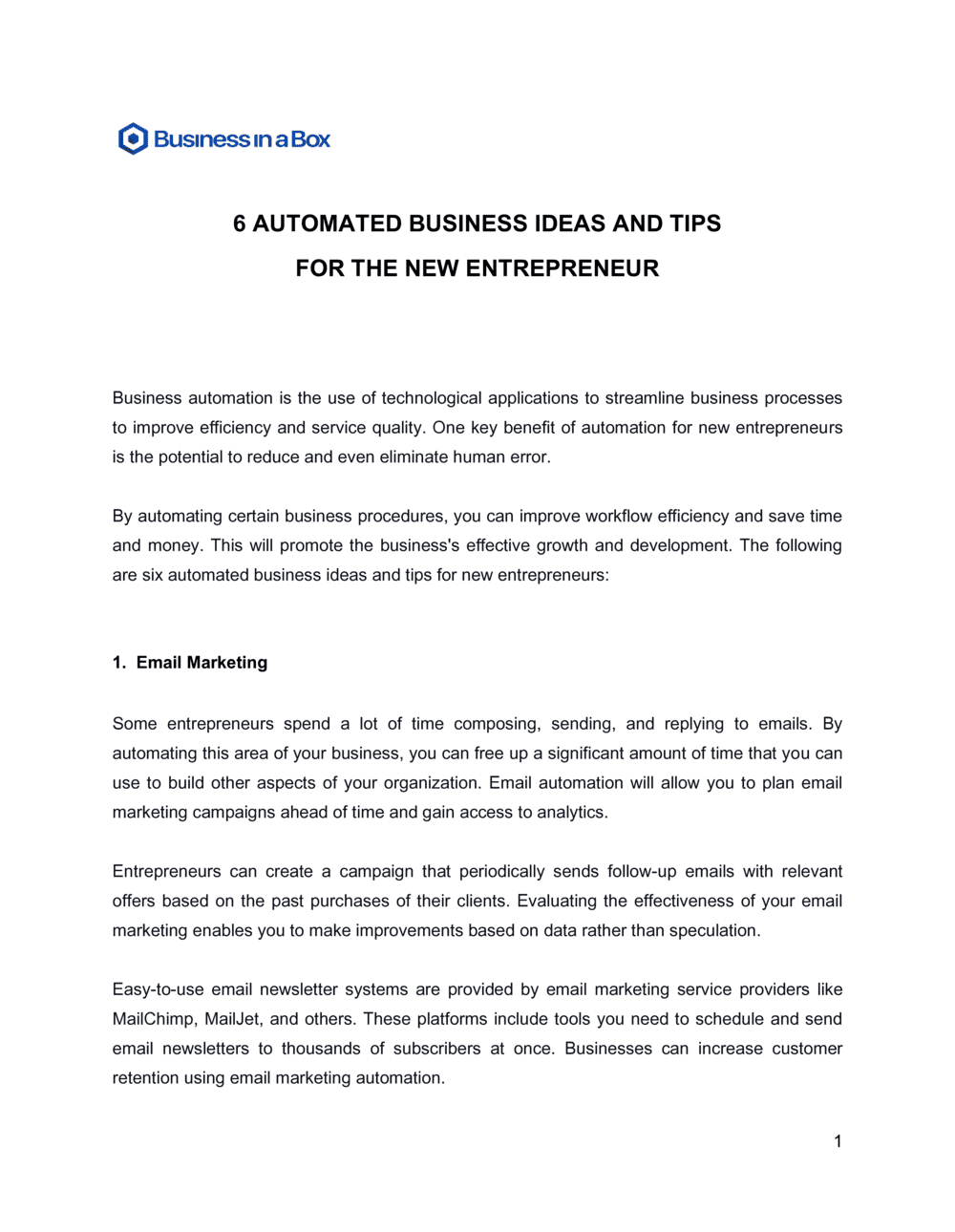
6 Automated Business Ideas and Tips For The New Entrepreneur

Free to read β€’ Save or share with one click

Free6 Automated Business Ideas and Tips For The New Entrepreneur Template

At a glance

What it is
This document is a structured planning guide that presents six proven automated business models alongside actionable startup tips for new entrepreneurs. It is a free Word download you can edit online and export as PDF β€” covering business model descriptions, required tools, revenue mechanics, and implementation steps for each idea in one organized reference.
When you need it
Use it when you are evaluating low-overhead business models that run with minimal daily intervention, or when you need a structured starting point to compare automation-friendly opportunities before committing time and capital to one path.
What's inside
Six distinct automated business model profiles, tool and platform recommendations for each model, revenue and cost structure overviews, common startup mistakes to avoid, and a practical checklist of first steps to launch each idea with automation from day one.

What is the 6 Automated Business Ideas and Tips for the New Entrepreneur Guide?

The 6 Automated Business Ideas and Tips for the New Entrepreneur guide is a structured planning document that profiles six proven business models β€” dropshipping, affiliate marketing, digital products, online courses, print on demand, and SaaS micro-tools β€” each designed to generate revenue with minimal ongoing manual effort. For each model, the document covers how the automation works, which platforms and tools power it, how the revenue and cost structure is organized, and the first concrete steps to get started. It is a free Word download you can edit online and export as PDF, giving new entrepreneurs a practical framework to evaluate options and move from idea to first launch without starting from a blank page.

Why You Need This Document

Without a structured starting point, most new entrepreneurs spend weeks researching business models across dozens of blog posts and YouTube videos, never converting that research into a concrete action plan. The cost is real: delayed launches, unfocused tool spending, and the common trap of building a product or store before validating that anyone will pay for it. This guide replaces scattered research with a single organized reference β€” comparing six models side by side, flagging the specific mistakes that kill early momentum in each one, and providing a 30-day launch checklist that moves you from decision to first transaction. Instead of optimizing for the perfect idea, it helps you validate a real one.

Which variant fits your situation?

If your situation is…Use this template
Building a full business strategy around one automated modelBusiness Plan
Planning the marketing and customer acquisition funnelMarketing Plan
Mapping financial projections for a new automated ventureFinancial Projections (12 Months)
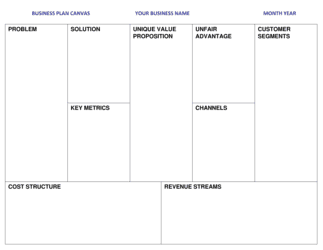
Formalizing a one-page concept before expanding into a full planOne-Page Business Plan
Launching a product-based automated business (e-commerce or dropshipping)E-Commerce Business Plan
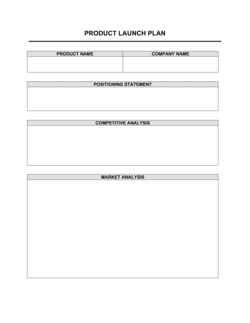
Planning a digital content or course-based businessNew Product Launch Plan
Setting up affiliate or referral partner structuresAffiliate Agreement

Common mistakes to avoid

❌ Choosing multiple business models simultaneously

Why it matters: Splitting attention across two or three models means none gets the focused iteration needed to generate revenue in the first 90 days, and tool costs multiply without proportional income.

Fix: Commit fully to one model for at least 90 days. Validate revenue before adding a second income stream β€” sequential wins beat parallel experiments.

❌ Skipping demand validation before building

Why it matters: Building a course, digital product, or SaaS tool without confirming willingness to pay is the leading cause of zero-revenue launches. The product may be technically complete but commercially irrelevant.

Fix: Run a pre-sale, landing page test, or paid traffic experiment before investing more than 10 hours in production. One pre-order is worth more than 100 hours of unvalidated building.

❌ Setting up automation tools before establishing a working manual process

Why it matters: Automating a broken process scales the problems within it. Errors in order routing, pricing, or fulfillment that are manageable at 5 orders per day become unmanageable at 50.

Fix: Process your first 10–20 transactions manually to identify every failure point, then automate the corrected workflow.

❌ Pricing too low to reach a viable monthly revenue target

Why it matters: A $9 digital product requires 334 sales per month to generate $3,000 β€” a volume that most new entrepreneurs cannot sustain through organic or low-budget paid channels.

Fix: Price each product or service at the level where 20–50 transactions per month reaches your income goal. Test higher price points early β€” they are easier to lower than to raise.

The 9 key sections, explained

Introduction: Why Automation Matters for New Entrepreneurs

Business Idea 1: Dropshipping Store

Business Idea 2: Affiliate Marketing Website

Business Idea 3: Digital Products and Downloads

Business Idea 4: Online Course or Membership Site

Business Idea 5: Automated Print on Demand Business

Business Idea 6: SaaS or Software Micro-Tool

Automation Tools and Platform Stack

First 30 Days: Launch Checklist and Next Steps

How to fill it out

  1. 1

    Choose one business idea to focus on first

    Read through all six model profiles and select the one that best matches your available time, existing skills, and starting capital. Write your chosen model in the designated field at the top of the document.

    πŸ’‘ Rank each model on three criteria: startup cost under $500, skills you already have, and interest level. The model that scores highest on all three is your starting point.

  2. 2

    Fill in your niche and target customer

    For the model you selected, enter the specific product category, content niche, or customer segment you will serve. Avoid broad categories β€” 'fitness' is not a niche; 'strength training for women over 40' is.

    πŸ’‘ Use Google Trends and a keyword research tool to confirm your niche has consistent monthly search volume before committing to it.

  3. 3

    Select and document your platform and tool stack

    Enter the specific platform you will use for your storefront, course, or content site, plus the automation tools for email, payments, and fulfillment. Document the free-tier limits for each so you know when upgrades are triggered.

    πŸ’‘ Zapier's free tier handles 100 tasks per month β€” enough to automate your first 30–50 transactions before you need to upgrade.

  4. 4

    Set your pricing and revenue target

    Enter your price point and calculate how many units or subscribers you need to reach your monthly revenue goal. If the number of required transactions exceeds what one acquisition channel can realistically deliver, adjust price upward.

    πŸ’‘ Work backward from $3,000/month β€” your minimum viable revenue for most side-hustle targets β€” to determine the right price tier for your model.

  5. 5

    Map out your automation workflow

    Document the end-to-end customer journey from first click to delivered value β€” purchase trigger, fulfillment or access step, confirmation email, and follow-up sequence β€” and identify which tool handles each step.

    πŸ’‘ Draw a simple flowchart before building anything in a tool. Spotting a missing step on paper costs nothing; spotting it after building costs hours.

  6. 6

    Complete the 30-day launch checklist

    Work through each item in the first-30-days section sequentially. Check off completed steps and record the date. Do not proceed to the traffic or marketing phase until the automation workflow is tested end to end.

    πŸ’‘ Place a test order using your own payment method and walk through the entire customer experience before sending traffic. Fix every friction point you encounter.

  7. 7

    Set your key metrics and review cadence

    Enter the three to five metrics you will track weekly β€” conversion rate, CAC, average order value, email open rate, and monthly revenue β€” and schedule a weekly 30-minute review to compare actuals against targets.

    πŸ’‘ Track only the metrics that directly connect to revenue in Month 1. Vanity metrics like social followers can be added later once the core revenue engine is working.

Frequently asked questions

What is an automated business?

An automated business is one where the core revenue-generating processes β€” order fulfillment, content delivery, payment collection, and customer communication β€” are handled by software systems rather than manual labor for each transaction. The owner's active time is concentrated on setup, optimization, and growth rather than operational execution. Models like dropshipping, affiliate marketing, digital products, and online courses are the most common examples accessible to new entrepreneurs.

Which automated business idea is best for a complete beginner?

Affiliate marketing and digital products (templates, e-books, or presets) have the lowest startup cost and technical barrier for most beginners. Affiliate marketing requires no product creation β€” you earn commissions promoting existing products. Digital products require a one-time creation effort but have no inventory or fulfillment cost. Both can be started for under $100 and scaled with free or low-cost tools. Dropshipping is accessible but requires more customer service capacity than most beginners anticipate.

How much money do I need to start an automated online business?

Most of the six models in this guide can be started for $50–$300, covering a domain name, a basic hosting or storefront subscription, and a free tier on an email automation tool. Dropshipping requires a Shopify subscription (around $29–$39/month). Online courses can be launched free on platforms like Teachable's free tier. The largest variable is paid advertising β€” budget $100–$300 for an initial traffic test to validate your model before scaling.

How long does it take to generate income from an automated business?

Timelines vary significantly by model and effort. Dropshipping and print on demand stores can generate first sales within 2–4 weeks of launch if traffic is purchased. Affiliate marketing via SEO typically takes 3–9 months to generate meaningful organic traffic. Digital products and online courses can produce first revenue within days if you already have an audience or use paid traffic. Planning for a 90-day horizon before evaluating whether a model is working is a realistic baseline.

Do I need technical skills to run an automated business?

Most models in this guide are designed for non-technical founders. Shopify, Gumroad, Teachable, Printful, and ConvertKit all provide no-code interfaces that handle the technical infrastructure. The SaaS micro-tool model is the one exception β€” it requires either coding skills or a budget to hire a developer. Zapier and Make (formerly Integromat) allow non-technical users to connect tools and build automated workflows without writing code.

What tools do I need to automate a new online business?

A core automation stack for most models includes: an e-commerce or content platform (Shopify, Gumroad, or WordPress), an email automation tool (Mailchimp or ConvertKit), a payment processor (Stripe or PayPal), and a task automation connector (Zapier or Make). Most of these offer free tiers sufficient for the first 30–90 days. Add tools only when a specific feature becomes a documented constraint β€” not in anticipation of future needs.

Is dropshipping still a viable automated business model?

Dropshipping remains viable but requires more differentiation than it did before 2020. Competing on price alone against large overseas sellers is not a sustainable strategy. Successful dropshipping businesses in the current environment focus on a specific niche, use domestic or fast-shipping suppliers to deliver within 5–7 days, and build a brand around the product category rather than listing generic items. Margins typically run 15–35% after platform fees and ad costs.

How is this document different from a business plan?

This guide is an idea-evaluation and early-action document β€” it helps you compare six specific automated models and take the first concrete steps to launch one. A business plan is a comprehensive strategic document covering market analysis, competitive positioning, multi-year financial projections, and a funding ask. Once you have selected and validated a model using this guide, a full business plan is the appropriate next document before seeking investors or business financing.

Can I run more than one automated business at the same time?

Technically yes, but practically not recommended for new entrepreneurs. Each model requires focused attention during the 60–90 day validation phase β€” building content, testing paid traffic, iterating on product listings, or refining the email funnel. Splitting that attention across two models in parallel consistently produces two underperforming experiments rather than one validated business. Add a second model only after the first generates predictable, recurring monthly revenue.

How this compares to alternatives

vs Business Plan

A business plan is a comprehensive strategic document covering market analysis, competitive positioning, financial projections, and a capital structure β€” typically 20–35 pages. This automated business ideas guide is a narrower idea-evaluation tool designed to help new entrepreneurs select and launch one automated model quickly. Use this guide first to validate a model, then build a full business plan when seeking investors or financing.

vs One-Page Business Plan

A one-page business plan captures a single business concept across standard strategy dimensions β€” customer, value proposition, channels, and revenue. This guide covers six distinct business models with implementation steps for each, making it a broader discovery and comparison tool rather than a single-concept summary. Use the one-page plan once you have chosen a model from this guide.

vs Marketing Plan

A marketing plan defines the specific channels, campaigns, budgets, and KPIs for acquiring customers in an existing or chosen business. This guide predates that decision β€” it helps you choose which type of automated business to build before marketing strategy is relevant. A marketing plan is the appropriate next document once a model is selected and validated.

vs New Product Launch Plan

A product launch plan covers the go-to-market execution for a specific product β€” positioning, pricing, launch timeline, and promotion. This automated business ideas guide operates at the model-selection level, above any single product launch. Use this guide to choose your business model, then apply a product launch plan when introducing your first digital product, course, or store to market.

Industry-specific considerations

E-commerce and Retail

Dropshipping and print on demand models are direct applications of e-commerce automation, with platform integrations handling inventory, fulfillment, and returns without warehouse infrastructure.

Education and Online Learning

Online course and membership site models allow subject-matter experts to package knowledge once and deliver it to unlimited students through automated enrollment and content drip systems.

Marketing and Content Creation

Affiliate marketing and digital product businesses are natural extensions for marketers and creators who already produce content and can monetize existing audiences through automated purchase funnels.

Professional Services and Consulting

Consultants and coaches use automated booking, onboarding, and course delivery to productize their expertise and generate revenue between client engagements without proportional time investment.

Template vs pro β€” what fits your needs?

PathBest forCostTime
Use the templateNew entrepreneurs evaluating automated business models and building their first launch plan independentlyFree2–4 hours to complete; 30–90 days to launch and validate
Template + professional reviewEntrepreneurs who want feedback on their chosen model, niche selection, or pricing from a business advisor or mentor$100–$500 for a one-hour advisor session or startup coaching package1–2 weeks including advisor feedback and revisions
Custom draftedEntrepreneurs building a fully researched, investor-ready business plan around a validated automated model$1,500–$5,000 for a professional business plan writer or startup consultant3–6 weeks

Glossary

Business Automation
The use of software, tools, or systems to perform recurring business tasks β€” order processing, email follow-ups, invoicing β€” without manual intervention each time.
Passive Income
Revenue generated from an asset or system that does not require active daily work to maintain, such as a digital product sold through an automated storefront.
Dropshipping
A retail model where the seller lists products online but never holds inventory β€” a third-party supplier ships orders directly to the customer when a sale is made.
Affiliate Marketing
A performance-based model where an individual earns a commission for directing customers to another company's product or service through a tracked link.
Print on Demand (POD)
A fulfillment model where custom-designed products are manufactured and shipped only when an order is placed, eliminating upfront inventory costs.
Sales Funnel
A sequence of automated steps β€” awareness, interest, decision, purchase β€” that moves a prospect from first contact to completed transaction without manual sales effort.
Email Automation
Pre-written email sequences triggered by subscriber actions β€” sign-up, purchase, abandonment β€” that run continuously without manual sending.
Digital Product
A downloadable or access-gated asset β€” e-book, template, course, or software β€” that can be sold unlimited times with no incremental production cost per unit.
SaaS (Software as a Service)
Cloud-based software delivered by subscription, often used as the automation infrastructure underlying each business model described in this guide.
Customer Acquisition Cost (CAC)
Total marketing and sales spend divided by the number of new customers acquired in the same period β€” a key metric for evaluating the sustainability of each automated model.

Part of your Business Operating System

This document is one of 3,000+ business & legal templates included in Business in a Box.

  • Fill-in-the-blanks β€” ready in minutes
  • Compatible with all office suites
  • Export to PDF and share electronically

Create your document in 3 simple steps.

From template to signed document β€” all inside one Business Operating System.
1
Download or open template

Access over 3,000+ business and legal templates for any business task, project or initiative.

2
Edit and fill in the blanks with AI

Customize your ready-made business document template and save it in the cloud.

3
Save, Share, Send, Sign

Share your files and folders with your team. Create a space of seamless collaboration.

Save time, save money, and create top-quality documents.

β˜…β˜…β˜…β˜…β˜…

"Fantastic value! I'm not sure how I'd do without it. It's worth its weight in gold and paid back for itself many times."

Managing Director Β· Mall Farm
Robert Whalley
Managing Director, Mall Farm Proprietary Limited
β˜…β˜…β˜…β˜…β˜…

"I have been using Business in a Box for years. It has been the most useful source of templates I have encountered. I recommend it to anyone."

Business Owner Β· 4+ years
Dr Michael John Freestone
Business Owner
β˜…β˜…β˜…β˜…β˜…

"It has been a life saver so many times I have lost count. Business in a Box has saved me so much time and as you know, time is money."

Owner Β· Upstate Web
David G. Moore Jr.
Owner, Upstate Web

Run your business with a system β€” not scattered tools

Stop downloading documents. Start operating with clarity. Business in a Box gives you the Business Operating System used by over 250,000 companies worldwide to structure, run, and grow their business.

Start freeΒ Β·Β No credit card required