Procurement Templates

4.7from 280+ reviews Trusted by 20M+ businesses

Cover every procurement step — from supplier policy to goods receipt — with ready-to-use templates.

WordEditable onlinePDF10+ procurement templates

Other Production & Operations categories

250K+Clients
20M+Free users
20+Years
190+Countries
10,000+Law firms
50M+Downloads

Trusted across review platforms

  • Capterra★★★★☆4.649 reviews
  • G2★★★★☆4.713 reviews
  • GetApp★★★★☆4.649 reviews
  • Google Play★★★★☆4.6179 ratings
  • Google Reviews★★★★☆4.567 reviews

Related categories

Frequently asked questions

What documents are typically included in a procurement process?
A complete procurement process typically involves a procurement policy (the governance framework), a procurement plan (project-level buying strategy), a purchase order (the transaction authorization), a goods received note (delivery confirmation), and a supplier contract or supply agreement. For disputed or defective deliveries, formal notices of defect or rejection are also needed to preserve the buyer's legal position.
What is a goods received note and why does it matter?
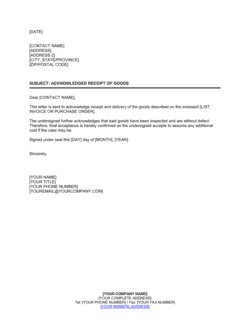
A goods received note (GRN) is a document that confirms a delivery has arrived, records what was received versus what was ordered, and is signed by the receiving party. It matters because it is the primary control document connecting the purchase order to the supplier invoice — without it, accounts payable has no verified basis for approving payment. GRNs also provide evidence if a dispute about quantity or condition arises later.
When should I use a procurement policy versus a procurement plan?
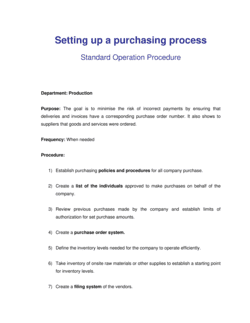
A procurement policy is a permanent governance document that applies to all purchasing activity across the organization — it sets approval thresholds, sourcing rules, and ethical standards. A procurement plan is project-specific: it maps out how a particular category of goods or services will be sourced, evaluated, and contracted during a defined period. Most organizations need both: the policy as standing rules, and a plan whenever a significant or novel procurement is undertaken.
What is the difference between a notice of defective goods and a notice of rejection?
A notice of defective goods informs the supplier that delivered items do not meet quality, specification, or safety standards — but the buyer may still accept them at a reduced price or request repair. A notice of rejection is a formal declaration that the buyer refuses to accept the goods entirely and requires replacement or a refund. Issuing the correct notice matters legally: most supply contracts require written rejection within a specified window, or the buyer is deemed to have accepted the goods.
Can I use a product supply agreement for both goods and services?
A product supply agreement is designed primarily for tangible goods with defined specifications and delivery schedules. For services, a service agreement or master services agreement is more appropriate because it addresses deliverables, acceptance criteria, and performance metrics rather than physical delivery and inspection. Some agreements cover both goods and associated services (installation, maintenance) — in that case, ensure the template you use includes service-specific provisions.
Do I need a lawyer to create a procurement policy?
For most small and mid-sized businesses, a well-constructed template is sufficient for an internal procurement policy, since it governs internal procedures rather than creating external legal obligations. Supplier contracts — especially high-value or multi-year supply agreements — benefit from legal review to ensure the warranty, liability, and dispute clauses are appropriate for your jurisdiction and industry. As a rule, the higher the spend value and the longer the contract term, the more valuable a lawyer's review becomes.
How do I handle a supplier who refuses to accept a rejection of goods?
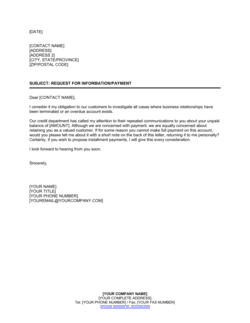
Issue a formal written notice of rejection citing the specific non-conformance against the agreed specification. If the supplier disputes the rejection, use the demand for particulars of rejection template to require them to state the grounds for their refusal. Keep all correspondence as evidence. If the dispute is not resolved, refer to the governing law clause in your supply agreement — most contracts provide for escalation through negotiation, then mediation, then arbitration or litigation.
What is the purpose of a product comparison worksheet in procurement?
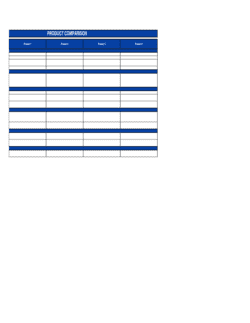
A product comparison worksheet creates a structured, documented basis for choosing between competing suppliers or products. It records evaluation criteria (price, quality, lead time, warranty terms), scores each option consistently, and provides an audit trail showing the decision was made objectively. This is especially important in regulated industries or publicly funded organizations where procurement decisions may be subject to review.

Procurement vs. related documents

Procurement vs. Purchase Order

A purchase order is a transactional document that authorizes a specific buy from a named supplier at a defined price and quantity. A procurement policy or plan sits one level above — it governs how purchase orders are issued, who can approve them, and what thresholds apply. Use both: the policy sets the rules; the purchase order executes a single transaction within those rules.

Procurement vs. Vendor Agreement

A vendor agreement (or supplier agreement) establishes the ongoing commercial relationship — pricing tiers, exclusivity, service levels, and dispute resolution. A procurement plan is an internal document that maps out how your organization will source a particular category of goods or services. The vendor agreement is signed with the supplier; the procurement plan is used internally before and during supplier selection.

Procurement vs. Inventory Management Template

Inventory management templates track stock levels, reorder points, and warehouse movements after goods are received. Procurement templates cover the upstream process — selecting suppliers, placing orders, and receiving deliveries. The goods received note is the handoff point between the two functions: once goods are confirmed received, inventory management takes over.

Procurement vs. Accounts Payable Document

Accounts payable documents — invoices, payment approvals, remittance advices — are triggered after goods are received and accepted. Procurement templates generate the records (goods received notes, receipts, supply agreements) that accounts payable needs to process payment accurately. A goods received note, for example, is the trigger document for releasing payment against an invoice.

Key clauses every Procurement contains

Procurement contracts and policies across this folder share a common set of clauses — the wording adapts by document type, but the underlying provisions remain consistent.

  • Parties and authorized signatories. Identifies the buying organization and the supplier by full legal name, with the names and titles of authorized signatories.
  • Description of goods or services. Specifies exactly what is being procured — SKU, specification, quantity, and unit — to eliminate ambiguity at delivery.
  • Price and payment terms. States the agreed price per unit, total contract value, currency, invoicing schedule, and payment due dates.
  • Delivery terms and Incoterms. Defines who bears risk and cost at each stage of transit, typically using standard Incoterms (e.g., FOB, CIF, DDP).
  • Inspection and acceptance. Sets the window and process for inspecting delivered goods and the criteria that must be met before acceptance is confirmed.
  • Rejection and return procedure. Outlines the steps a buyer must follow to formally reject non-conforming goods and the supplier's obligation to remedy or replace.
  • Warranties and representations. Supplier warrants that goods conform to specification, are free from defects, and comply with applicable regulations.
  • Remedies for breach. Specifies what the buyer can claim — replacement, repair, price reduction, or damages — when the supplier fails to perform.
  • Governing law and dispute resolution. Names the jurisdiction whose laws govern the agreement and the mechanism for resolving disputes (negotiation, arbitration, or litigation).

How to write a procurement policy or plan

A well-structured procurement document takes 30–60 minutes to draft from a template if you gather the right inputs first.

  1. 1

    Define the scope and purpose

    State which categories of spend, business units, and dollar thresholds the policy or plan covers.

  2. 2

    Identify all stakeholders

    List who initiates requisitions, who approves purchases, and who manages supplier relationships.

  3. 3

    Set approval thresholds

    Specify who can approve purchases at each dollar tier — for example, managers up to $5,000, directors up to $25,000, and executives above that.

  4. 4

    Document the sourcing process

    Describe how suppliers are identified, shortlisted, and evaluated — including minimum number of quotes required by spend level.

  5. 5

    Define receiving and inspection procedures

    Specify who receives goods, how they are inspected against the purchase order, and how discrepancies are recorded.

  6. 6

    Establish dispute and return protocols

    Document the notice periods and escalation steps for defective, rejected, or missing goods before a formal claim is raised.

  7. 7

    Add record-keeping requirements

    State which documents must be retained (purchase orders, goods received notes, invoices) and for how long.

  8. 8

    Review, approve, and communicate

    Have an authorized executive approve the final document and distribute it to all staff with purchasing authority.

At a glance

What it is
Procurement templates are pre-built documents that standardize how a business sources, orders, receives, and manages goods and services from external suppliers. They reduce drafting time, enforce consistent processes, and create an audit trail for every transaction.
When you need one
Any time your business buys goods from a supplier, disputes a delivery, or formalizes a supply relationship, a procurement template ensures the process is documented and defensible.

Which Procurement do I need?

The right procurement template depends on where you are in the buying cycle — setting policy, planning a purchase, receiving goods, or resolving a supplier dispute.

Your situation
Recommended template

Establishing company-wide rules for how all purchases are made

Sets the governance framework all other procurement activity must follow.

Planning a specific purchase project with budget and timeline

Structures objectives, sourcing strategy, and milestones for a defined buy.

Confirming a shipment has arrived and matches the order

Creates a timestamped record of received items for accounts payable and audit.

Formalizing an ongoing supply relationship with a vendor

Defines price, volume, delivery terms, and remedies for the supply relationship.

Notifying a supplier that delivered goods are defective

Documents the defect formally and triggers the supplier's remedy obligation.

Formally rejecting a delivery that does not meet specifications

Provides written rejection notice required before pursuing a claim or return.

Filing a claim for goods damaged during shipping

Documents damage for carrier and supplier claims with the required detail.

Comparing multiple suppliers or products before a buying decision

Structures a side-by-side evaluation to support an objective selection decision.

Glossary

Procurement
The end-to-end process of identifying, sourcing, ordering, receiving, and paying for goods or services from external suppliers.
Purchase order (PO)
A buyer-issued document that formally authorizes a specific purchase from a named supplier at an agreed price and quantity.
Goods received note (GRN)
A document confirming that a delivery has been received, recording actual quantities and condition against the purchase order.
Procurement policy
An organization-wide governance document that defines the rules, approval thresholds, and ethical standards governing all purchasing activity.
Procurement plan
A project-specific document that outlines the sourcing strategy, timeline, evaluation criteria, and budget for a defined buying initiative.
Supply agreement
A contract between a buyer and supplier that governs price, volume, delivery terms, and remedies for an ongoing supply relationship.
Incoterms
Standardized international trade terms (published by the ICC) that define which party bears cost and risk at each point in a shipment's journey.
Non-conforming goods
Goods that do not meet the specification, quality standard, or quantity stated in the purchase order or supply agreement.
Acceptance
The buyer's formal confirmation that delivered goods meet the agreed specification, triggering the obligation to pay.
Rejection
The buyer's formal refusal to accept delivered goods because they do not conform to the agreed specification.
Lead time
The elapsed time between placing an order and receiving the goods, used in procurement planning to set order schedules.
Three-way match
An accounts payable control that verifies the purchase order, goods received note, and supplier invoice all agree before payment is released.

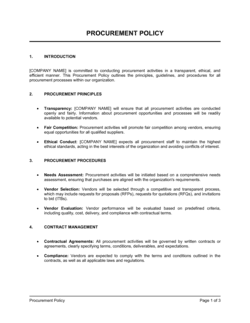
What is a procurement template?

A procurement template is a pre-formatted document that standardizes the way a business sources, orders, receives, and manages goods and services from external suppliers. Procurement covers every step between recognizing a need and confirming a satisfactory delivery — and each step generates a document that protects the buyer, the supplier, and the transaction itself. Templates eliminate the need to draft these documents from scratch, reduce the risk of missing critical provisions, and create a consistent paper trail that supports audits, disputes, and financial controls.

Procurement documents fall into four broad categories: governance documents (policies and plans that define how buying decisions are made), transactional records (purchase orders, goods received notes, and receipts that document individual transactions), supplier contracts (supply agreements, distribution agreements, and manufacture-and-sale contracts that govern ongoing relationships), and dispute documents (defect notices, rejection notices, and claims that protect the buyer when a delivery goes wrong). A mature procurement process uses documents from all four categories.

When you need a procurement template

Any time your business spends money with an external supplier — whether you are buying raw materials, finished goods, software, or services — a procurement template ensures the transaction is authorized, documented, and recoverable if something goes wrong. Even small organizations benefit from standardized forms: they reduce disputes, speed up accounts payable, and demonstrate due diligence.

Common triggers:

  • Writing a formal purchasing policy before delegating buying authority to staff
  • Planning a significant sourcing project with multiple supplier candidates
  • Confirming receipt of a delivery against a purchase order
  • Notifying a supplier that goods arrived damaged, defective, or short
  • Formally rejecting a delivery that does not meet agreed specifications
  • Filing a damage claim with a carrier or supplier after a shipment loss
  • Executing a long-term supply or distribution agreement with a key vendor
  • Comparing competing suppliers on a consistent set of criteria before awarding a contract

Skipping procurement documentation does not eliminate the risk — it just moves it. Without a goods received note, there is no verified basis for payment. Without a notice of rejection issued in time, a buyer may lose the right to return non-conforming goods. Without a procurement policy, purchasing authority is undefined and fraud or waste goes undetected. The templates in this folder cover every stage of the cycle so your procurement process is both efficient and defensible.

Award-winning platform

  • Great Place to Work 2025
  • BIG Award — Product of the Year 2025
  • Smartest Companies 2025
  • Global 100 Excellence 2026
  • Best of the Best 2025

Create your document in 3 simple steps.

From template to signed document — all inside one Business Operating System.
1
Download or open template

Access over 3,000+ business and legal templates for any business task, project or initiative.

2
Edit and fill in the blanks with AI

Customize your ready-made business document template and save it in the cloud.

3
Save, Share, Send, Sign

Share your files and folders with your team. Create a space of seamless collaboration.

Save time, save money, and create top-quality documents.

★★★★★

"Fantastic value! I'm not sure how I'd do without it. It's worth its weight in gold and paid back for itself many times."

Managing Director · Mall Farm
Robert Whalley
Managing Director, Mall Farm Proprietary Limited
★★★★★

"I have been using Business in a Box for years. It has been the most useful source of templates I have encountered. I recommend it to anyone."

Business Owner · 4+ years
Dr Michael John Freestone
Business Owner
★★★★★

"It has been a life saver so many times I have lost count. Business in a Box has saved me so much time and as you know, time is money."

Owner · Upstate Web
David G. Moore Jr.
Owner, Upstate Web

Run your business with a system — not scattered tools

Stop downloading documents. Start operating with clarity. Business in a Box gives you the Business Operating System used by over 250,000 companies worldwide to structure, run, and grow their business.

Free Forever Plan · No credit card required