1
Enter sender and carrier details before the delivery arrives
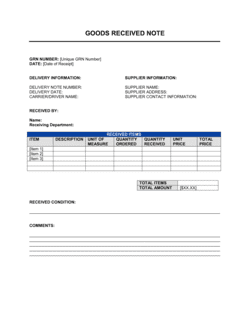
Pre-fill the sender's legal name, address, carrier name, and tracking or waybill number using information from the advance shipping notice or purchase order confirmation.
💡 Pre-printing the PO number and expected item list saves time at the dock and reduces transcription errors during a busy receiving window.
2
Record recipient information at the point of handoff
Enter the full name and title of the person physically accepting the goods, along with the exact delivery address. Do not use a department name in place of an individual's name.
💡 If your organization requires an authorized signatory list for goods acceptance, keep a laminated copy at the receiving desk so staff can verify authority quickly.
3
Match the PO and invoice reference numbers
Write the buyer's PO number and the seller's invoice number on the form before counting items. This links the physical receipt to financial records for three-way matching in accounts payable.
💡 If the delivery arrives without a packing list or invoice, note 'no accompanying documentation' in the exception field — do not leave the reference fields blank.
4
Count and verify each line item against the packing list
Open every carton or pallet and count items at the SKU level. Record the ordered quantity and the actual received quantity for each line. Do not accept a driver's count without your own verification.
💡 For large shipments, use a two-person count — one person calls out items, the other records. Discrepancies caught at this step cost minutes to resolve; discrepancies caught later cost days.
5
Assess condition and document any exceptions
Inspect goods for visible damage, incorrect items, or moisture. Check the appropriate condition box and, for any issue, write a specific exception note including item name, SKU, quantity affected, and nature of the damage.
💡 Photograph damaged items before moving them — timestamped photos on a smartphone are admissible evidence in most carrier and supplier claim processes.
6
Sign and obtain the carrier countersignature for any exceptions
The authorized recipient signs and dates the form. If any exceptions were noted, ask the driver or carrier representative to countersign the exception section before they depart.
💡 Never let the carrier leave before countersigning an exception note. Once the vehicle departs, the carrier will dispute that the damage occurred in their possession.
7
Distribute copies and file the original
Give one copy to the carrier or driver, retain the original for your accounts payable records, and attach a scanned copy to the corresponding purchase order and invoice in your accounting system.
💡 File receipts by PO number, not by date — accounts payable reconciliation searches by PO, and date-filed archives slow down the three-way match process.