Financial Statement Templates

4.7from 280+ reviews Trusted by 20M+ businesses

Track revenue, expenses, and financial position with ready-to-use templates built for every reporting need.

Word & ExcelEditable onlinePDF13+ financial statement templates

Other Finance & Accounting categories

Financial health tools and checklists

250K+Clients
20M+Free users
20+Years
190+Countries
10,000+Law firms
50M+Downloads

Trusted across review platforms

  • Capterra★★★★☆4.649 reviews
  • G2★★★★☆4.713 reviews
  • GetApp★★★★☆4.649 reviews
  • Google Play★★★★☆4.6179 ratings
  • Google Reviews★★★★☆4.567 reviews

Related categories

Frequently asked questions

What are the main types of financial statements?
The three core financial statements are the income statement (revenue and expenses over a period), the balance sheet (assets, liabilities, and equity at a point in time), and the cash flow statement (cash inflows and outflows by activity). Most small businesses start with an income statement or P&L and add the others as reporting requirements grow.
How often should a business prepare financial statements?
Most businesses prepare statements monthly for internal management, quarterly for investor or board reporting, and annually for tax and compliance purposes. Lenders typically require annual audited or reviewed statements, while high- growth companies often produce monthly statements to manage cash tightly.
Can I use a financial statement template instead of hiring an accountant?
For routine internal reporting, a well-structured template is sufficient. For statements that will be submitted to lenders, investors, or regulators, you should have an accountant or CPA review — and in many cases compile, review, or audit — the numbers. A template ensures the format is correct; a professional ensures the figures are accurate and properly disclosed.
What is the difference between a financial statement and a budget?
A financial statement records actual results for a past period. A budget is a forward-looking plan that sets targets for revenue and spending. Many businesses produce a budget-vs-actual variance report by running both side by side, which is easier when both documents use the same line-item structure.
Do financial statement templates work for small businesses?
Yes. Financial statement templates are especially useful for small businesses that don't have a dedicated finance team. A template enforces consistent categorization, reduces preparation time, and produces a document that banks and investors recognize. Start with an income statement or P&L, then add projections when you need financing.
What is a financial projection and when do I need one?
A financial projection estimates future revenue, expenses, and cash position based on stated assumptions. You need one when applying for a business loan, seeking investment, opening a new location, or building an annual budget. Lenders typically want 12-month projections; investors often require three to five years.
How do I certify a financial statement?
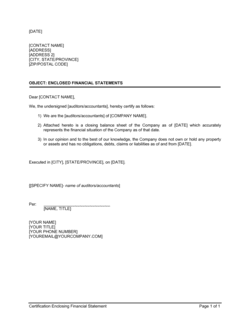
Certification means an authorized officer — often the CFO or CEO — signs a statement confirming that the enclosed financials are accurate and complete to the best of their knowledge. A Certification Enclosing Financial Statements template (D5165) provides the standard cover letter format used for this purpose.
What happens if I miss a financial reporting deadline?
For internal reporting, a missed deadline delays management decisions and may breach board expectations. For external obligations — lender covenants, regulatory filings, or investor agreements — late reporting can trigger default provisions or penalties. If a delay is unavoidable, use a Request Delay to Present Financial Statement (D296) to formally notify the relevant party and document the reason.

Financial Statement vs. related documents

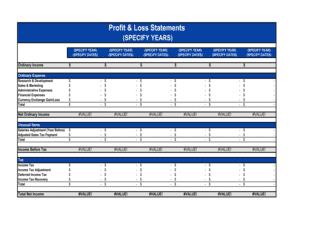
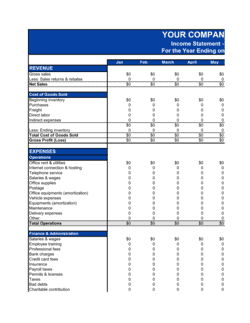
Income statement vs. profit & loss statement

These two terms describe the same document. "Income statement" is the preferred term under US GAAP and international standards; "profit and loss statement" (P&L) is common in management and small-business contexts. Both show revenues, costs, and net income or loss for a period. Choose whichever label your audience — investors, accountants, or internal management — recognizes.

Financial statement vs. financial report

A financial statement is a standardized document (income statement, balance sheet, cash flow statement) governed by accounting standards. A financial report is a broader management document that may include financial statements plus commentary, KPIs, charts, and strategic context. Use a financial statement for compliance and audits; use a financial report for board presentations and stakeholder communications.

Financial projections vs. financial statements

Financial statements record what has already happened — actual revenues, expenses, and balances. Financial projections estimate what will happen in a future period based on assumptions about growth, costs, and market conditions. Lenders and investors typically request both: statements to verify history, projections to assess future viability.

Expense statement vs. expense report

The two terms are often used interchangeably. An expense statement typically refers to a formal summary of costs incurred by a project, department, or period. An expense report usually refers to an individual employee's itemized claim for reimbursement. Both documents need the same detail: date, amount, category, and supporting receipt information.

Key clauses every Financial Statement contains

Every financial statement, regardless of type, is built from the same core sections — the structure stays consistent even as the numbers change.

  • Reporting period. Defines the exact dates the statement covers — month, quarter, fiscal year, or trailing twelve months.
  • Revenue (or income). Records all income earned during the period, broken down by product line, service category, or business unit.
  • Cost of goods sold (COGS). Lists the direct costs of producing goods or delivering services that generated the reported revenue.
  • Operating expenses. Captures indirect business costs — salaries, rent, utilities, marketing — not included in COGS.
  • Net income (or net loss). The bottom line: total revenue minus all expenses, showing whether the business was profitable in the period.
  • Notes and disclosures. Explains assumptions, accounting policies, and unusual items that affect how the numbers should be read.
  • Signatory or certification block. Identifies the preparer and authorizing officer, establishing accountability for the accuracy of the statement.
  • Comparison period. Many statements include prior-period figures so readers can assess performance trends rather than a single snapshot.

How to write a financial statement

Whether you're producing a simple monthly income statement or a full annual financial report, the same preparation steps apply.

  1. 1

    Define the reporting period and scope

    Decide whether you're reporting monthly, quarterly, or annually, and which entities or cost centers are included.

  2. 2

    Choose the right statement type

    Select the format that matches your goal — income statement for profitability, expense statement for cost tracking, projections for forward planning.

  3. 3

    Gather your source data

    Pull actuals from your accounting system, bank records, or payroll reports to ensure numbers are complete and reconciled.

  4. 4

    Organize revenue and expense categories

    Group income and costs into consistent line items that align with your chart of accounts so results are comparable period over period.

  5. 5

    Calculate subtotals and net figures

    Work down from gross revenue through COGS and operating expenses to arrive at operating income and net income or loss.

  6. 6

    Add notes and explanations

    Flag any non-recurring items, accounting policy changes, or significant variances so readers can interpret the numbers correctly.

  7. 7

    Have the statement reviewed and certified

    An authorized officer or accountant should sign off before the statement is shared with lenders, investors, or the board.

At a glance

What it is
A financial statement is a formal document that summarizes a business's financial activity, position, or performance over a defined period. Companies use them to track profitability, satisfy lenders and investors, meet reporting obligations, and guide strategic decisions.
When you need one
Anytime you're reporting results to stakeholders, applying for financing, preparing for an audit, or planning for the year ahead, a financial statement template gives you a structured, professional starting point.

Which Financial Statement do I need?

The right financial statement depends on what you're measuring and who you're reporting to. Match your situation to the template below.

Your situation
Recommended template

Summarizing revenue, costs, and net profit for a reporting period

The standard template for showing whether a business made or lost money.

Tracking monthly income and expenses in a rolling format

Structures revenue and costs month by month for trend analysis.

Reporting profit and loss in plain, management-friendly format

A P&L format widely recognized by owners, investors, and lenders.

Forecasting financials for the next 12 months

Projects revenue, costs, and cash position through a full budget year.

Building a three-year financial forecast for investors or a business plan

Long-range projections required by most investors and lenders.

Producing a formal financial report for management or a board

Covers all key financial metrics in a board-ready presentation format.

Documenting and submitting employee or project expenses

Itemizes expenditures with supporting detail for reimbursement or audit.

Formally certifying that financial statements have been prepared and enclosed

Provides a signed cover letter confirming the accuracy of enclosed financials.

Glossary

Income statement
A financial statement showing a business's revenues, expenses, and net profit or loss over a specific period.
Profit and loss statement (P&L)
Another name for the income statement, commonly used in management and small-business contexts.
Balance sheet
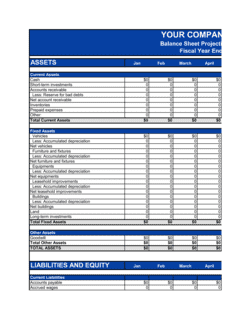
A snapshot of a company's assets, liabilities, and shareholders' equity at a specific point in time.
Cash flow statement
A report tracking the actual movement of cash in and out of a business, categorized by operating, investing, and financing activities.
Net income
Total revenue minus all expenses for a period — the 'bottom line' figure showing overall profitability.
COGS (cost of goods sold)
The direct costs of producing the goods or services that generated a company's revenue in a given period.
Operating expenses (OpEx)
Ongoing business costs not directly tied to production, such as salaries, rent, utilities, and marketing.
Financial projection
A forward-looking estimate of revenues, costs, and cash position over a future period, based on stated assumptions.
Gross profit
Revenue minus cost of goods sold, before operating expenses are deducted.
Reporting period
The defined timeframe — month, quarter, or fiscal year — that a financial statement covers.
Variance
The difference between a budgeted or projected figure and the actual result, used to identify over- or under-performance.
Certification
A signed statement by an authorized officer confirming that accompanying financial documents are accurate and complete.

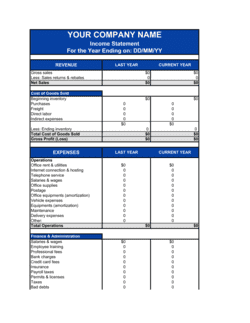
What is a financial statement?

A financial statement is a formal document that records a business's financial activity, position, or performance over a defined period. The three foundational statements — the income statement, the balance sheet, and the cash flow statement — together tell a complete story: whether a business is profitable, what it owns and owes, and whether it has enough cash to operate. Lenders, investors, regulators, and boards rely on these documents to make decisions, and most financing relationships require them as a condition of funding.

Financial statements are not just for large corporations. Small businesses, nonprofits, and sole proprietors all benefit from consistent financial reporting. Even a single-page monthly income statement helps an owner see whether revenue is covering costs, which expenses are growing, and whether the business is trending in the right direction. Structured templates make this discipline accessible without requiring accounting expertise for every report.

When you need a financial statement

Any time money flows in or out of your business — and certainly before any significant financial decision — you need a financial statement to ground that decision in real numbers. Common triggers:

  • Applying for a business loan or line of credit from a bank
  • Preparing board or investor reports at the end of a quarter or fiscal year
  • Filing annual business taxes with supporting financial documentation
  • Evaluating whether to hire, invest in equipment, or expand to a new location
  • Tracking monthly performance against budget targets
  • Forecasting revenue and expenses for a new product, service, or market
  • Responding to a lender covenant requiring periodic financial reporting
  • Formalizing a delay or deviation in reporting to an investor or creditor

Operating without regular financial statements means decisions are made on intuition rather than evidence. When a lender declines a loan or an investor walks away, the most common reason is not that the business is unviable — it's that the numbers aren't organized in a way that builds confidence. A clear, consistently prepared financial statement closes that gap.

Award-winning platform

  • Great Place to Work 2025
  • BIG Award — Product of the Year 2025
  • Smartest Companies 2025
  • Global 100 Excellence 2026
  • Best of the Best 2025

Create your document in 3 simple steps.

From template to signed document — all inside one Business Operating System.
1
Download or open template

Access over 3,000+ business and legal templates for any business task, project or initiative.

2
Edit and fill in the blanks with AI

Customize your ready-made business document template and save it in the cloud.

3
Save, Share, Send, Sign

Share your files and folders with your team. Create a space of seamless collaboration.

Save time, save money, and create top-quality documents.

★★★★★

"Fantastic value! I'm not sure how I'd do without it. It's worth its weight in gold and paid back for itself many times."

Managing Director · Mall Farm
Robert Whalley
Managing Director, Mall Farm Proprietary Limited
★★★★★

"I have been using Business in a Box for years. It has been the most useful source of templates I have encountered. I recommend it to anyone."

Business Owner · 4+ years
Dr Michael John Freestone
Business Owner
★★★★★

"It has been a life saver so many times I have lost count. Business in a Box has saved me so much time and as you know, time is money."

Owner · Upstate Web
David G. Moore Jr.
Owner, Upstate Web

Run your business with a system — not scattered tools

Stop downloading documents. Start operating with clarity. Business in a Box gives you the Business Operating System used by over 250,000 companies worldwide to structure, run, and grow their business.

Free Forever Plan · No credit card required